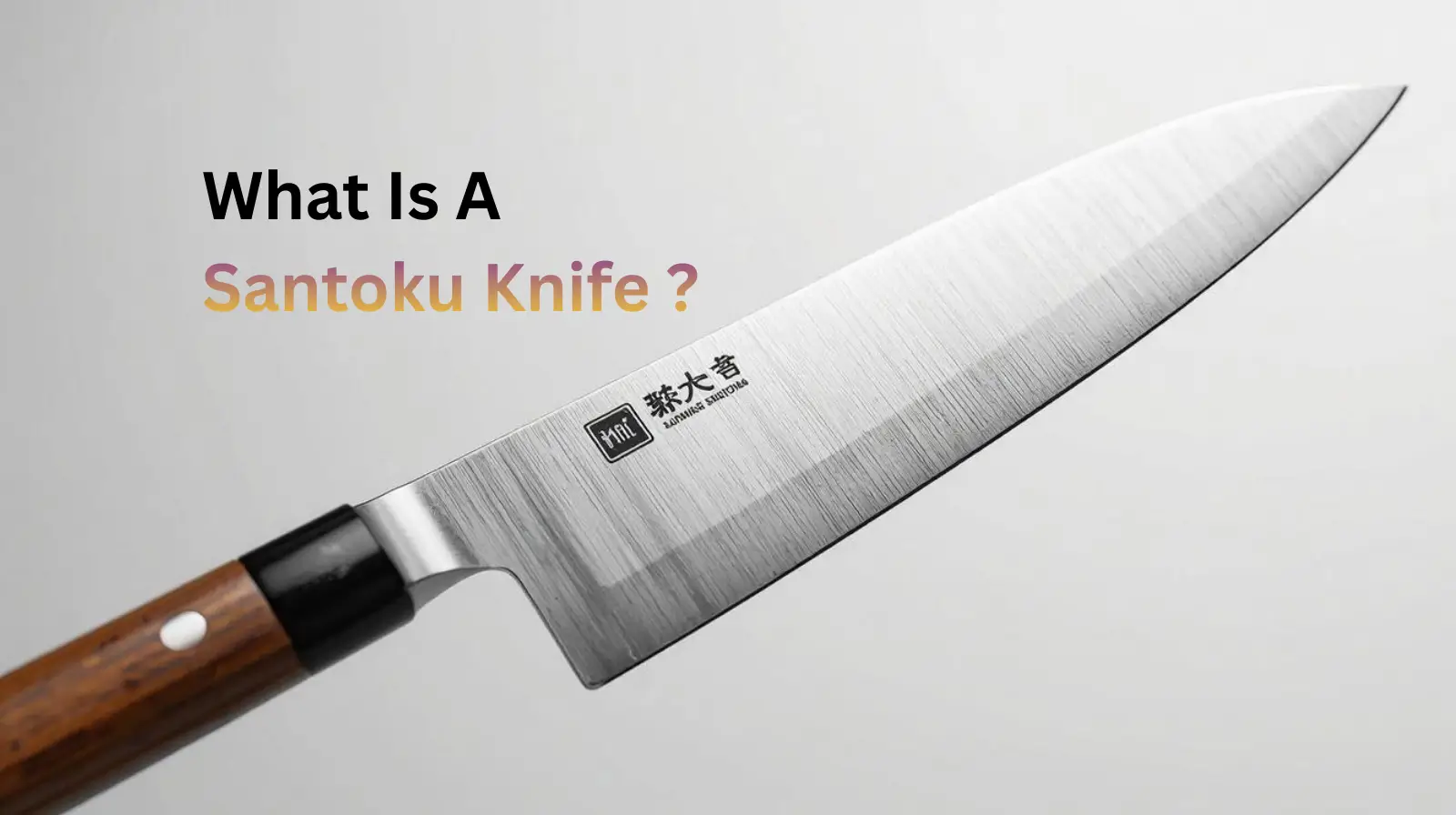
A santoku knife is a Japanese all-purpose kitchen knife for slicing, dicing, and mincing.
If you want a knife that makes prep fast and clean, this is it. I have used santoku knives for years in busy kitchens and at home. In this guide, I’ll break down what is a santoku knife, how it works, how it compares to a chef’s knife, and how to pick one you’ll love. Stick with me and you’ll know exactly which blade to buy, how to use it, and how to care for it.

What Is a Santoku Knife?
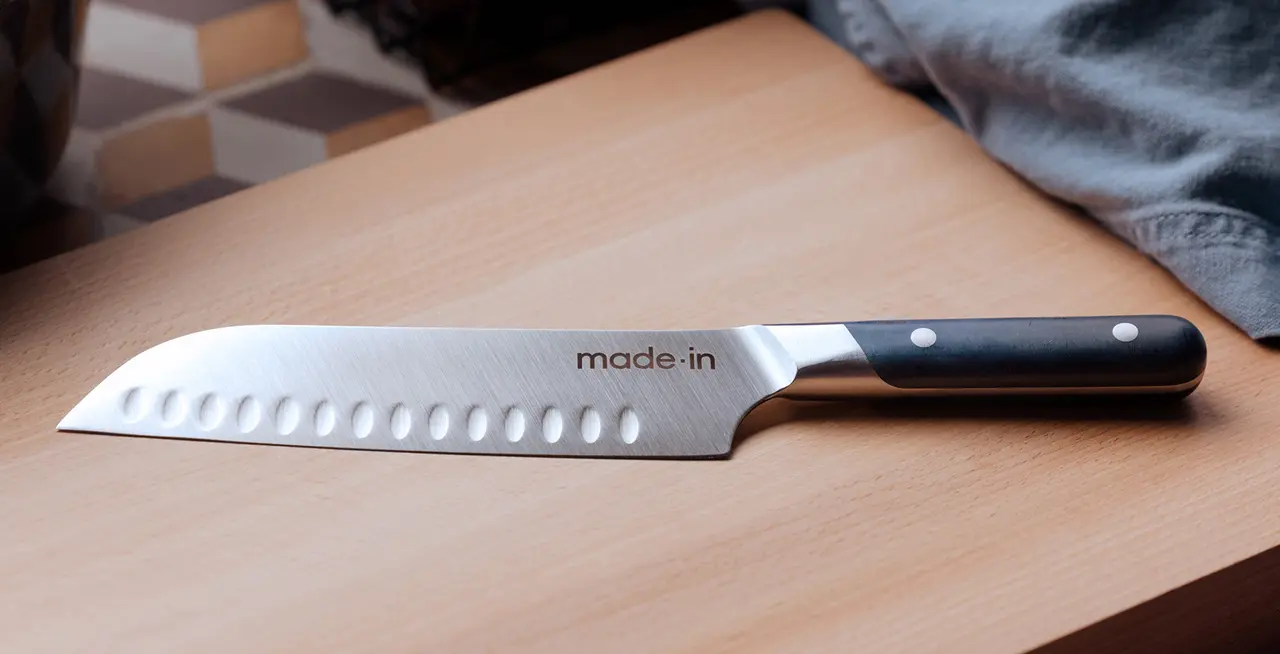
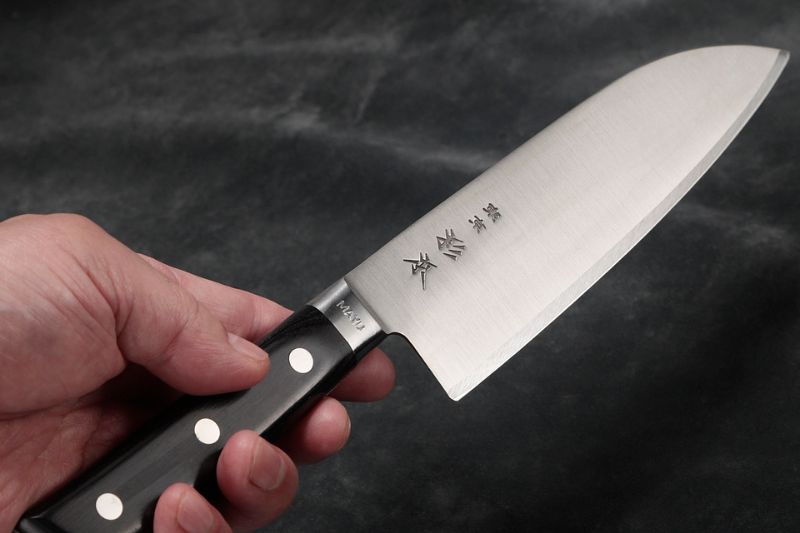
The word santoku means three virtues. It refers to three core tasks: slicing, dicing, and mincing. When people ask what is a santoku knife, I say it is a compact, flat-bellied blade with a sheepsfoot tip. It shines on vegetables, fish, and boneless meats.
Most santoku knives measure 5 to 7 inches. Many home cooks like 7 inches for reach and balance. The edge is quite flat, so it loves a push or pull cut. If you ever wondered what is a santoku knife best at, think neat slices and fast, even cuts with little rocking.
A classic santoku has a thin blade and a low tip. It slides under food and keeps slices straight. This is why pro cooks reach for it for fine prep, and why home cooks feel in control. That is the heart of what is a santoku knife and why it wins on speed and comfort.
Origins and Evolution
The santoku grew in Japan in the mid-20th century. It bridged ideas from the vegetable-focused nakiri and the Western-style gyuto. As home cooking changed, people wanted one knife for many jobs. The santoku solved that need with a shorter, nimble blade.
Over time, makers added features. You now see granton dimples that help food release. Stainless steel became common for easy care. Western handles also spread as global users picked the knife up. When folks search what is a santoku knife today, they will find both traditional and modern forms.

Anatomy and Design Details
A good santoku blends many small parts into one smooth tool. Here is what to look for.
- Blade profile: A flat belly and a gentle curve near the tip. Great for straight-line cuts.
- Tip shape: Sheepsfoot or downturned tip. Safe and easy to guide.
- Edge grind: Most are double-bevel. Many Japanese models use a 12 to 15 degree angle per side for a very keen edge.
- Steel: Stainless for easy care. High-carbon for a sharper edge and more bite. Powder steels add top wear resistance.
- Hardness: Often 58 to 62 HRC. Harder steels hold edges longer but can chip if abused.
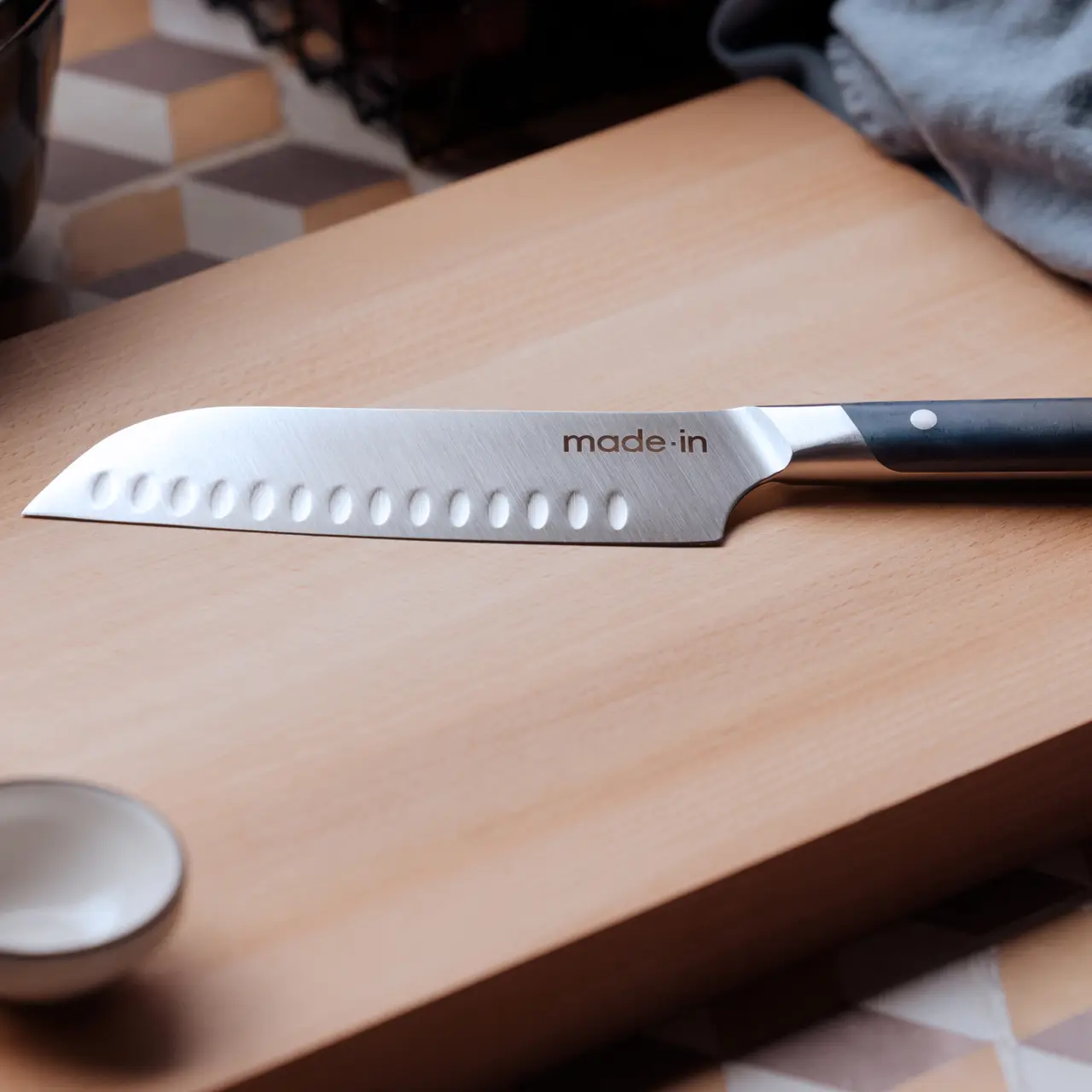
- Granton dimples: Small ovals on the sides that help reduce sticking with wet foods.
- Handle: Wa handles are round, octagonal, or oval and very light. Western handles are thicker and can feel more stable for big hands.
- Balance: Many santoku knives balance near the pinch grip, which gives fine control.
If you are still asking what is a santoku knife in real, daily use terms, think of a thin, keen blade that rewards light hands. It works best when you let the edge do the work.
Santoku vs Chef’s Knife
Both knives can be your daily driver. But they feel and cut a bit different.
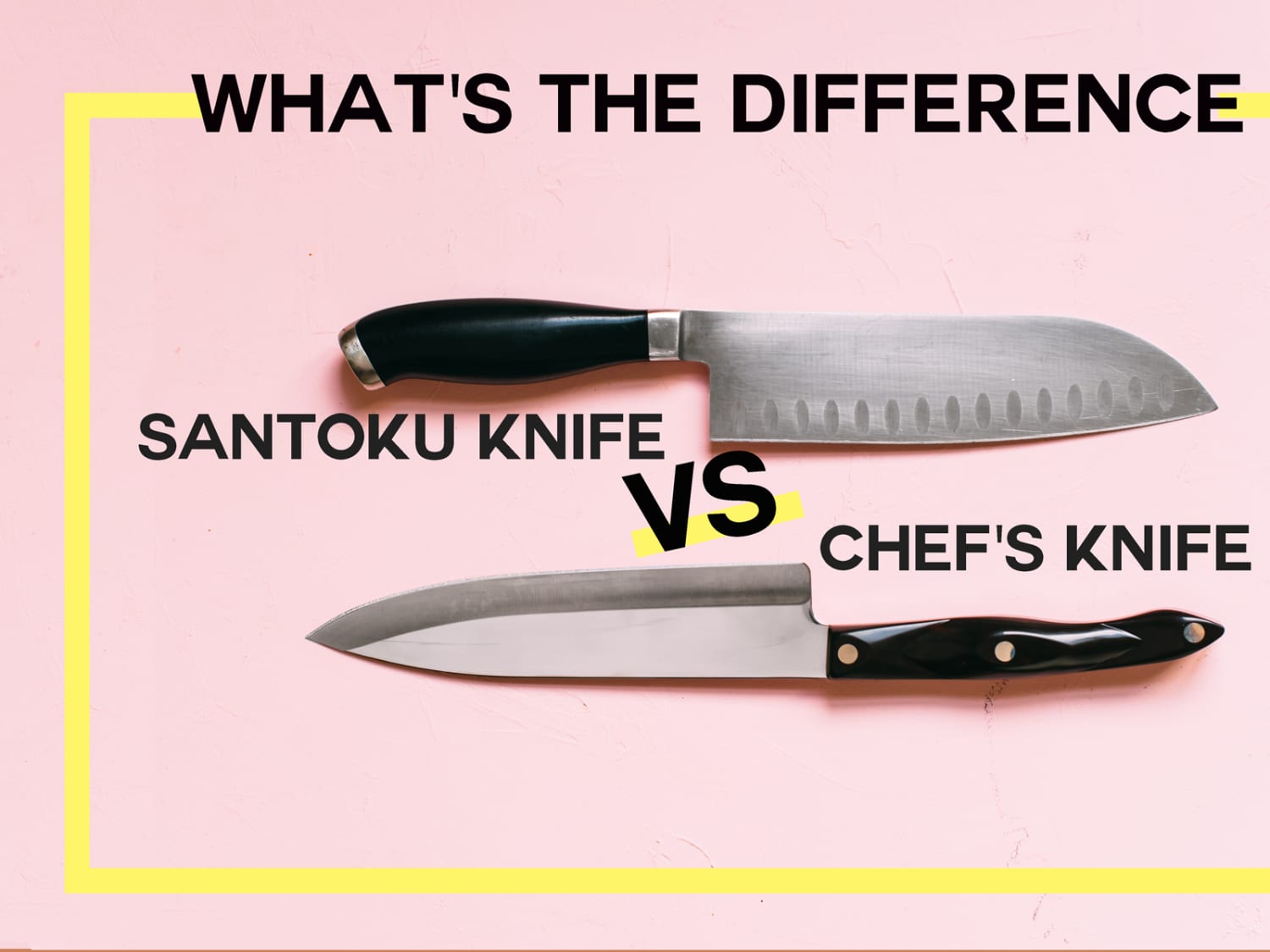
- Length: Chef’s knives are often 8 to 10 inches. Santoku knives sit around 7 inches or less. Shorter length means tighter control in small kitchens.
- Motion: Chef’s knives rock well due to a curved belly. Santoku knives love a push or pull stroke because the belly is flatter.
- Tasks: A chef’s knife handles tall stacks and large squash with ease. A santoku shines on vegetables, herbs, and neat slices of fish and chicken.
- Learning curve: Many beginners find the santoku easy to steer. The flat edge plants well on the board.
If your main question is what is a santoku knife good for versus a chef’s knife, the answer is clean, fast prep. If you love a deep rocking chop, a chef’s knife may suit you more.

How to Use a Santoku Knife Like a Pro
I teach new cooks a simple plan.
- Use a pinch grip. Pinch the blade at the heel with your thumb and index finger. Wrap the rest around the handle.
- Keep your guide hand safe. Tuck fingertips in. Let your knuckles guide the blade.
- Push-cut or pull-cut. Glide the blade forward or back with light pressure. Lift only a little between strokes.
- Keep the tip down for fine work. Use small, straight cuts for herbs, onions, and garlic.
- Slice proteins with smooth strokes. Use the full length of the edge. No sawing needed.
From my own work, a santoku rewards rhythm. When people ask what is a santoku knife like in daily prep, I say it feels like a metronome. Find a steady beat and the knife does the rest.
Choosing the Right Santoku Knife
Match the knife to your habits, not the other way around.
- Length: 7 inches for most cooks. 5 to 6 inches if you want speed and tight control.
- Steel: Stainless if you need easy care. Carbon or harder steels if you want max edge life and do not mind wiping dry.
- Handle: Wa handle for light, agile feel. Western handle for a fuller grip and weight.
- Balance and weight: Check where it balances under a pinch grip. It should feel neutral, not tip heavy.
- Fit and finish: Smooth spine and choil. Even edge grind. No gaps at the handle.
- Left-handed use: Make sure the edge grind is even and the handle is comfortable in your left hand.
- Budget: Spend for the edge, not the damascus look. A clean grind and good steel beat flashy cladding.
This is how I answer friends who ask what is a santoku knife to buy first. Pick the one that feels safe, sharp, and easy to keep sharp.
:max_bytes(150000):strip_icc()/sea-santoku-knives-3-grace-kelly-aa17c0172e5746db82b4441f44d14216.jpg "What Is A Santoku Knife: Best Guide For 2026 8")
Care, Sharpening, and Maintenance
Good care keeps the knife sharp and safe.
- Wash by hand. Dry at once. No dishwasher.
- Use wood or soft plastic boards. Never glass, marble, or steel.
- Hone lightly to realign the edge. A few passes before a big prep helps.
- Sharpen on stones. Start with 1000 grit. Refine at 3000 to 6000. Aim for 12 to 15 degrees per side if the steel can take it.
- Avoid bones and frozen food. Use a cleaver or saw instead.
- For carbon steel, wipe dry and a thin coat of food-safe oil can prevent rust.
If you wonder what is a santoku knife edge supposed to feel like, test on a tomato. A good edge breaks the skin with no force. That is your signal it is ready.
Mistakes to Avoid and Safety Tips
Small habits make a big difference.
- Do not pry or twist in cuts. The thin edge can chip.
- Do not scrape the board with the edge. Flip and use the spine to move food.
- Keep a towel under the board. It stops sliding and boosts safety.
- Keep the knife sharp. Dull knives slip and cause cuts.
- Store it well. Use a sheath, block, or magnetic strip.
Many people ask what is a santoku knife not meant to do. It is not a bone splitter or a can opener. Treat it like a scalpel, not a crowbar.
Price, Value, and Trusted Buying Tips
You can get a solid santoku at many price points.
- Budget: Around 30 to 60 dollars. Look for decent stainless, even grind, and safe fit.
- Mid-range: Around 80 to 150 dollars. Better steel, thinner grinds, nicer handles.
- Premium: 200 dollars and up. Top steels, hand finishes, and fine balance.
Buy from sellers with clear return rules and real specs. If you ask what is a santoku knife worth at the high end, the answer is feel and edge life. But a smart mid-range pick can serve most cooks for years.
Frequently Asked Questions of What is a santoku knife
What is a santoku knife used for?
It handles slicing, dicing, and mincing with ease. It is great for vegetables, fish, and boneless meats.
Is a santoku knife good for beginners?
Yes. The shorter blade and flat edge give control and confidence for new cooks.
Santoku vs chef’s knife: which should I buy first?
Buy the one that matches your style. If you like straight push cuts and tight control, start with a santoku.
How do I sharpen a santoku knife?
Use whetstones. Keep a steady 12 to 15 degree angle per side and make light, even strokes.
Can a santoku knife cut meat and bones?
It can cut meat. Do not cut bones or frozen food, as the thin edge can chip.
What size santoku is best?
Seven inches suits most kitchens. Smaller sizes feel fast in small spaces or for fine work.
Conclusion
A santoku brings speed, control, and clean cuts to daily prep. Now you know what is a santoku knife, how it works, and how to choose and care for one. Pick a blade that fits your hand, learn the push-cut, and keep it sharp.
Try one this week on onions, herbs, and chicken. Feel the clean glide. Want more guides like this? Subscribe, share this with a friend who cooks, or drop your questions in the comments.
Maliha Khatun has spent 5 years hands-on testing Japanese knives for everyday home cooks. She has evaluated over 60 blades across nakiri, santoku, gyuto, and petty categories — scoring each on edge retention, steel quality, handle comfort, and value for money. She writes to help home cooks buy the right knife without the guesswork.
Expertise:Japanese Knives • Vegetable Knives • Product Reviews • Kitchen Efficiency • Knife Care
Leave a Reply