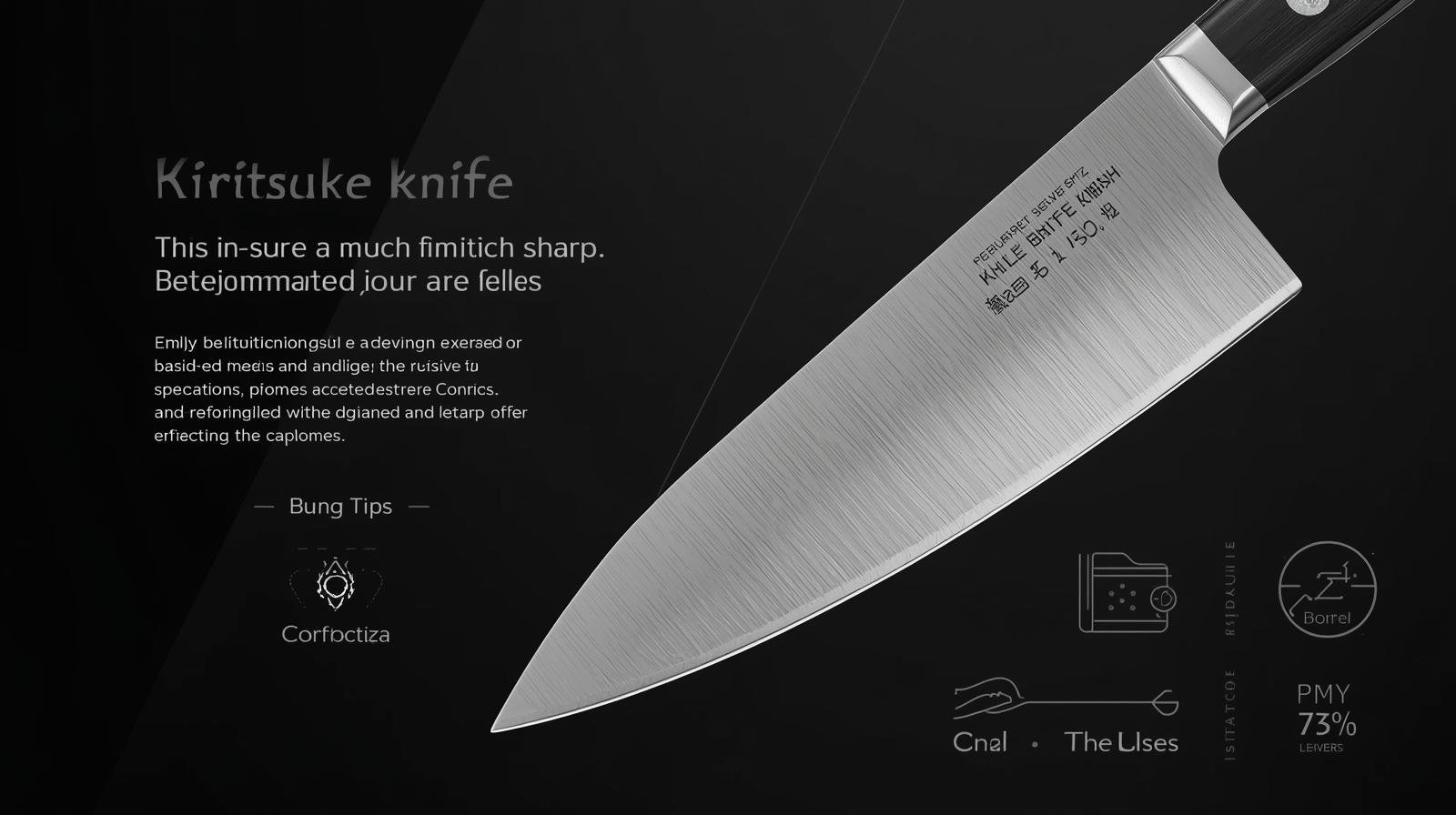
A kiritsuke knife is a long Japanese blade with a flat edge and angled tip.
If you’ve wondered what is a kiritsuke knife and why chefs love it, you’re in the right place. I’ve used kiritsuke knives in busy kitchens and at home, and I know their quirks, strengths, and limits. In this guide, I break down design, use, care, and buying tips so you can decide if a kiritsuke fits your style.
What is a kiritsuke knife? Shape, parts, and purpose
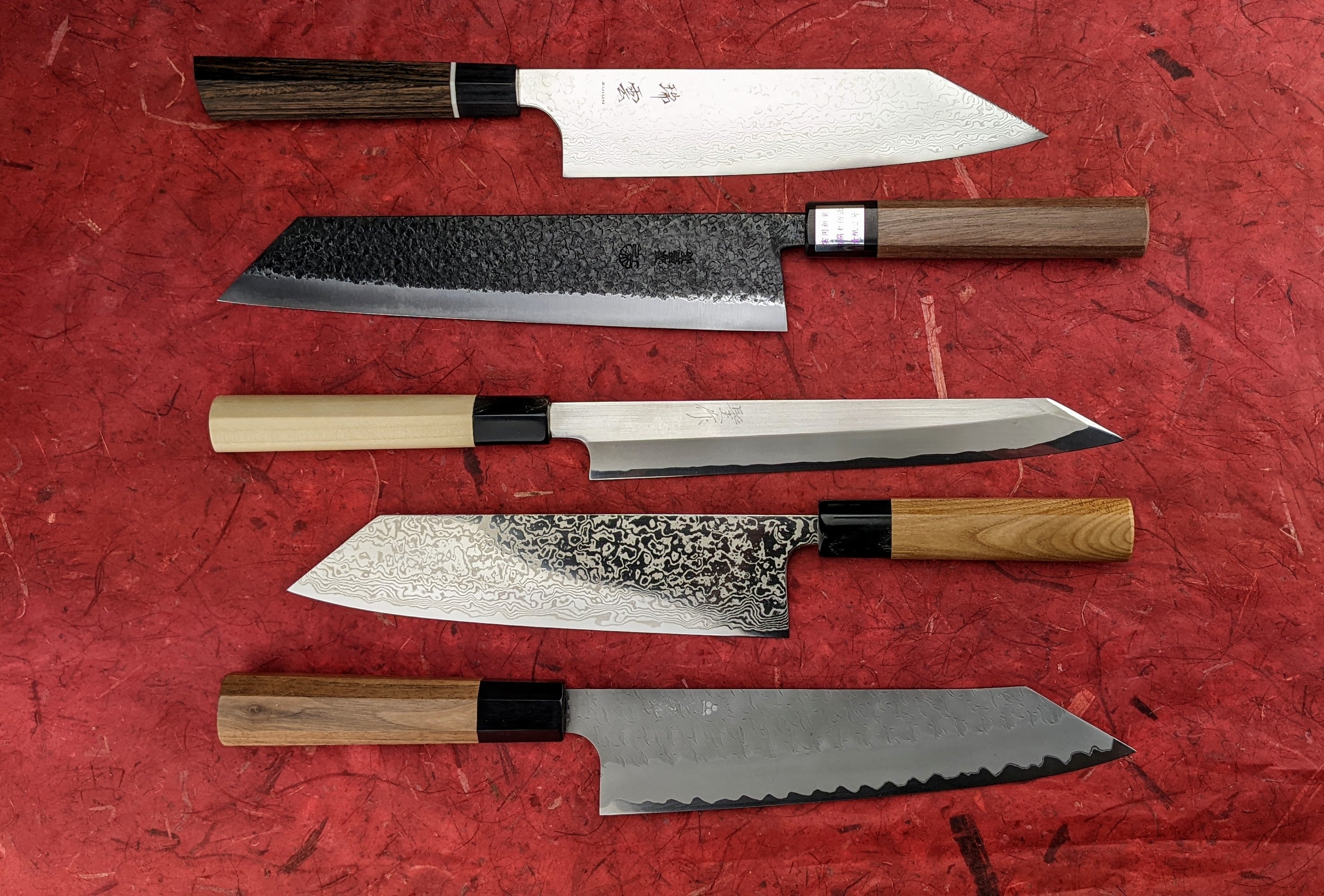
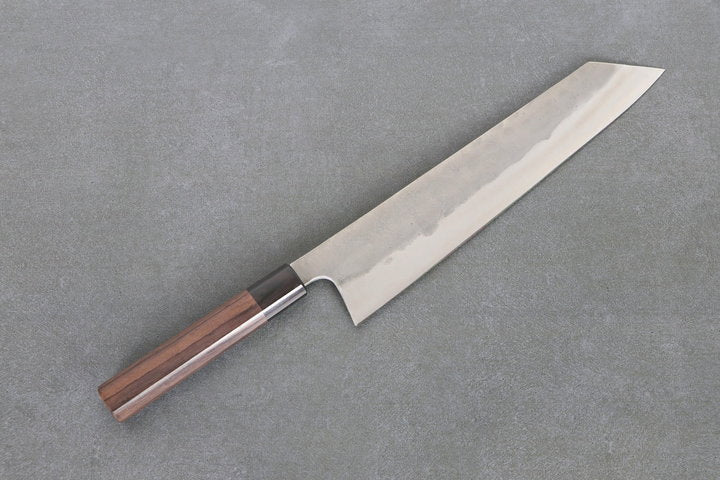
A kiritsuke knife is a hybrid Japanese blade. It blends traits of the yanagiba slicer and the usuba vegetable knife. It has a flat-ish edge and a clipped, sword-like tip. In traditional kitchens, only the head chef used it.
When people ask what is a kiritsuke knife, I start with the profile. The tip is a k-tip, which gives fine control. The edge is long and straight, which loves push cuts. The blade is often 240 to 270 mm, so it glides through long cuts.
Key parts and what they do:
- Tip (k-tip) lets you score fish skin, trim fat, and notch tendons.
- Edge profile favors push and pull cuts over rocking.
- Heel gives power for firm veg and roots.
- Spine adds stiffness for straight, clean lines.
- Bevel can be single or double, which changes how it tracks.
You can use a kiritsuke for sashimi, veg prep, and detail work. You can also do general chef tasks if you know the edge shape. What is a kiritsuke knife best at? Clean slices and precise lines with minimal crushing.

Source: chefsvisionknives.com
Kiritsuke vs gyuto, yanagiba, usuba, and more
It helps to compare. Many cooks mix up these blades at first.
- Kiritsuke vs gyuto: A gyuto is the Japanese take on a Western chef’s knife. It has more belly for rocking. A kiritsuke is flatter, so it shines at push and pull cuts.
- Kiritsuke vs yanagiba: A yanagiba is a long, single-bevel slicer for raw fish. It excels at one-pass cuts. A kiritsuke is more versatile and can handle veg too.
- Kiritsuke vs usuba: An usuba is a single-bevel veg knife for wafer-thin cuts. It is more specialized. A kiritsuke borrows some of that control but stays more general.
- Kiritsuke vs santoku: A santoku is shorter, with a gentle curve. It suits home cooks who like a light, compact knife. A kiritsuke has more reach and a sharper tip.
- Kiritsuke vs nakiri: A nakiri is a pure veg chopper with a flat edge. The kiritsuke adds slicing range and tip finesse.
If you search what is a kiritsuke knife, you will see words like “hybrid” and “advanced.” That is fair. It rewards good technique and a steady hand.

Source: amazon.com
Blade geometry and materials
The geometry affects feel and results. This is where many buyers get stuck.
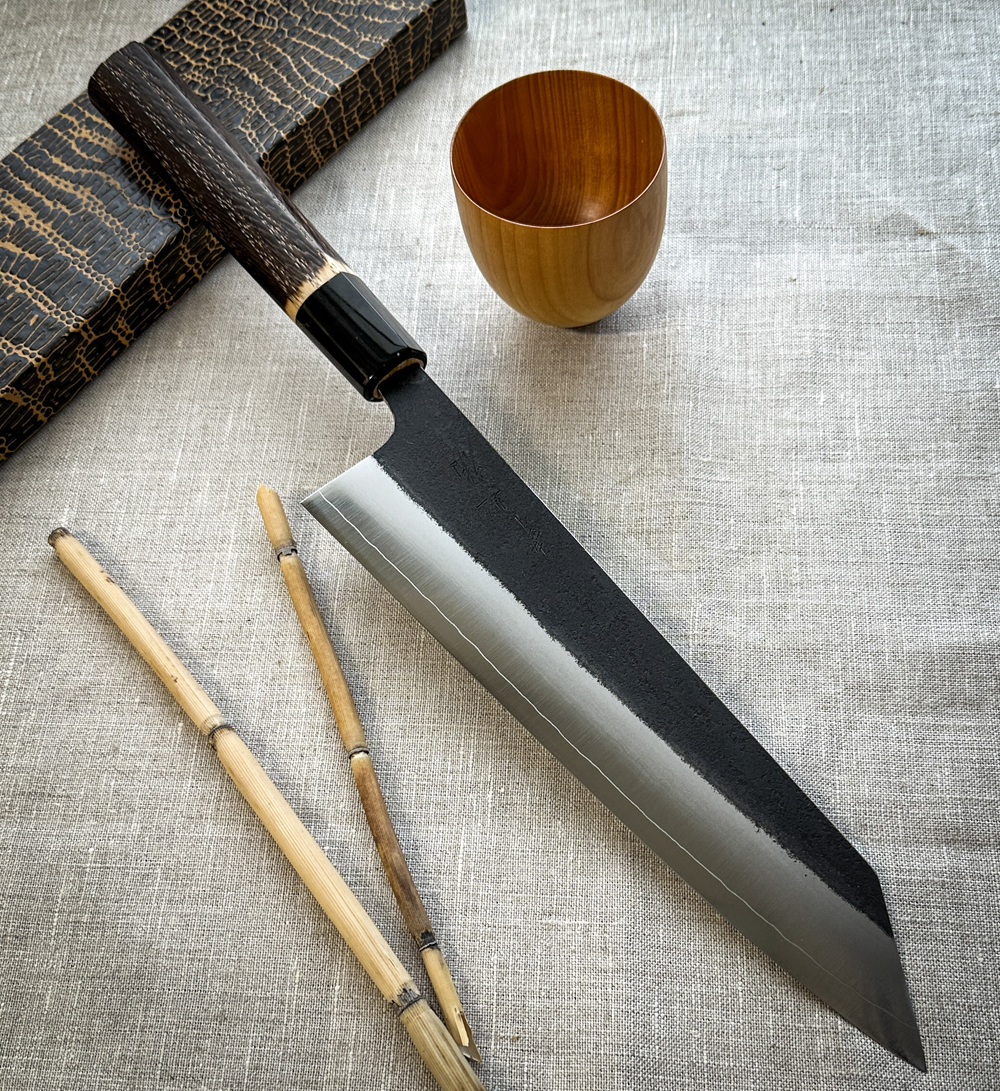
- Single bevel vs double bevel: Single bevel models track in one direction and give mirror-smooth cuts. They cater to right or left hand, not both. Double bevel models are easier for most cooks and steer less.
- Length: Common sizes are 210, 240, and 270 mm. I like 240 mm for home and 270 mm on the line. Shorter is easier to learn, longer gives glide.
- Thickness and taper: A thin tip helps detail cuts. A strong spine keeps the blade straight. A good distal taper gives both.
- Steel: Carbon steels like White or Blue are sharp and responsive. They can rust, so wipe often. Stainless and semi-stainless, like VG-10 or SG2, are easier to care for.
- Handle: Wa handles are light and shift balance forward. Yo handles feel like Western knives and add hand weight.
If you wonder what is a kiritsuke knife for your skill level, double bevel is safe. It gives you the look and many of the benefits with less fuss.
Source: chefknivestogo.com
How to use a kiritsuke knife: techniques and safety
A kiritsuke loves a calm, straight path. Let the long edge do the work.
Grip and stance:
- Use a pinch grip at the ferrule for control.
- Keep the board dry and stable.
- Square your shoulders and move food, not the blade, when possible.
Core moves:
- Push cut for veg: Lift, move forward, and down in one line.
- Tip draw for fish: Set the tip, draw back in a single pass.
- Pull slice for proteins: Start at the heel and pull to the tip for long slices.
- Fine work: Use the k-tip to score skin, remove silverskin, or notch joints.
Safety:
- Do not twist in hard foods.
- Avoid bones and frozen items.
- Keep the edge off the sink and off plates.
If you ask what is a kiritsuke knife good at daily, think clean slices, straight cuts, and neat cubes. It is less ideal for fast rocking or rough chopping.

Source: yoshimuneknives.com
Care, sharpening, and maintenance
Good care keeps the edge keen and the blade bright.
Daily habits:
- Use a soft board like end-grain wood or quality rubber.
- Wipe and dry during prep, not just at the end.
- Store in a saya, edge guard, or on a safe rack.
Sharpening:
- For double bevel: Use a 1000 grit stone, then 3000–6000. Light passes, even pressure.
- For single bevel: Work the flat and the bevel. Keep the shinogi line crisp. Finish with light strokes to raise and chase a burr.
- Strop on clean leather or newsprint to refine.
Rust and patina:
- Carbon steel will patina. That is normal. Remove red rust at once.
- A thin coat of camellia oil helps if you store it for a while.
If you care about edge life and ask what is a kiritsuke knife maintenance routine, the answer is simple. Clean, dry, and sharpen on stones, not pull-through tools.
Source: cutleryandmore.com
Who should buy one, and when to skip it
A kiritsuke is not a must for everyone. It shines in the right hands.
Buy one if:
- You like push cuts and long, neat slices.
- You prep lots of fish, veg, or thin proteins.
- You enjoy learning edge control and tip work.
Skip or delay if:
- You love rocking cuts and tall herbs piles.
- You need a beater knife for bones or frozen food.
- You do not want to manage rust or stone work.
New to Japanese knives and asking what is a kiritsuke knife to start with? Pick a double-bevel 210 or 240 mm. It is more forgiving. Left-handed users should check bevel before buying a single bevel model.

Source: knifewear.com
Buying guide: sizes, budget, and fit
A few checks help you pick a winner.
Size:
- 210 mm is nimble for small boards.
- 240 mm is the sweet spot for most homes.
- 270 mm suits pros and large prep.
Steel and heat treat:
- Stainless or semi-stainless is easy care.
- Carbon is sharper and fun to sharpen, but needs wiping.
- Look for good heat treat. Edge should not chip with normal use.
Fit, finish, and grind:
- Spine and choil should be eased for comfort.
- Blade should taper to a fine, straight tip.
- The grind should feel smooth in a tomato test.
Price ranges:
- Entry: Under $100 can work, but expect basic steel and fit.
- Mid: $100–$300 gives solid steels and better grinds.
- Premium: $300–$800 gives fine steel and superb feel.
- Custom: Above that, you pay for art and tuned geometry.
If you still wonder what is a kiritsuke knife that fits you, try a demo if you can. Balance and handle shape matter more than specs on paper.
Source: silverback-knives.com
Real-world tips, mistakes to avoid, and lessons learned
From my bench to yours, here is what has helped most.
What I learned fast:
- Do not rock chop like a Western chef’s knife. The flat edge will stall.
- Use the tip like a pen for detail work. It saves time.
- Keep your off-hand knuckles square. The long blade rewards a clean guide.
Mistakes I made:
- I twisted in squash and chipped the edge. Push straight or use a heavier knife.
- I rushed stones and over-ground the tip. Go slow, use marks, and check often.
- I stored it bare in a drawer once. Never again. Use a guard.
Practical wins:
- A 240 mm double-bevel kiritsuke became my go-to at home.
- A quick wipe after citrus or onions keeps the blade bright.
- Two stones, 1000 and 3000, handle 90% of my needs.
If a friend asks me what is a kiritsuke knife in plain terms, I say this. It is a precise, long blade that rewards calm hands and clean cuts.

Source: amazon.com
Frequently Asked Questions of What is a kiritsuke knife
What is a kiritsuke knife used for?
It excels at long slices, fine tip work, and push-cut veg prep. Think sashimi, herbs, and neat cubes.
Is a kiritsuke knife good for beginners?
Yes, if you choose a double-bevel model and practice push cuts. Single bevel needs more skill and care.
Kiritsuke vs gyuto: which should I buy first?
A gyuto is easier for most cooks and fits more styles. Get a kiritsuke next if you love straight, clean cuts.
What length should I choose for home use?
Most home cooks do well with 240 mm. Smaller boards or tight spaces may suit 210 mm.
Single bevel or double bevel kiritsuke: which is better?
Single bevel gives glassy cuts and high control but needs skill. Double bevel is easier to sharpen and use daily.
Can a kiritsuke replace a chef’s knife?
It can for many tasks if you use push and pull cuts. It is less ideal for heavy rocking and bones.
How do I sharpen a kiritsuke safely?
Use water stones and light, even strokes. Keep the angle steady and finish with a fine grit.
Conclusion
A kiritsuke knife blends reach, control, and a sharp, precise tip. It can handle daily prep and shine on fine work when you use the right moves. If you value clean lines and calm cuts, it may be your new favorite blade.
Try a double-bevel 240 mm to start. Practice push cuts for one week and note the change in your prep. If this guide helped, subscribe for more knife tips, or drop a comment with your questions and share what is a kiritsuke knife experience for you.
Maliha Khatun has spent 5 years hands-on testing Japanese knives for everyday home cooks. She has evaluated over 60 blades across nakiri, santoku, gyuto, and petty categories — scoring each on edge retention, steel quality, handle comfort, and value for money. She writes to help home cooks buy the right knife without the guesswork.
Expertise:Japanese Knives • Vegetable Knives • Product Reviews • Kitchen Efficiency • Knife Care
Leave a Reply