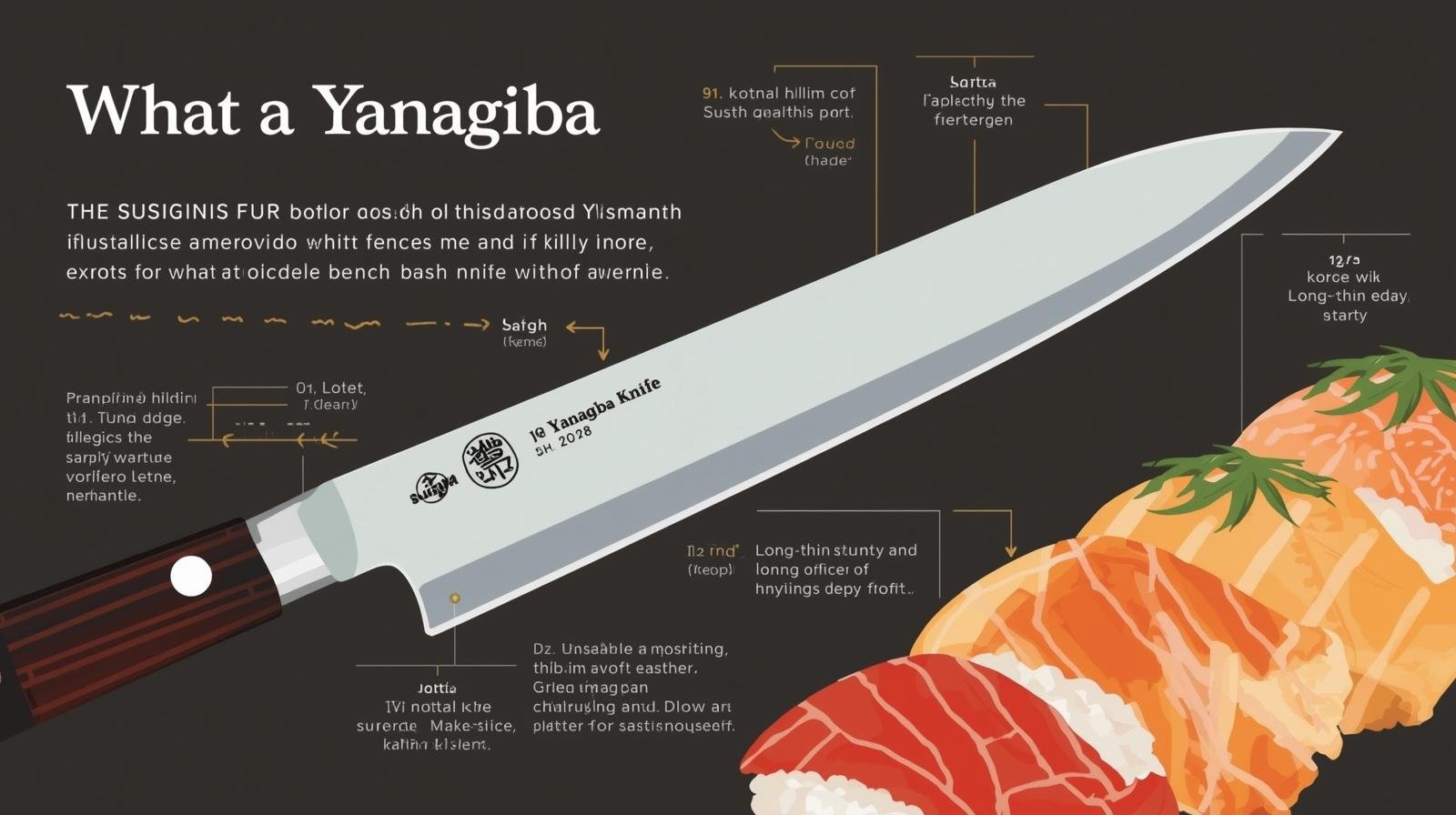
A yanagiba knife is a long, single-bevel Japanese slicer for sashimi.
If you have ever wondered what is a yanagiba knife, you are in the right place. I have used and tested dozens in pro and home kitchens. I will show you what sets it apart, how to use it, and how to pick one with confidence. By the end, what is a yanagiba knife will be crystal clear, and you will know if it belongs in your kit.

What makes a yanagiba knife unique
The yanagiba is built for clean, long slices. It shines with raw fish and delicate proteins. The goal is to make one smooth pull cut that leaves a glossy surface.
The blade is long, thin, and single bevel. One side is flat and slightly concave. The other side has the main grind. This shape helps food release and keeps cuts straight.
If you ask what is a yanagiba knife in simple terms, think of a “willow leaf” blade made for precision. It does not hack or saw. It glides and respects texture.

A short history and tradition
Yanagiba knives rose in Kansai (Osaka) sushi culture. Chefs wanted perfect sashimi slices that looked like silk. The knife evolved to meet that need.
The word yanagiba means willow leaf. The long, slim profile mirrors that image. It also reflects the art of Japanese knife work. Every detail serves a purpose.
What is a yanagiba knife without its culture? It is a tool shaped by craft, ritual, and restraint.

Anatomy and design details
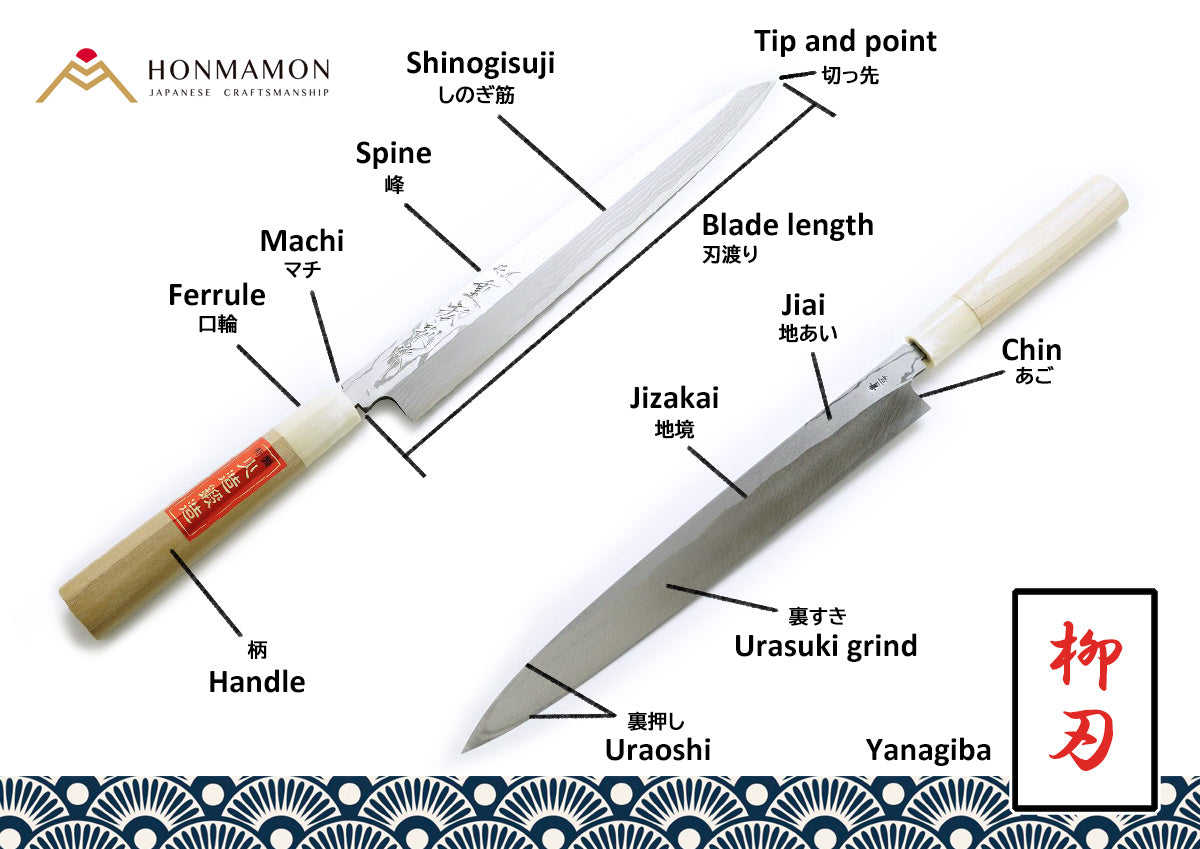
A classic yanagiba runs 240 to 330 mm. The long blade lets you slice in one stroke. This avoids sawing marks on fish.
Key parts matter:
- Ura (concave back) lets food release and helps straight cuts.
- Shinogi line defines the main bevel and supports the edge.
- Tip is fine and sharp for detail work and trimming.
What is a yanagiba knife grind? It is single bevel. Most are right-handed. Left-hand grinds exist but cost more due to extra work.

Steel, hardness, and edge performance
Most yanagiba knives use high-carbon steel. Common choices are White steel and Blue steel. These can hit 60 to 65 HRC for superb edge retention.
White steel takes a scary sharp edge. Blue steel holds it longer. Carbon will patina and can rust if you neglect it. Stainless-clad options reduce maintenance.
What is a yanagiba knife edge like in use? It feels crisp. It “bites” with little force. That is why care and a fine finish matter so much.

How to use a yanagiba knife
Use a gentle pinch grip. Plant the tip just ahead of the cut. Draw the blade toward you in one smooth pull.
Do not push back and forth. Let the length do the work. Keep the angle low and steady.
When people ask what is a yanagiba knife for, I point to sashimi, nigiri, and fine crudo. It also works on terrines and soft proteins where you want clean lines.
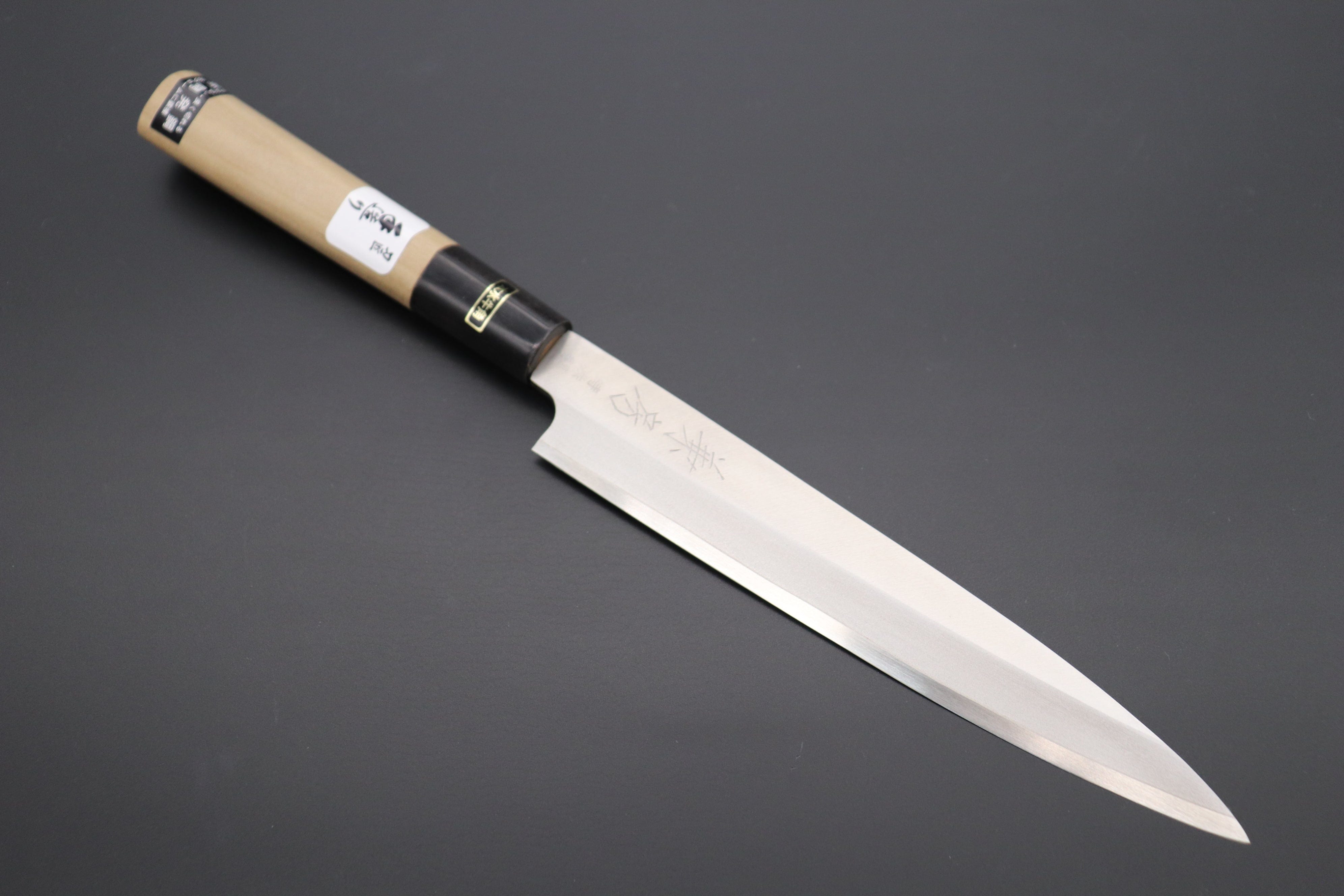
Yanagiba vs sujihiki and other knives
It helps to compare:
- Yanagiba is single bevel and optimizes pull cuts for raw fish.
- Sujihiki is double bevel and more versatile for roasts and fish.
- Deba breaks down whole fish and handles small bones.
- Usuba is for vegetables and fine cuts.
So, what is a yanagiba knife best at? Pure slicing with minimal damage to texture. If you need a general slicer, a sujihiki may suit you more.
Sharpening, honing, and maintenance
Sharpen with water stones. A 1000 to 3000 grit sets the edge. A 6000 to 8000 grit polishes it. Maintain the ura with light passes to keep the flat true.
Wipe the blade often while cutting. Moisture on fish can stain carbon steel. Dry well after use. A thin coat of blade oil helps prevent rust.
If you wonder what is a yanagiba knife sharpening trick, it is consistency. Keep the angle stable and finish the back with care, not pressure.

Choosing the right yanagiba knife
Think about size, hand, and steel. A 270 mm is a sweet spot for most users. Right- and left-hand grinds differ. Pick one that matches your hand.
Consider build types:
- Kasumi combines soft iron and hard steel. It is easier to sharpen and costs less.
- Honyaki is one-piece hard steel. It is harder to master and pricier.
What is a yanagiba knife budget range? Entry starts around $150 to $250, mid-tier sits between $300 and $600, and high-end can climb well above $1,000.
Real-world tips from the line
From my first week behind the sushi bar, I learned fast. A dull yanagiba ruins fish and morale. A sharp one makes you look like you know what you are doing.
These habits helped me:
- Start every shift with a quick strop on high-grit.
- Wipe the blade after each slice for clean shine.
- Slice in one motion; reset if the stroke fails.
Asking what is a yanagiba knife without practice is like asking about a bike without riding. The feel comes with reps.
Common mistakes and how to avoid them
Avoid these pitfalls:
- Sawing through cuts. Use one long pull instead.
- Cutting bones or frozen food. You may chip the edge.
- Skipping back maintenance. Keep the ura flat and clean.
If someone asks what is a yanagiba knife risk, it is chipping from misuse. Respect the edge. Use the right board and gentle technique.
Buying and care checklist
Use this simple plan:
- Define your main use. Sashimi at home or pro line work.
- Pick length based on board space and fish size.
- Choose steel for your care routine. Carbon for sharpness, stainless-clad for ease.
- Inspect fit and finish. Look for a clean shinogi, even ura, and tight handle.
Want a fast summary of what is a yanagiba knife quality test? Check if it can glide through fish skin with a single pull and leave a glossy face.
Frequently Asked Questions of What is a yanagiba knife
What is a yanagiba knife used for?
It is used for slicing raw fish for sashimi and sushi. It makes long, clean cuts that protect texture and shine.
Why is a yanagiba single bevel?
The single bevel supports straight cuts and easy food release. It also allows ultra-fine edges for precision work.
Can a beginner use a yanagiba knife?
Yes, with practice and care. Start with a 240 or 270 mm length and focus on slow, smooth pull cuts.
How do I maintain a yanagiba knife?
Wipe often, dry after use, and oil the blade if it is carbon. Sharpen on water stones and keep the back flat and polished.
What is the difference between yanagiba and sujihiki?
Yanagiba is single bevel and made for sashimi. Sujihiki is double bevel and more versatile for roasts and general slicing.
Conclusion
A yanagiba is a purpose-built slicer that turns simple cuts into fine work. Now you know what is a yanagiba knife, how it is built, and how to use and care for it. If you value clean lines and perfect texture, this blade will reward your effort.
Take the next step. Try a 270 mm yanagiba, practice smooth pull cuts, and track your progress. Want more guides like this? Subscribe, share your questions, or drop a comment with your setup and goals.

Maliha Khatun has spent 5 years hands-on testing Japanese knives for everyday home cooks. She has evaluated over 60 blades across nakiri, santoku, gyuto, and petty categories — scoring each on edge retention, steel quality, handle comfort, and value for money. She writes to help home cooks buy the right knife without the guesswork.
Expertise:Japanese Knives • Vegetable Knives • Product Reviews • Kitchen Efficiency • Knife Care
Leave a Reply