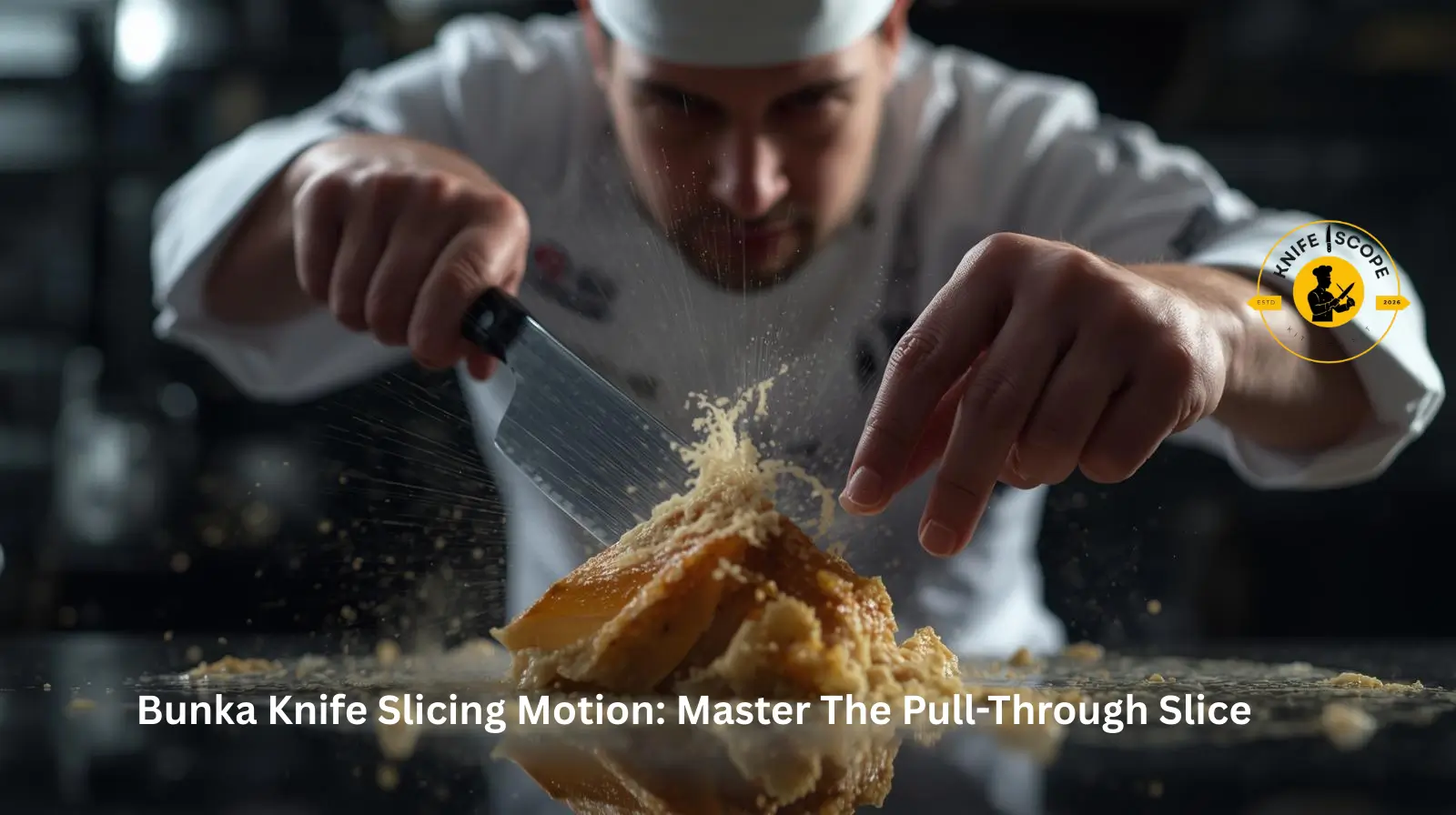
The bunka knife slicing motion emphasizes short push-cut strokes with a compact rocking arc.
I have trained chefs and home cooks on knife technique for over a decade, and I know the bunka knife slicing motion inside out. This guide breaks down the mechanics, benefits, and step-by-step method so you can slice safer, faster, and with more control using a bunka knife.
Anatomy and purpose: Why the bunka knife matters
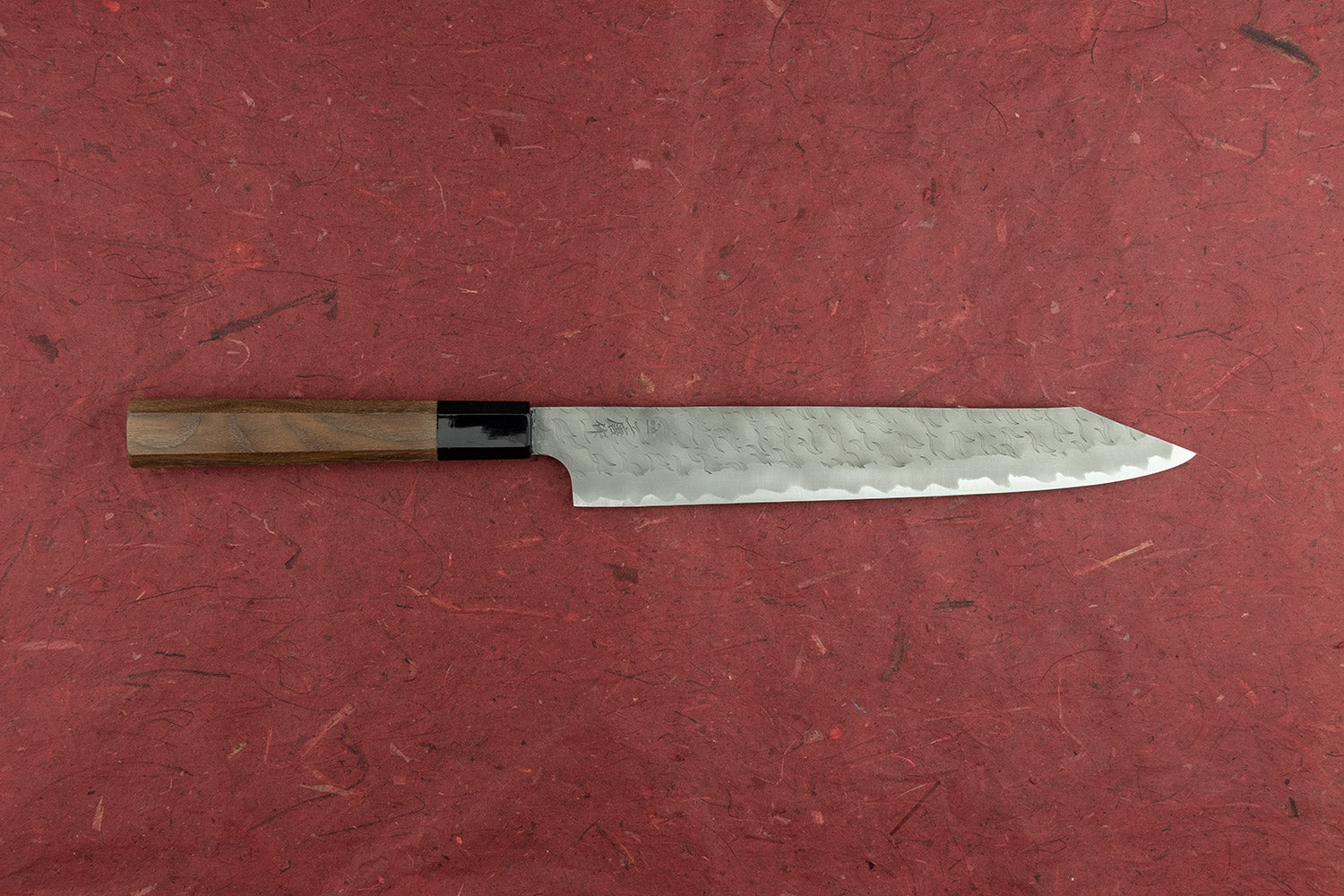
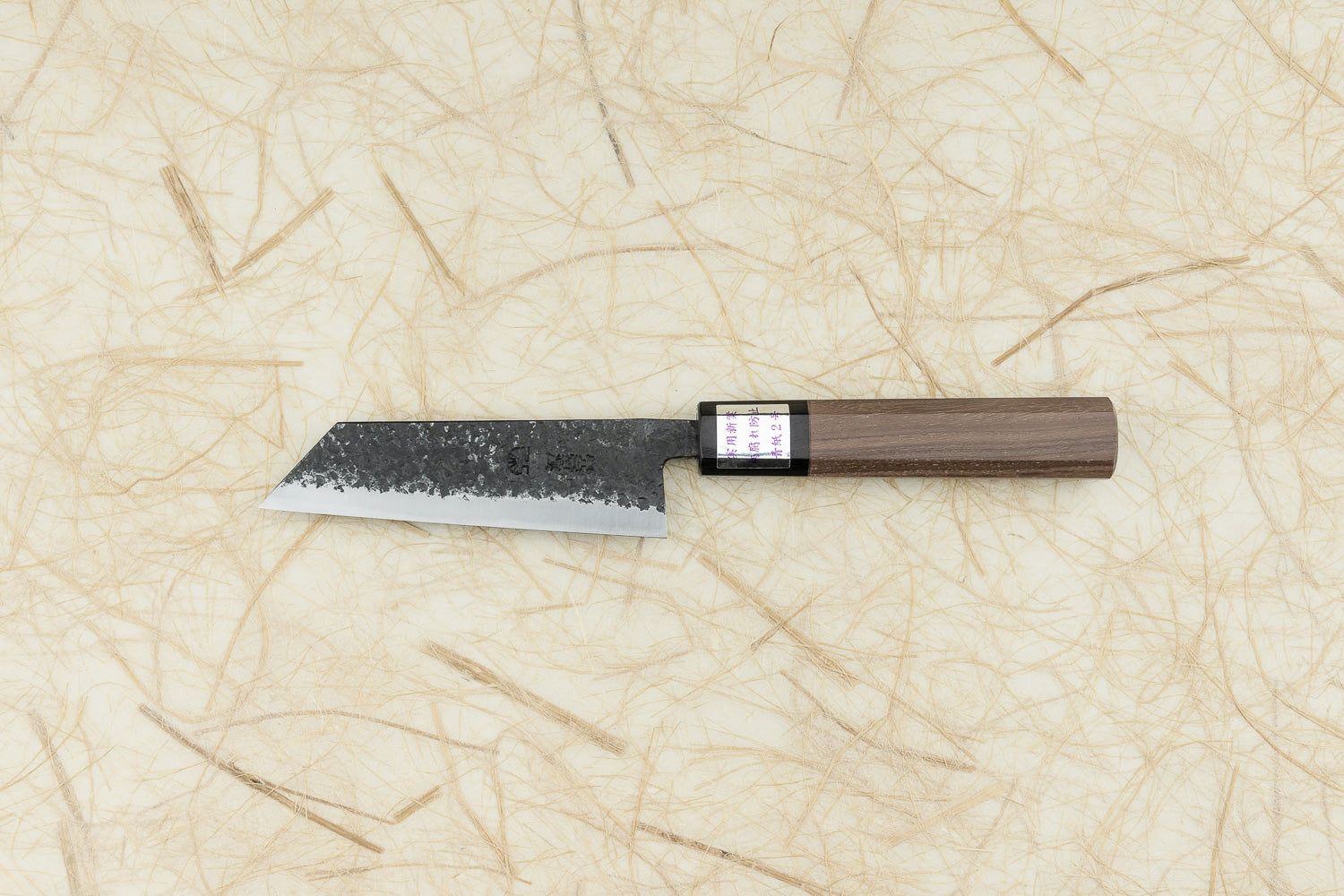
The bunka knife has a short, angled tip and a flat belly. It blends the traits of a nakiri and a gyuto for versatile work. The bunka knife slicing motion uses the blade shape to pair push-cut and slight rocking actions for thin, even slices. Many cooks choose the bunka knife for vegetables, herbs, and quick protein work because the motion is compact and precise. Professional chefs value the bunka knife slicing motion for control in tight prep spaces.

Source: thecookingguild.com
What is the bunka knife slicing motion?
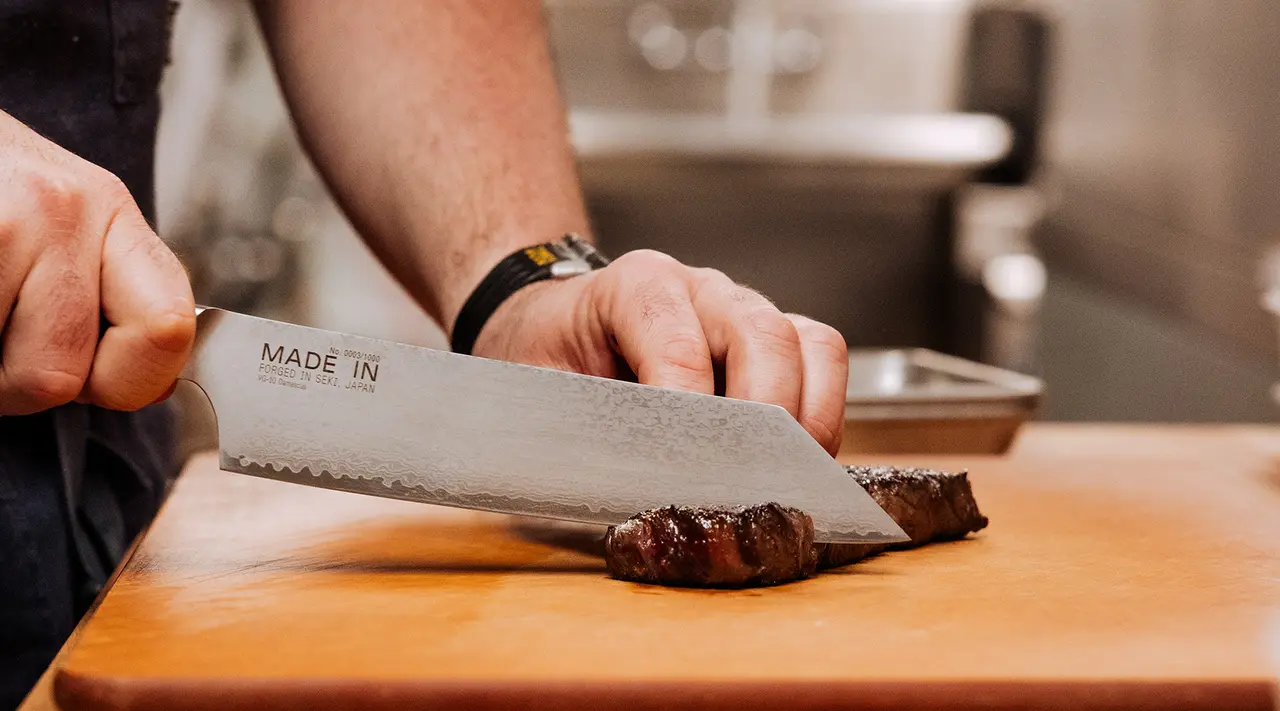
The bunka knife slicing motion is a controlled push-cut with a small rocking finish at the tip. You move the blade forward and down across the food, then lift slightly as you return. This keeps the cut clean and uses the bunka’s angled tip for fine work. The motion reduces wrist strain and boosts consistency when you repeat cuts.
Source: madeincookware.com
Step-by-step: How to perform the bunka knife slicing motion
Follow these steps to build good muscle memory for the bunka knife slicing motion.
- Grip the handle with a firm pinch and support the blade with your thumb and forefinger. Keep the rest of your hand relaxed.
- Place the tip near the board and the heel slightly raised for a forward slice. Start with the tip anchored for thin slices.
- Push the blade forward and down through the food in one smooth motion. Slice with the middle of the blade for most work.
- Lift the blade gently as you pull it back and prepare the next slice. Avoid forcing the blade; let the edge do the work.
- Use the tip for precision cuts and the midsection for lengthwise slices. Adjust angle and pressure for thicker or thinner cuts.
I teach students to practice slow, even strokes. This builds timing for the bunka knife slicing motion and prevents bad habits.

Source: cutleryandmore.com
Practical examples and common uses
You can use the bunka knife slicing motion for many tasks.
- Vegetables: thin rounds, batons, and fine julienne. The motion keeps slices uniform.
- Aromatics: garlic and ginger mince using the tip. The motion offers control.
- Fish and thin meats: light forward strokes for neat portions. You get cleaner edges.
- Herbs: fine chiffonade by using the tip and small rocking moves. This beats tearing herbs by hand.
In my own kitchen, I use the bunka knife slicing motion morning and night. It cuts prep time and gives steady slices for plating.

Source: messermeister.com
Common mistakes and how to avoid them
New cooks often make a few repeatable errors when learning the bunka knife slicing motion.
- Grip too tight. This causes fatigue and shaky cuts. Loosen your grip while keeping control.
- Using full up-and-down rocking. The bunka motion is more push-cut than large rock. Keep the arc small.
- Not using the tip. The bunka’s angled tip is for detail work. Anchor the tip for precision.
- Rushing. Speed hurts consistency. Slow down until your slices are even.
Correct these issues by drilling basic cuts at a slow pace. Use a metronome or a slow count to time your strokes. That improved my speed and accuracy within weeks.

Source: cutleryandmore.com
Safety and ergonomics
Good form reduces risk and pain.
- Keep a stable non-slip board under your work. It prevents slips.
- Tuck the fingers of your guide hand. Use a claw to protect fingertips.
- Maintain neutral wrist alignment. This lowers strain when using the bunka knife slicing motion.
- Rest between long sessions. Repeated cutting can tire forearms.
These habits make the bunka knife slicing motion safe and repeatable for long prep shifts.
Source: knifewear.com
Sharpening and maintenance tips that support the motion
A sharp edge supports the bunka knife slicing motion at every step.
- Hone regularly with a steel or ceramic rod to maintain edge alignment.
- Sharpen at the correct angle for your blade, usually 15–20 degrees per side. Consistency matters.
- Clean and dry the blade after use to protect the edge and finish.
- Store in a block, sheath, or on a magnetic strip to avoid dings.
I sharpen my bunka knife weekly when I have heavy use. A sharp blade makes the slicing motion effortless and safer.
Source: myshopify.com
When to choose bunka over santoku or gyuto
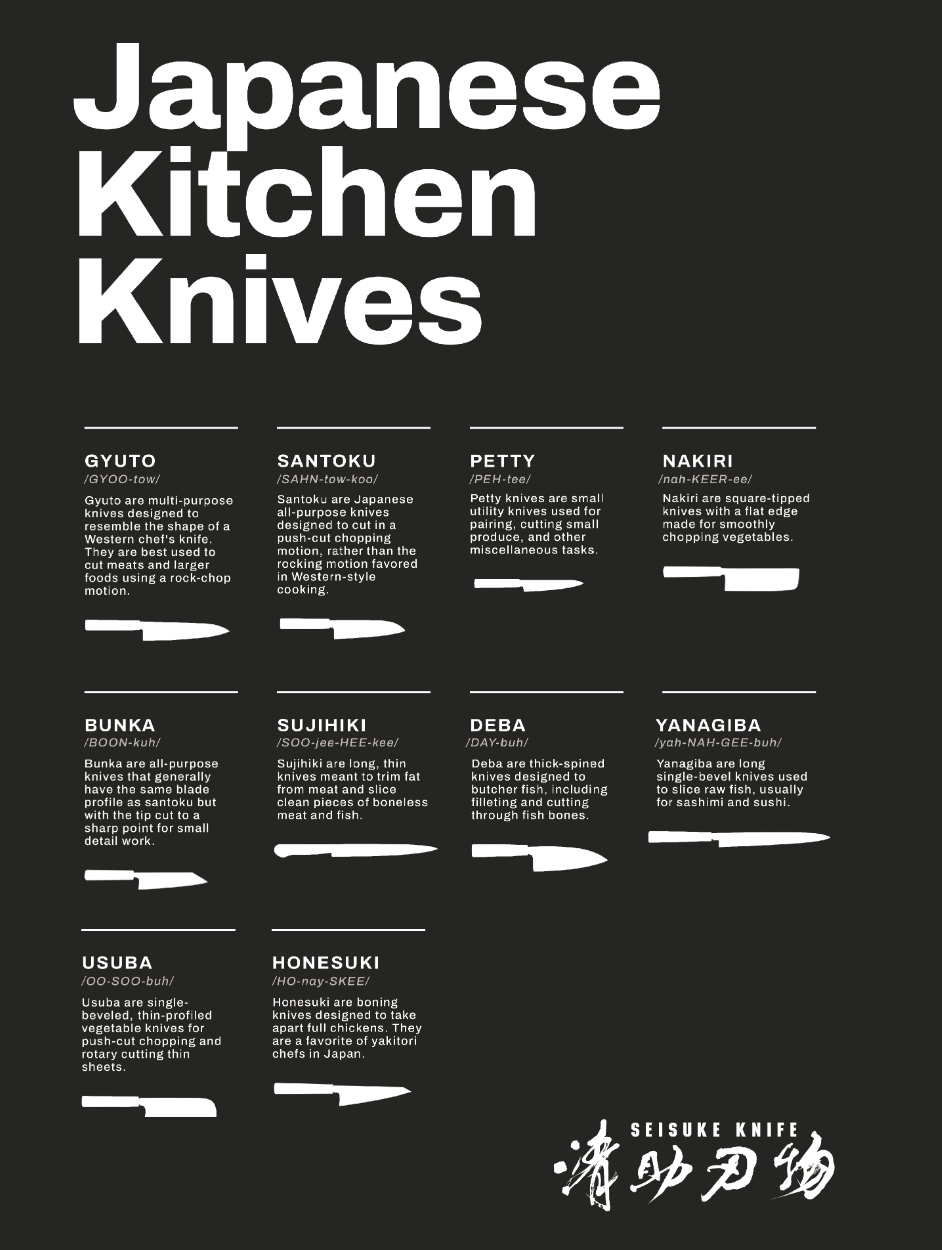
Choose the bunka when you want compact control and an angled tip for detail work. The bunka knife slicing motion is shorter and more controlled than the long rocking of a gyuto. Compared with a santoku, the bunka offers a sharper tip for precision. For small kitchens or focused prep tasks, the bunka excels.
Source: knifewear.com
Troubleshooting: Why slices feel uneven
If your slices vary in thickness, check these factors.
- Blade angle: Adjust the entry angle and keep it steady.
- Motion size: Keep the push-cut consistent. Small changes alter thickness.
- Food placement: A rolling vegetable or uneven board will cause error.
- Edge sharpness: Dull edges tear rather than slice cleanly.
Fix these and your bunka knife slicing motion will yield consistent results.
Personal tips from experience
Here are simple practices that helped my students improve fast.
- Practice on potatoes or onions. They show inconsistencies clearly.
- Mark a guide line on the board for even width. Visual cues help timing.
- Record short clips of your hands. You can see grip faults you missed.
- Build short routines: ten slices, rest, repeat. This trains your muscles.
These small routines improved my speed and reduced my waste when using the bunka knife slicing motion.
Frequently Asked Questions of bunka knife slicing motion
What is the ideal grip for the bunka knife slicing motion?
Use a pinch grip with thumb and forefinger on the blade and the rest of the fingers wrapped on the handle. This grip gives control and balance for the push-cut and slight rocking of the motion.
Can I use the bunka knife slicing motion for boneless meat?
Yes. Use light, confident forward cuts and keep the tip for trimming. The motion works well for thin slices and small portions.
How often should I hone to keep the motion smooth?
Hone before each heavy use or once a day in busy kitchens. Regular honing keeps the edge aligned and supports clean, easy slices.
Is the bunka knife slicing motion hard to learn?
No, it is simple to learn with short, focused practice sessions. Start slow and repeat basic cuts to build muscle memory.
What angle should I use when slicing with a bunka?
Aim for a slight angle of 10–20 degrees depending on blade geometry. Keep it steady to maintain even slice thickness.
Will a dull blade change the bunka knife slicing motion?
Yes. A dull blade forces you to press and saw, which breaks the smooth push-cut rhythm. Keep the edge sharp to preserve the intended motion.
Conclusion
Mastering the bunka knife slicing motion brings cleaner cuts, less strain, and faster prep. Start with a firm pinch grip, steady forward slices, and a small rocking tip finish. Practice slowly, hone often, and correct common errors to see steady improvement. Try a short daily drill for two weeks and notice the change in speed and consistency. If you found this useful, try the steps in your next prep, share your progress, or leave a comment with questions.
Maliha Khatun has spent 5 years hands-on testing Japanese knives for everyday home cooks. She has evaluated over 60 blades across nakiri, santoku, gyuto, and petty categories — scoring each on edge retention, steel quality, handle comfort, and value for money. She writes to help home cooks buy the right knife without the guesswork.
Expertise:Japanese Knives • Vegetable Knives • Product Reviews • Kitchen Efficiency • Knife Care
Leave a Reply