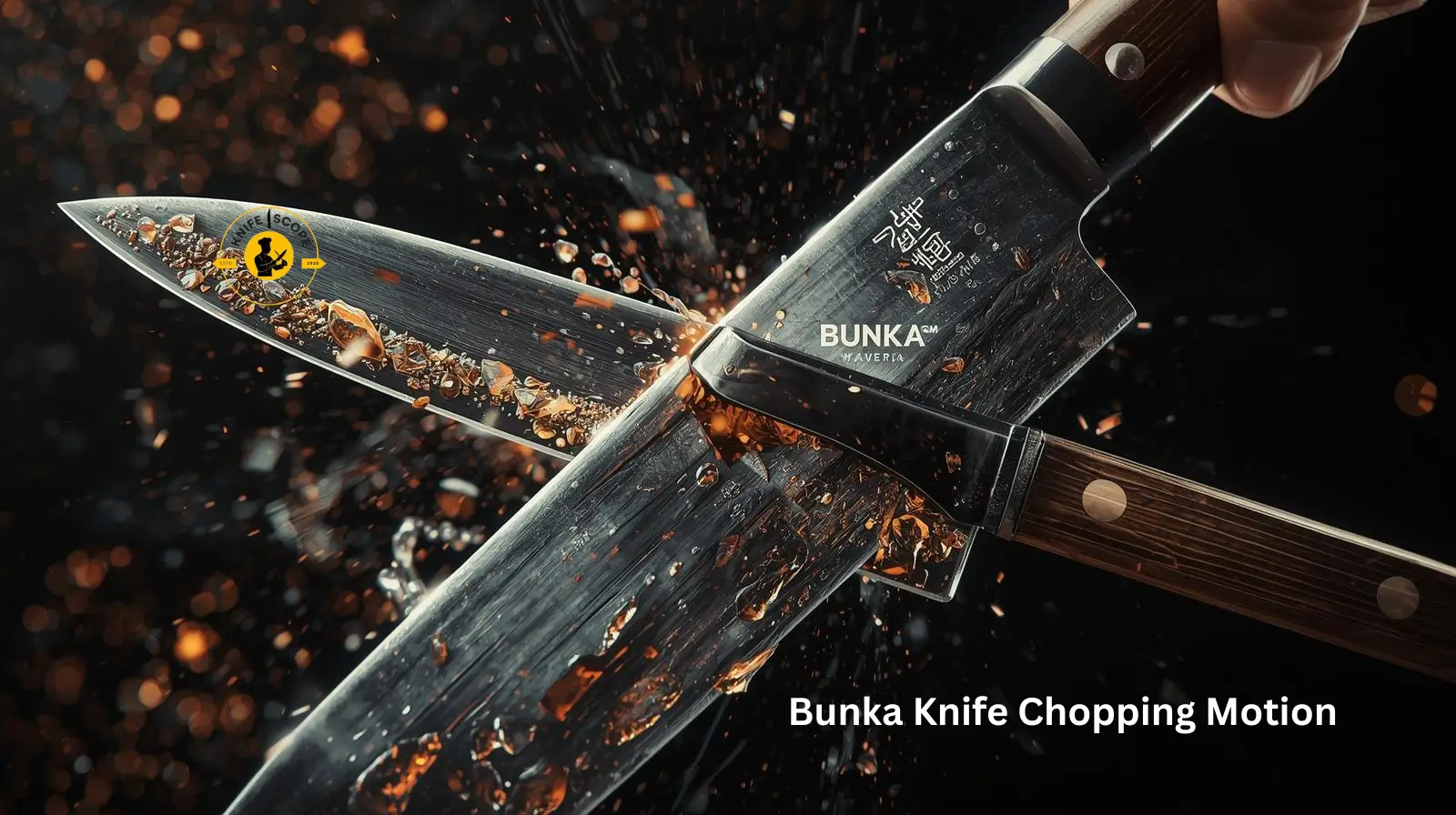
The bunka knife chopping motion is a short, precise downward and pull cut.
I have used and taught the bunka knife chopping motion for years in both home kitchens and professional settings. This article breaks down the motion, why it works, how to practice it, and how to avoid common mistakes so you can cut faster and safer with a bunka knife.
What is a Bunka Knife and Why Its Chopping Motion Matters
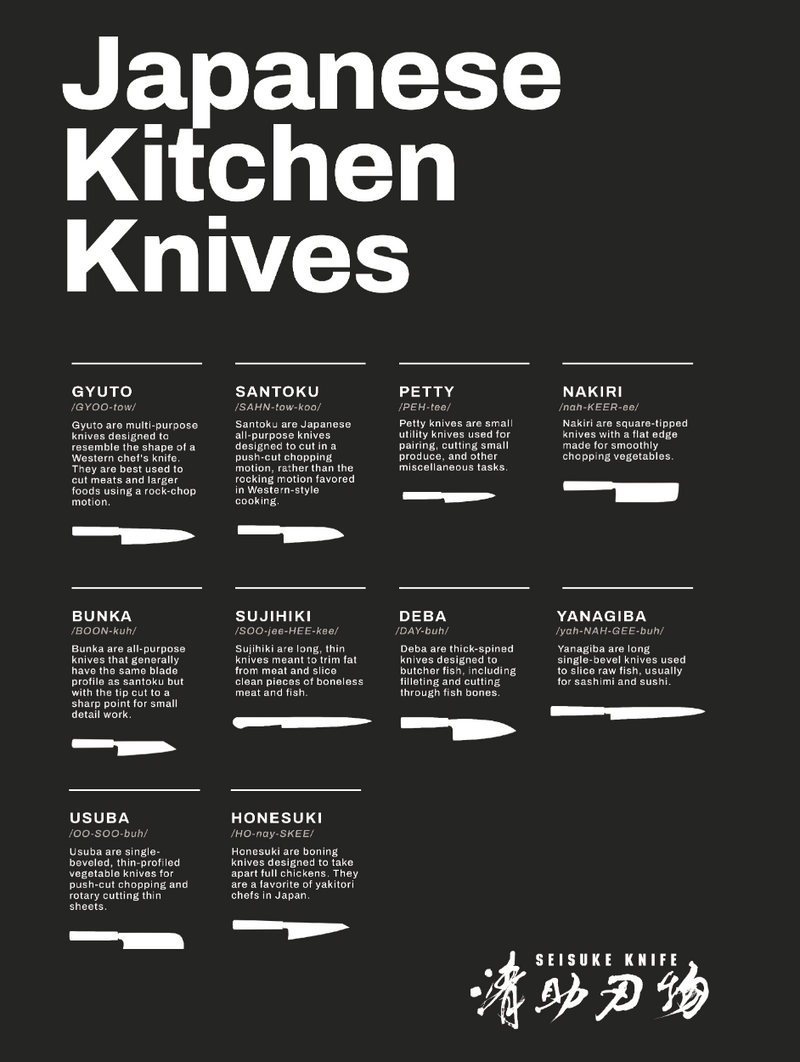
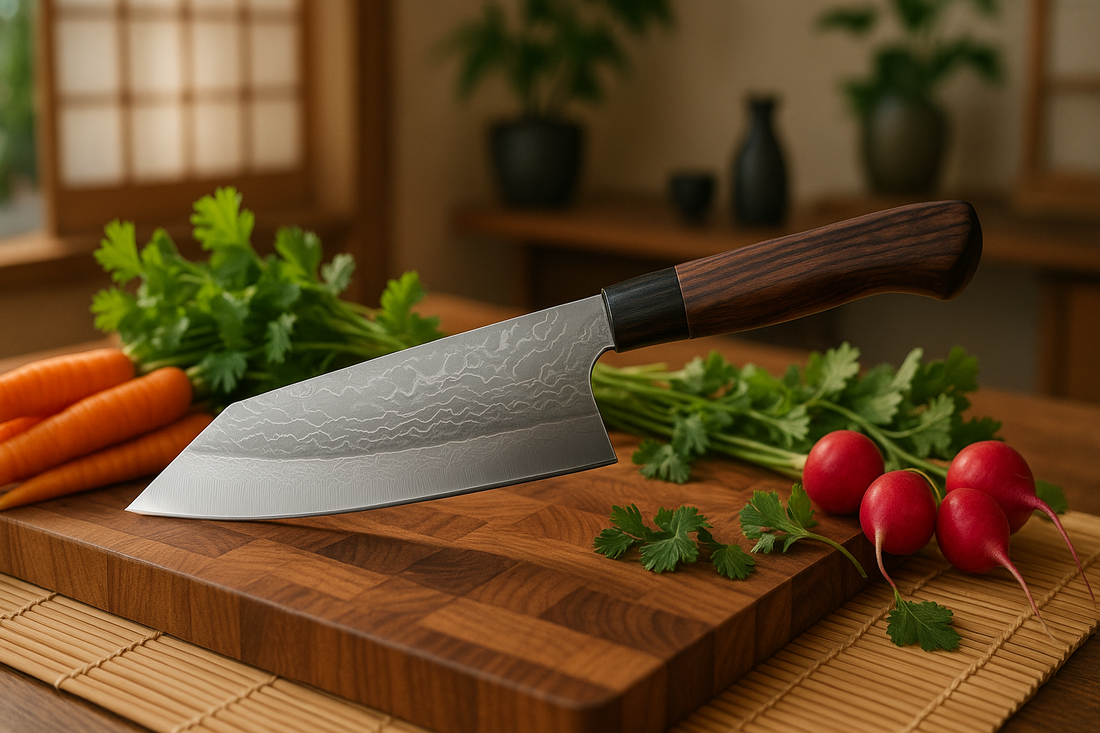
A bunka knife is a Japanese-style multipurpose blade with a sheepsfoot tip and a steep belly. Its shape makes the bunka knife chopping motion different from a chef’s knife. The shorter blade and angled tip favor tight, controlled cuts and quick pulls.
Why the motion matters:
- It improves speed with small items like herbs and onions.
- It keeps food stable on the board.
- It reduces wrist strain by using short arcs.
I’ll explain how the bunka knife chopping motion works and why you should learn it. This knowledge helps you pick the right angles, rhythm, and practice steps.
Source: madeincookware.com
Anatomy of the Bunka Knife and How It Affects Motion
Blade shape and length guide how you move the knife. The bunka typically has:
- Short blade length that limits large rocking motions.
- Straight edge with a steep tip suited to downward and pull cuts.
- A flat profile near the heel for push cuts and scooping.
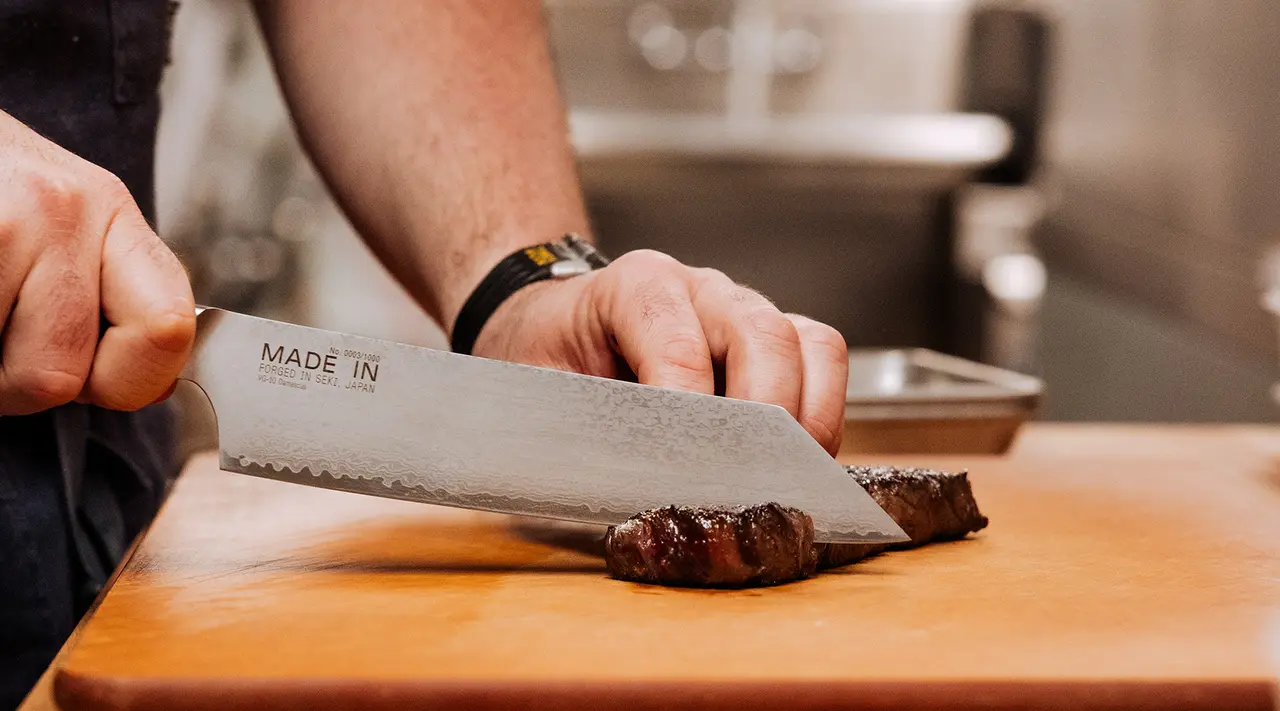
These traits push the user toward a compact chopping motion. The bunka knife chopping motion uses more wrist and slight forearm movement than a full-arm chef’s knife chop. The tip can be used to trim and the heel to push through tough parts.
Knowing these parts helps you match your motion to the tool. I learned this by switching from a long chef’s knife to a bunka and reworking my motion to smaller, faster cuts.

Source: cutleryandmore.com
Key Elements of Proper Bunka Knife Chopping Motion
Mastering the bunka knife chopping motion means focusing on grip, angle, and rhythm. Keep these points simple.
Grip and stance
- Hold the blade with a pinch grip on the heel and thumb against the spine.
- Stand with feet shoulder-width apart and knees relaxed.
- Keep the cutting board stable and at a comfortable height.
Knife angle and cutting plane
- Aim for a 10–20 degree angle between blade and board for thin slices.
- Use short downward strokes that end with a slight pull toward you.
- Keep the tip often near the board for control.
Motion and rhythm
- Use short arcs that come from the wrist and a bit of forearm.
- Match your rhythm to the food’s density.
- Let the blade do the work; avoid pressing hard.
Personal tip from experience: start slow. I practiced on bell peppers and green onions for two weeks. Short, steady reps built muscle memory faster than long sessions. The bunka knife chopping motion rewarded consistent, slow practice.
Source: myshopify.com
Quick PAA-style Questions
How do I start the bunka knife chopping motion?
Begin with a firm pinch grip and short downward pulls. Keep the tip near the board and move from the wrist.
Is the bunka knife chopping motion faster than rocking?
For small items, yes. The bunka knife chopping motion is faster and more precise for herbs and small vegetables.
Can beginners use this motion safely?
Yes. Start with slow, deliberate cuts and a non-slip board. Increase speed only after control feels natural.
Step-by-step Chopping Drills and Practice Routines
Practice routines help make the bunka knife chopping motion automatic. Try these drills daily.
- Finger-tap grip drill
- Place the knife on the board.
- Tap downward with only three fingers on the handle.
- Repeat 30 taps per hand to build balance.
- Onion quarter chop
- Quarter an onion and slice across in 3–4mm cuts.
- Use the short downward and pull strokes.
- Do five onions in one session.
- Herb run
- Stack herbs and chop small bundles with quick pulls.
- Keep tips close to board.
- Repeat 10 bundles.
- Speed and control timer
- Time a 1-minute chop of green onion.
- Track improvements and keep form steady.
These simple drills improve control, speed, and comfort with the bunka knife chopping motion. I recommend 10 minutes a day for two weeks to see real gains.

Source: thecookingguild.com
Common Mistakes and How to Fix Them
Avoid these common errors to make the bunka knife chopping motion safe and efficient.
Mistake: Full-arm rocking instead of wrist arcs
- Fix: Shorten your stroke and use a pinch grip. Focus on wrist movement.
Mistake: Lifting the tip too high
- Fix: Keep the tip near the board for control. Only lift when needed for clearance.
Mistake: Over-pressing the blade
- Fix: Let the edge slice. Use steady weight and the pull motion rather than force.
Mistake: Wrong edge angle
- Fix: Adjust to a shallower angle for thin slices and a steeper angle for tougher items.
From my experience, the biggest improvement came from correcting grip first. Once the hold was stable, motion became natural.

Source: cutleryandmore.com
Benefits, Limitations, and Best Use Cases
Benefits of the bunka knife chopping motion:
- Faster chopping for small items.
- High control for delicate work.
- Less wrist strain for repeated small cuts.
Limitations to know:
- Not ideal for large, rocking cuts like whole melons.
- Not the best for heavy bone or cleaving.
- Can feel awkward if you use only long chef’s knife techniques.
Best use cases:
- Herbs, scallions, and small vegetables.
- Fine mincing and detail work.
- Quick prep in tight spaces.
I use the bunka knife chopping motion for mise en place. It saves time and keeps pieces uniform.

Source: cutleryandmore.com
Maintenance and Safety Tips Related to Chopping Motion
Keep your knife sharp and your motion safe. These tips help performance and reduce risk.
- Use a whetstone or sharpener at the correct angle.
- Hone regularly to keep the bunka knife chopping motion smooth.
Board and stance
- Use a stable wooden or plastic board.
- Keep knives dry and never try slippery cuts.
Safety habits
- Curl your guide hand (claw) to protect fingers.
- Slow down when learning new cuts.
I once learned the hard way that a dull blade increases accidents. A sharp bunka knife makes the chopping motion efficient and safe.
Source: monoya.com
Frequently Asked Questions of bunka knife chopping motion
What makes the bunka knife chopping motion unique?
The bunka knife chopping motion is short and relies on wrist arcs and small pulls. The bunka’s blade shape favors close control and speed for small items.
Can I use the bunka knife chopping motion for meat?
You can use it for small cuts of meat and boneless prep. Avoid heavy bones or thick sections where a cleaver or larger knife is better.
How often should I practice the bunka knife chopping motion?
Short daily practice sessions of 10–15 minutes are ideal. Consistency builds speed and safe form.
Will the bunka knife chopping motion damage my knife?
No, if you use a proper cutting board and avoid bones. Regular sharpening keeps the edge in top shape.
Is the bunka knife chopping motion good for beginners?
Yes. It teaches control and precision. Start slow and focus on grip and tip placement.
Conclusion
The bunka knife chopping motion is a compact, precise skill that improves speed and control for many kitchen tasks. Focus on grip, short wrist arcs, and steady rhythm. Practice simple drills, correct common mistakes, and keep your knife sharp.
Try a 10-minute daily drill for two weeks and note your progress. Share your results, ask questions, or subscribe for more knife technique guides.
Maliha Khatun has spent 5 years hands-on testing Japanese knives for everyday home cooks. She has evaluated over 60 blades across nakiri, santoku, gyuto, and petty categories — scoring each on edge retention, steel quality, handle comfort, and value for money. She writes to help home cooks buy the right knife without the guesswork.
Expertise:Japanese Knives • Vegetable Knives • Product Reviews • Kitchen Efficiency • Knife Care
Leave a Reply