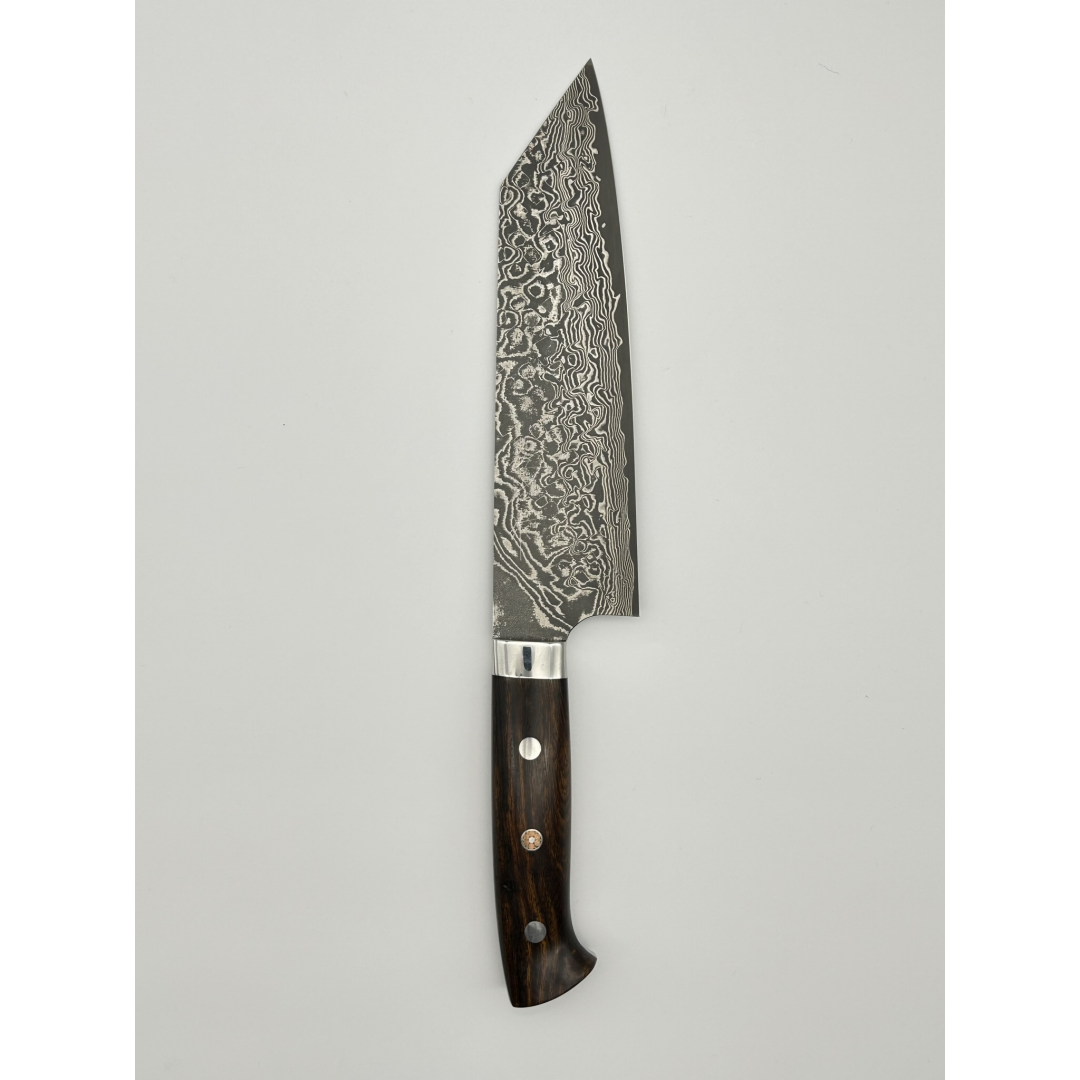
Bunka knives typically use a 15–18° per-side blade angle for a balance of sharpness and strength.
I have worked with Japanese knives and kitchen edges for years, and I’ll walk you through everything you need to know about bunka knife blade angle. This article explains what that angle is, why it matters, how to measure and set it, and practical sharpening and care tips I use in my own kitchen. Read on to master the bunka knife blade angle so your knife performs at its best every day.
Understanding the bunka knife blade angle
A blade angle is the measurement between one face of the blade and the centerline of the knife. For single-bevel knives, angle is counted from the flat to the edge; for double-bevel knives like most bunkas, we talk per-side angle. The bunka knife blade angle influences how well the knife slices, how long the edge holds, and how resistant it is to chipping.
Common per-side angles for a bunka knife blade angle range from 12° to 20°. Lower angles give a sharper feel and cleaner cuts. Higher angles add toughness and durability. Choosing the right bunka knife blade angle depends on food types, cutting style, and how often you want to sharpen the knife.

Recommended angles and why they matter
- 12°–15° per side: Use this if you favor razor-sharp edges and mostly cut vegetables or boneless proteins. This bunka knife blade angle slices brilliantly but needs frequent maintenance.
- 15°–18° per side: A balanced choice for home cooks and pros. This bunka knife blade angle delivers sharpness with good edge life.
- 18°–20° per side: Best for rougher tasks or if you prefer less maintenance. This bunka knife blade angle resists chips but feels less silky on soft produce.
Why the angle matters:
- Sharpness: Lower bunka knife blade angle means a finer edge and cleaner cuts.
- Durability: Higher bunka knife blade angle gives more metal behind the edge, reducing chips.
- Maintenance: Lower bunka knife blade angle requires more frequent honing and sharpening.
From my experience, a 16° per-side bunka knife blade angle is a reliable sweet spot for mixed kitchen use.
How to measure and set the bunka knife blade angle
Measuring a bunka knife blade angle is simple with a little practice.
Steps to estimate angle by eye:
- Hold the knife so the spine points straight up. That shows a 90° centerline.
- Split the 90° visually into halves to find 45°.
- Split 45° into pieces to estimate 15° or 20°. This helps you approximate the bunka knife blade angle while sharpening.
Tools for precise measurement:
- Angle guides and clamps: Attach to the knife to keep a consistent bunka knife blade angle while sharpening.
- Digital angle finders: Give numeric readouts for more exact setup.
- Sharpening stones with angle markers: Help maintain a consistent bunka knife blade angle manually.
Setting the angle on a whetstone:
- Soak or prepare the stone as recommended.
- Place the blade flat to the stone, lift the spine slightly to reach your target bunka knife blade angle.
- Use consistent strokes and pressure. Count strokes to keep sides even.
A practical tip from my kitchen: mark a small dot on the spine where your thumb rests when you hold the correct bunka knife blade angle. This tactile cue makes the angle repeatable during hand sharpening.

Sharpening methods and tools for the bunka knife blade angle
Common sharpening methods for achieving and maintaining the bunka knife blade angle include:
- Whetstones
- Pros: Control, customization of bunka knife blade angle, fine finishes.
- Cons: Takes time to master.
- Guided systems
- Pros: Consistent bunka knife blade angle, great for beginners.
- Cons: Can be slower and less flexible for advanced edge profiles.
- Honing rods and leather strops
- Pros: Maintain edge between sharpenings and refine the bunka knife blade angle.
- Cons: Do not remove much metal; not for major re-profiling.
- Electric sharpeners
- Pros: Quick, consistent.
- Cons: May remove more metal than needed and force a generic bunka knife blade angle.
Sharpening workflow I use:
- Re-profile on a coarse stone with a consistent bunka knife blade angle if edge is damaged.
- Move to medium stone, maintaining the same bunka knife blade angle.
- Finish on a fine stone and strop to refine the edge.
- Hone lightly before each use to keep the bunka knife blade angle sharp.
Practical stroke tips:
- Keep strokes even on both sides to preserve the target bunka knife blade angle.
- Use light pressure on the final passes. This refines the edge without changing the angle.

Source: cutleryandmore.com

Maintenance, edge care, and longevity of the bunka knife blade angle
Caring for a bunka knife blade angle keeps performance high and saves money.
Daily care:
- Hone before use to realign the bunka knife blade angle.
- Use a wood or plastic cutting board to reduce edge wear.
Periodic care:
- Sharpen on stones when honing no longer restores the edge. Choose stones to maintain the chosen bunka knife blade angle.
- Strop to remove burrs and polish the edge that matches your bunka knife blade angle.
Storage and handling:
- Store knives in a block or on a magnetic strip to avoid knocks that can alter the bunka knife blade angle.
- Avoid twisting motions on bones or frozen foods that can chip an edge set at a fine bunka knife blade angle.
From experience, small daily hones multiplied over weeks dramatically reduce the need to re-profile the bunka knife blade angle.

Common mistakes and troubleshooting with the bunka knife blade angle
- Error: Changing angles mid-sharpening.
- Fix: Set a visual or tactile cue and keep the same bunka knife blade angle throughout the session.
- Error: Too much pressure on stones.
- Fix: Ease pressure; heavy pressure changes the bunka knife blade angle and removes more metal.
- Error: Neglecting maintenance for sharp edges.
- Fix: Hone regularly to keep the bunka knife blade angle aligned and avoid frequent regrinds.
- Error: Using the wrong tool for the desired angle.
- Fix: Choose guides or stones suited to your target bunka knife blade angle.
If you notice chipping, slightly increase the bunka knife blade angle when reprofiling. If cuts feel dull but edge is not chipped, refine the same bunka knife blade angle on finer stones.

Comparing the bunka knife blade angle to other knife styles
- Santoku: Often similar to bunka; many santokus use a 12°–18° per-side angle, matching common bunka knife blade angle ranges.
- Gyuto: Typically between 15°–20° per side, slightly broader for heavier use compared to a fine bunka knife blade angle.
- Western chef’s knives: Commonly 20°–25° per side, designed for durability rather than the fine bunka knife blade angle.
Understanding these differences helps you pick the right bunka knife blade angle for your cooking style. If you want finer cuts, aim lower; if you need toughness, go higher.

PAA-style quick questions
Q: What angle should I sharpen my bunka knife?
A: Aim for 15°–18° per side for most use. Lower angles give more sharpness but need more care.
Q: Can I sharpen a bunka at 10°?
A: You can, but 10° is very fine and fragile. Expect frequent sharpening and careful use.
Q: How often should I hone to keep a 16° bunka edge?
A: Hone lightly before or after each use, or at least every few days if you cook daily.
Q: Will a higher angle stop my bunka from chipping?
A: Yes, raising the bunka knife blade angle increases edge strength and reduces chipping.
Q: Is there a standard bunka knife blade angle from makers?
A: There is no single standard; most makers set around 15°–18° per side, but check the maker’s specs.

Frequently Asked Questions of bunka knife blade angle
What is the ideal bunka knife blade angle for home cooks?
Most home cooks find 15°–18° per side ideal. It balances sharpness and durability for everyday tasks.
How do I keep my bunka knife blade angle consistent while sharpening?
Use an angle guide, a consistent hand position, or a tactile marker on the spine to repeat the same bunka knife blade angle.
Can I change the bunka knife blade angle to suit different tasks?
Yes. You can reprofile to a higher angle for tougher tasks or a lower angle for delicate slicing. Expect to remove more metal when changing angles.
Does a smaller bunka knife blade angle cut better?
A smaller angle cuts cleaner and requires less force. However, it is more prone to damage and needs more frequent maintenance.
Is professional sharpening necessary to set the bunka knife blade angle?
Not always. With practice and the right stones, you can set the bunka knife blade angle at home. A pro can help if the edge is heavily damaged.
Conclusion
Choosing and maintaining the right bunka knife blade angle makes a big difference in kitchen performance. Pick an angle based on your food and care routine, practice consistent sharpening, and use simple tools like stones or guides to keep the edge true. Start with a 15°–18° per-side bunka knife blade angle if you want a reliable all-rounder, then adjust from there as you learn what you like.
Take action now: decide your target bunka knife blade angle, set up a basic sharpening kit, and try a guided sharpening session this week. Leave a comment with your experience or questions so we can refine your technique together.
Maliha Khatun has spent 5 years hands-on testing Japanese knives for everyday home cooks. She has evaluated over 60 blades across nakiri, santoku, gyuto, and petty categories — scoring each on edge retention, steel quality, handle comfort, and value for money. She writes to help home cooks buy the right knife without the guesswork.
Expertise:Japanese Knives • Vegetable Knives • Product Reviews • Kitchen Efficiency • Knife Care
Leave a Reply