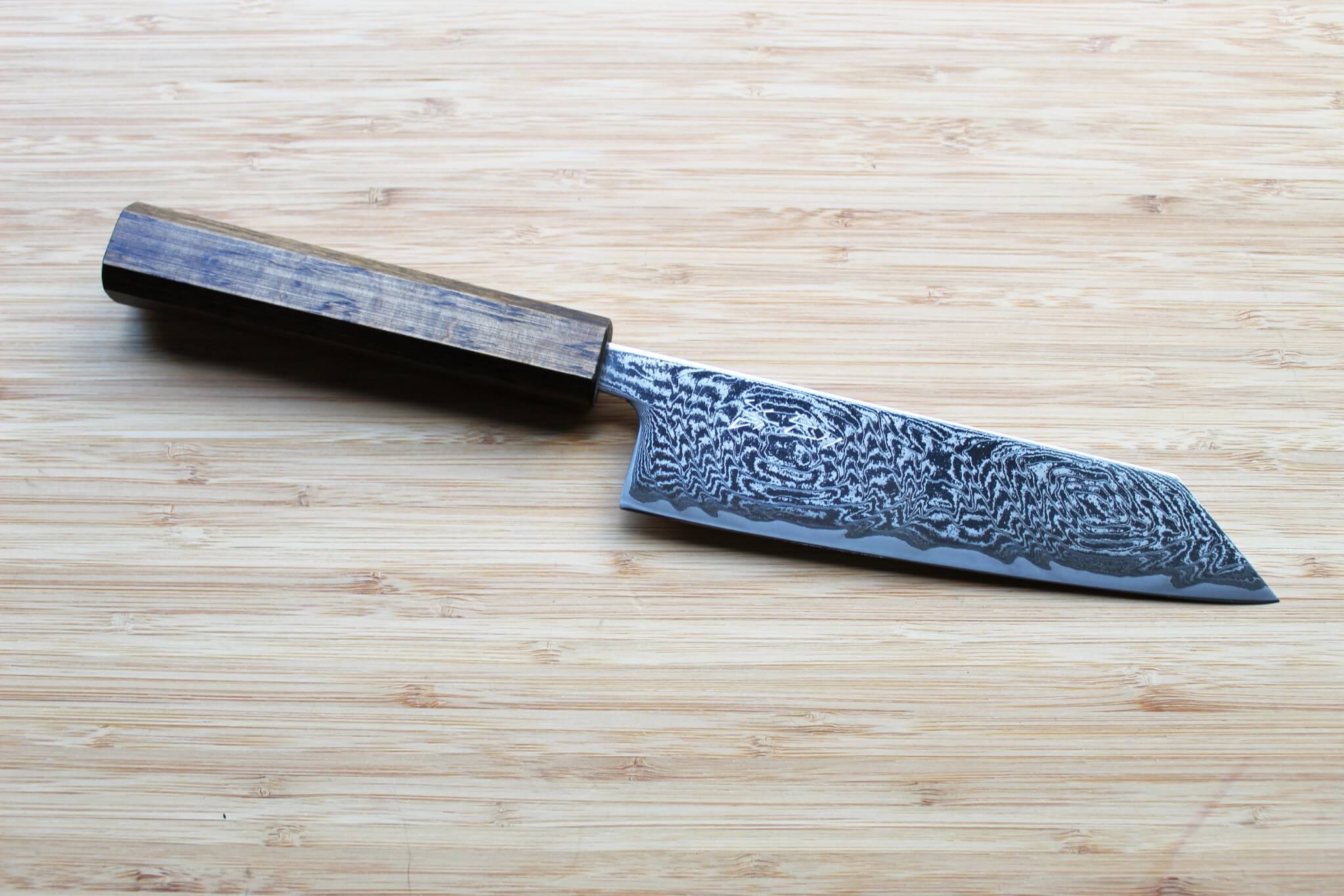
The bunka knife bevel is most often a double-bevel with a high flat-to-angled profile.
I have worked with Japanese knives and sharpened dozens of bunka blades. This guide explains what a bunka knife bevel is, why it matters, how to spot different bevels, and how to sharpen and choose the best bevel for your cooking. I will share practical tips from hands-on experience, clear examples, and simple steps you can use today to get the most from your bunka knife bevel.

What is a bunka knife bevel?
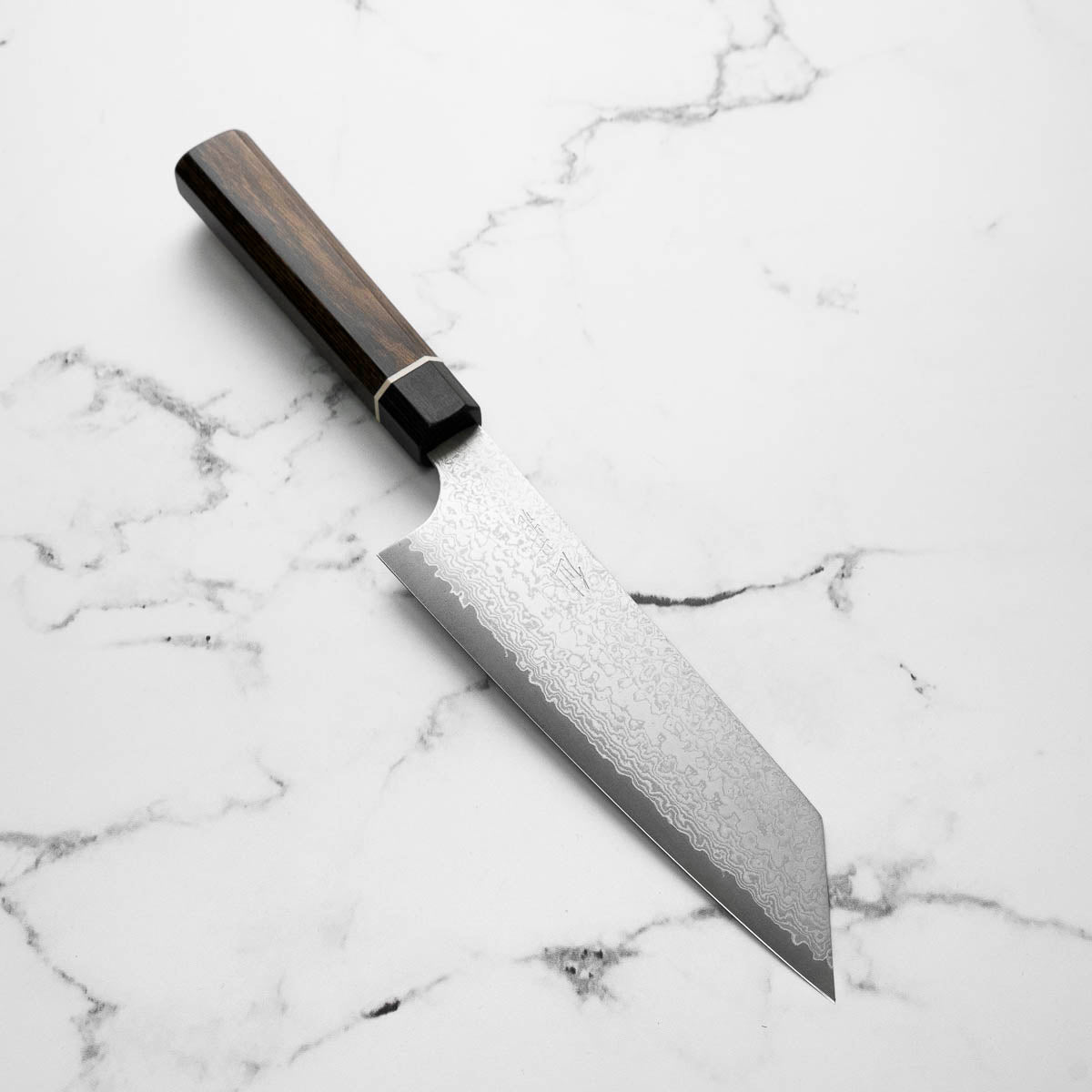
A bevel is the sloped surface ground into the blade that creates the edge. The bunka knife bevel refers to the shape and angle of that slope on a bunka blade. Bunka knives are Japanese utility knives with a distinctive clipped tip. Their bevel influences how they slice, chop, and resist chips.
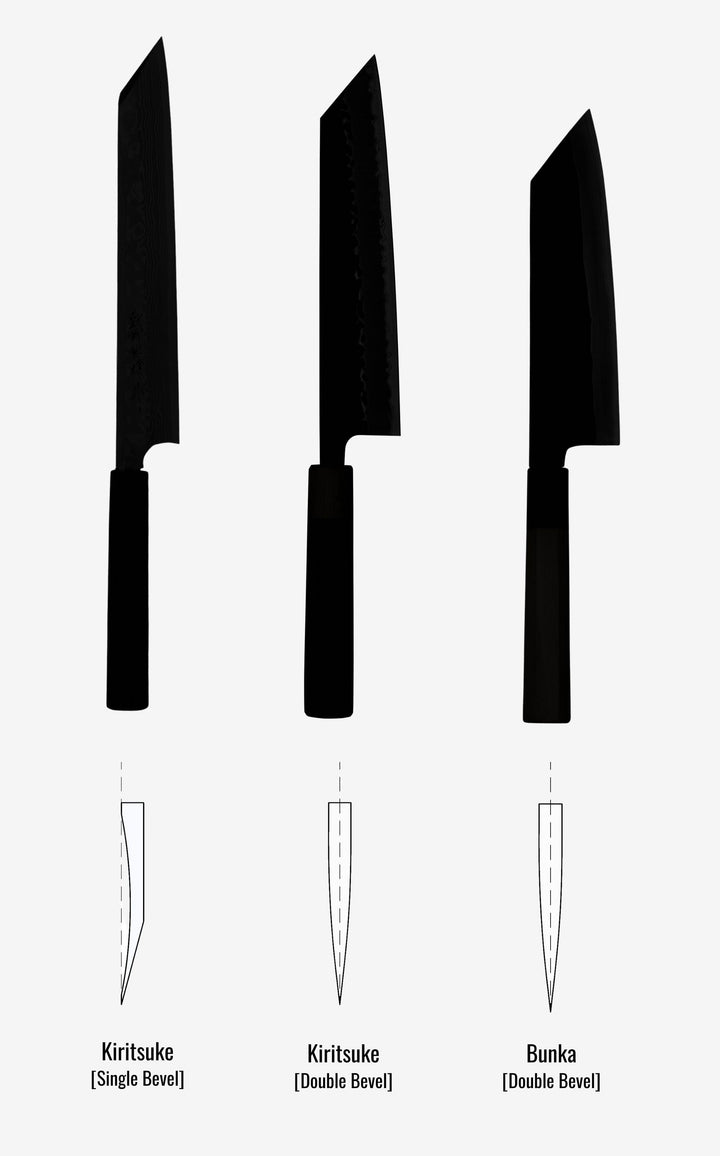
Most bunka knife bevels are double-bevel. That means both sides of the edge are ground. Single-bevel bunka variants exist for specialist use and for left- or right-handed cooks. Understanding the bevel helps you pick, use, and sharpen the knife correctly.

Common bevel types on bunka knives
There are several bevel styles you will see on bunka knives. Each style changes the feel and performance of the knife.
• Double bevel (symmetrical) — Both sides are ground. It is common and easy to sharpen. Double bevel bunka knife bevels balance sharpness and durability.
• Single bevel (chisel) — Only one side is ground. This gives razor-sharp cutting on thin work but needs special sharpening and can favor right- or left-handed users.
• Flat (V) grind — A straight, plain slope to the edge. It slices well and is simple to maintain. Many bunka blades use a high flat grind to keep the edge strong.
• Convex grind — Rounded slope to the edge. It is more durable and resists chipping, though it can be harder to sharpen perfectly.
• Hollow grind — Concave slope near the edge. This can create an extremely sharp edge but is less common on heavier bunka blades.
People also ask:
• What bevel is best for slicing? A low-angle double bevel usually slices best.
• Can a bunka be single-bevel? Yes, but it is less common and needs more skill to use and sharpen.

How bevel angle affects performance
Bevel angle is how steep the edge is. It often determines sharpness and strength.
• Lower angles (around 10°–15° per side) give a keener edge and easier slicing. These angles are common on traditional Japanese knives.
• Medium angles (15°–20° per side) are a practical compromise and are common on stainless steel bunka blades.
• Higher angles (20°–25° per side or more) add durability and handle harder tasks without chipping.
The bunka knife bevel choice should match your cook style. If you slice delicate vegetables and fish, a lower-angle double bevel works well. If you work with tougher foods or want more resilience, choose a slightly higher angle.
How to identify a bunka knife bevel
You can spot bevel types with a few simple checks. I use these steps when I inspect new knives or when a customer brings one in.
• Visual check — Look at the edge with light. A single-bevel will show a flat face and a steep back face. A double-bevel will look symmetric.
• Marker test — Color the edge with a pen and make a few light strokes on a stone. The ink will wear off from the side being ground.
• Magnifying glass — Use 10x to see the grind line and angle. You can see whether the grind is flat, convex, or hollow.
• Cutting test — Slice paper or a tomato. A very keen low-angle edge will slice effortlessly. A durable high-angle edge resists small chips.
• Angle gauge or guide — Use a small bevel gauge to measure the edge angle in degrees.
Knowing the bevel type keeps you from sharpening at the wrong angle and damaging the edge.
Sharpening and maintenance for bunka knife bevels
Sharpening a bunka knife bevel is about matching the original grind and angle. I sharpen bunka knives often and follow a clear method.
• Tools to use — Water stones (1000, 3000, 6000+ grit), a leather strop, an angle guide if needed, and coarse stones for damaged edges.
• Simple progression — Start at 1000 grit for reshaping, move to 3000–5000 for refining, and finish at 6000–8000 for polish. Keep the same bevel angle on both sides for double-bevel edges.
• Angle control — Maintain steady wrist motion and light pressure. For a bunka knife bevel, set the stone angle to roughly the per-side angle you want (often 15°–20°).
• Single-bevel care — For a single-bevel bunka, sharpen the flat side flat and the angled side carefully. Flatten the flat face regularly to keep the angle true.
• Stropping — Use a leather or compound strop to remove burrs and refine the apex. This step makes the edge cut smoothly.
I once over-thinned a bunka edge by pushing too low an angle. The tip began to chip on dense squash. I returned the edge to a higher angle and the knife felt stronger. Keep spare stones and work slowly if you are new to sharpening.

Choosing the right bunka knife bevel for your needs
Match the bevel to how you cook. Your choice matters more than brand.
• Home cooks and mixed tasks — Choose a 15°–20° per-side double bevel. It slices well and holds up for general use.
• Precision slicing and soft foods — Choose a lower-angle double bevel or a carefully made single-bevel if you only use it for thin cuts.
• Heavy chopping and root vegetables — Choose a higher-angle bevel or a convex grind for strength and chip resistance.
• Left- or right-handed users — If you are left-handed, consider a left-handed single-bevel or a symmetric double-bevel to avoid edge bias.
When buying, ask the seller about the bevel angle. If possible, test the knife on a tomato or sheet of paper to sense how it cuts.

My experience and practical tips
I sharpened and used bunka knives in home kitchens and pro settings. These are quick tips I learned.
• Keep a marker on the edge before you sharpen. It saves mistakes and shows you removed the right metal.
• Use light passes. Heavy pressure removes metal too fast and can ruin the bevel.
• Store the knife safely. A chipped tip often comes from poor storage or loose tools in a drawer.
• Maintain stones. Flat stones give consistent angles and avoid creating a wavy edge.
• Practice on cheaper blades first. Learning to control bevel angles on a modest knife protects your best tools.
One clear lesson: respect the original bunka knife bevel. Trying to convert every knife to a very low angle can cause more harm than good.
Frequently Asked Questions of bunka knife bevel
What angle should a bunka knife bevel be?
Most bunka knife bevels fall between 15° and 20° per side for a balanced cut and durability. Some traditional or specialty blades use lower or higher angles depending on purpose.
Can a bunka be single-bevel?
Yes, some bunka knives are made with a single-bevel edge for specialized tasks. Single-bevel bunka blades require skill to sharpen and are often made for right- or left-handed users.
How do I know if my bunka is double-bevel or single-bevel?
Look down the edge under light or use a marker test. A single-bevel shows a flat face and a steep opposite face, while a double-bevel looks symmetric.
Is a convex bevel better for a bunka knife?
A convex bevel adds durability and resists chipping, which helps for heavier work. It may not slice as thinly as a low-angle flat bevel, but it is tougher for hard food.
How often should I sharpen my bunka knife bevel?
Sharpening frequency depends on use. For daily use, a light hone weekly and stone sharpening every few months is common. Heavy use or hard foods need more frequent attention.
Can I change the bevel on my bunka knife?
Yes, but changing the bevel angle removes metal and risks weakening the edge if done poorly. If you change the bevel, do it gradually and keep good stones or seek a pro sharpener.
Conclusion
Understanding the bunka knife bevel lets you pick, use, and care for a bunka blade with confidence. The bevel defines sharpness, durability, and the knife’s role in your kitchen. Start by identifying the bevel type and angle, and then match your sharpening and use to that grind. Try the sharpening steps slowly, protect the tip, and practice on a less expensive blade if you are new. If you found this useful, test your knife’s bevel today and share your results or questions in the comments.
Maliha Khatun has spent 5 years hands-on testing Japanese knives for everyday home cooks. She has evaluated over 60 blades across nakiri, santoku, gyuto, and petty categories — scoring each on edge retention, steel quality, handle comfort, and value for money. She writes to help home cooks buy the right knife without the guesswork.
Expertise:Japanese Knives • Vegetable Knives • Product Reviews • Kitchen Efficiency • Knife Care
Leave a Reply