A bunka knife needs a 15–20° per-side edge for a sharp, durable slicing edge.
I have sharpened dozens of Japanese-style knives, tested angles, and coached cooks on edge care. This guide explains the bunka knife sharpening angle in plain terms. You will learn why that angle matters, how to measure it, step-by-step sharpening instructions, common mistakes, and real-world tips I use in the kitchen. Read on to master the angle and keep your bunka cutting like new.
Why the bunka knife sharpening angle matters
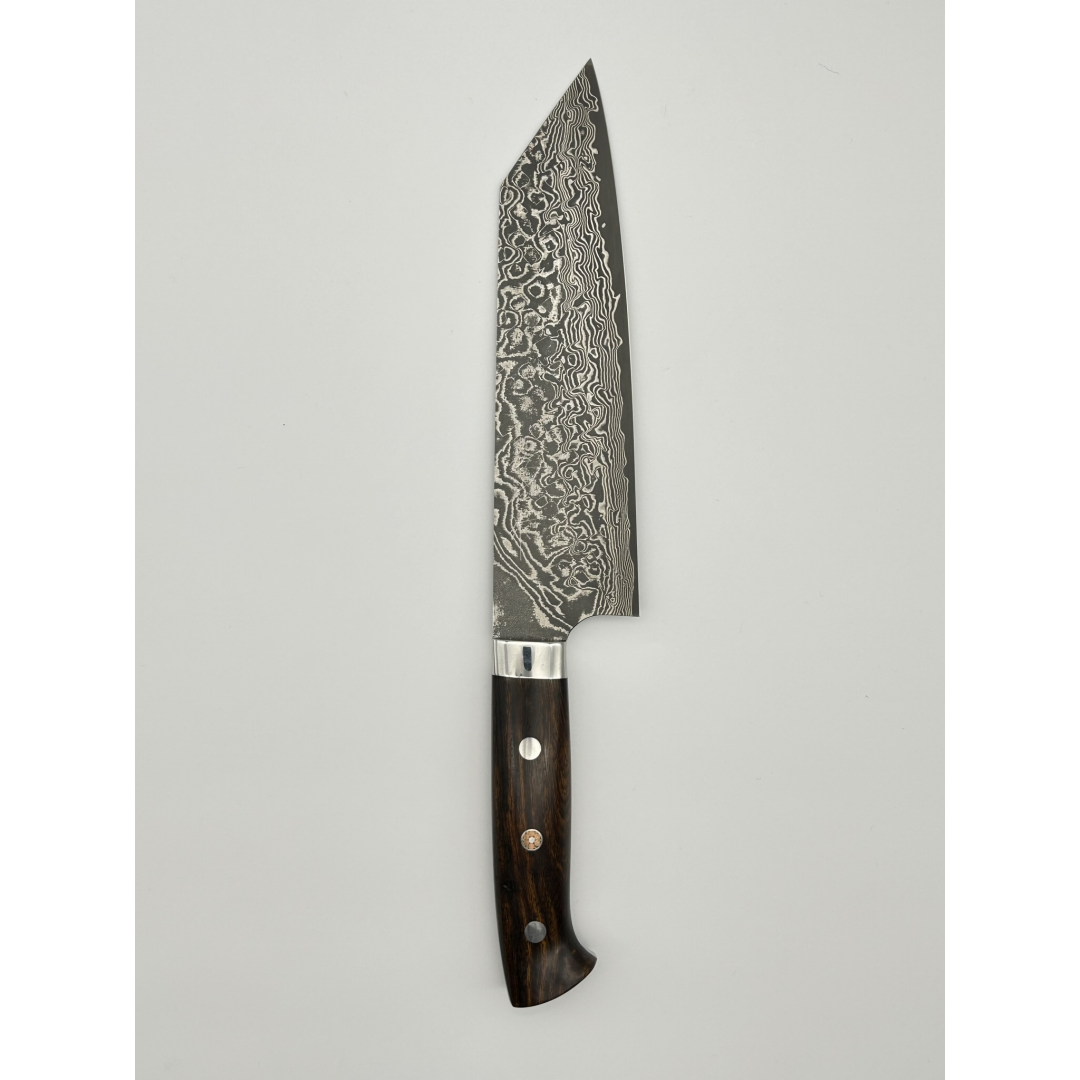
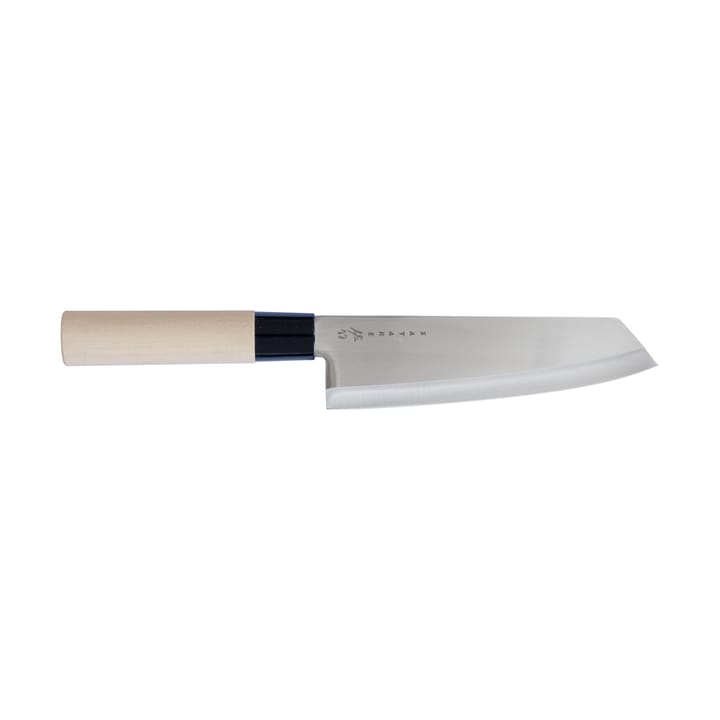
The bunka is a hybrid Japanese chef’s knife. It pairs a thin point with a broad belly and a flat grind. The chosen bunka knife sharpening angle shapes how the blade cuts, how long the edge lasts, and how resistant it is to chipping.
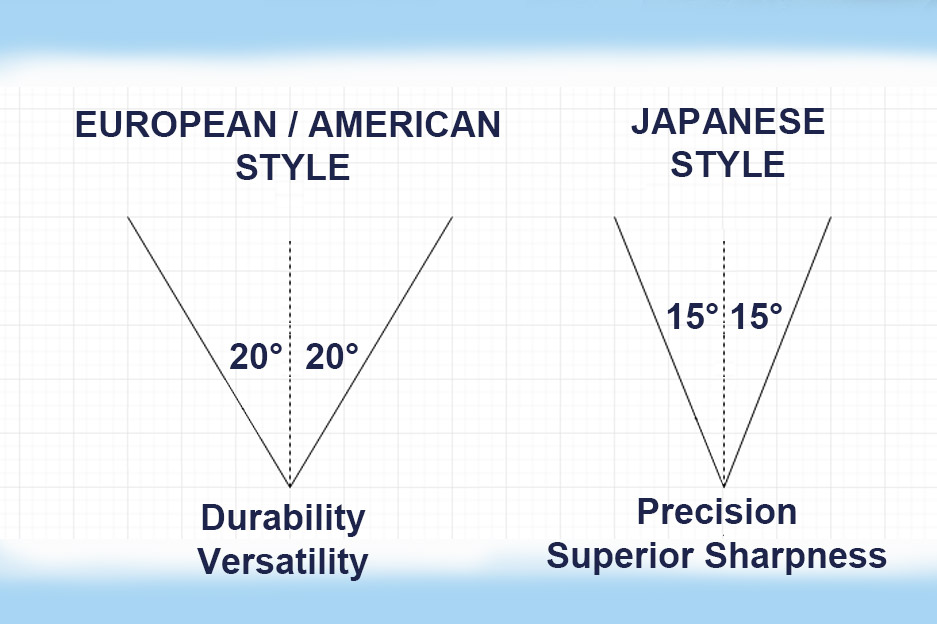
A lower angle gives razor-sharp cuts and less drag. A higher angle gives more strength and durability. Finding the right bunka knife sharpening angle is a balance between sharpness and toughness that depends on your food and maintenance habits.
A consistent angle also makes sharpening faster. When you keep the bunka knife sharpening angle steady, you remove less metal and keep the knife true. That saves time and keeps the blade in better shape over years.

Recommended angles and how to measure
Most professionals recommend a bunka knife sharpening angle of 15–20° per side. That range works for general kitchen use. If you mainly slice soft produce, aim closer to 15°. If you cut bones or hard squash, aim toward 20°.
How to interpret angle terms
- Inclusive angle. The total angle between both faces of the blade. For a 15° per-side angle, the inclusive angle is 30°.
- Per-side angle. The common way to describe sharpening. We set each side at 15–20°.
Simple ways to estimate angle
- Use an angle guide or jig to hold a steady bunka knife sharpening angle.
- Use a smartphone protractor app against the spine and stone for a rough check.
- Learn the hand method: hold the spine at about the width of two stacked coins from the stone to approximate 15°.
People also ask: What angle should I sharpen a bunka knife?
- Aim for 15–20° per side for a mix of sharpness and durability. Adjust within that range for your cutting style.
People also ask: Is a bunka knife single or double bevel?
- Most bunka knives are double bevel. Set the bunka knife sharpening angle on both faces to keep the edge balanced.
People also ask: Will a lower angle make my bunka edge fragile?
- Yes. A very low bunka knife sharpening angle increases fragility and the chance of chipping, especially on harder foods.
Sharpening methods: stones, rods, and guided systems
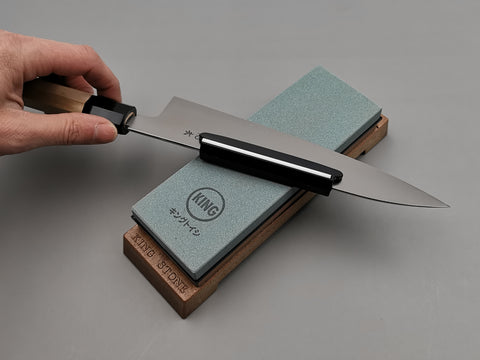
Water stones deliver the best control for a bunka knife sharpening angle. They cut fast and let you feel the edge forming. Use a 1000–6000 grit progression for sharpening and polishing.
Diamond stones work well for harder steels and flatten fast. Ceramic rods and steel hones are for maintenance, not major re-profiling. Guided systems lock the bunka knife sharpening angle for beginners and for repeatable results.
Key points for each tool
- Water stone. Best control. Use for re-profiling and polishing the bunka knife sharpening angle.
- Diamond stone. Fast stock removal and flat. Good when you need to remove chips.
- Guided system. Steady angle for beginners. Good to learn the bunka knife sharpening angle.
- Ceramic rod. Daily touch-ups. Keeps the edge aligned between sharpenings.

Step-by-step sharpening guide for a bunka knife sharpening angle
- Prepare the stones. Soak a water stone if needed and place it on a non-slip base. Clean the blade of any grit before you start.
- Set the angle. Aim for 15–20° per side and test your hand position until the angle feels steady. Use an angle guide if you need a visual reference.
- Form the bevel. Start on the coarse grit (for example 1000 grit). Push the edge forward across the stone like slicing a thin layer of the stone, keeping the bunka knife sharpening angle steady. Do equal strokes on both sides.
- Check for a burr. After a dozen strokes per side, feel for a burr along the edge. The burr means the bevel has connected and the edge is formed.
- Refine the edge. Move to finer grits (3000–6000) to polish and refine. Keep the bunka knife sharpening angle consistent and reduce pressure as the edge refines.
- Stropping. Use a leather strop with polishing compound to remove the last micro-burr and improve bite.
- Test the edge. Try slicing paper or a tomato. The bunka knife sharpening angle should give a clean, effortless cut.
- Clean and store. Rinse and dry the blade, then store the knife safely.
Safety tips
- Keep fingers behind the edge while sharpening.
- Use a stable stone and good lighting.
- Work slowly until you build muscle memory for the bunka knife sharpening angle.
Common mistakes and troubleshooting
- Inconsistent angle. Fix: Use an angle guide or slow down. Small changes ruin an even bevel and make sharpening harder.
- Too low an angle. Fix: Move up to 15–20° per side to add strength. A very low bunka knife sharpening angle chips easily.
- Over-grinding. Fix: Stop when the burr appears and progress to finer grits. Remove only what you must.
- Skipping burr checks. Fix: Test the edge often by feeling for a tiny burr. This tells you when to switch sides or grit.
- Poor maintenance. Fix: Hone or strop between sharpenings to keep the bunka knife sharpening angle working longer.

Maintaining the edge: honing, stropping, and care
Hone with a ceramic rod at your chosen bunka knife sharpening angle every few uses. Honing straightens the edge without removing much metal. Strop weekly after heavy use to polish the edge.
Store the knife safely in a block or magnetic strip. Avoid dishwashers and acidic puddles. Regular care preserves the bunka knife sharpening angle and reduces the need for frequent sharpening.
Personal experience and practical tips
I sharpened my first bunka to 15° per side and cut vegetables for a year before re-profiling. The knife stayed sharp with weekly stropping. I later tried 12° per side for a test; the cuts were cleaner but chips showed after a month. That taught me to match the bunka knife sharpening angle to how I use the blade.
Tips I learned the hard way
- Practice the angle on cheap steel first. It builds confidence without risking a good blade.
- Take photos of your hand position. Visual feedback speeds learning.
- Keep a spare stone for coarse work. Removing chips on a fine stone wastes time.
Frequently Asked Questions of bunka knife sharpening angle
What is the best bunka knife sharpening angle for home cooks?
Aim for 15–20° per side. This range balances sharpness and durability for most home tasks.
Can I sharpen a bunka at 10° per side?
You can, but the edge will be fragile and may chip on harder foods. Lower angles suit careful, soft-food slicing only.
How often should I sharpen my bunka knife at the right angle?
Sharpen fully when cuts dull noticeably, often every few months for regular cooks. Hone or strop weekly to prolong the bunka knife sharpening angle.
Should I use a guided system to set the bunka knife sharpening angle?
A guided system helps beginners hold a steady angle and learn consistent technique. Experienced sharpeners often prefer freehand for speed and feel.
Does steel type change the bunka knife sharpening angle?
Yes. Harder steels hold a lower bunka knife sharpening angle longer, but they can be harder to reprofile. Softer steels may need a slightly higher angle for durability.
Conclusion
Choosing the right bunka knife sharpening angle gives you the best mix of sharpness and strength. Aim for 15–20° per side, use a stone or guided system to keep the angle steady, and hone or strop often to maintain the edge. Try the steps in this guide, practice on inexpensive steel, and track results in the kitchen. If you found this useful, sharpen one blade today, subscribe for more tips, or leave a comment with your sharpening question.
Maliha Khatun has spent 5 years hands-on testing Japanese knives for everyday home cooks. She has evaluated over 60 blades across nakiri, santoku, gyuto, and petty categories — scoring each on edge retention, steel quality, handle comfort, and value for money. She writes to help home cooks buy the right knife without the guesswork.
Expertise:Japanese Knives • Vegetable Knives • Product Reviews • Kitchen Efficiency • Knife Care
Leave a Reply