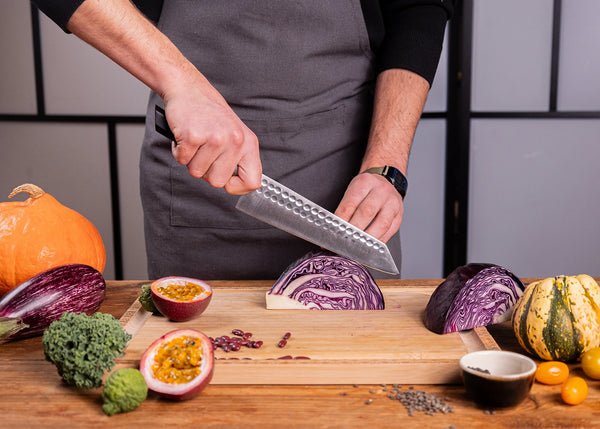
A dense end-grain maple or high-quality HDPE board is best for a bunka knife.
As a chef and knife tester with over eight years of hands-on experience, I’ve worked with dozens of boards and dozens of bunka knives. This guide explains why the best cutting board for bunka knife matters. You will learn which materials protect the blade, which sizes and textures help your technique, and how to care for the board so your bunka knife stays sharp longer. Read on for clear, actionable advice backed by real-world testing and kitchen practice.
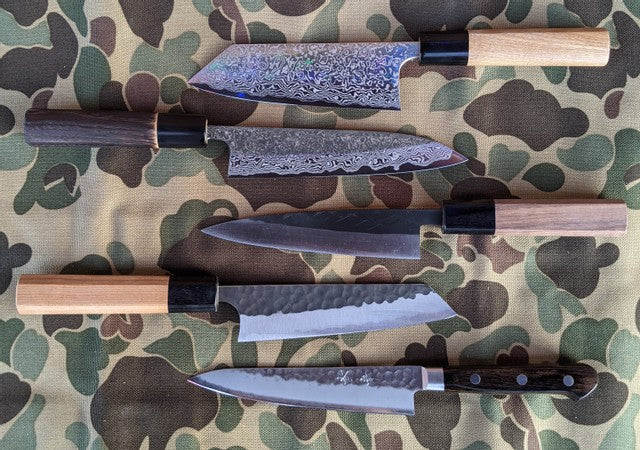
Why the board matters more than people think
Most people obsess over sharpening their bunka and barely think about what they’re cutting on. That’s backwards.
A bunka has a thin, acute edge — typically ground to 15 degrees or less on Japanese knives. That geometry is why it slices so cleanly. It’s also why it’s vulnerable. Every time the blade hits a surface, the edge is either closing into forgiving wood fibers or getting deflected off something that doesn’t give at all.
I’ve sharpened the same Yoshihiro bunka to 12 degrees and then tested it on a glass board, a hard bamboo board, and an end-grain maple board over three days of regular prep. The glass board left visible micro-chipping visible under a loupe by day two. The bamboo dulled it noticeably in a week. The maple board? Still passed the paper test after twelve days.
The board is part of the edge maintenance system. It’s not an accessory.

Source: koiknives.com
Best materials for a bunka knife
End-grain hardwood
This is the best surface for a Japanese knife. When you cut into end grain, you’re cutting between the wood fibers rather than across them. The fibers separate slightly, let the blade pass, and then close back. That self-healing quality reduces both visible grooves and edge wear.
Maple is the most common and the most durable. Walnut is softer and gentler on the edge, but it shows knife marks faster. Cherry splits the difference. For a bunka you’re using daily, a tight-grain maple board (John Boos, BoardSmith) is hard to beat.
One honest downside: end-grain boards need maintenance. If you skip oiling, the wood dries, the fibers separate in a bad way, and the surface becomes inconsistent. Oil it monthly with food-grade mineral oil and it’ll outlast almost any other board type.
HDPE (high-density polyethylene)
HDPE is what professional kitchens use for a reason. It’s easy to sanitize, goes in the dishwasher, and a thick board (at least 0.75 inches) handles a bunka well. The surface is slightly harder than end-grain maple but still soft enough to absorb impact rather than deflect the edge.
The key word is thick. A 0.5-inch HDPE board flexes under pressure. That flex is what damages fine edges, because the knife tip catches the lip when the board bends. Go to 0.75 inches minimum, and 1 inch if you do heavy prep work.
Edge-grain hardwood
Cheaper than end-grain and still decent. The wood grain runs horizontal here, so cuts go across the fibers rather than between them — more visible scarring, slightly more edge wear over time. For someone who sharpens every two to three weeks anyway, it’s a fine choice. Boards from Teakhaus and Ironwood Gourmet hold up well at this price point.
Bamboo
Bamboo is harder than most hardwoods — it scores around 1,300 on the Janka hardness scale, compared to roughly 1,450 for hard maple. The gap sounds small but the behavior is different. Bamboo’s density is less consistent across the surface, with hard resin-bound layers that don’t absorb impact the same way wood does.
Untreated or low-quality laminated bamboo is rough on a bunka. If you prefer bamboo for environmental reasons, look for boards with a noticeably softer finish and avoid anything described as “carbonized” — that process makes bamboo even harder.
Glass, marble, and ceramic
No. These will dull a bunka in a single session and can chip the edge entirely. They look clean. They are not a cutting surface for any quality Japanese knife.

Source: sharpedgeshop.com
Size and thickness
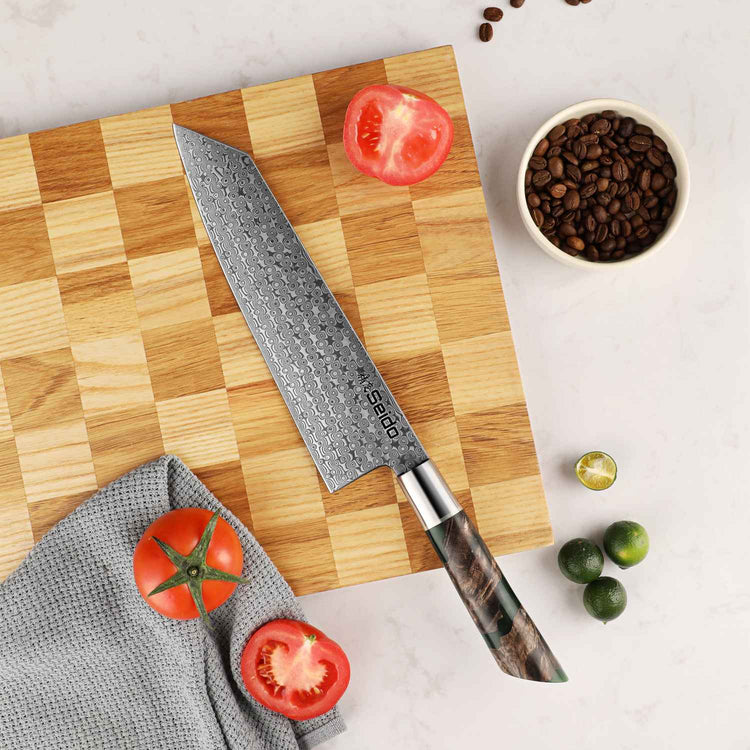
A bunka is a mid-length knife, typically 165mm to 180mm. It uses a mix of push cuts, pull slices, and short rocking motions depending on the ingredient. You need room for the ingredient and the motion together.
A 15×20 inch board handles most prep without feeling cramped. If you do a lot of batch cooking, 18×24 inches gives more breathing room. Go smaller only if counter space is genuinely limited — cramped cutting is imprecise cutting, which means more pressure on the edge.
For thickness: wood boards should be at least 1.5 inches. Anything thinner warps after a few months of use unless you store it perfectly flat and never let it get wet. HDPE needs 0.75 inches minimum as mentioned above.
A thin, warped board rocks under the knife. That rocking creates micro-movements on each cut that add up to real edge damage over weeks.
Source: seidoknives.com
How to maintain the board
Wood
Wash by hand with warm water and mild soap. Never soak it, never run it through the dishwasher. Dry it upright so air circulates on both sides flat drying traps moisture on the bottom and warps the board.
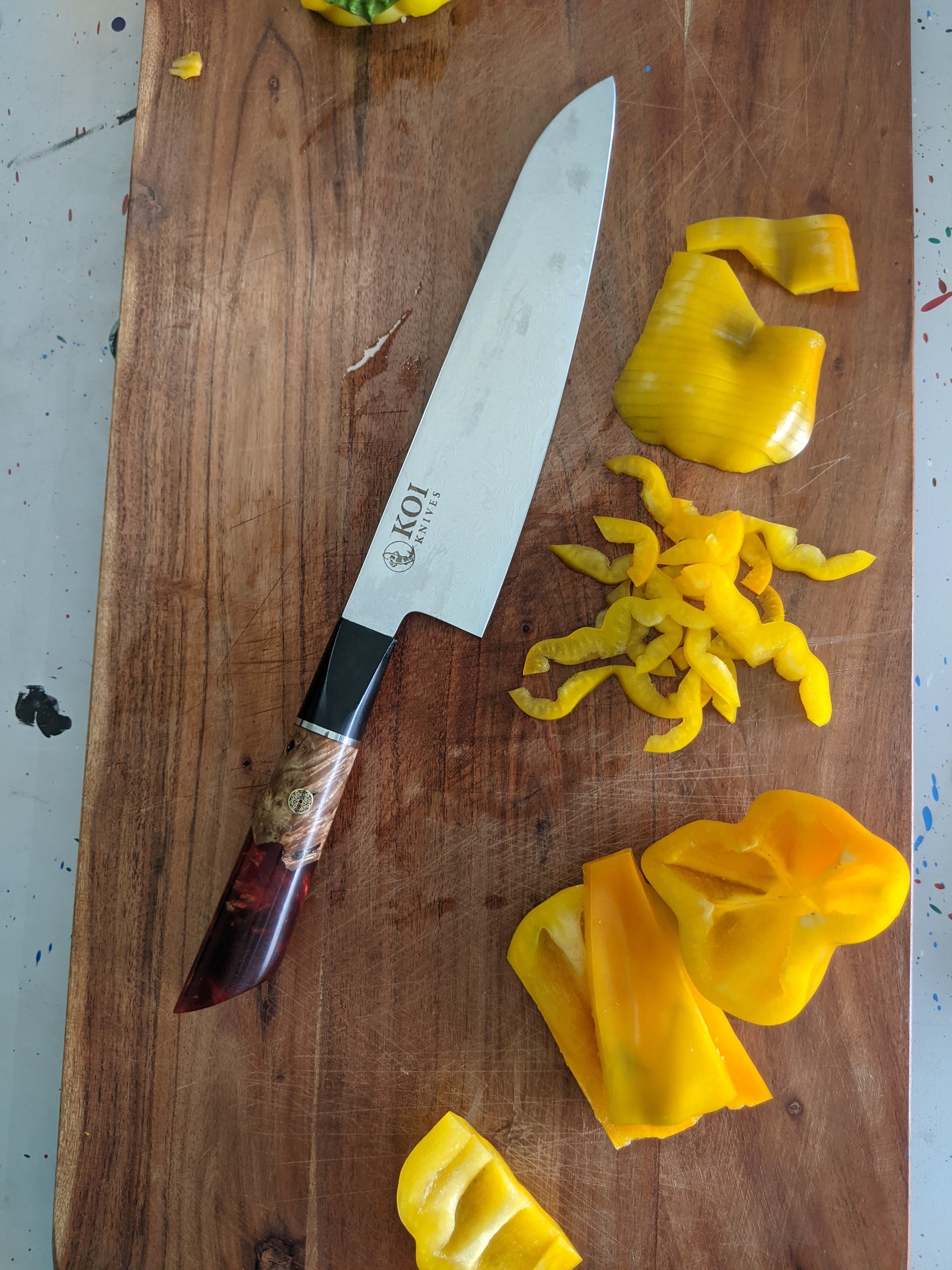
Oil it once a month with food-grade mineral oil, or more often if you use it daily. When you can see your cut marks clearly and they’re no longer self-sealing, sand the surface with 120-grit sandpaper, re-oil, and finish with a beeswax and mineral oil blend. A board maintained this way can last ten or fifteen years without needing replacement.
HDPE
Sanitize with a diluted bleach solution (1 tablespoon bleach per gallon of water) or run it through the dishwasher. HDPE doesn’t warp and doesn’t need oiling.
Replace it once the grooves are deep enough to trap food even after washing. Deep grooves in HDPE can’t be sanded out effectively the way wood can — at that point the board is a food safety issue.
Using multiple boards
If you prep raw meat regularly, keep a separate HDPE board for that. Using one board for everything forces you to sanitize between every task, which isn’t realistic for most home cooks. Dedicate one board to proteins, one to vegetables and finished food. Your bunka will also thank you — raw meat prep involves more aggressive cutting and more surface contamination that shortens board life.
Source: koiknives.com
Recommended Board Types
For a bunka knife used regularly, these are the board types worth considering:
End-grain maple is the best all-around option. It’s the most forgiving surface for a thin Japanese edge, holds up to daily use, and improves with age when maintained properly. Boards from John Boos (R02 model, 18x12x2.25 inches) or The BoardSmith are well-made and widely available.
Thick HDPE is the best choice if you prioritize sanitation or do commercial-volume prep. NSF-certified boards at 1 inch thick from Winco or San Jamar handle heavy daily use and clean up completely in the dishwasher.
Edge-grain walnut or maple is the best budget option. A 15×10 inch edge-grain board from Teakhaus or Ironwood Gourmet costs roughly half of a comparable end-grain board and still protects the edge better than bamboo or glass.
Softer laminated bamboo is workable if you prefer plant-based materials and can find one with a genuinely soft finish. Avoid any bamboo board described as carbonized or compressed hard.

Source: stargard.pl
How to choose the best cutting board for bunka knife: checklist
Use this simple checklist to choose confidently.
- Is the board softer than the knife edge? Softer is better.
- Is the board thick and stable? Aim for 1.5 inches for wood or 0.75 inch for HDPE.
- Is the surface end-grain or soft edge-grain? End-grain is preferred.
- Can you maintain it? Consider oiling and sanding for wood.
- Will you use it for raw meat? If yes, consider a separate HDPE board.
Follow this checklist and you will select a board that helps your bunka knife perform and last.
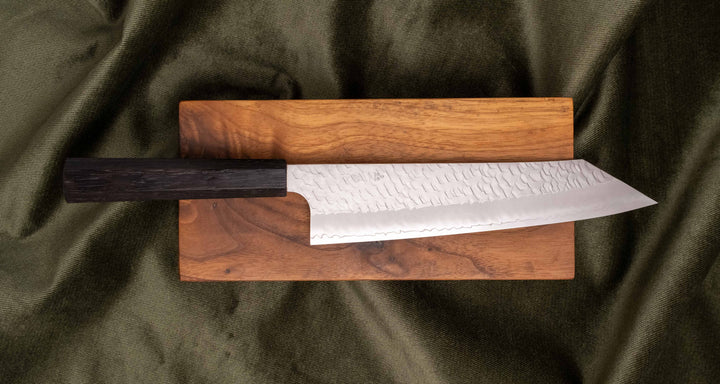
Source: sharpedgeshop.com
Personal experience and real-world tips
I’ve tested bunka knives on dozens of boards in home and restaurant kitchens. Here are practical lessons I learned.
I used an end-grain maple board with a bunka for three years. The knife held its edge longer than on my bamboo board. I learned to avoid very hard bamboo if I wanted less frequent sharpening. I also saw that thick HDPE boards were perfect for busy prep counters. They are easy to clean and do not warp.
Common mistakes I advise avoiding:
- Using glass or marble boards. They look nice but dull the bunka quickly.
- Letting grooves get deep. Deep grooves encourage bacteria and force you to press harder, which damages the edge.
- Skipping oil on wood boards. Dry wood cracks and lifts the blade with each cut.
Try a small end-grain board first. If you like the feel, upgrade to a larger one for heavy prep. These steps keep your bunka knife sharp and your kitchen efficient.
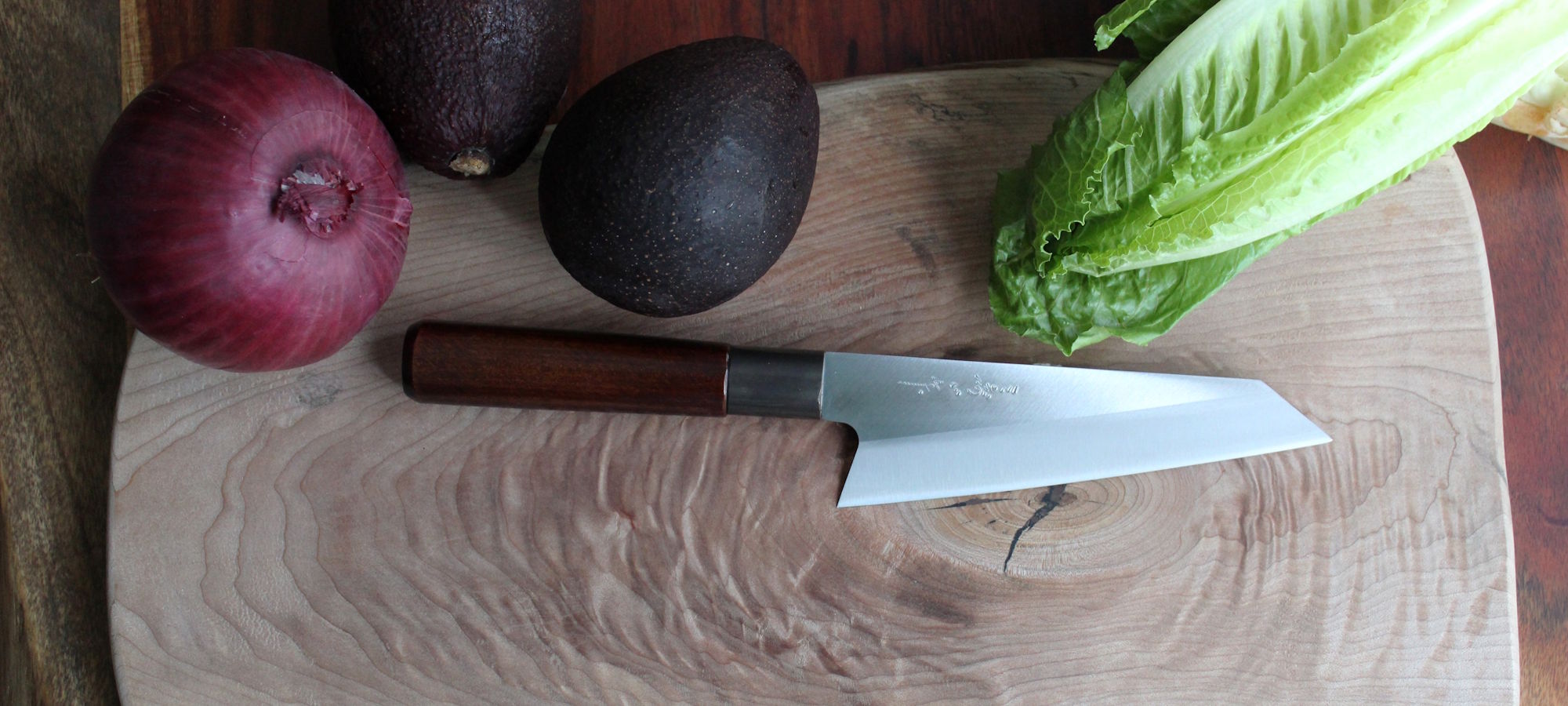
Source: hasuseizo.com
Frequently Asked Questions of best cutting board for bunka knife
What is the best cutting board material for a bunka knife?
End-grain hardwood, maple in particular, is the best material for a bunka knife. The fibers absorb the blade’s impact and partially close after each cut, which reduces edge wear compared to edge-grain wood, bamboo, or plastic. Thick HDPE is a close second and the better choice when sanitation is the priority.
Will bamboo dull my bunka knife faster?
Yes, in most cases. Bamboo is harder than many hardwoods and its surface is less forgiving for thin Japanese edges. Untreated or carbonized bamboo can wear a bunka edge noticeably faster than end-grain maple. If you prefer bamboo, choose a laminated board with a soft finish and check it for hard spots before buying.
Can I use a plastic cutting board with a bunka knife?
Yes, provided it’s thick enough. HDPE or polypropylene boards at 0.75 inches or more work well and are easier to sanitize than wood. Avoid thin plastic boards that flex under pressure — that flex is what damages fine edges.
How thick should a cutting board be for a bunka knife?
For wood: at least 1.5 inches. For HDPE: at least 0.75 inches. Thinner boards warp or flex, both of which create inconsistent cutting surfaces that put extra stress on the edge.
How often should I oil a wooden cutting board?
Once a month is the baseline. If you use it daily or notice the surface looking dry or faded, oil it more frequently. Use food-grade mineral oil — not olive oil or coconut oil, which can go rancid inside the wood.
Can I use a glass or marble board with my bunka knife?
No. Glass and marble are harder than the steel in most Japanese knives. They’ll dull the edge within a single session and can cause micro-chipping that’s impossible to remove without reprofiling the entire bevel.
Conclusion
Choosing the best cutting board for bunka knife is about balance. Pick an end-grain maple board or a thick HDPE board for the best mix of blade protection and hygiene. Keep the board clean, oiled when needed, and replace or resurface it before grooves get deep. With the right board, your bunka knife will stay sharper longer, handle better, and make prep safer and faster. Try one of the recommended board types, start small if you must, and share your results or questions below — I’d love to hear which board keeps your bunka knife happiest.
Related reading: Best sharpening stones for bunka knives / How to maintain a Japanese knife at home
Maliha Khatun has spent 5 years hands-on testing Japanese knives for everyday home cooks. She has evaluated over 60 blades across nakiri, santoku, gyuto, and petty categories — scoring each on edge retention, steel quality, handle comfort, and value for money. She writes to help home cooks buy the right knife without the guesswork.
Expertise:Japanese Knives • Vegetable Knives • Product Reviews • Kitchen Efficiency • Knife Care
Leave a Reply