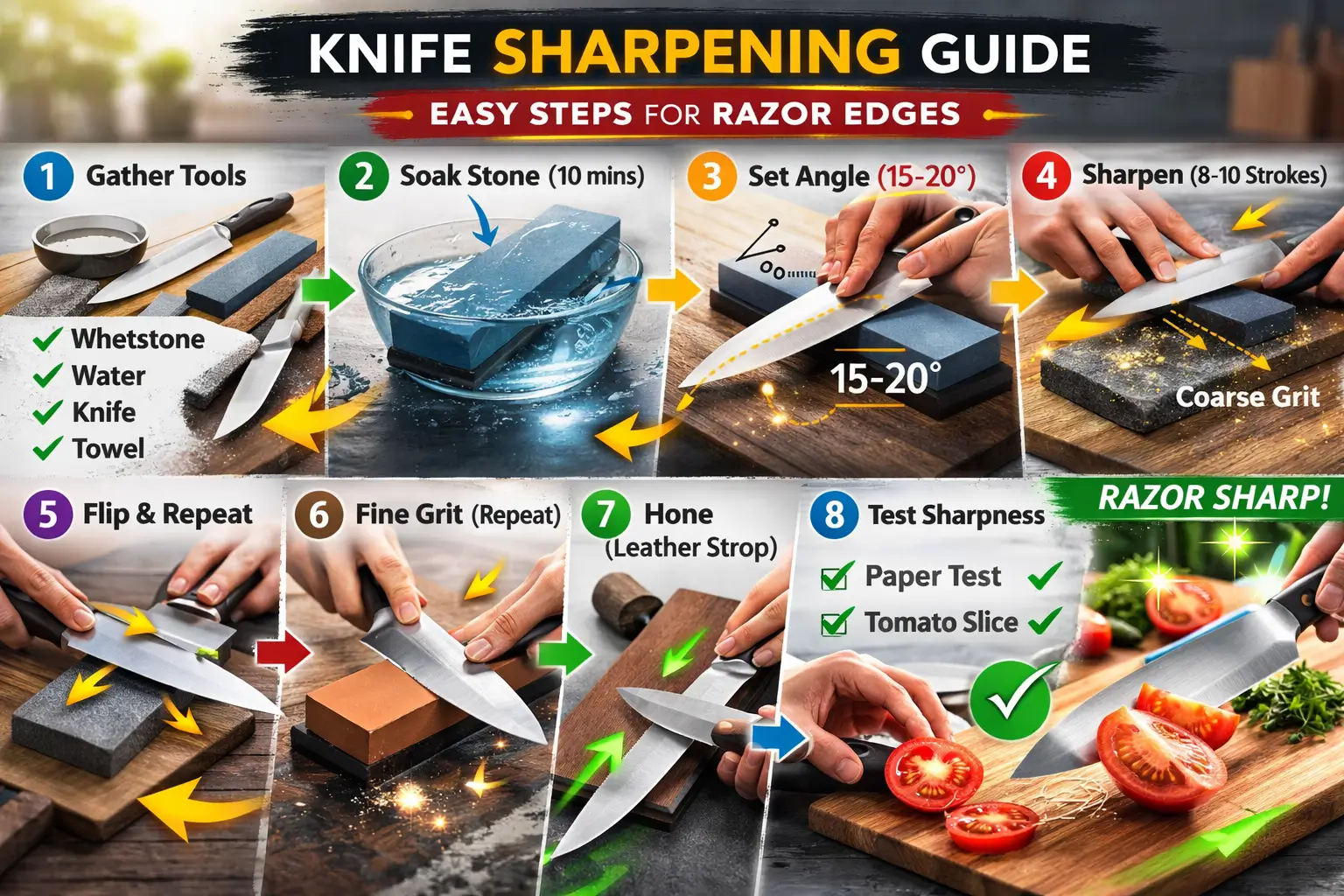
A clear, practical knife sharpening guide to keep blades safe, sharp, and long lasting.
I have decades of hands-on experience sharpening kitchen and outdoor knives. This knife sharpening guide explains how to choose tools, set angles, and sharpen safely. Read on for step-by-step methods, real-world tips, and mistakes to avoid so you get consistent, professional results.

Why sharpening matters: benefits and signs your knife needs work
A sharp knife is safer, faster, and kinder to food and your hands. Dull blades slip, crush, and force you to use more pressure. This knife sharpening guide helps you spot dullness, measure need, and understand the benefits of regular sharpening.
Signs a knife needs sharpening
- Blade drags through paper or tomato skin instead of slicing cleanly.
- You must press hard to cut or the knife tears food.
- The edge looks rolled, shiny, or chipped under light.
Benefits of regular sharpening
- Better control and cleaner cuts.
- Less risk of accidents from slipping.
- Longer blade life and less frequent full regrinds.
Source: knifewear.com
Tools and stones: what to buy and why
Choosing the right tools changes outcomes. This knife sharpening guide covers stones, rods, and powered options so you pick tools that match your skill and knife type.
Main tool categories
- Water stones and oil stones for manual, precise sharpening.
- Diamond stones for fast material removal and durability.
- Honing rods for everyday edge alignment.
- Electric sharpeners and guided systems for beginners.
How to pick stones
- Start with a medium grit 1000 for general sharpening.
- Add 400–600 grit for repair, 3000–8000 grit for polishing.
- Use diamond stones for very hard steels or fast work
Understanding angles and grits: the foundation of a good edge
Angle and grit decide edge performance. This knife sharpening guide explains how to match angle and grit to knife use and steel.
Angle basics
- Western kitchen knives: 20° to 22° per side for durability.
- Japanese–style knives: 12° to 18° per side for a finer edge.
- Outdoor and bushcraft knives: 20° to 30° for toughness.
Grit progression
- Coarse (200–600) removes chips and reshapes.
- Medium (800–2000) rebuilds a comfortable edge.
- Fine (3000–8000+) polishes and refines for shaving sharpness.

Source: youtube.com
Step-by-step knife sharpening guide (whetstone method)
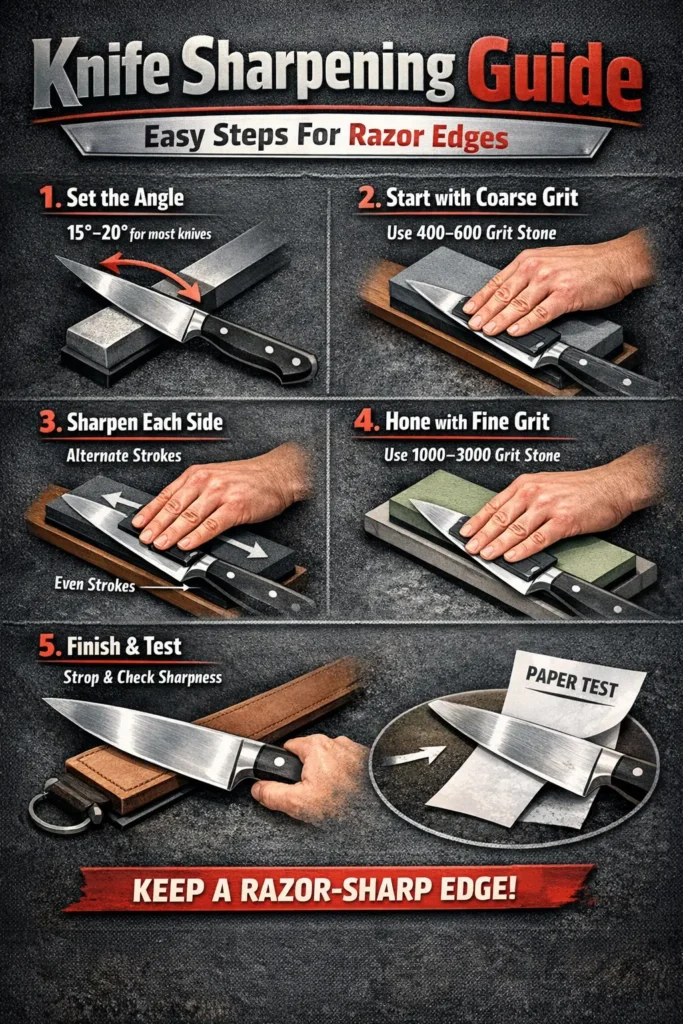
This step-by-step knife sharpening guide uses a whetstone. It’s reliable and adaptable to most knives.
- Prep and safety
- Secure the stone on a non-slip mat.
- Soak a water stone if required; dry stones usually don’t need soaking.
- Wear cut-resistant gloves if you feel unsure.
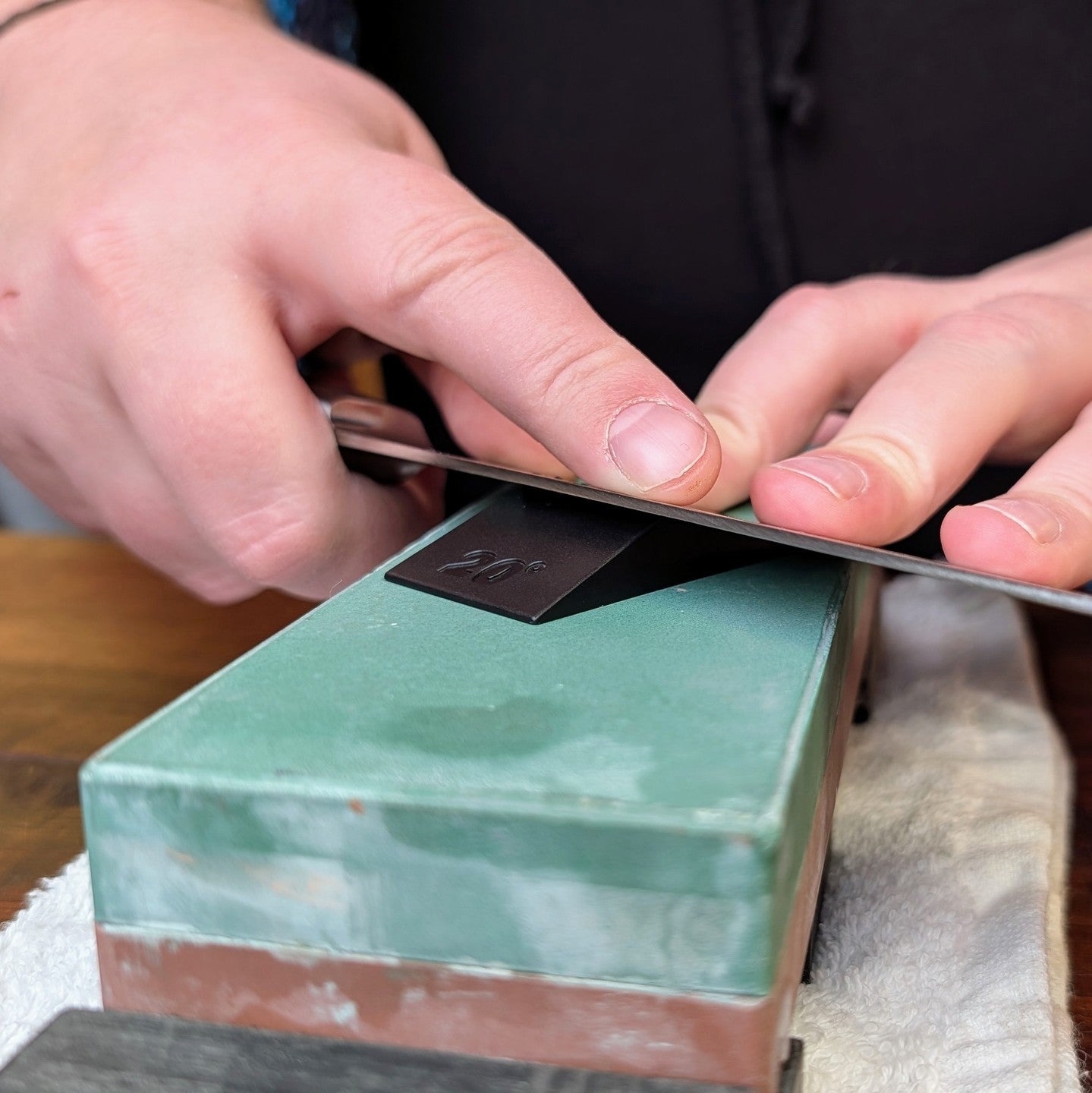
- Set the angle
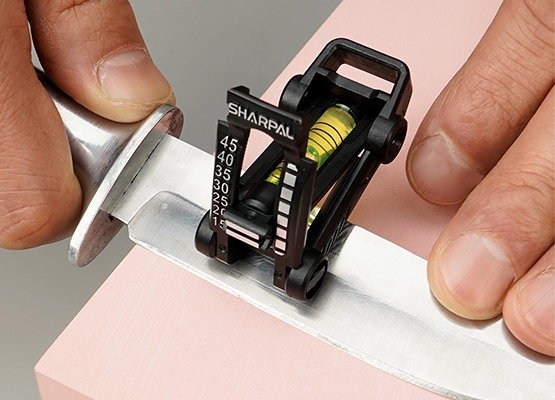
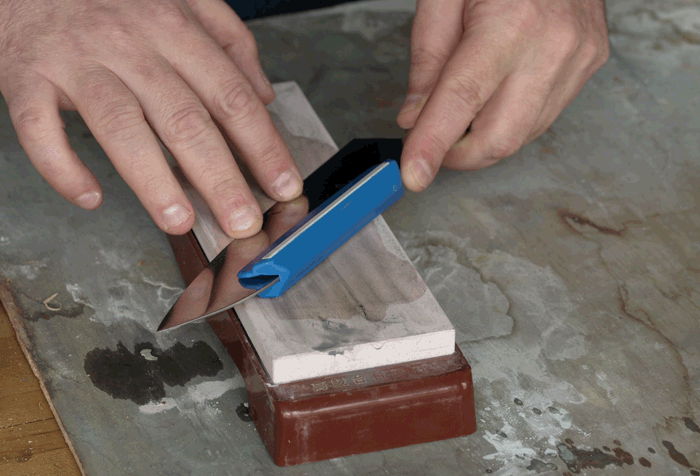
- Hold the blade at the target angle using a finger thumb method or angle guide.
- Maintain the same angle through each stroke for consistency.
- Sharpen strokes
- Push the blade away or pull toward depending on comfort.
- Cover the whole edge from heel to tip with even pressure.
- Repeat 10–20 strokes per side on medium grit.
- Refine and polish
- Move to higher grit and repeat 10–30 light strokes.
- Finish alternating single strokes per side to form a clean apex.
- Test and hone
- Test on thin paper or shave a loose hair as a simple check.
- Use a honing rod for daily alignment between sharpening sessions.

Source: reddit.com
Electric and guided sharpeners: when to use them
Electric and guided sharpeners save time and reduce guesswork. This knife sharpening guide shows when these tools make sense and their limits.
Advantages
- Fast and repeatable results for many users.
- Great for hard steels and people who prefer convenience.
Limitations
- Can remove more metal than needed if misused.
- Less control over fine angle work and artisan edges.
Source: sharpal.com
Common mistakes and how to avoid them
Mistakes can ruin an edge and shorten a knife’s life. This knife sharpening guide highlights pitfalls and how to prevent them.
Common errors
- Changing angle between strokes and sides causes uneven edges.
- Using coarse grit too often wears down the blade.
- Applying too much pressure creates heat and warps edges.
How to avoid
- Keep angles steady; use an angle guide if needed.
- Progress through grits rather than skipping steps.
- Use light pressure on polishing grits and cool the blade when necessary.
Source: crateandbarrel.com
Maintenance: honing, stropping, and storage
Good maintenance delays full sharpening. This knife sharpening guide covers daily care and storage best practices.
Daily care
- Hone with a rod before use to realign the edge.
- Strop after sharpening to remove micro-burrs and increase polish.
Storage and cleaning
- Store knives on a magnetic strip or in a block to protect edges.
- Hand wash and dry knives; avoid dishwashers which dull blades.
Source: toolsforworkingwood.com
Safety tips and tool care
Sharpening is simple but requires caution. This knife sharpening guide stresses safety for you and your tools.
Safety basics
- Always move the blade away from your body.
- Use clamps or gloves for extra protection if you are new.
Tool maintenance
- Clean stones after use to remove slurry.
- Flatten water stones periodically to maintain an even surface.
Source: reddit.com
My personal experience and lessons learned
I started sharpening knives decades ago in a small kitchen and later as a hobby. This knife sharpening guide reflects real errors and lessons that can save you time.
What I learned
- Small strokes with consistent angle beat brute force every time.
- Keeping a small stone on the counter cut my sharpening frequency in half.
- A good strop brought kitchen knives from usable to razor-sharp in minutes.
Tips from practice
- Mark your angle with a thin tape marker on the spine to train your muscle memory.
- Test edges on paper before assuming sharpness—it’s quick and reliable.
Frequently Asked Questions of knife sharpening guide
How often should I sharpen my knives?
Sharpening frequency depends on use. For home cooks, sharpen every 6–12 months and hone weekly.
Can I sharpen serrated knives with these methods?
Serrated knives need special care. Use a tapered diamond rod to work each serration individually.
Is a higher grit always better?
Higher grit polishes the edge but does not replace coarse work. Use coarse grits to fix damage and fine grits to refine.
Will electric sharpeners damage my knives?
Electric sharpeners can remove too much metal if used improperly. Use them sparingly and follow manufacturer instructions.
How do I know the right sharpening angle?
Match the original factory angle or choose based on use. Lower angles for fine slicing and higher angles for durability.
Can I sharpen ceramic knives at home?
Ceramic knives require diamond abrasives and care. Many users prefer professional sharpening for ceramics.
Conclusion
You can sharpen knives safely, quickly, and effectively with the right tools and technique. This knife sharpening guide gave clear steps, tool choices, and maintenance routines you can trust. Try one method, practice steady angles, and keep a honing rod nearby to preserve your work. Share your results, ask questions below, or subscribe for more hands-on sharpening tips.
Maliha Khatun has spent 5 years hands-on testing Japanese knives for everyday home cooks. She has evaluated over 60 blades across nakiri, santoku, gyuto, and petty categories — scoring each on edge retention, steel quality, handle comfort, and value for money. She writes to help home cooks buy the right knife without the guesswork.
Expertise:Japanese Knives • Vegetable Knives • Product Reviews • Kitchen Efficiency • Knife Care
Leave a Reply