Set the correct knife sharpening angle to balance sharpness and edge life—typically 15°–25° per side.
I have sharpened and tested dozens of knives in home and pro kitchens. I will show you how knife sharpening angle affects performance, how to choose the right angle, and easy ways to measure and hold it while sharpening. Read on to master this core skill and make every edge last longer and cut better.

What is knife sharpening angle and why it matters
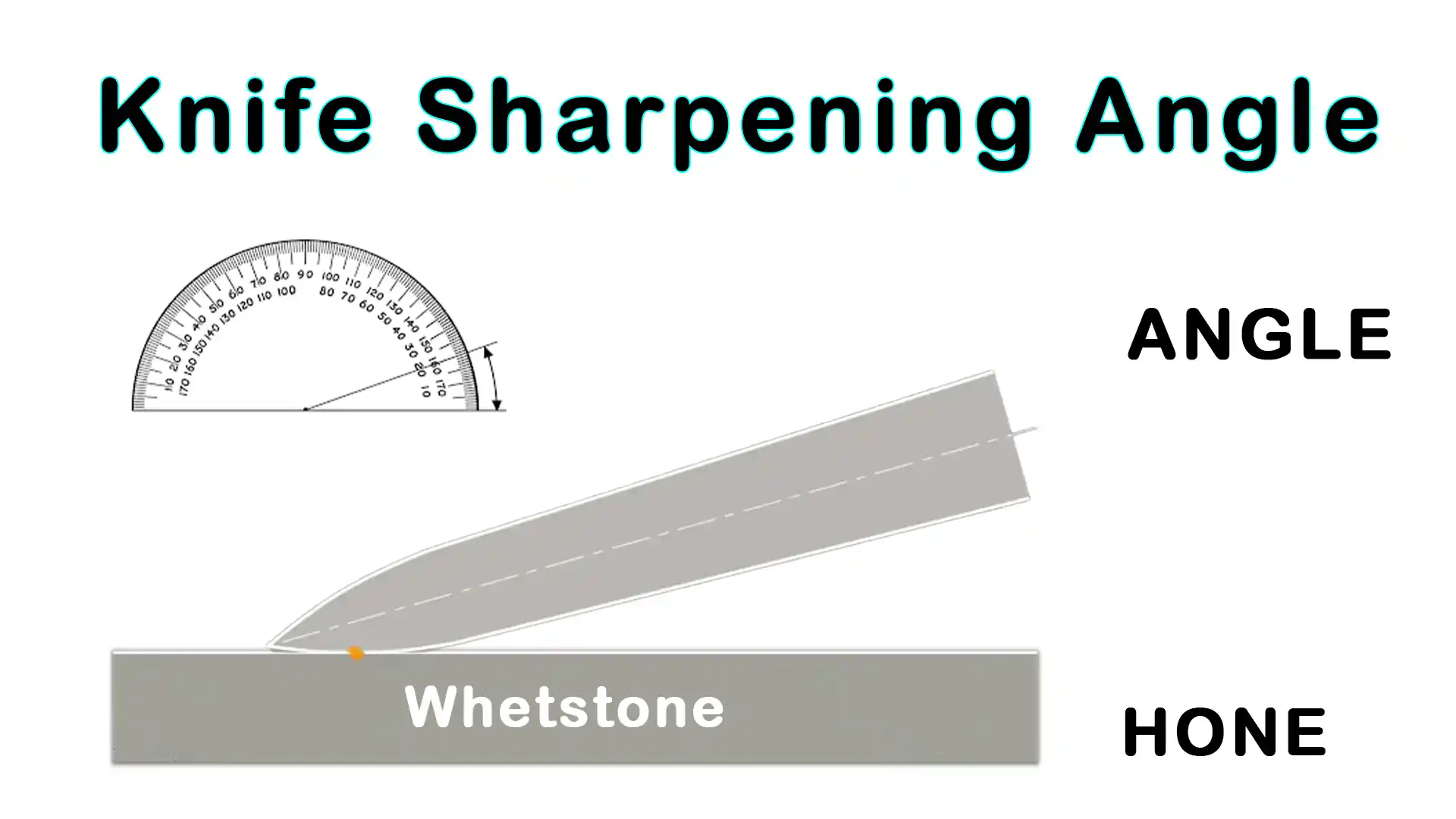
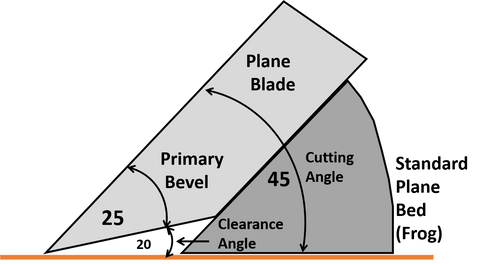
The knife sharpening angle is the tilt between the blade face and the stone or sharpening surface. It defines the thinness of the edge. A lower angle makes a sharper edge. A higher angle makes a stronger edge.
Angle controls three main things:
- Sharpness. Lower angles slice cleaner.
- Durability. Higher angles resist chips and roll.
- Cutting use. Different jobs need different angles.
Understanding the knife sharpening angle helps you tune edges for cooking, woodwork, or outdoor use. Pick the right angle and you get better performance and longer edge life.
Common angle ranges and the knives that use them
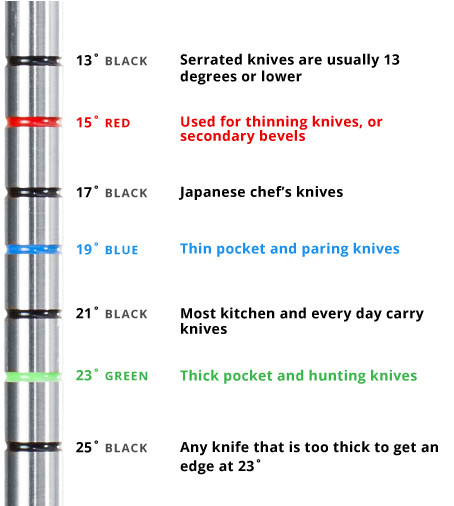
Knives fall into clear angle groups. Below are practical ranges and uses.
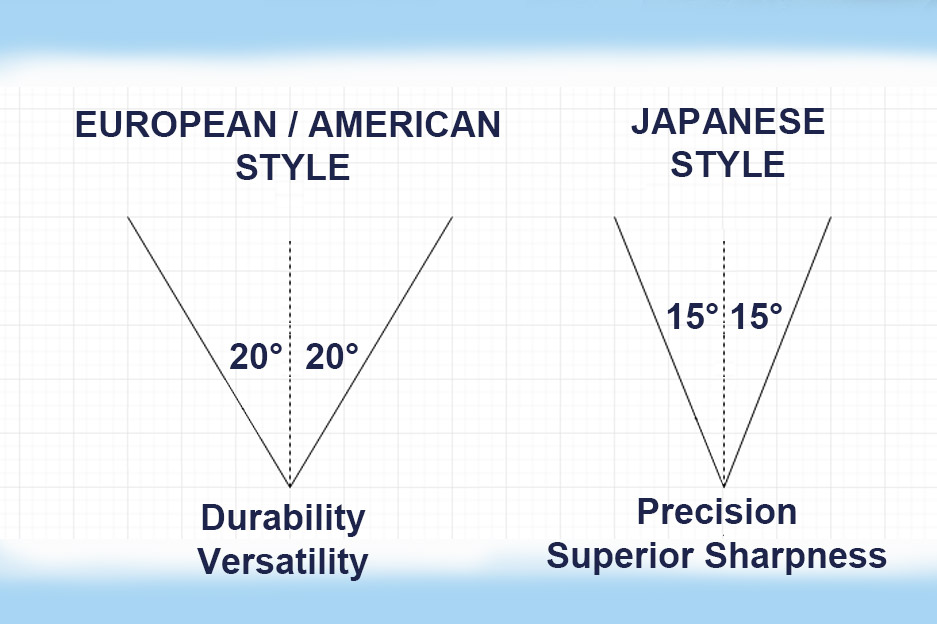
- 10°–15° per side
- Ultra-thin edges for sushi knives and delicate slicing.
- Very sharp but fragile. Not good for bones or frozen food.
- 15°–20° per side
- Typical for high-end kitchen knives. Great balance of sharpness and strength.
- Good for vegetables, fish, and most home tasks.
- 20°–25° per side
- Workhorse angle for many Western kitchen knives and outdoor blades.
- Strong edge that performs well under tougher use.
- 25°–30° per side
- Heavy-use blades, axes, and certain survival knives.
- Very durable but less razor-sharp.
When people ask the best knife sharpening angle, answer depends on knife steel, use, and how often you sharpen. I usually set kitchen knives at 17°–20° for home cooks.
How to measure and set the angle
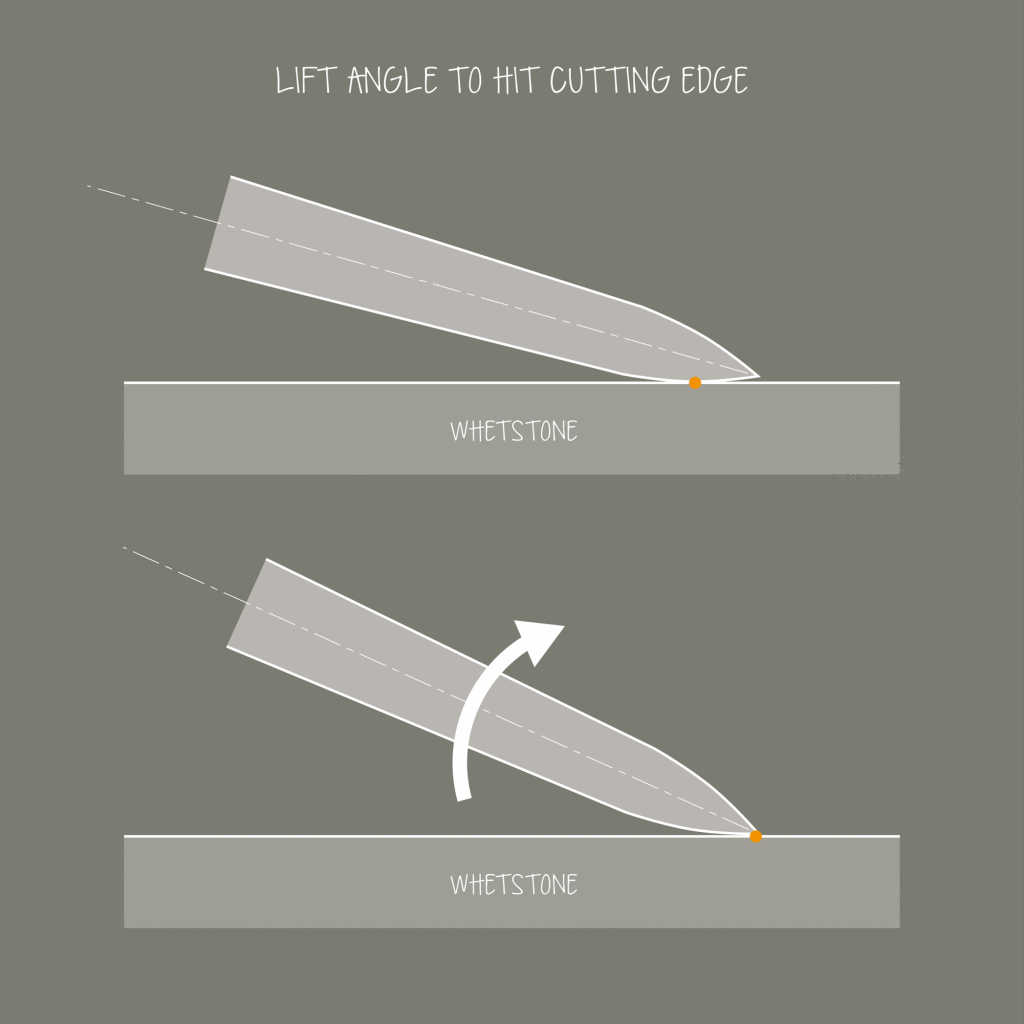
You can measure and set the knife sharpening angle in several easy ways.
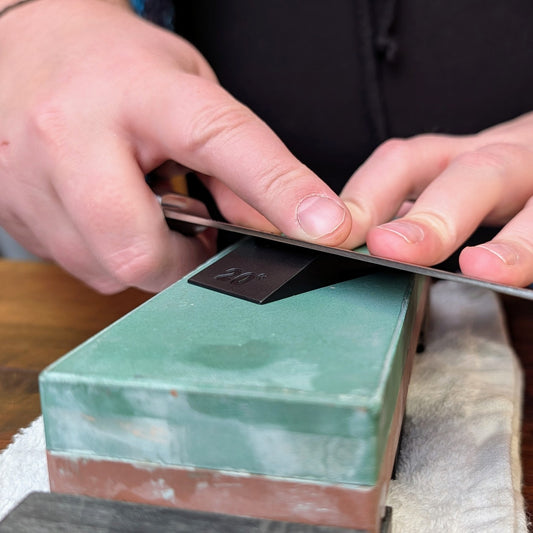
- Use an angle guide or sharpening jig.
- Attach the guide to the blade. It locks a consistent angle.
- Use an angle cube or digital protractor.
- Place it on the flat of the blade or spine. Read the degrees.
- Use the visual or finger method.
- Rest the spine on the stone and tilt until you hit the target by eye.
- Count method (for woodworkers)
- Each finger width equals roughly 5°–7°, so two fingers is about 10°–14°.
Steps to set the angle by hand:
- Decide target angle like 17° or 20° per side.
- Rest the blade on the stone with light contact.
- Tilt the handle until the bevel meets the stone consistently.
- Hold that tilt while running strokes.
Consistency is key. The exact knife sharpening angle matters less than holding the same angle across the whole edge.

Sharpening techniques by angle
Different angles use different approaches. Here are practical steps for common goals.
For 15°–17° (fine kitchen edge)
- Use a fine waterstone or ceramic stone.
- Start with a 1000 grit to reshape and 3000–8000 grit to refine.
- Use light, even pressure and short strokes.
- Finish on a leather strop to polish the edge.
For 17°–20° (everyday kitchen)
- Use 400–1000 grit to set the bevel.
- Move to 3000–6000 grit for refinement.
- Maintain consistent angle and equal passes per side.
- Test on paper or tomato to verify.
For 20°–25° (heavy use, outdoor)
- Use coarser stones or diamond stones to remove metal fast.
- Keep longer strokes to form a strong bevel.
- Use a strop or fine stone to remove burrs.
- Check edge strength by slicing soft rope or wood.
Electric sharpeners and belts often have preset angles. Match those presets to your desired knife sharpening angle for best results.
How angle affects performance and edge life
Angle choice creates clear trade-offs. Know them before you grind metal.
- Lower angles (sharper)
- Pros: Better slicing, less force required.
- Cons: Edge chips and dulls faster, needs frequent honing.
- Higher angles (stronger)
- Pros: Withstands tough tasks, lasts longer between sharpenings.
- Cons: Less slicing finesse and more drag when cutting.
Steel type matters. Hard steels hold a low-angle edge well but can be brittle. Softer steels need a slightly larger angle for strength. The right knife sharpening angle balances steel, use, and how often you want to sharpen.
Common mistakes and practical tips from my experience
I sharpened knives for years and learned key lessons the hard way.
Common mistakes to avoid:
- Switching angles mid-stroke. This ruins bevel geometry.
- Setting too low an angle for a soft steel. Edge folds quickly.
- Skipping burr removal. A burr hides poor sharpening work.
- Overusing coarse grits for final finishing. It leaves a rough edge.
Practical tips I use and recommend:
- Mark the edge with a permanent marker. It shows where you contact the stone.
- Count strokes per side to keep balance. Start with 10–12 light passes.
- Use a progression of grits. Coarse to fine gives the best edge.
- Keep stones flat. A hollow stone forces inconsistent angles.
These small habits made my edges more reliable and easier to maintain.

Tools and accessories to lock in a consistent angle
Tools make angle control simple and repeatable.
- Manual angle guides and clamp jigs
- Great for beginners and repeatable results.
- V-guides and rod systems
- Fast setup for consistent bevels.
- Diamond plates and whetstones
- For rapid metal removal and fine finishing.
- Angle cubes, digital protractors
- Quick checks to verify your knife sharpening angle.
- Leather strops and compound
- Polishes and removes micro-burrs for true sharpness.
I use a simple plastic angle guide and a leather strop on nearly every knife. It cuts time and boosts consistency.
How to test and maintain your angle and edge
Testing and upkeep keep your edge useful and safe.
Simple tests:
- Paper slice. A sharp edge slices clean paper. It’s a fast check.
- Tomato test. A sharp knife skins a tomato without crushing it.
- Thumb drag (careful). Gentle drag across the spine checks for burrs.
Maintenance tips:
- Hone regularly with a steel or ceramic rod at your chosen knife sharpening angle.
- Touch up on a fine stone when the edge dulls slightly.
- Reprofile only when the edge is too dull or damaged.
Regular light maintenance beats rare aggressive regrinds. Keep the same knife sharpening angle during hones for best results.
Frequently Asked Questions of knife sharpening angle
What is the best knife sharpening angle for kitchen knives?
Most kitchen knives perform best between 15° and 20° per side. Choose closer to 15° for high-end steels and 20° for tougher daily use.
How do I know what angle my knife currently has?
Use a digital angle finder or visually compare to a guide while the blade rests on the stone. Marking the bevel with a marker helps you see contact points.
Can I sharpen at any angle I want?
Yes, but extreme angles trade sharpness for strength. Keep angles consistent and match them to steel and use for best results.
How often should I reprofile the angle?
Reprofile only when the edge is too worn or damaged to restore with normal sharpening. Most cooks reprofile once or twice a year.
Will sharpening at a lower angle make my knife weaker?
Lower angles make an edge finer and more prone to chips. Pair a low knife sharpening angle with harder steel and gentle use to avoid damage.
Conclusion
Choosing and holding the right knife sharpening angle is the most important step to get the edge you need. Match angle to knife steel and use, stay consistent when you sharpen, and use the right tools to measure and maintain the bevel. Try a small change in angle on one knife and test it for a week to see the difference. Share your results, subscribe for more guides, or leave a comment with your sharpening questions.

Maliha Akter is a kitchen knife reviewer and food preparation specialist with over 6 years of experience testing Japanese kitchen knives and everyday cooking tools. She focuses on performance, safety, durability, and real-world usability to help home cooks choose the right knives for efficient and enjoyable cooking.
Expertise:Japanese Knives • Vegetable Knives • Product Reviews • Kitchen Efficiency • Knife Care