Knife sharpening basics: keep blades sharp with the right angle, stone, and regular maintenance.
I have spent years sharpening kitchen and outdoor knives for home cooks and pros. This guide on knife sharpening basics explains how to choose tools, set angles, and maintain edges safely. Read on to learn tested methods, avoid common mistakes, and get confident at keeping blades sharp.

Why sharp knives matter
A sharp knife cuts cleanly. It reduces slips, speeds prep, and keeps food textures intact. Dull blades force you to press harder. That raises the chance of accidents and ruins delicate cuts.
Benefits of understanding knife sharpening basics:
- Safer handling and fewer slips.
- Faster, cleaner food prep.
- Longer knife life and less frequent replacement.
I once fixed a chef’s paring knife that was rounded at the tip. After restoring the edge, prep time dropped and waste fell by half. Learning knife sharpening basics pays off quickly.
Tools and methods for sharpening
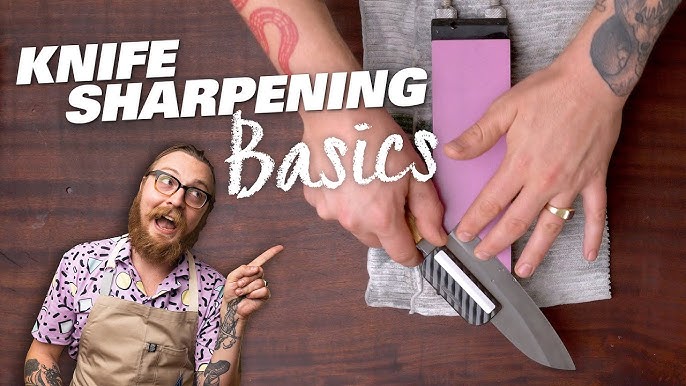
There are several reliable tools for knife sharpening basics. Choose the right tool for your knife and skill level.
Common tools:
- Whetstones: come in coarse, medium, and fine grits. Best control and finish.
- Honing rods: realign edges between sharpening sessions. Not for major repairs.
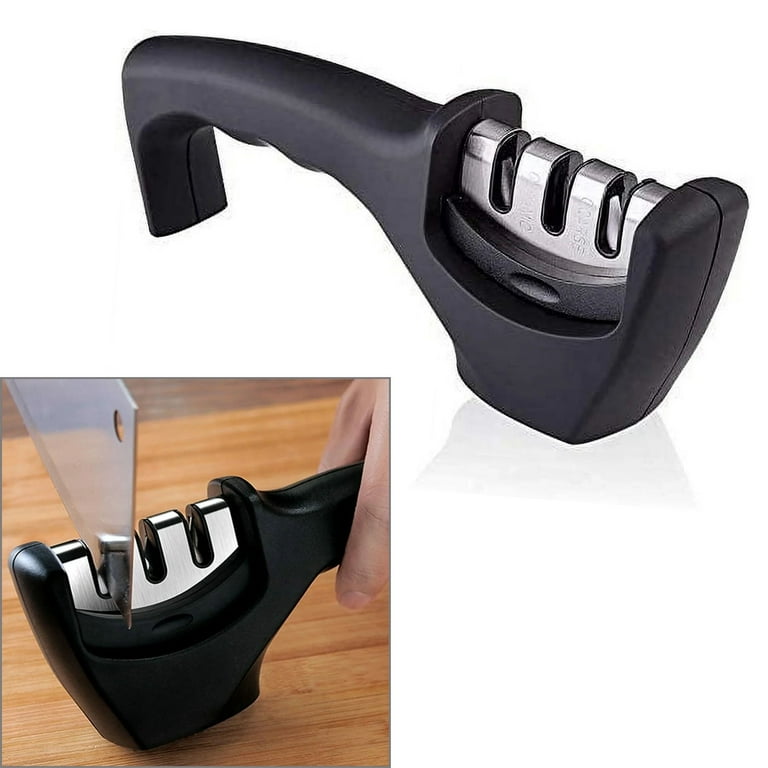
- Pull-through sharpeners: easy and quick. Good for beginners but can remove more metal.
- Electric sharpeners: fast and consistent. Good for busy users but may be aggressive.
- Strops and polishing pastes: refine and remove burrs for a razor finish.
When learning knife sharpening basics, start with a medium-grit whetstone and a simple angle guide. Practice on inexpensive blades first to build confidence.

Understanding angles, grits, and edge geometry
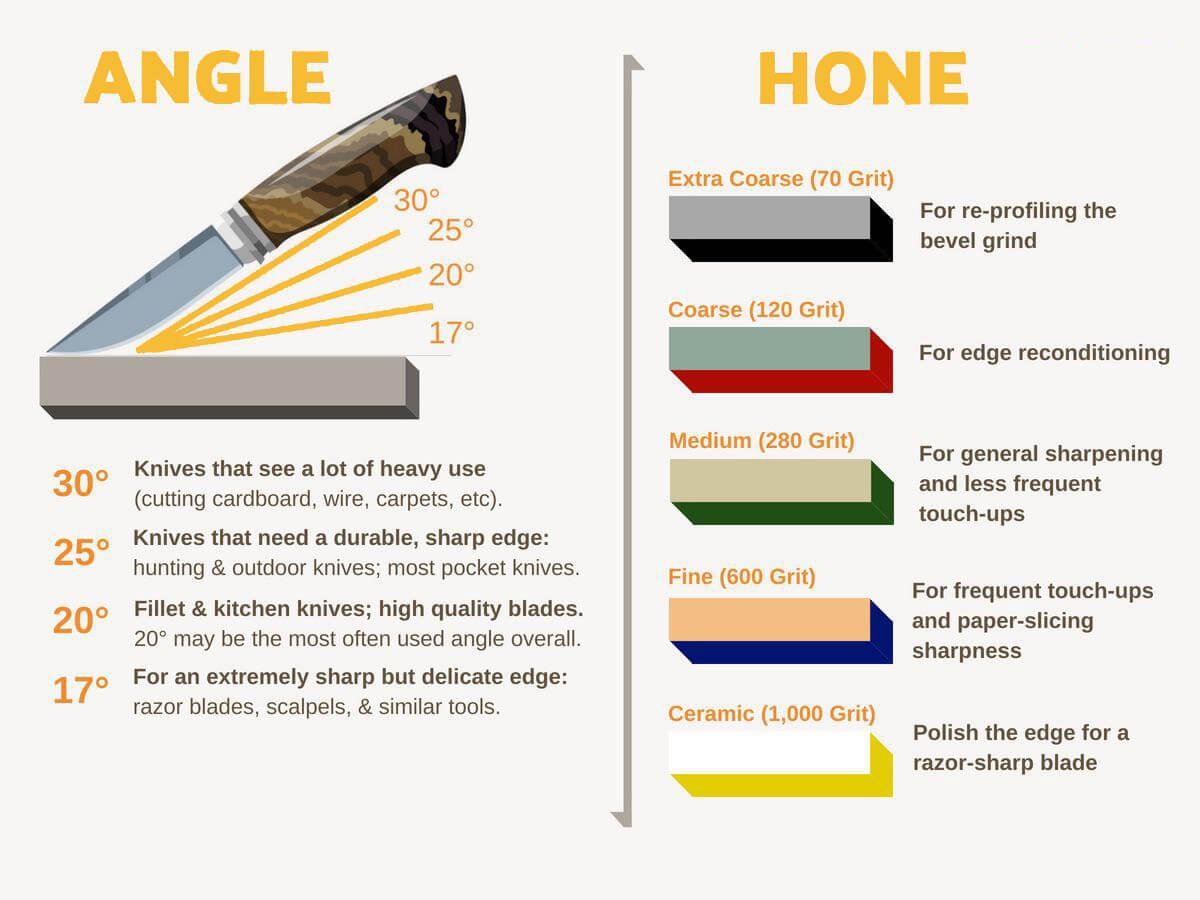
Edge angle and grit determine the knife’s performance. Knowing these basics helps you choose the right approach.
Key concepts:
- Angle: Lower angles (12–18°) make a sharper but more delicate edge. Higher angles (20–25°) create a tougher edge for heavy use.
- Grit: Coarse grits (200–600) reshape damaged edges. Medium grits (800–2000) create a basic edge. Fine grits (3000–8000) polish and refine.
- Edge geometry: Flat, hollow, or convex grinds affect cutting and maintenance needs.
Practical tip: Match the angle to the knife’s use. A chef’s knife for veg and meat benefits from 15–20°. A hunting knife used for chopping should be 20° or more.
Step-by-step sharpening guide (whetstone method)
This is a simple, repeatable process from my hands-on work.
- Prepare the stone
- Soak a water stone or oil the stone as required. Keep it flat and clean.
- Set the angle
- Hold the knife at the chosen angle. Use an angle guide if needed.
- Stroke the blade
- Push the blade across the stone, moving from heel to tip. Use even pressure.
- Repeat on the other side to keep the edge centered.
- Progress grits
- Start with coarse grit if needed, then switch to medium and fine grits.
- Count strokes or use time to keep sides even.
- Remove the burr
- Lightly alternate single strokes per side to remove the burr.
- Hone and strop
- Use a honing rod for quick realignment.
- Finish with a strop to polish the edge.
Safety tips:
- Keep fingers clear of the edge.
- Work slowly until you feel confident.
- Secure the stone on a damp towel to prevent slipping.

Maintaining edges and daily care
Daily care makes sharpening less frequent. These simple steps keep an edge longer.
Daily habits:
- Hone regularly to realign the edge.
- Hand wash knives and dry them immediately.
- Store blades in a block, magnetic strip, or sheath.
When to sharpen:
- If the knife tears food instead of slicing cleanly.
- If you need extra force to cut soft items.
- Rough checks like cutting paper can show dullness.
I sharpen my main chef’s knife roughly every 3–6 months, with honing weekly. That schedule keeps tasks quick and safe.

Troubleshooting and common mistakes
Even experienced people make errors. These are common issues and fixes.
Common mistakes:
- Using wrong angle: fix by practicing with a guide or marker.
- Skipping coarse grit: you cannot fix chips with only fine stones.
- Overuse of pull-through sharpeners: they can remove too much metal.
- Rushing: uneven edges happen when you hurry.
Fixes:
- Use a marker on the edge to see where metal is removed.
- Flatten worn stones with a lapping plate.
- Practice on cheap knives before moving to expensive blades.

PAA-style quick questions
What is the easiest way to start learning knife sharpening basics?
- Begin with a medium-grit whetstone and an angle guide. Practice on inexpensive knives and make short, consistent strokes.
How often should I sharpen my kitchen knives?
- It depends on use. Most home cooks sharpen every 3–6 months and hone weekly.
Do honing rods sharpen or just align?
- Honing rods realign the edge. They do not remove significant metal like stones do.
Can any knife be sharpened at home?
- Most knives can be sharpened. Ceramic blades and some specialty steels need special tools or professional service.
Is professional sharpening worth it?
- Yes for expensive or damaged knives. Professionals restore edge geometry faster than most beginners.
Frequently Asked Questions of knife sharpening basics
What angle should I use for my chef’s knife?
Use roughly 15–20° per side for a chef’s knife. This range balances sharpness and durability.
How do I know when to switch grits on a stone?
Move up when the edge looks even and burrs form consistently. Coarse to medium to fine gives best results.
Can I use a leather strop at home?
Yes. A leather strop is easy to use and improves cutting performance after sharpening.
Does sharpening remove a lot of metal?
Sharpening removes a small amount each time. Excessive or aggressive methods remove more metal and shorten knife life.
How do I check for a burr?
Lightly run a finger across the edge (not along). A burr feels like a slight ridge. Use care to avoid cuts.
Conclusion
Sharp knives change how you cook and work. Mastering knife sharpening basics saves time, improves safety, and extends the life of your blades. Start with the right tools, practice consistent angles, and keep a simple maintenance routine. Try one sharpening session this week and see how much easier kitchen tasks become. Share your results, ask questions, or subscribe to learn more about blade care.
Maliha Khatun has spent 5 years hands-on testing Japanese knives for everyday home cooks. She has evaluated over 60 blades across nakiri, santoku, gyuto, and petty categories — scoring each on edge retention, steel quality, handle comfort, and value for money. She writes to help home cooks buy the right knife without the guesswork.
Expertise:Japanese Knives • Vegetable Knives • Product Reviews • Kitchen Efficiency • Knife Care
Leave a Reply