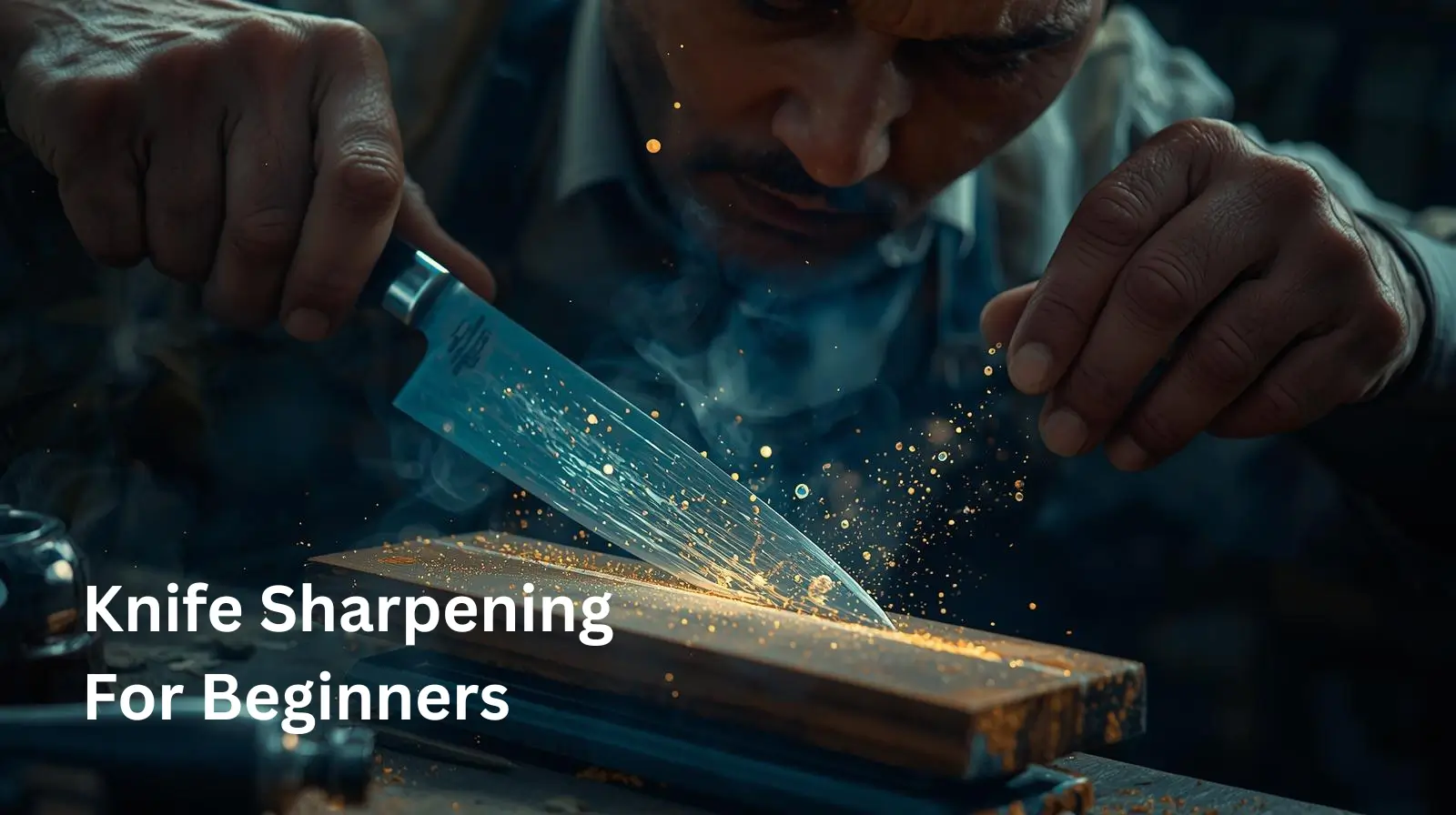
Sharp knives make cutting safer and easier for home cooks and pros.
I’m a hands-on sharpening coach with years of work in kitchens and workshops. This guide on knife sharpening for beginners draws on real tests and clear technique. Read on to learn tools, step-by-step methods, safety tips, and mistakes to avoid so you can sharpen with confidence.

Why knife sharpening for beginners matters
A sharp blade cuts better. It makes food prep faster and safer. Dull knives slip more and cause more injuries. Learning knife sharpening for beginners saves money by keeping knives useful longer.
Good sharpening also protects blade geometry. A properly sharpened edge keeps its shape and lasts. For new sharpeners, the process looks complex. This guide breaks it down into clear steps.

Tools and supplies for knife sharpening for beginners
Choose simple gear to start. Here are the basic tools you need.
- Whetstone or sharpening stone – Use a two-sided stone with coarse and fine grits.
- Water or oil – Use water stones with water. Use oil for oil stones.
- Honing rod – Steel or ceramic for quick touch-ups.
- Leather strop – Polishes and removes burrs after sharpening.
- Angle guide (optional) – Helps keep a steady angle as you learn.
- Clamp or non-slip pad – Keeps stones steady during use.
If you try pull-through sharpeners or electric sharpeners, use them carefully. They can work, but they remove more metal. For solid technique, practice with a whetstone. I learned on a cheap pull-through and switched to stones. The control from stones is worth it.

How to sharpen a knife: step-by-step for beginners
Follow these steps when practicing knife sharpening for beginners. Keep motions slow and steady.
Prepare the stone
- Soak a water stone for 5 to 15 minutes or follow the stone’s instructions.
- Place it on a stable non-slip surface.
Set the angle
- Most kitchen knives use a 15 to 20 degree angle per side.
- Use an angle guide until you can hold it steady by feel.
Start with the coarse grit
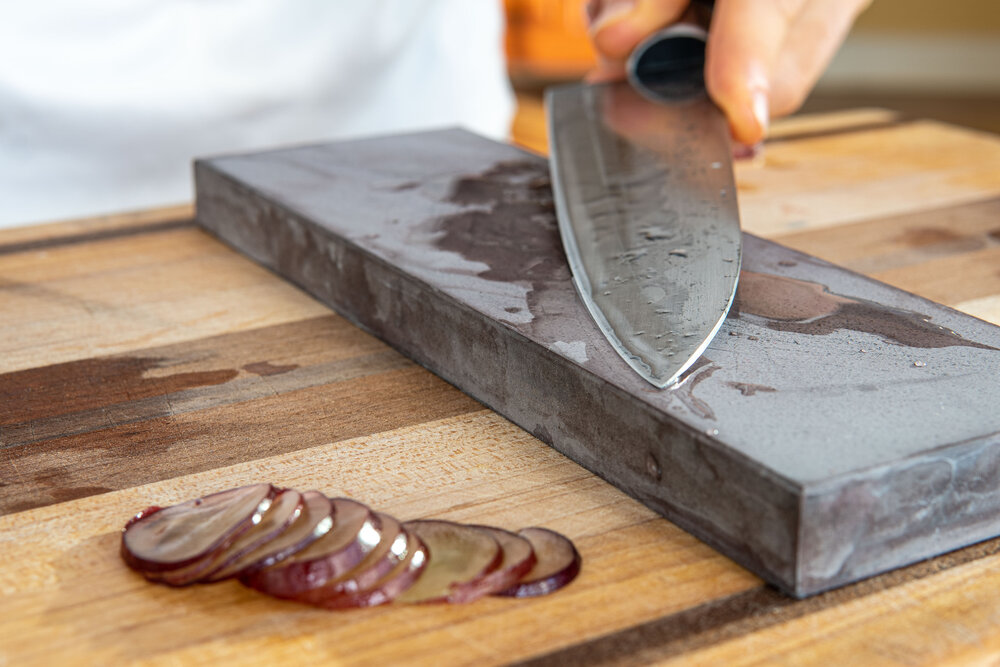
- Place the blade behind the edge on the stone at the chosen angle.
- Push the blade away from you as if slicing a thin layer off the stone.
- Maintain light, even pressure. Repeat 8 to 12 strokes per side.
Check for a burr
- Run your fingertip lightly across (not along) the flat near the edge.
- Feel a tiny burr on the opposite side indicating metal has moved.
Move to the finer grit
- Flip to the fine side and repeat the same stroke count.
- Use lighter pressure to refine the edge and remove the burr.
- Use a paper slice test or slice a tomato skin.
- If it tears, repeat fine grit passes. If it slices cleanly, you are done.
Finish on a strop
- Strop leather with paste or dry leather.
- Pull the blade away from the edge across the strop to polish and remove micro-burrs.
Safety tips during sharpening
* Keep fingers behind the edge at all times.
- Work slowly. Rushing causes slips and mistakes.
- Stabilize the stone. A slipping stone can lead to accidents.
I remember a first session where I used too much pressure. The edge took longer to form and the knife lost shape. Light, consistent strokes work best.

Stropping and finishing in knife sharpening for beginners
Stropping gives a refined, mirror-like edge. It is the last step for many chefs.
- Why strop – It removes tiny burrs and aligns the edge for immediate sharpness.
- How to strop – Place leather on a stable base. Drag the blade spine-first across the leather away from the edge. Repeat 10 to 20 strokes per side.
- When to strop – After fine-grit sharpening or sharpening in the field for a quick finish.
A good strop can make a kitchen knife feel usable without heavy sharpening. I keep a small strop near my prep station for quick touch-ups. It saves time and keeps edges consistent.

Maintenance and safety for knife sharpening for beginners
Maintain blades and tools to avoid frequent heavy sharpening. This reduces wear.
- Hone regularly – Use a honing rod weekly to realign the edge.
- Clean after sharpening – Remove metal filings and oil. Dry blades fully.
- Store safely – Use a block, magnetic strip, or blade guards.
- Limit sharpening frequency – Too much sharpening removes metal and shortens blade life.
Safety rules
- Point the edge away from your body.
- Use protective gloves if you’re unsure.
- Keep children and pets away while you sharpen.
Apply these simple routines to get reliable results and safer use.
Common mistakes to avoid when learning knife sharpening for beginners
Avoid habits that frustrate progress. These are common pitfalls.
- Rushing the angle – Changing angles wastes edge and yields poor results.
- Using too much pressure – Heavy pressure grinds metal away unevenly.
- Ignoring the burr – Not forming or removing a burr means the edge isn’t truly sharp.
- Skipping maintenance – Letting knives go dull forces big grinds later.
- Over-relying on pull-throughs – They can work but often remove too much metal.
I once flattened a nice chef’s knife by over-sanding one side. Take your time. Small, consistent changes beat big corrections.

Frequently Asked Questions of knife sharpening for beginners
What is the easiest method of knife sharpening for beginners?
The easiest method is a coarse-to-fine whetstone routine with steady angles. Pull-through sharpeners are simpler but give less control and can remove more metal.
How often should a beginner sharpen their knives?
Sharpening depends on use, but most home cooks need stone sharpening every 6 to 12 months. Hone more often—every few uses—to keep edges aligned.
What angle should beginners use to sharpen kitchen knives?
Use 15 to 20 degrees per side for most kitchen knives. Japanese–style knives use lower angles; Western knives often use slightly higher angles.
Can I use a honing steel instead of sharpening?
A honing steel realigns the edge; it does not remove metal to rebuild a dull edge. Use it frequently and sharpen on a stone when the blade won’t cut.
Is a whetstone better than an electric sharpener for beginners?
Whetstones teach control and preserve edge geometry. Electric sharpeners are faster but less forgiving. For skills and long-term blade care, start with stones.
Conclusion
Mastering knife sharpening for beginners begins with simple tools and steady practice. Focus on angle, light pressure, burr checks, and regular honing. Small, consistent steps build durable skills and sharper knives. Try a short practice session this week and share your experience or questions below to keep learning.
Maliha Khatun has spent 5 years hands-on testing Japanese knives for everyday home cooks. She has evaluated over 60 blades across nakiri, santoku, gyuto, and petty categories — scoring each on edge retention, steel quality, handle comfort, and value for money. She writes to help home cooks buy the right knife without the guesswork.
Expertise:Japanese Knives • Vegetable Knives • Product Reviews • Kitchen Efficiency • Knife Care
Leave a Reply