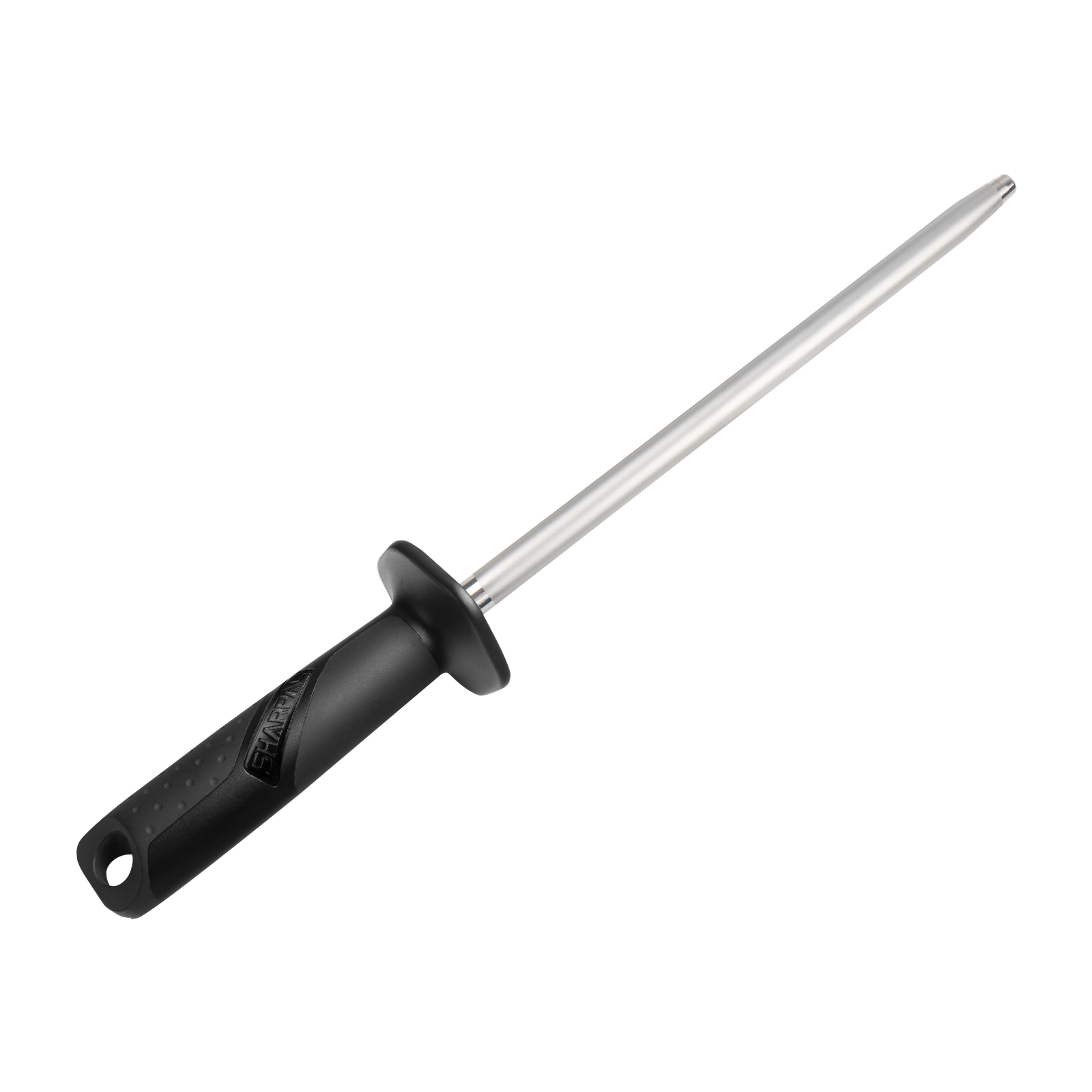
Sharpen a dull blade quickly and safely using a rod for a keen, long-lasting edge.
I’ve sharpened hundreds of knives using rods in kitchens and workshops. This guide on knife sharpening with rod explains why rods matter, which rod to choose, and how to sharpen step by step. I will show clear angles, safe technique, and troubleshooting from real experience. Read on to master knife sharpening with rod and keep blades working like new.

Why choose a sharpening rod for your knives
A sharpening rod is quick, portable, and keeps edges aligned. Knife sharpening with rod is ideal for daily touch-ups and maintaining bevels between full sharpenings. The rod does not remove much metal when used correctly, so it extends blade life. For cooks and outdoors users, learning knife sharpening with rod saves time and money.

How a sharpening rod works
A rod realigns a knife’s edge and, depending on the surface, can remove burrs and small amounts of metal. When you use knife sharpening with rod, you run the blade along the rod at a set angle. The motion straightens rolled metal and polishes the bevel. Repeating the motion on both sides creates a keen, even edge.
What’s the difference between honing and sharpening?
Honing realigns the edge without removing much metal. Sharpening removes metal to create a new bevel. A rod often hones and can sharpen slightly if abrasive.
Can a rod fix a very dull or chipped blade?
A rod can restore a mildly dull edge and remove small burrs. Deep chips need stones or professional sharpening for proper repair.
:max_bytes(150000):strip_icc()/sea-honing-steels-test-primary-ashlee-redger-16-ab14942666c942af8965fe4b980afcdf.jpeg "Knife Sharpening With Rod: Quick Pro Tips 4")
Types of sharpening rods and when to use them
Choose a rod based on abrasiveness and blade type.
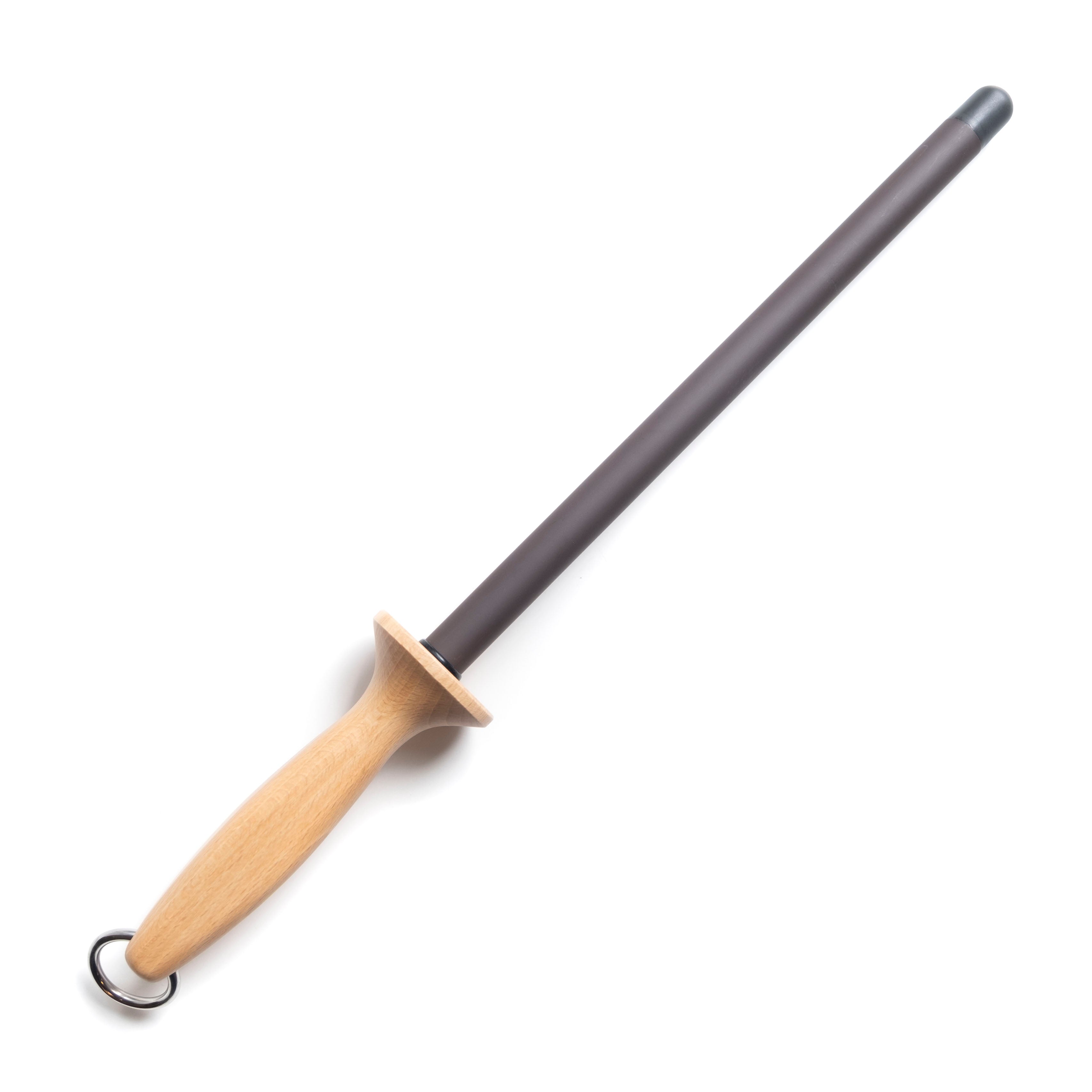
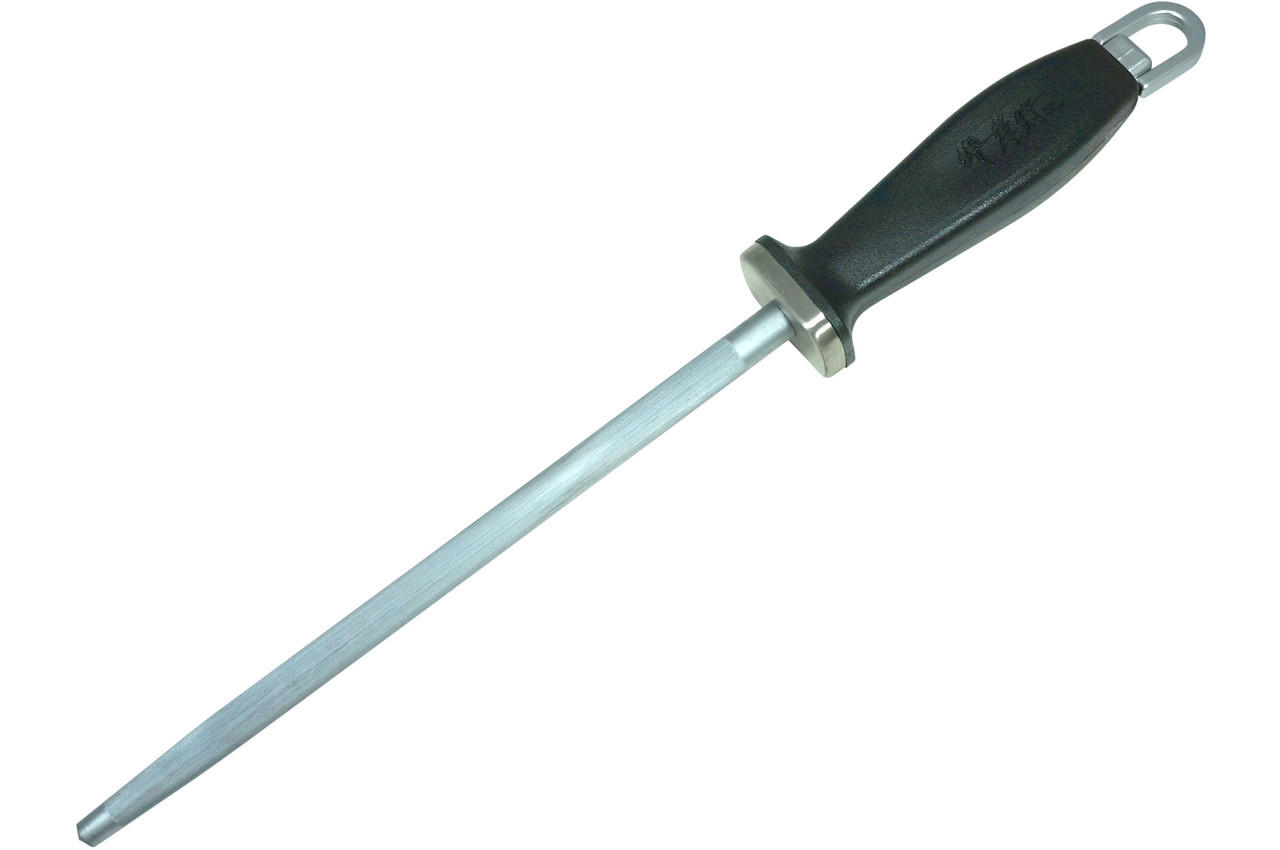
- Ceramic rod: Fine grit for polishing and finishing after coarse work. Best for daily knife sharpening with rod to keep an edge keen.
- Steel (smooth) rod: Least abrasive; mainly aligns edges. Great for frequent honing and gentle maintenance.
- Diamond rod: Coarse and fast at removing metal. Use diamond rods for restoring dull blades or hard steels.
- Tapered rod: Easier to use on curved blades and knives with complex shapes.
Match the rod to your knife steel. Hard steels often need diamond or ceramic rods; softer steels respond well to steel and ceramic rods.

Step-by-step: How to sharpen a knife with rod
Follow these clear steps for safe, repeatable results when doing knife sharpening with rod.
- Secure the rod vertically with the tip on a non-slip surface or hold it steady by the handle.
- Hold the knife at the correct angle (see next section) with a light, controlled grip.
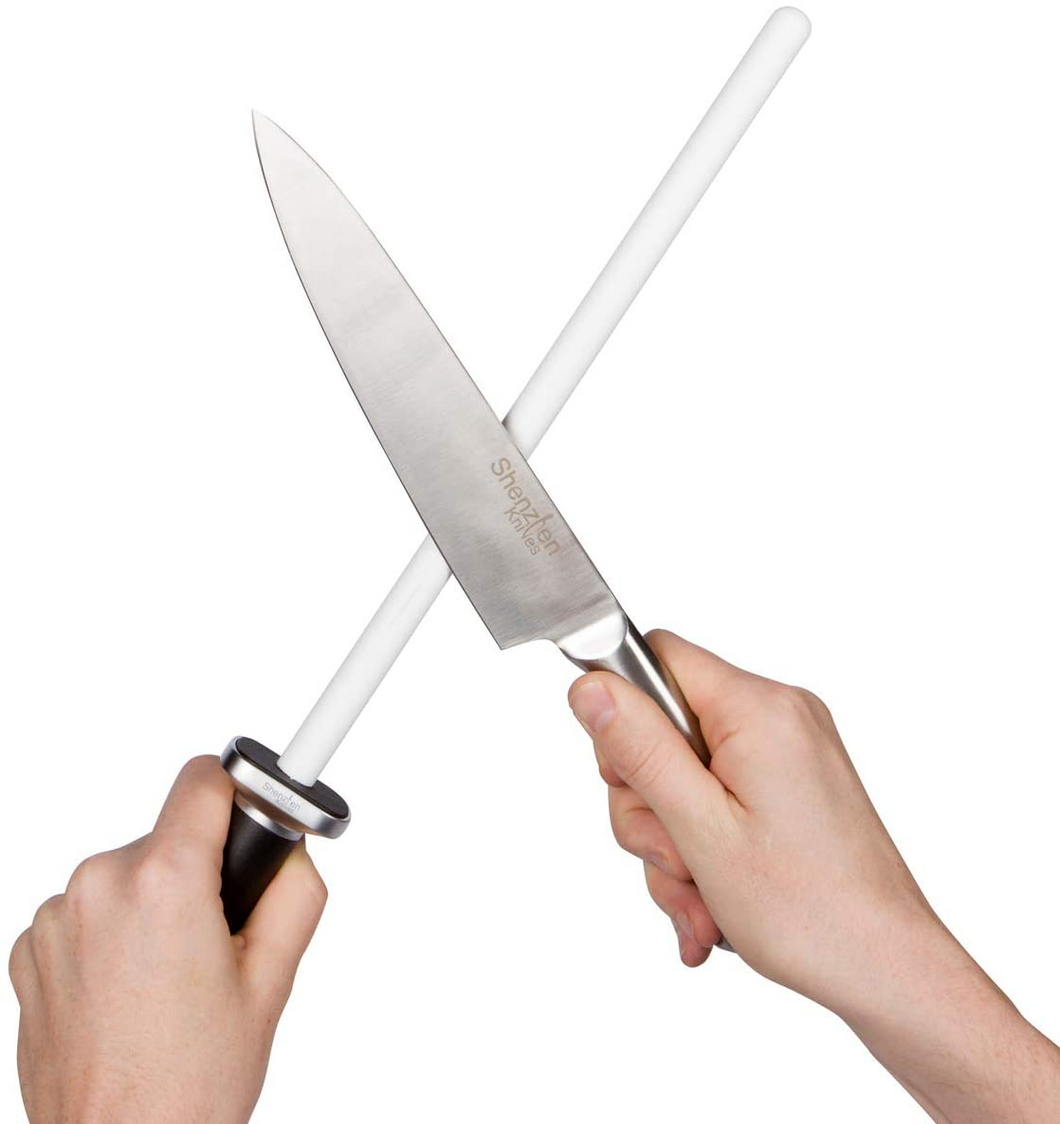
- Draw the blade from heel to tip along the rod, moving away from the rod. Use one smooth motion.
- Repeat the same number of strokes on each side, usually 5–10 per side for honing.
- Test the edge on paper or by gentle slicing. Finish with lighter strokes for polish.
Keep movements steady. Speed does not equal skill when practicing knife sharpening with rod.
 pressure, and technique”
style=”max-width: 100%; height: auto; border: 2px solid black; border-radius: 10px; display: block; margin: 0 auto;”
loading=”lazy”
/>
Angle, pressure, and technique
Angle is the most important factor in knife sharpening with rod.
- Typical kitchen knives: 15–20 degrees per side.
- Pocket knives and hard-steel blades: 20–25 degrees per side.
- Use light pressure. Let the rod do the work.
- Maintain the same angle each stroke. Visualize a small wedge between blade and rod.
A simple trick: hold the knife so the spine is about the width of two stacked coins above the rod; this approximates 20 degrees. Practice on old knives to feel the right motion.
Common mistakes and how to avoid them
Avoid these frequent errors when doing knife sharpening with rod.
- Rushing strokes: Move slowly to keep the angle steady.
- Uneven strokes: Do equal strokes per side to avoid a lop-sided edge.
- Too much pressure: Excess force removes metal and shortens blade life.
- Wrong rod choice: Use diamond rods for hard steels and ceramic for finishing.
- Ignoring safety: Keep fingers clear and use controlled motions.
Correct these to sharpen faster and safer.
Maintenance: care for rods and knives
Proper care extends rod life and keeps results consistent.
- Clean ceramic and diamond rods with a soft brush after use.
- Wipe steel rods to prevent rust. Oil lightly if needed.
- Store rods in a dry place or protective sleeve.
- Clean knives before sharpening to remove grit and food residue.
- Periodically re-profile blade bevels on a stone if the edge is badly worn.
A well-kept rod improves every session of knife sharpening with rod.

Personal experience and expert tips
I learned knife sharpening with rod the hard way. Early on I pressed too hard and shortened blades. Switching to light pressure and consistent angles fixed that. A few practical tips from my workbench:
- Start with 5 strokes per side and increase if needed.
- Use a diamond rod for knives that have lost their bevel.
- Keep a small towel under your hand to steady and protect the knife.
- Practice on a cheap knife to build muscle memory before working on prized blades.
These habits make knife sharpening with rod fast and reliable.
Benefits and limitations
Knife sharpening with rod offers clear pros and cons.
Benefits
- Fast maintenance between full sharpenings.
- Portable and inexpensive.
- Gentle on blade life when used correctly.
Limitations
- Not ideal for fixing deep chips or reshaping a bevel.
- Requires practice to maintain a steady angle.
- Some rods wear unevenly over long use and need replacement.
Use rods as part of a broader sharpening routine for best results.
Frequently Asked Questions of knife sharpening with rod
How often should I use a rod on my kitchen knives?
Use a rod for light honing every few uses or weekly for busy kitchens. Full sharpening on stones is needed less often when you hone regularly.
Can I use a rod on serrated knives?
Most rods do not work well on serrations. Use a dedicated serration tool or professional sharpening for serrated edges.
Is a diamond rod better than ceramic for all knives?
Diamond rods remove metal faster, so they are better for very dull or hard-steel knives. Ceramic rods are best for polishing and regular maintenance.
Does honing change the blade angle?
Honing does not change the angle significantly; it realigns the existing bevel. Reshaping the angle requires stone or guided sharpening.
Can I damage my knife with a rod?
Yes, using excessive pressure or uneven strokes can harm the edge. Practice a gentle, consistent technique to avoid damage.
How do I know I’m holding the right angle?
Look for a thin, consistent contact line along the bevel as you stroke. Practice and simple visual checks help build accuracy.
Conclusion
Knife sharpening with rod is a practical skill that keeps blades ready and extends their life. With a steady angle, light pressure, and the right rod, you can sharpen quickly and safely. Start small, practice regular honing, and use stones for major repairs. Try the method today, share your results, and subscribe for more hands-on sharpening tips.
Maliha Khatun has spent 5 years hands-on testing Japanese knives for everyday home cooks. She has evaluated over 60 blades across nakiri, santoku, gyuto, and petty categories — scoring each on edge retention, steel quality, handle comfort, and value for money. She writes to help home cooks buy the right knife without the guesswork.
Expertise:Japanese Knives • Vegetable Knives • Product Reviews • Kitchen Efficiency • Knife Care
Leave a Reply