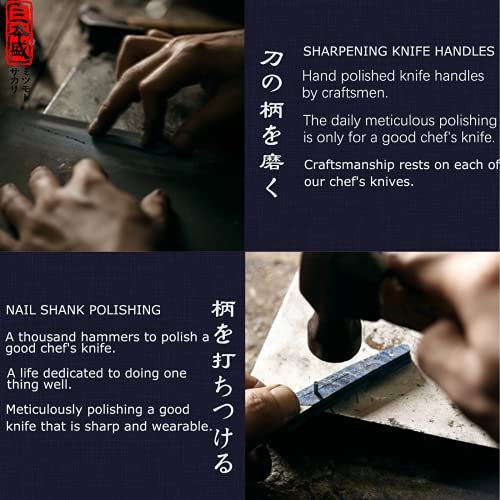
A sharp, elegant nakiri that feels handmade and slices vegetables with clean precision.
You know the frustration: dull knives smash tomatoes, and uneven cuts make meals look amateur. If you cook several times a week, you need a blade that stays sharp, slices thin, and feels secure in your hand. This nakiri solves that by offering a thin, flat blade profile for push-cutting vegetables, plus a solid heft for control. It also comes in a nice presentation box that makes it useful as a gift or a first quality upgrade for your kitchen.

Is MITSUMOTO SAKARI Nakiri Chef Knife 7 inch Good?
I give a clear yes for home cooks who want an affordable, traditional-style nakiri. The Mitsumoto Sakari Nakiri offers a thin 7-inch blade made from 9CR18MOV high carbon steel with a three-layer construction. It keeps a keen edge longer than typical stainless house knives and has a pleasant weight that helps when chopping dense vegetables.
In my kitchen, this Nakiri cut through carrots and daikon with a clean push-cut. I also used it for thinly slicing cabbage for slaw and noticed cleaner edges and less bruising on the greens. Once, I prepped a large batch of stir-fry veggies and the knife stayed sharp enough that I only touched it up once. For cooks who value straight, consistent vegetable cuts, this blade performs well.

My First Impression for MITSUMOTO SAKARI Nakiri Chef Knife 7 inch
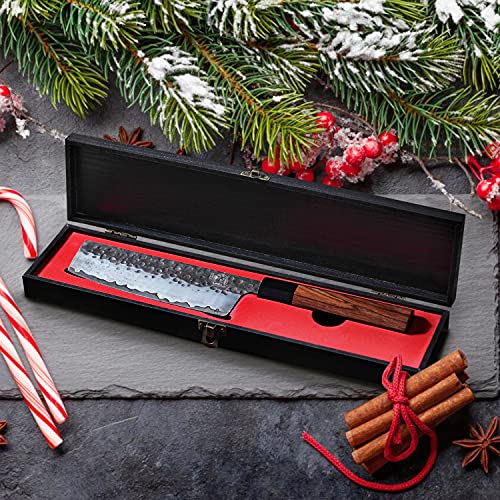
The knife arrived in a simple but attractive sandalwood-style box. Presentation felt premium for the price. Unwrapping revealed a satin-finished three-layer blade and a polished rosewood handle. The fit and finish were solid. There was no wobble or loose ferrule. The spine felt balanced in my hand, and the blade had a slight distal taper that I liked.
First use was easy. I rinsed and dried the knife, then sliced a bunch of bell peppers. The edge grabbed and slid through the skin. Setup required no seasoning or special steps—just a quick rinse. The performance matched my expectations for a hand-forged style blade. I felt pleased and a bit impressed at how well a mid-priced nakiri presented and cut right out of the box.

What Makes It Stand Out / Key Features
- 3-layer construction with a core of 9CR18MOV high carbon stainless steel for edge retention
- 7-inch flat nakiri blade ideal for push-cutting and thin vegetable slices
- Hand-forged look with a satin finish for reduced sticking and easy cleaning
- Rosewood handle for a classic look and comfortable grip
- Comes boxed in a sandalwood-style presentation box — good for gifting
- Balanced weight that aids controlled chopping and reduces wrist fatigue

What I Like
- Clean vegetable slices with minimal crushing — great for salads and stir-fries
- Good edge retention thanks to the 9CR18MOV core
- Comfortable rosewood handle that feels secure during long prep sessions
- Attractive presentation box, handy as a gift or storage
- Balanced feel that makes repetitive chopping less tiring
- Hand-forged aesthetic that looks higher-end than its price suggests
What Could Be Better
- Edge may require more frequent honing if you apply lateral twisting to bones or hard roots
- Rosewood handle needs care—avoid soaking or dishwasher use to prevent warping
- Blade is thin; not ideal for heavy bone or butcher tasks

My Recommendation
If you want a reliable vegetable knife, the Mitsumoto Sakari Nakiri is a smart buy. It fits cooks who prepare lots of produce and value neat, even cuts. I recommend it to home chefs who want a traditional Japanese-style nakiri without spending a premium. The blade balance and 9CR18MOV steel give you good performance and lasting sharpness. Keep the handle dry and hone the edge frequently for best results.
| Best for | Why |
|---|---|
| Vegetable-focused cooks | Flat nakiri blade gives clean push-cuts and thin slices |
| Gift buyers | Comes in a sandalwood-style box for presentable gifting |
| Cooks upgrading from cheap knives | Better steel and edge retention than standard stainless sets |

Alternative Products You Can Consider
Shun Classic Nakiri 7-inch — A higher-end option. Best for cooks who want razor edge retention and a luxury finish. It costs more but offers a finer grind and premium pakkawood handle. Compared to the Mitsumoto Sakari Nakiri, it has superior fit-and-finish but at a significant price premium.
Tojiro DP Nakiri 165mm — A great mid-range Japanese nakiri. It uses VG-10 core steel and is lighter in price. Tojiro excels in consistent factory sharpening and predictable performance. It’s a strong pick if you want a trusted brand with Japanese steel performance similar to the Mitsumoto option.
Mercer Culinary Millennia Nakiri — Budget-friendly and ergonomic. Best for cooks who want a lightweight, dishwasher-safe option. The Mercer won’t match hand-forged looks or edge retention of the Mitsumoto Sakari Nakiri, but it’s practical for busy kitchens and classroom use.
| Product | Best For | Key Difference |
|---|---|---|
| MITSUMOTO SAKARI Nakiri Chef Knife 7 inch | Home cooks wanting hand-forged feel | 3-layer 9CR18MOV core with rosewood handle and gift box |
| Shun Classic Nakiri 7-inch | Luxury-minded cooks | Higher-end materials and finish |
| Tojiro DP Nakiri 165mm | Mid-range performance buyers | VG-10 core, solid factory sharpening |

Final Verdict: Which Should You Buy?
The Mitsumoto Sakari Nakiri is best if you want a traditional nakiri with good edge life, pleasing balance, and a nice presentation box. It suits anyone who prepares lots of vegetables and wants clean, consistent slices. If you want a luxury blade with extra refinement, consider the Shun. If you need consistent mid-range performance and value, the Tojiro DP is an excellent alternative. Overall, the Mitsumoto Sakari Nakiri 7-inch strikes a solid balance of value, looks, and everyday performance for vegetable-centric cooking.
FAQs Of MITSUMOTO SAKARI Nakiri Chef Knife 7 inch – Hand Forged Japanese Kitchen Knives, 3-Layer 9CR18MOV High Carbon Steel, Rosewood Handle & Sandalwood Box
Is this knife suitable for meat?
Short answer: not ideal for heavy meat or bones. The blade is thin and designed for vegetables. It can handle boneless meats for slicing, but avoid cutting through bone.
How do I maintain the rosewood handle?
Wipe it clean and avoid soaking or dishwashers. Periodically apply light mineral oil to preserve the wood. Proper care prevents warping and extends the handle life.
How often should I sharpen or hone the blade?
Hone before each use or every few uses to keep the edge aligned. Sharpen on a whetstone when you notice reduced performance, typically every few months depending on use.
Is the blade stainless or carbon steel?
The knife uses a 3-layer construction with a 9CR18MOV high carbon stainless steel core. It offers better edge retention than basic stainless steels while still resisting rust when cared for.
Does it come with a warranty?
Warranty details vary by seller. Check the Amazon listing for current warranty and return policies before purchase.
Maliha Khatun has spent 5 years hands-on testing Japanese knives for everyday home cooks. She has evaluated over 60 blades across nakiri, santoku, gyuto, and petty categories — scoring each on edge retention, steel quality, handle comfort, and value for money. She writes to help home cooks buy the right knife without the guesswork.
Expertise:Japanese Knives • Vegetable Knives • Product Reviews • Kitchen Efficiency • Knife Care
Leave a Reply