Use whetstones, set a 12–16° angle, raise a burr, deburr cleanly.
If you want a crisp push-cut and paper-thin slices, this nakiri knife sharpening guide is for you. I have sharpened a lot of Japanese vegetable knives, and the steps here work. I will show you how to pick the right stones, set the right angle, and get a clean edge fast. Follow this nakiri knife sharpening guide and you will get safe, smooth cuts with less effort.
Why a sharp nakiri matters
A nakiri is made to push cut straight down. It has a flat edge and a tall blade. When it is sharp, it does not wedge in food. It glides. When it is dull, it cracks herbs, crushes tomatoes, and skids on onions.
A sharp nakiri saves time and keeps food clean. It holds line when you julienne. It stays stable on the board because of its flat profile.
From years of work at the stone, I learned this simple rule. If the edge bites a tomato skin with no force, your knife is ready. This nakiri knife sharpening guide will show you how to reach that point and keep it there.

Anatomy of a nakiri and how it affects sharpening
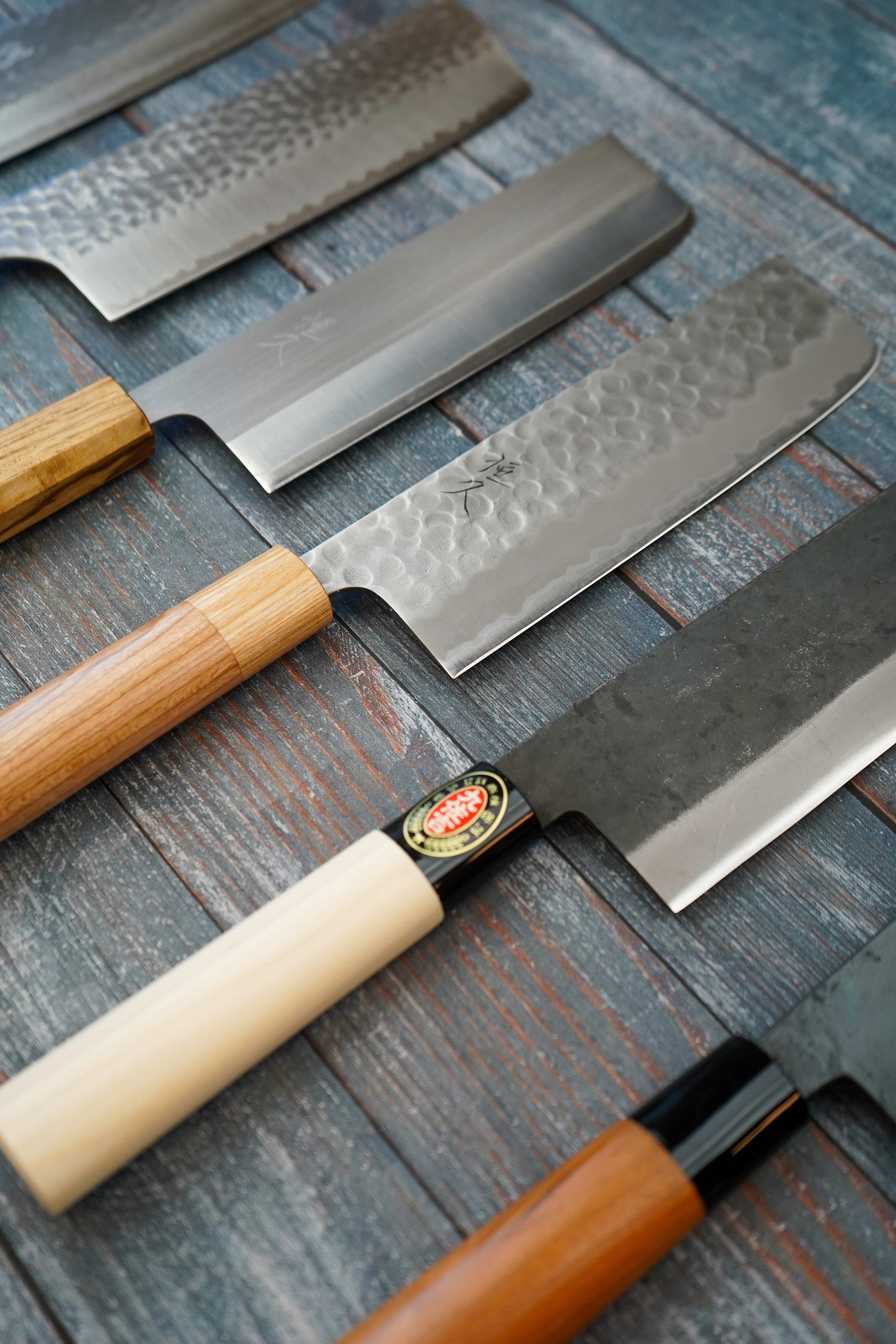
Most nakiri knives are double bevel. That means you sharpen both sides. The blade is thin and tall, so it wants a low angle. The edge is straight, so you keep the blade flat to the stone and do not rock.
Common steels include White and Blue carbon steels, and stainless like VG-10 or AUS-10. Harder steels hold a fine edge longer. They also like lower angles and finer finishes. Softer steels need a touch more angle and respond well to a toothy finish.
Think of geometry like a door wedge. Thin behind the edge equals easy slice. Thick behind the edge equals push and crack. This nakiri knife sharpening guide will help you keep the blade thin and the edge keen.

Tools and setup
You do not need every tool, but the right few help a lot.
- Whetstones. Coarse 320–400 for chips. Medium 800–1000 for edge set. Refining 2000–3000 for bite. Finishing 4000–8000 for polish.
- Stone flattener or a coarse lapping plate. Flat stones give flat bevels.
- Marker. Use the Sharpie trick to track contact.
- Non-slip base, towel, and a bowl of water. Keep things safe and wet.
- Strop with leather, balsa, or newsprint. Use 1 micron compound if you want.
- Optional guides or a rod. A ceramic rod is fine for light touch-ups. Avoid steel rods.
I suggest a 1000 and a 3000 to start. Add a coarse stone later for repairs. This nakiri knife sharpening guide lists all you need to set up well.
Step-by-step nakiri knife sharpening guide
Follow this simple path. Keep each step short and steady.
- Soak and flatten
- Soak splash-and-soak stones per maker notes. Soak most mid-grit stones 10–15 minutes.
- Flatten the stone. Draw a grid with a pencil. Lap until the grid is gone.
- Mark and set angle
- Color the edge with a marker.
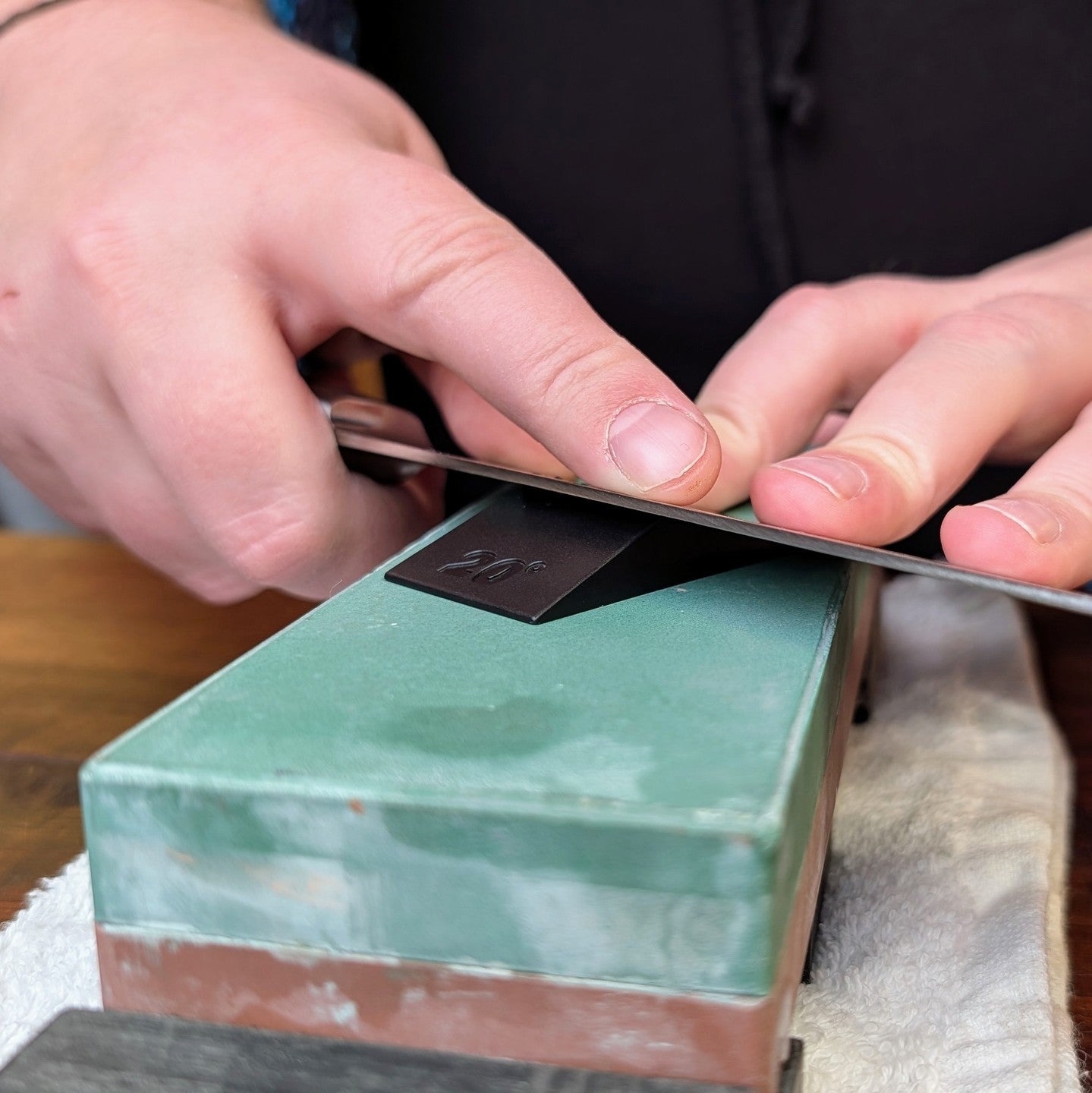
- Set 12–16 degrees per side for most hard Japanese steels. Pick 15–18 degrees for softer steels.
- Lock your wrist. Use your index on the spine and three fingers on the bevel.
- Build the edge on a 1000 grit
- Place the blade heel on the stone. Keep the edge flat to your set angle.
- Use even strokes away and toward you. Use light to medium pressure.
- Move along the edge in small zones to stay flat.
- Check the marker. You want clean removal at the very edge.
- Raise a burr
- Stay on one side until you feel a light burr from heel to tip.
- Flip to the other side. Repeat until you feel a matching burr.
- Refine on 2000–3000 grit
- Use lighter pressure.
- Make 10–15 strokes per side.
- Reduce pressure to almost zero for the last few strokes. This helps keep the apex crisp.
- Deburr
- Lightly sweep edge through soft wood, wine cork, or felt.
- Make two very light edge-leading strokes per side on the fine stone.
- Strop 5–10 passes per side on leather or newsprint.
- Finish polish if you like
- On 4000–8000 grit, use feather-light strokes.
- A mirror is not needed to cut well. Stop when the edge grabs your nail with a soft touch.
- Test the edge
- Slice paper. It should cut slow and clean, no snag.
- Shave a patch of arm hair at skin level if you wish.
- Most useful test for a nakiri is a tomato push cut. The edge should bite with no draw.
I do 80% of work on the 1000 stone. I keep pressure low at the end to kill the burr. This nakiri knife sharpening guide uses a simple loop. Set, burr, refine, deburr, test. Repeat if needed.

Angle, grit, and burr control
Angle sets the trade between sharp and strong. Low angles cut easy but can chip if you twist. High angles last longer but feel dull in soft produce.
- For hard steels like White, Blue, VG-10, AUS-10. Use 12–16 degrees per side.
- For softer German type steel. Use 15–18 degrees per side.
- For more strength, add a micro-bevel. Raise the spine a hair and make 2 light passes per side.
Grit picks the bite. A 1000–3000 finish gives a toothy edge that pops tomato skin. A 4000–8000 finish gives glide on cucumbers and herbs. Both work. Pick what you like.
Burr size should be tiny. A big burr hides a weak apex. Think of the burr as a cue, not the goal. Flip when you feel a light burr along the full edge. This nakiri knife sharpening guide will help you tune burr size and stop at the right time.

Common mistakes and how to fix them
- Rocking the blade. The nakiri has a flat edge. Keep it flat to the stone. Fix by working in short zones and watching the contact line.
- Lifting the spine. This rounds the edge. Fix by bracing your fingers and moving your body, not your wrist.
- Skipping flattening. A dished stone makes a smile in the edge. Fix by lapping before each session.
- Chasing a mirror too soon. A shiny bevel can hide a dull apex. Fix by building a clean edge on 1000 before you go higher.
- Over-deburring. Too many strop passes can round the apex. Fix by using fewer, lighter passes.
I learned to check the edge under bright light. If you see the edge reflect, it is still dull at that spot. Sharpen until the line goes dark. This nakiri knife sharpening guide calls for small, steady corrections, not force.

Maintenance between full sharpenings
Daily care keeps the edge alive longer.
- Use a soft board. End-grain wood is best. Soft plastic is fine. Glass is never okay.
- Wipe the blade during use. Acid and water can dull the edge and spot the steel.
- Strop weekly. Ten light passes per side on leather or newsprint bring the bite back.
- Use a fine ceramic rod for tiny touch-ups. Two or three gentle strokes per side.
- Store with a sheath or in a block. Do not let the edge hit metal.
If the edge needs more than a strop, drop back to 2000 or 1000 grit. Do not wait until it is dead dull. This nakiri knife sharpening guide favors light, regular care over heavy fixes.

Advanced techniques for a pro edge
Try these once you master the basics.
- Micro-bevel for strength. After your main bevel at 13–15 degrees, raise the spine a touch. Make two feather-light passes per side on 3000–6000 grit.
- Thinning behind the edge. Every few full sharpenings, use 800–1000 grit to remove a little metal just above the edge. This keeps the blade slim and reduces wedging.
- Controlled convex. Use a slight roll of the spine across two angles to add support without losing sharpness.
- Burr-free finish. End with a few edge-leading strokes at near zero pressure on your finest stone.
Do not confuse a nakiri with a usuba. Usuba is single bevel and needs a very different process. This nakiri knife sharpening guide stays with the double bevel work that most home cooks use.

Frequently Asked Questions of nakiri knife sharpening guide
What angle should I use for a nakiri?
Most nakiri like 12–16 degrees per side. If your steel is softer, use 15–18 degrees for more strength.
What grit stones do I need to start?
A 1000 grit and a 3000 grit will handle most tasks. Add a 320–400 for repairs and a 6000–8000 later if you want a finer finish.
How often should I sharpen my nakiri?
Home cooks can sharpen every 4–8 weeks with light stropping in between. Pros may touch up weekly and do a full session monthly.
Can I use a honing rod on a nakiri?
A fine ceramic rod is okay with light strokes. Avoid aggressive steel rods, as they can roll or chip a thin Japanese edge.
Do I need to strop after sharpening?
Yes, a few light strop passes help clean the burr and smooth the apex. Keep pressure low to avoid rounding the edge.
Should I sharpen a nakiri on both sides equally?
Yes, it is a double bevel. Keep the number of strokes and pressure even to avoid steering during cuts.
Why does my edge feel sharp but crushes tomatoes?
You may have a wire burr still attached. Deburr on felt or cork, then do two feather-light edge-leading passes per side.
Is a mirror polish better for vegetables?
Not always. A 2000–3000 grit finish gives more bite on skins. Try both and pick the feel you like.
Can I use oil stones for a nakiri?
You can, but water stones cut faster on hard Japanese steels. Water stones also make it easy to manage the burr.
How do I know if my stone is flat enough?
Draw a pencil grid on the stone. Lap until the grid is gone across the whole face.
Conclusion
A clean push-cut edge is simple when you follow a plan. Set a steady angle, raise a small burr, refine, then deburr with care. Keep your stones flat and your touch light, and your nakiri will fly through produce.
Put this nakiri knife sharpening guide to work on your next prep day. Start with a 1000 grit, finish on 3000, and test on a tomato. If this helped, share it with a friend, subscribe for more guides, or leave a question and I will help you dial in your edge.
Maliha Khatun has spent 5 years hands-on testing Japanese knives for everyday home cooks. She has evaluated over 60 blades across nakiri, santoku, gyuto, and petty categories — scoring each on edge retention, steel quality, handle comfort, and value for money. She writes to help home cooks buy the right knife without the guesswork.
Expertise:Japanese Knives • Vegetable Knives • Product Reviews • Kitchen Efficiency • Knife Care
Leave a Reply