Aim for 12–15° per side; some Western santoku prefer 15–17° per side.
If you want clean slices, less drag, and fewer chips, the santoku knife sharpening angle matters more than the stone grit you choose. I’ve sharpened hundreds of santoku blades for home cooks and line chefs. In this guide, I’ll break down the ideal santoku knife sharpening angle, why it works, and how to hit it every single time.

Understanding the santoku knife sharpening angle
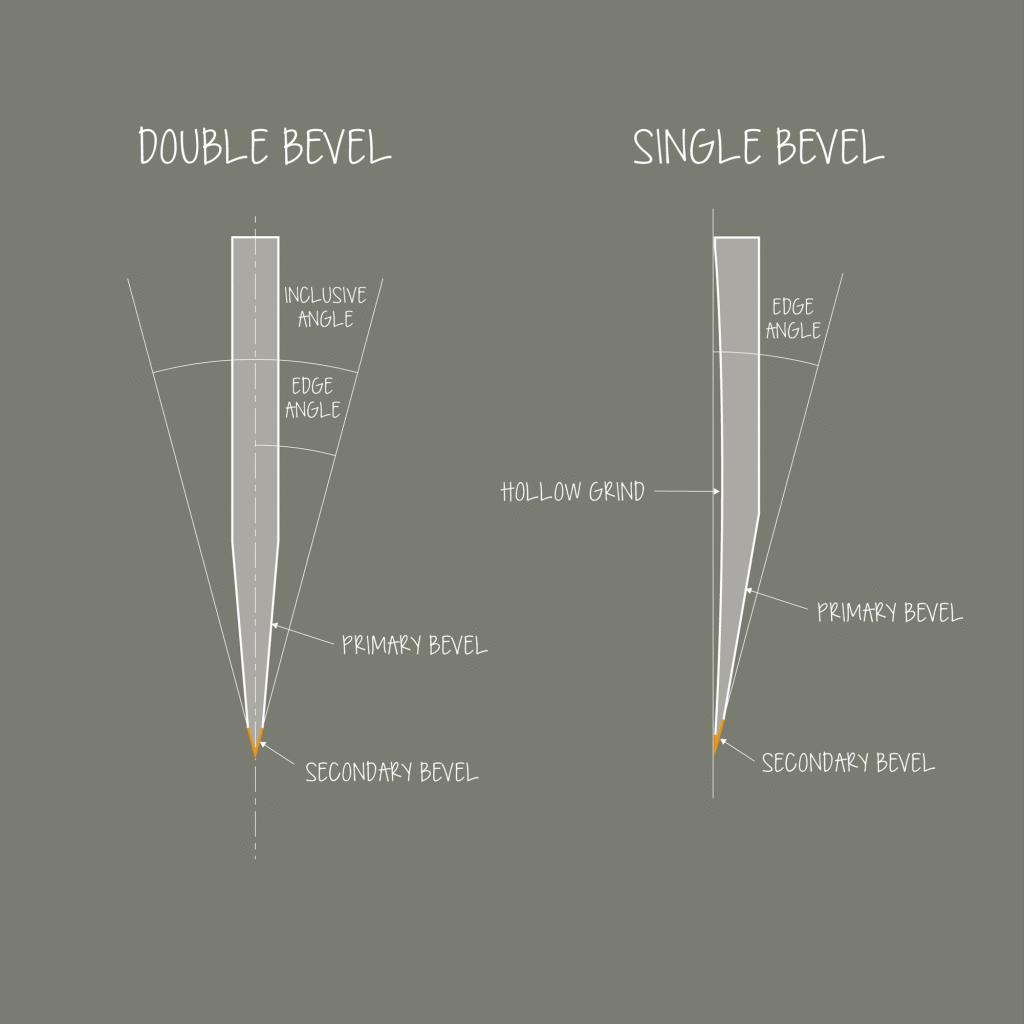
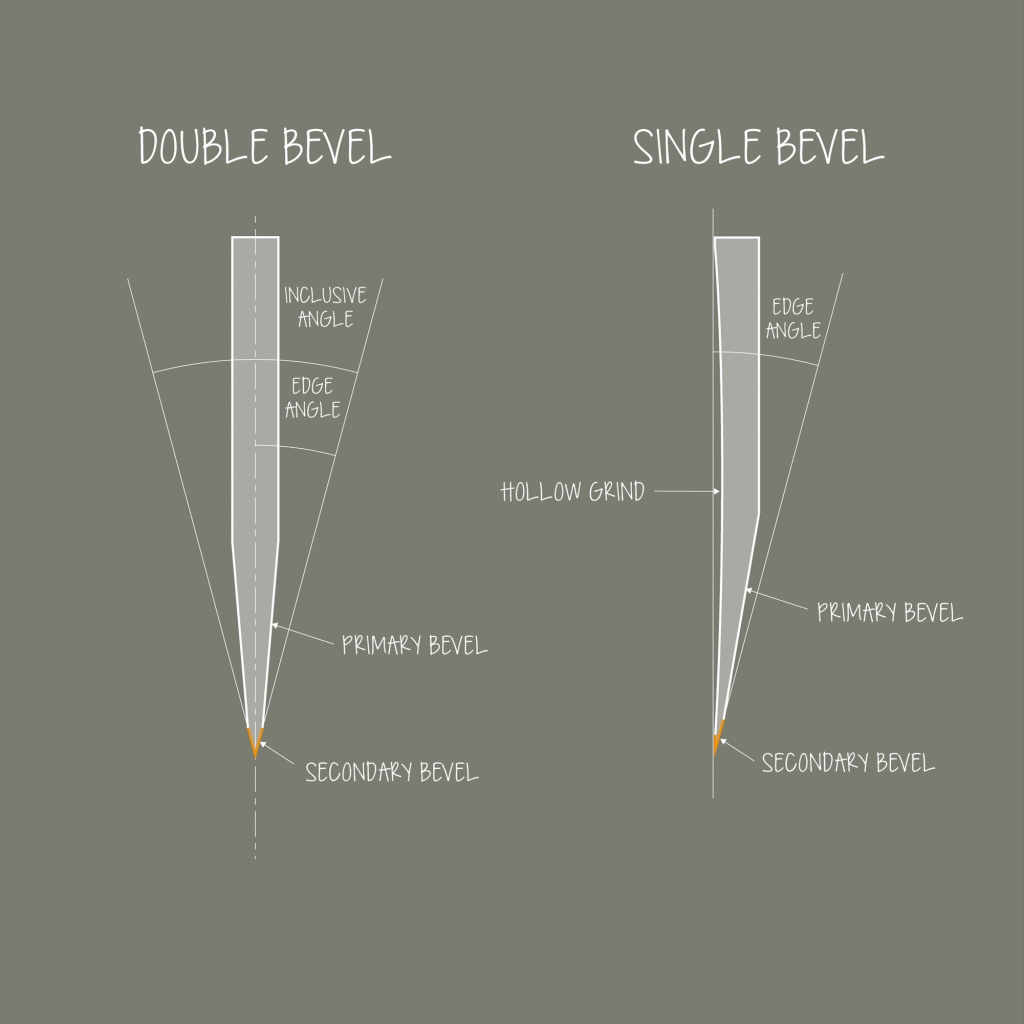
Santoku knives are usually double-bevel. That means you sharpen both sides. The sweet spot for a classic Japanese santoku is 12–15 degrees per side. The inclusive angle is 24–30 degrees.
This range cuts soft produce with ease. It also holds up for daily prep. If your santoku has softer steel or a thicker grind, 15–17 degrees per side may be better. That still gives great bite without fast dulling.
Single-bevel santoku versions exist, but they are less common. Those often use a large primary bevel around 10–12 degrees and a flat or slight back side. Unless yours is single-bevel, stick to a balanced double-bevel. You will protect the edge and keep cuts straight.
Using the right santoku knife sharpening angle makes the knife feel like it glides. Thin angles slice. Wider angles survive abuse. Your goal is to match the angle to your steel and how you cook.

Santoku vs Western chef knife angles
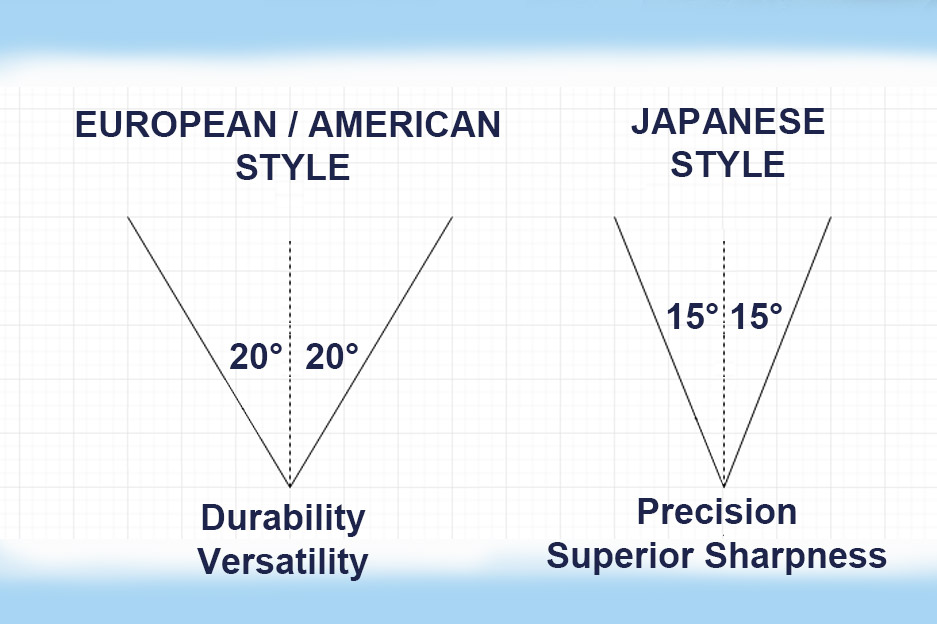
Western chef knives tend to live at 15–20 degrees per side. They are often thicker and made from slightly softer steel. They favor durability.
A typical Japanese santoku is thinner with harder steel. That is why the santoku knife sharpening angle can be lower, at 12–15 degrees per side. You gain bite and clean, straight cuts on onions, fish, and fruit.
If your santoku is a Western-style version, treat it like a hybrid. Use 15–17 degrees per side. This keeps performance high but avoids micro-chips under hard use. If you push through squash or cut near bones, a touch more angle is a smart trade.
How steel and grind affect your angle
Harder steels (often HRC 60–62) support smaller angles. They hold a crisp apex longer. But they can chip if you twist the edge or hit bone. Softer steels (HRC 56–58) are tougher. They like a slightly wider angle.
Grind matters too. Thin, flat grinds bite at lower angles. Thick or convex grinds can take more abuse at higher angles. If you are unsure, start at 15 degrees per side. Test. Then adjust by 1–2 degrees.
When in doubt, add a micro-bevel. After sharpening at 12–14 degrees, finish with 2–3 light strokes at 16–17 degrees per side. This tiny change boosts strength with almost no loss in slicing feel. It is a great way to stabilize your santoku knife sharpening angle for daily work.

Tools you need to hold the santoku knife sharpening angle
You do not need many tools. You need the right ones. Here is a simple kit that works.
- Whetstones: 1000 grit for shaping, 3000–6000 for refining, 8000 optional for polish.
- Diamond plate: 300–400 grit only if repair or chips are present.
- Angle guide or angle cube: optional, but great for learning.
- Marker: color the edge to see contact.
- Strop: leather with fine compound to clean the burr.
- Ceramic rod: gentle maintenance at the same angle between full sharpenings.
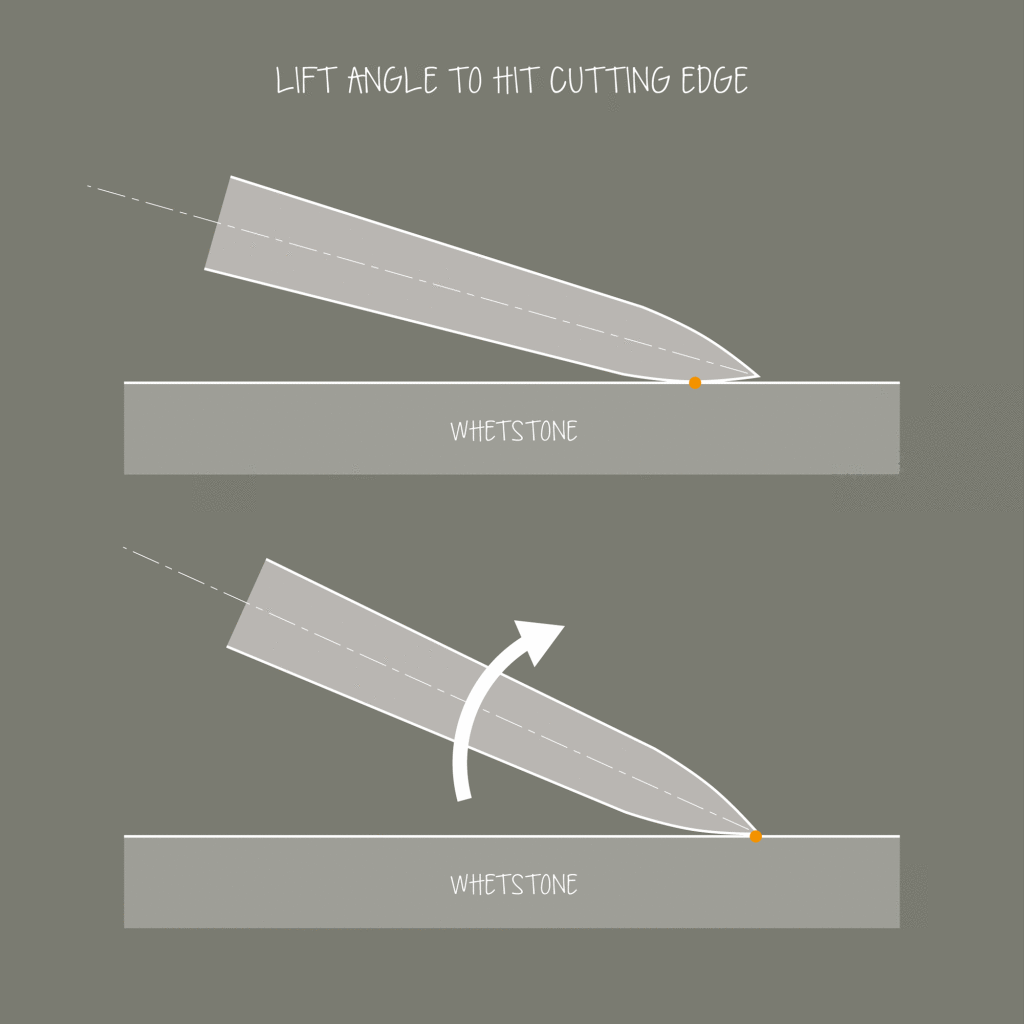
A quick way to visualize angle is lift height. Angle ≈ arctan(lift/blade width). On a 50 mm tall santoku:
- 12 degrees ≈ 10.6 mm lift.
- 15 degrees ≈ 13.4 mm lift.
- 17 degrees ≈ 15.3 mm lift.
You can stack coins near the spine to learn the feel. A stack near 13–15 mm equals about 15–17 degrees on a 50 mm blade. This simple trick locks in your santoku knife sharpening angle fast.

Step-by-step: Sharpen a santoku at the right angle
Follow these steps to build a sharp, strong edge.
- Set the angle. Choose 12–15 degrees per side for most santoku knives. Use a guide or coin stack if needed.
- Color the edge. Use a marker so you can see if your strokes hit the apex.
- Start on 1000 grit. Use light, even strokes. Keep the santoku knife sharpening angle steady. Work heel to tip. Raise a small burr along the full length.
- Flip and repeat. Match your angle on the second side. Raise the burr again, now on the first side.
- Refine on 3000–6000 grit. Use lighter pressure. Remove the burr. Aim for a clean apex with no wire edge.
- Add a micro-bevel (optional). Do 2–3 passes at 1–2 degrees higher per side. This boosts durability.
- Strop. Use light strokes on leather. Ten passes per side is plenty.
- Test. Slice paper, a cherry tomato, or a paper towel. The edge should bite with zero snag.
Take your time. Short strokes are fine. The goal is a clean, repeatable santoku knife sharpening angle. Pressure should be light. Let the stone do the work.
Common mistakes that ruin the santoku knife sharpening angle
A few habits can dull or damage your edge fast.
- Rocking the spine. This rounds the apex. Lock your wrist and use your shoulder.
- Too much pressure. It digs ruts and makes a big burr. Use gentle, even pressure.
- Skipping grits. Going from coarse to fine too fast leaves deep scratches. Step through grits.
- Chasing mirror polish. Shiny does not mean sharp. Focus on clean, consistent bevels.
- No deburr. A wire edge feels sharp, then fails in a day. Always refine and strop.
- Wrong rod. A grooved steel can rip a hard Japanese edge. Use a smooth ceramic rod at your set angle.
Protect your work by respecting the santoku knife sharpening angle you set. Consistency beats speed.
Angle maintenance, honing, and testing sharpness
Most home cooks can hone weekly and sharpen monthly. Use a fine ceramic rod at the same angle you sharpened. Keep strokes light. Two to four passes per side is enough.
How to test:
- Paper test: Should push cut without tearing.
- Tomato test: Should pierce skin with zero pressure.
- Arm hair test: Should shave with a soft touch.
If these tests fail, you have two choices. Hone at the same santoku knife sharpening angle. Or do a quick touch-up on a 3000–6000 grit stone. Save the 1000 grit for dull or damaged edges.

Real-world examples and lessons I learned
I once set a new VG-10 santoku at 10 degrees per side. It was a laser. It also chipped on a sweet potato. I reset the santoku knife sharpening angle to 14 degrees and added a 16-degree micro-bevel. The edge held for weeks and still sliced tomatoes like a dream.
On a softer stainless santoku, 12 degrees felt amazing for one day. Then it rolled. I bumped it to 16 degrees per side. The owner could now cut squash and melons without fuss. Lesson learned: match angle to steel and task, not just feel on day one.
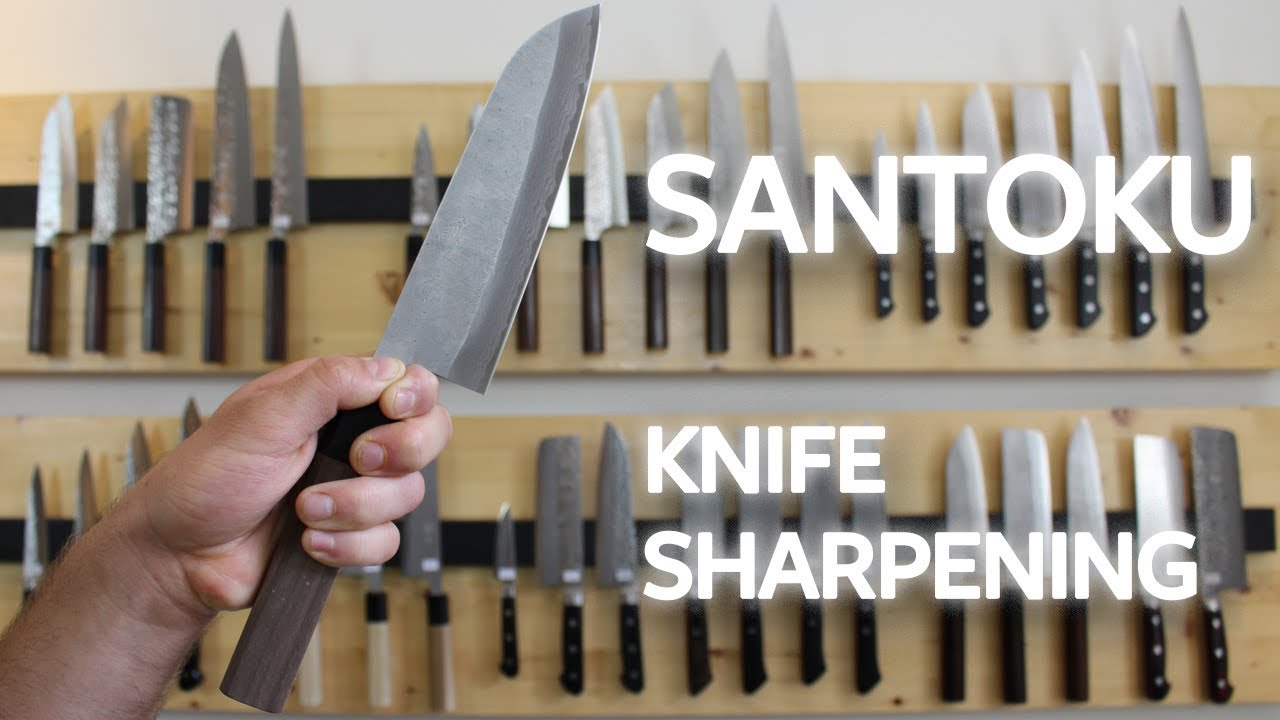
Quick reference: choose your santoku knife sharpening angle
Use these simple ranges to choose fast and well.
- Thin Japanese santoku, hard steel (HRC 60–62): 12–14 degrees per side. Add a 16-degree micro-bevel if you see micro-chips.
- Western-style santoku, medium steel (HRC 56–58): 15–17 degrees per side. This balances durability and bite.
- Heavy prep, dense produce, or rough boards: 16–17 degrees per side. Fewer chips, better edge life.
- Fine slicing, fish, herbs, delicate fruit: 12–13 degrees per side. Keep strokes light. Store well.
- Unsure about your steel or grind: Start at 15 degrees per side. Test and adjust by 1 degree.
When in doubt, protect the apex. A steady, repeatable santoku knife sharpening angle beats an aggressive angle that fails under load.
Frequently Asked Questions of santoku knife sharpening angle
What is the best santoku knife sharpening angle for beginners?
Start at 15 degrees per side. It is easy to hold and works well for most steels.
How often should I resharpen my santoku at that angle?
For home use, sharpen every 4–8 weeks. Hone weekly with a ceramic rod at the same angle.
Does a lower angle always cut better?
It slices better but can chip or roll faster. Match the santoku knife sharpening angle to your steel and cutting tasks.
Can I use a honing steel on a Japanese santoku?
Use a smooth ceramic rod, not a grooved steel. Keep the same angle and use light pressure.
What grit stones do I need for this angle?
Use 1000 grit to set the bevel, then 3000–6000 to refine. An 8000 grit polish is optional for push-cut performance.
Should I add a micro-bevel to my santoku?
Yes, if you see micro-chips or fast dulling. Add 2–3 light passes at 1–2 degrees higher per side.
How do I know I am holding the right angle?
Color the edge with a marker and check the wear. Or use a coin stack to match lift height to your target angle.
Conclusion
Set your santoku knife sharpening angle with intent, not guesswork. Most knives thrive at 12–15 degrees per side; tougher builds prefer 15–17. Keep pressure light, raise a small burr, refine, and finish with a micro-bevel if you need more strength.
Commit to a simple routine this week. Pick your angle, practice five minutes on a 1000 grit stone, and test on a tomato. Want more guides like this? Subscribe, ask a question, or share your results so we can fine-tune your edge together.
Maliha Khatun has spent 5 years hands-on testing Japanese knives for everyday home cooks. She has evaluated over 60 blades across nakiri, santoku, gyuto, and petty categories — scoring each on edge retention, steel quality, handle comfort, and value for money. She writes to help home cooks buy the right knife without the guesswork.
Expertise:Japanese Knives • Vegetable Knives • Product Reviews • Kitchen Efficiency • Knife Care
Leave a Reply