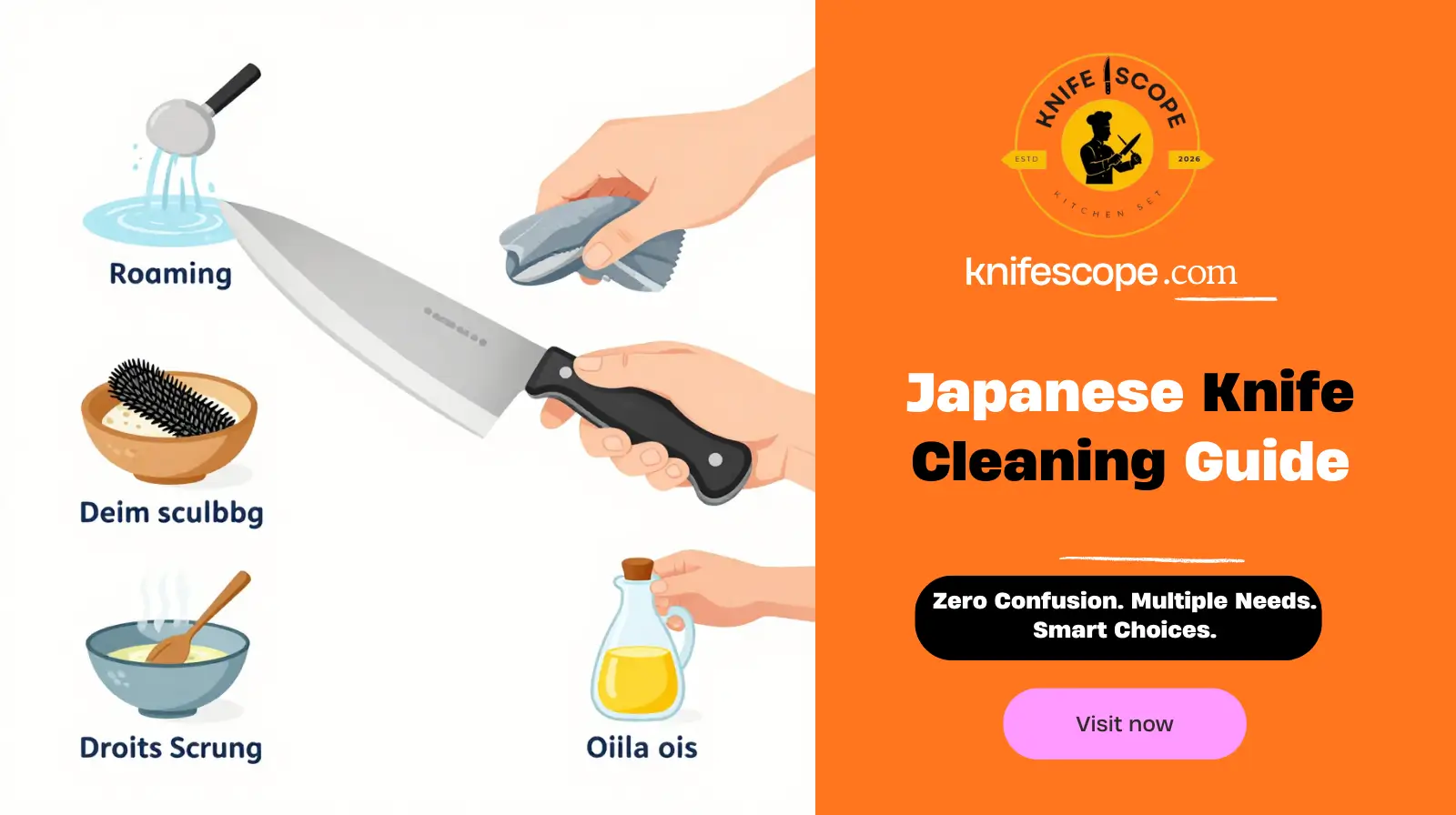
Wash by hand with mild soap, dry fast, and oil the blade lightly.
If you care about sharpness, safety, and long life, this japanese knife cleaning guide is for you. I’ve cleaned and restored hundreds of carbon and stainless blades over the years. I’ll show you what works, what fails, and why. You’ll learn simple steps that protect the edge, stop rust, and keep your knife looking great for years to come.
Why Japanese knives need special care
Japanese knives are thin, hard, and sharp. Many use high-carbon steels that can rust fast. Even stainless Japanese steels can stain if left wet. That is why this japanese knife cleaning guide puts speed and care first.
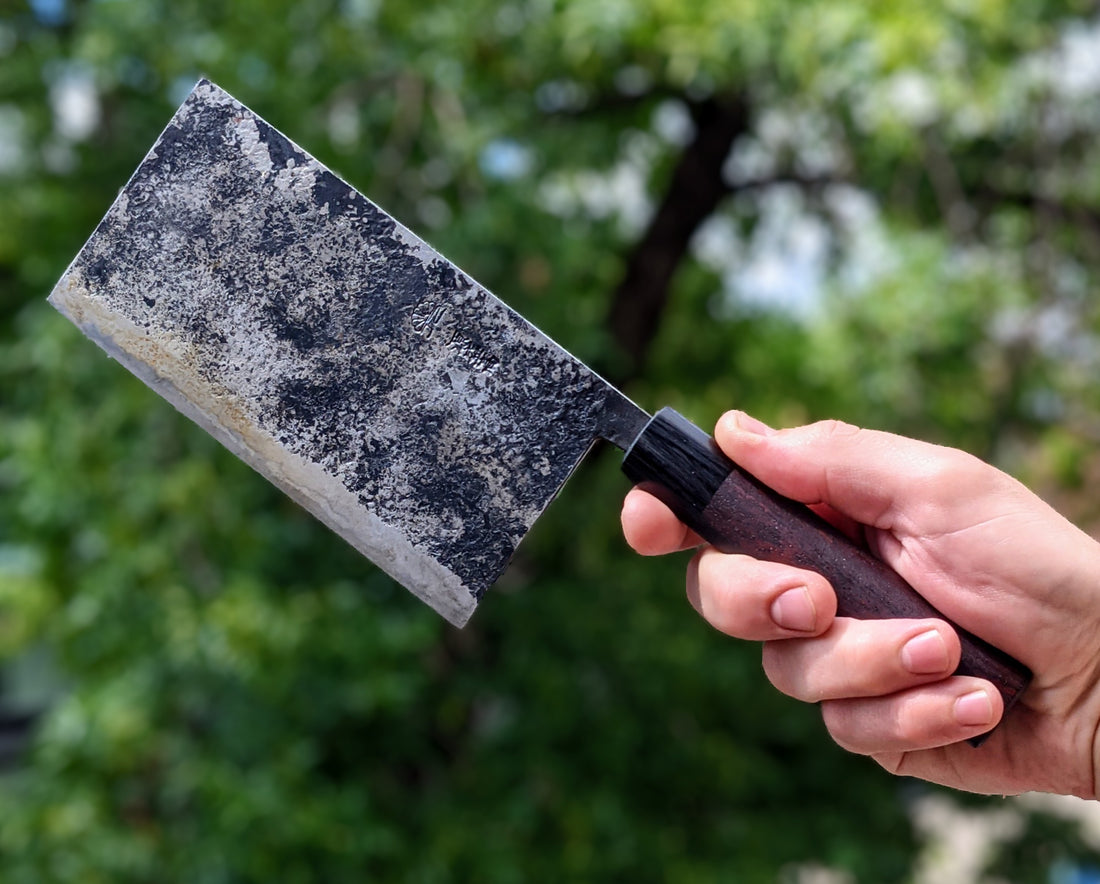
Hard steel chips if scrubbed wrong. Kurouchi and satin finishes can scratch with rough pads. Traditional wood handles swell if soaked. A few small habits prevent all that. Follow the steps below, and your knife will stay clean, safe, and razor ready.
Daily cleaning steps that work every time
Use this simple routine after each use. It takes under a minute and avoids costly damage.
- Rinse fast
- Rinse off food right after cutting. Do not leave the blade wet on a board or in a sink.
- Soap gently
- Use warm water, a drop of mild dish soap, and a soft sponge. Wipe from spine to edge, moving away from the sharp side.
- Avoid danger moves
- Do not use a scouring pad or steel wool. Do not scrub the edge head-on. Never use the dishwasher.
- Dry right away
- Pat dry with a soft towel. Wipe the spine, heel, and choil. Water hides in those spots.
- Oil if needed
- For carbon steel, add a thin film of food-safe mineral oil or camellia oil before storage.
I use this exact routine in my own kitchen. It keeps my white steel and VG-10 blades spotless with almost no effort. This japanese knife cleaning guide keeps your cleanup fast and safe.

Deep cleaning and stain removal
When the blade shows stick-on gunk or light stains, do a deeper clean.
- For sticky residue: Use a drop of warm soapy water and a non-scratch sponge. Push from spine to edge. Rinse and dry.
- For food discoloration: Make a paste of baking soda and water. Rub very gently along the length, not across. Rinse and dry at once.
- For tough tea or onion stains on stainless: A small dab of a gentle, non-chlorine cleaner can help. Use with care, rinse well, and dry fully.
Do not over-polish carbon steel. A natural gray patina protects the blade. This japanese knife cleaning guide treats patina as a friend, not a flaw.

Rust removal and patina care
If you spot rust, act fast. Surface rust looks orange or red and wipes off. Pitting looks like small holes and needs more care.
- Rust eraser: A fine rust eraser (sanding block made for knives) removes light rust with minimal scratching. Work along the blade, not across.
- Baking soda method: Make a paste, rub gently with a wine cork or soft cloth, rinse, and dry.
- Vinegar dab: For carbon steel only, dab with vinegar on a cloth for a short moment. Rinse, dry, and oil right away.
Keep the patina if you use acidic foods like citrus or tomatoes. It helps resist new rust. After removal, apply a thin coat of food-safe oil. This japanese knife cleaning guide keeps your blade stable and ready.
Handle care and safe sanitation
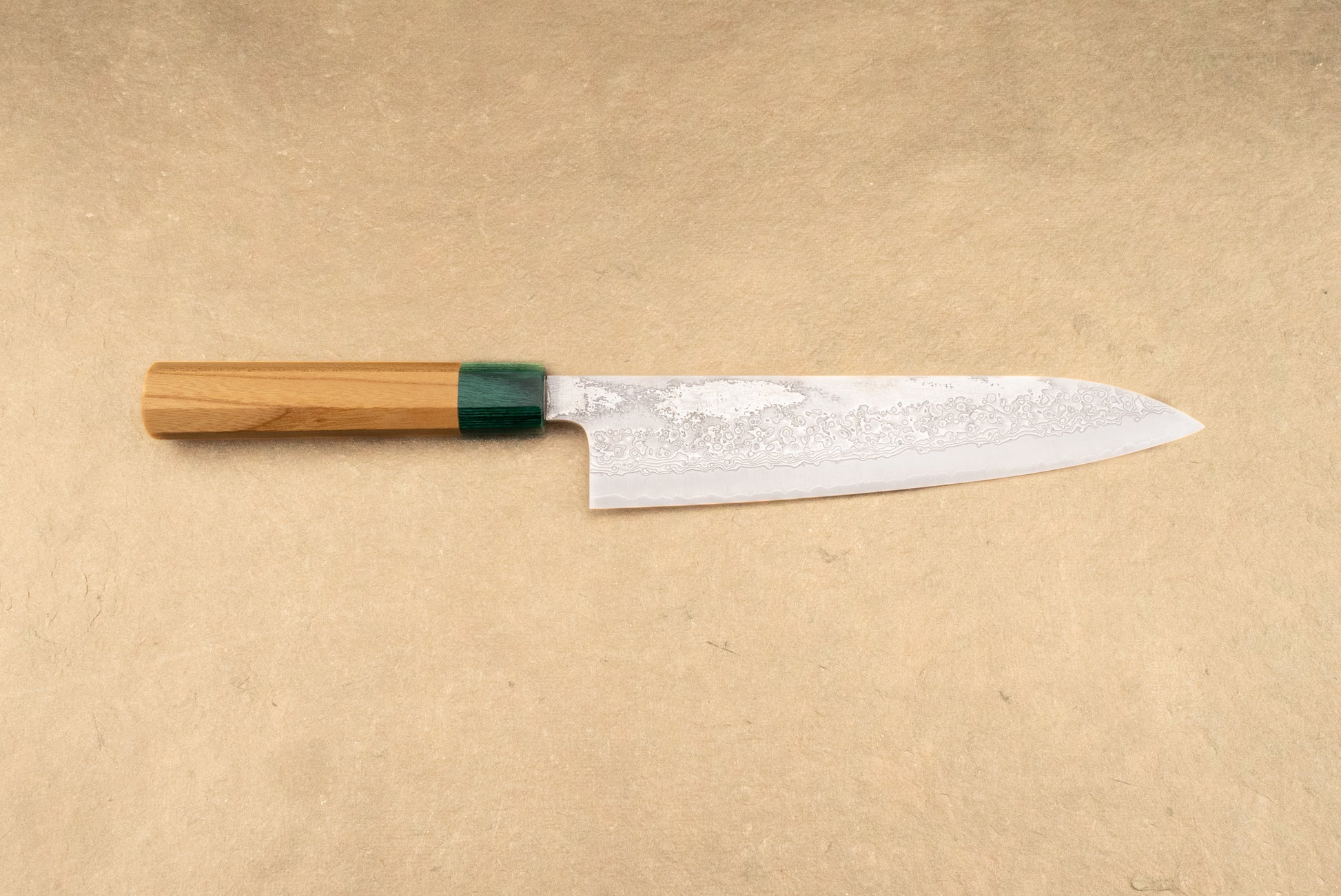
Traditional wa-handles are often wood. They hate long soaks and harsh chemicals.
- Wood handles: Wipe with a damp cloth and mild soap. Dry at once. A drop of board oil or wax every few months keeps them sealed.
- Pakkawood and composites: These resist water better. Still, avoid soaking and heavy heat.
- Ferrule and tang area: Water sits here. Dry that junction well.
For sanitation, hot soapy water is enough for home use. Avoid bleach and strong disinfectants on the blade or handle. They can corrode steel and damage wood. If you do need extra sanitation, use very hot water, wash fast, dry at once, and oil lightly. This japanese knife cleaning guide puts safety and blade health first.

Drying, oiling, and storage
Drying and storage are half the battle. Small steps stop big problems.
- Dry twice: First with a towel, then air-dry for a few minutes on a clean rack.
- Oil smart: For carbon steel, a thin coat of mineral or camellia oil before storage. For stainless, oil is optional but helpful in humid homes.
- Store right: Use a saya, edge guard, or a clean magnetic strip. Keep the edge off hard metal rails. Avoid loose drawers.
I live near the coast. In summer, I oil carbon blades after every shift. That habit came from hard lessons with surprise rust. This japanese knife cleaning guide can spare you the same.
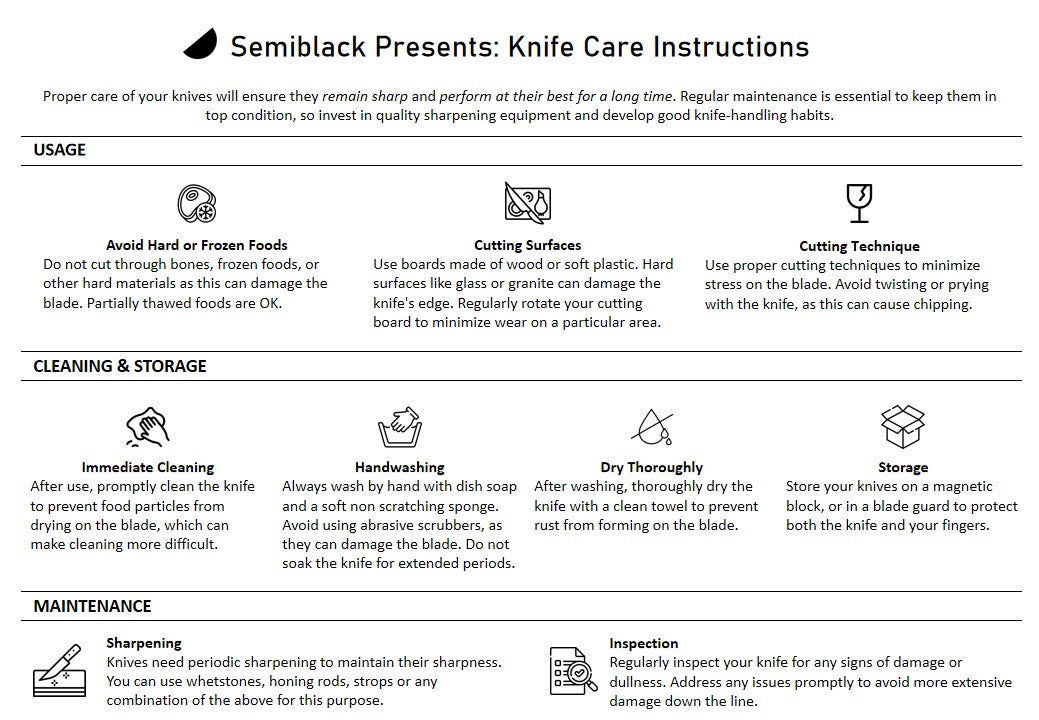
Common mistakes to avoid
These slip-ups dull edges and stain blades fast.
- Dishwasher use: Heat, water jets, and detergent wreck edges and handles.
- Soaking: Wood swells, steel rusts, adhesives weaken.
- Abrasive pads: They scratch finishes and can bite the edge.
- Leaving food on the blade: Acid and salt attack steel in minutes.
- Cross-drawer storage: Edge hits forks and spoons, causing chips.
Stick to the steps in this japanese knife cleaning guide and your knife will run like a tuned engine.

Tools and safe products I trust
You do not need a lot. The right tools make cleaning simple.
- Soft sponge and mild dish soap: Daily cleaning heroes.
- Microfiber towel: Fast drying without lint.
- Food-safe oil: Mineral oil or camellia oil for corrosion control.
- Rust eraser: For quick rust touch-ups.
- Cork or wine cork: Gentle scrubber with baking soda paste.
Each tool protects the thin, hard edge that makes Japanese knives special. Build this small kit, and this japanese knife cleaning guide becomes second nature.

Troubleshooting quick fixes
Real kitchens get messy. Here is how I handle common issues.
- Fish smell on blade: Wash with warm soapy water, then wipe with a lemon-damp cloth, rinse, and dry.
- Onion or garlic stickiness: Use a dab of baking soda paste, rinse, and dry.
- Cloudy stainless finish: A drop of non-chlorine cleaner, very light rub, rinse, dry, and oil.
- Dark patina after citrus: That is normal on carbon steel. Rinse, dry, and oil. Do not chase it off unless you see rust.
These tiny habits, repeated daily, define this japanese knife cleaning guide in action.
Frequently Asked Questions of japanese knife cleaning guide
How often should I oil a carbon steel Japanese knife?
Oil carbon steel after each use if you live in a humid area. In dry zones, oil after deep cleaning or at least weekly.
Can I remove patina from carbon steel?
Yes, but try to keep a stable gray patina. It protects against new rust and does not affect cutting.
Is dish soap safe for my knife?
Mild dish soap is safe and effective. Avoid harsh chemicals and bleach, which can corrode steel and damage handles.
What if my knife smells after cutting fish or onions?
Wash with warm soapy water, then wipe with a lemon-damp cloth. Rinse and dry right away.
Can I sanitize without harming the blade?
Yes. Use hot soapy water, rinse, and dry fast. Avoid bleach and strong oxidizers, which can attack steel and wood.
Should I ever use the dishwasher?
No. Heat, detergent, and banging cause rust, dulling, and handle damage. Hand wash only.
Conclusion
Clean by hand, dry fast, and oil when needed. Store with care. That simple rhythm saves edges, stops rust, and keeps your blade ready for perfect cuts. Use this japanese knife cleaning guide today, and your knife will reward you with years of sharp, safe work.
Ready for more? Try these steps tonight, build your small care kit, and share your results. Subscribe for more knife care tips, or drop a question in the comments.

Maliha Khatun has spent 5 years hands-on testing Japanese knives for everyday home cooks. She has evaluated over 60 blades across nakiri, santoku, gyuto, and petty categories — scoring each on edge retention, steel quality, handle comfort, and value for money. She writes to help home cooks buy the right knife without the guesswork.
Expertise:Japanese Knives • Vegetable Knives • Product Reviews • Kitchen Efficiency • Knife Care
Leave a Reply