Every Japanese kitchen knife carries a little of the country’s sword-making past. The same forging towns, the same obsession with hard steel and fine edges, and in some workshops, the same families who once made blades for samurai.
You do not need to know any of this to cook well. But understanding where these knives came from explains a lot of things that confuse buyers today: why some blades are single bevel, why carbon steel is still popular, and why a knife from Sakai can feel completely different from one made in Seki.
Origins: from battlefield steel to kitchen tools
Japanese knife history began with swords. Early Japanese smiths learned to fold and temper steel to make strong swords. Those methods moved into tool making as peace grew in the Edo period. Craftsmen adapted sword skills to make knives for farmers, carpenters, and cooks.
The old schools taught hard edges and soft backs. This mix made blades hold a sharp edge while avoiding breakage. Over time, these methods became the basis for modern kitchen knives in Japan. The link from samurai steel to kitchen steel is the heart of japanese knife history.

Forging techniques and metallurgy that define the craft
Key forging steps Shape japanese knife history. Smiths layered steels by folding and forge-welding. They used differential hardening to create hard cutting edges and tough cores. These steps let knives stay sharp and resist chipping.
Common terms you will see are:
- San mai: a hard core sandwiched by softer steel.
- Kasumi: a cloudy contrast from softer cladding.
- Honyaki: single-steel blades hardened like a sword.
I have watched a smith heat a billet until it glows. The smell, the rhythm, the control of time and temperature made the difference between a blade that sings and one that fails.
Regional styles and blade types
Japanese knife history is also a story of regions. Different towns became known for certain blades. Sakai, Seki, and Takefu are household names. Each region favored unique shapes, steels, and finishes.
Common blade types include:
- Gyuto: the all-purpose chef knife.
- Santoku: a versatile, shorter blade.
- Yanagiba: a long slicer for raw fish.
- Deba: a thick blade for fish and light bone work.
Knowing the region helps you judge a knife’s profile and likely use. It also helps you understand why makers use specific steels or edge angles.
The transition to culinary knives and modern workshops
As Japan urbanized, cooking grew more refined. Chefs demanded finer, thinner blades for delicate work. This shifted production from heavy tools to razor blades for food. Small shops and family-run firms began making kitchen knives full time.
After World War II, western knife forms arrived. Japanese makers merged western shapes with traditional steelwork. That fusion accelerated the global rise of japanese knife history in the 20th century.
Key makers, schools, and brands
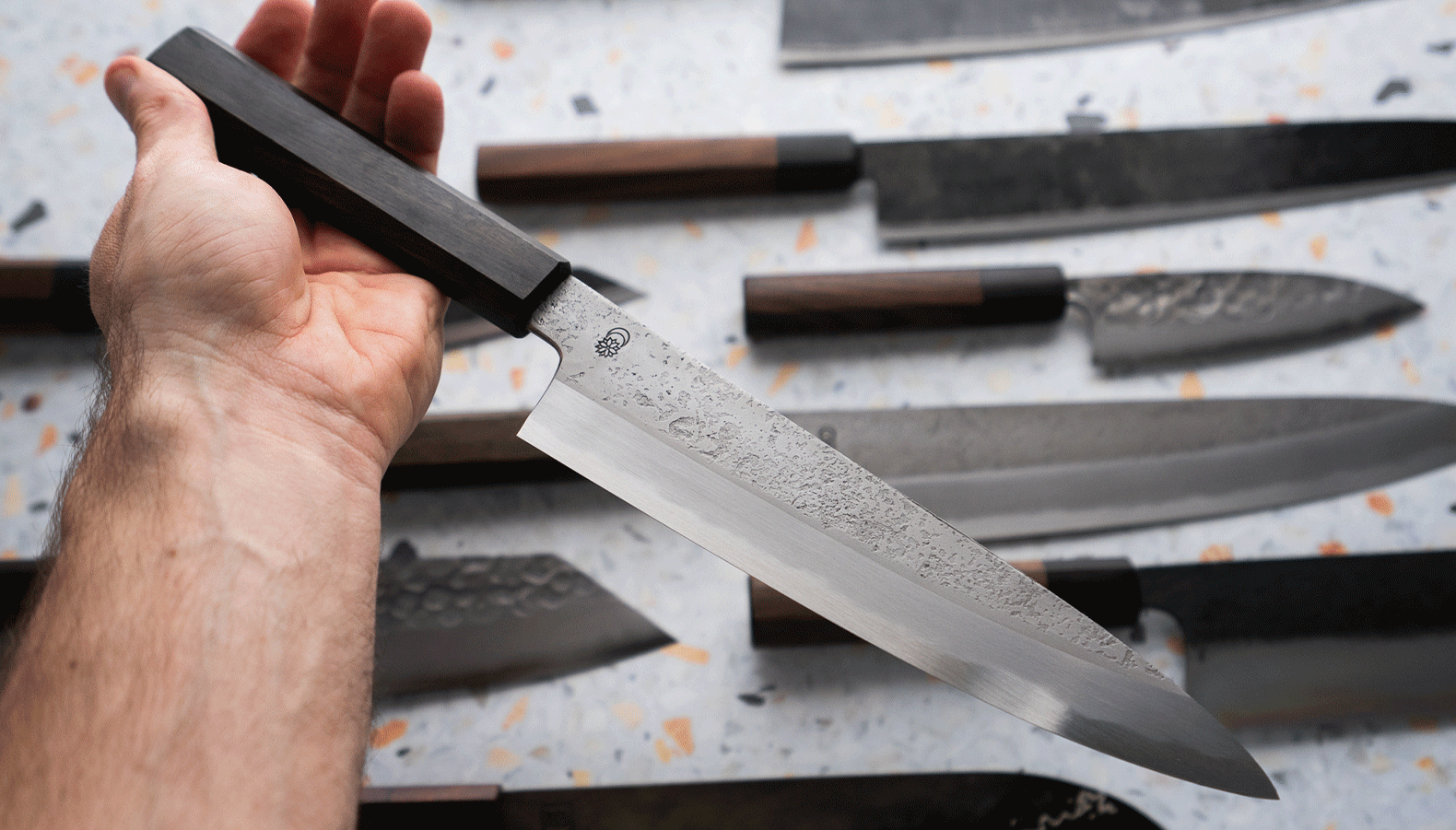
Certain names shaped japanese knife history. Long-standing families and schools passed skills down for generations. Some focused on honyaki blades. Others specialized in san mai styles for durability.
What to look for in a maker:
- Proven lineage or long workshop history.
- Clear disclosure of steel type and heat treatment.
- Consistent geometry and finish.
I have handled knives from old family shops and modern boutique makers. The older makers often offer finer hand Finishing while new makers bring innovation in steel and grinding methods.

How Japanese knife design affects performance
Design choices in Japanese knife history affect how knives feel and cut. Thin grinds slice cleanly. Harder steels hold a sharper edge. Single-bevel knives give precise cuts but need skill to use.
Practical notes:
- Harder steel needs care but cuts longer between hones.
- Double-bevel knives are easier for general cooks.
- Single-bevel knives excel in fish and precise vegetable work.
When I switched to a single-bevel yanagiba, my slicing improved. But I also learned to sharpen and handle it carefully to avoid mistakes.
Caring for classic blades: maintenance and sharpening
Proper care preserves the heritage in japanese knife history. These blades like simple care. Use soft cutting boards and hand wash only. Dry the blade right away to avoid rust.
Sharpening tips:
- Use a whetstone. Start coarse, then refine with a fine stone.
- Keep the edge angle steady. Many Japanese blades need 15 degrees or less per side.
- Hone lightly after each use and full sharpen weekly to monthly, based on use.
I once ruined a favorite blade by tossing it in a dishwasher. That lesson made me a disciplined guardian of knives.

Modern revival and global influence
Today, Japanese makers combine tradition with new steel science. Powder metallurgy and high-carbon alloys expanded options. Chefs worldwide now prize Japanese blades for their edge and balance.
This global interest also spurred more makers and more choices. That boom has pros and cons. You can find excellent modern blades. You can also find poor copies that lean on the reputation of japanese knife history without real craft.
Buying guide: choosing a blade that fits you
Know your needs before you buy. Match blade type, steel, and edge to your cooking style. Set a practical budget. Look for honest makers who show heat treatment and steel info.
Checklist:
- Purpose: slicing, chopping, or filleting.
- Steel: stainless for low care, carbon for edge and patina.
- Edge: single-bevel for precision, double for versatility.
- Weight: heavier for power, lighter for finesse.
Try a knife in hand if you can. The feel tells you more than specs alone.
A short timeline
- Before 1600: Smiths in towns like Sakai, Seki and Echizen forge swords and farming tools. Tobacco knives arrive in Sakai with Portuguese trade in the 1500s and become a local speciality.
- 1600s to 1800s: Peace under the Tokugawa shogunate reduces demand for weapons. Many smiths shift to kitchen and craft knives. The deba, usuba and yanagiba take their familiar shapes.
- 1876: The Haitorei edict bans the public carrying of swords. Even more blacksmiths turn to kitchen knives to survive.
- Post-war era: Stainless steels and Western-style double-bevel knives like the gyuto become common, built for both Japanese and foreign cooks.
- Today: Powder steels such as SG2 sit alongside traditional carbon steels, and small workshops sell directly to cooks worldwide.
Sakai, Seki and Echizen: why the town matters
Sakai (Osaka) is known for its split craft system: one artisan forges, another sharpens, another fits the handle. It is the home of many traditional single-bevel knives used by professional chefs.
Seki (Gifu) has a long sword heritage and today mixes craft with large-scale production. Many well-known brands manufacture here, so it is a great source of reliable, affordable knives.
Echizen (Fukui) is famous for hand-forged, often hammered blades with a rustic look. Echizen smiths were among the first to have their craft recognised as a traditional industry.
When a listing names one of these towns, it tells you something real about how the knife was likely made.
Frequently Asked Questions of japanese knife history
What role did samurai swords play in japanese knife history?
Samurai swords provided the core forging methods. Folding, tempering, and the art of clay-hardening migrated from swords to knives, shaping blade culture.
When did kitchen knives become common in Japan?
Kitchen knives became common during the Edo period as cities grew. Demand rose as cuisine became more seasonal and refined.
What is the difference between honyaki and san mai knives?
Honyaki are made from one type of steel and treated like swords. San mai blades have a hard core wrapped in softer cladding for toughness.
Which Japanese region is best for knives?
Regions like Sakai, Seki, and Takefu are famous. Each has its strengths in finish, style, and tradition.
Can I use a Japanese knife for bone cutting?
Most Japanese kitchen knives are not for heavy bone work. Use a thicker deba or a dedicated cleaver for bones to avoid chipping.
How has modern steel changed japanese knife history?
Modern steels offer better wear resistance and uniformity. They let makers push edge retention, yet require careful heat treatment to match tradition.
Do Japanese knives need special boards or tools?
Soft wood or plastic boards help keep edges sharp. Hard surfaces like glass or stone can dull blades quickly.
Is it important to know the maker when buying?
Yes. A reputable maker reveals methods, steels, and care needs. That transparency helps you pick the Right blade for your goals.
How often should I sharpen a Japanese kitchen knife?
Light honing can be done after each use. Full sharpening ranges from weekly to monthly, depending on frequency of use and steel type.
Can beginners use traditional Japanese knives?
Beginners can use many Japanese knives with care. Start with double-bevel blades before moving to single-bevel tools.
Conclusion
Japanese knife history is not just trivia. It explains the hard steel, the thin edges, the single-bevel designs and the regional styles you see on shop pages today. Knowing that background makes it easier to choose a knife for the way you actually cook, whether that is a traditional Sakai yanagiba or a modern stainless gyuto from Seki.
Maliha Khatun has spent 5 years hands-on testing Japanese knives for everyday home cooks. She has evaluated over 60 blades across nakiri, santoku, gyuto, and petty categories — scoring each on edge retention, steel quality, handle comfort, and value for money. She writes to help home cooks buy the right knife without the guesswork.
Expertise:Japanese Knives • Vegetable Knives • Product Reviews • Kitchen Efficiency • Knife Care
Leave a Reply