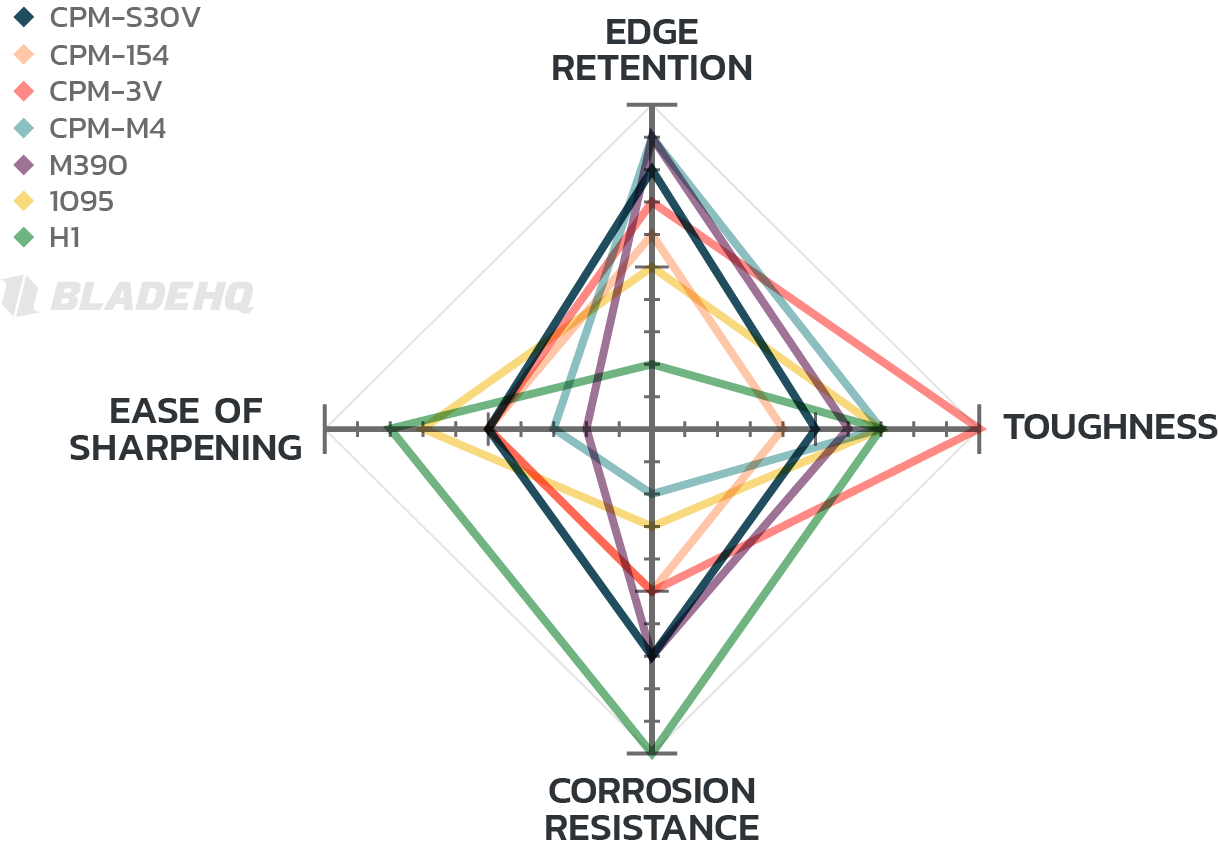
Choose the right steel by balancing hardness, toughness, and corrosion resistance.
I’ve spent years testing blades in the field and at the bench, so this knife steel guide gives clear, usable advice for buyers, makers, and collectors. You'll learn how steel chemistry, heat treatment, and everyday care affect performance. Read on for practical tips, tested recommendations, and a simple system to pick the best steel for your knife use and budget.
Basics of knife steel guide: what matters most
Understanding steel starts with three core ideas. First, chemistry defines what a steel can potentially do. Second, heat treatment unlocks the chemistry. Third, the intended use decides which properties matter most.
Key concepts to remember:
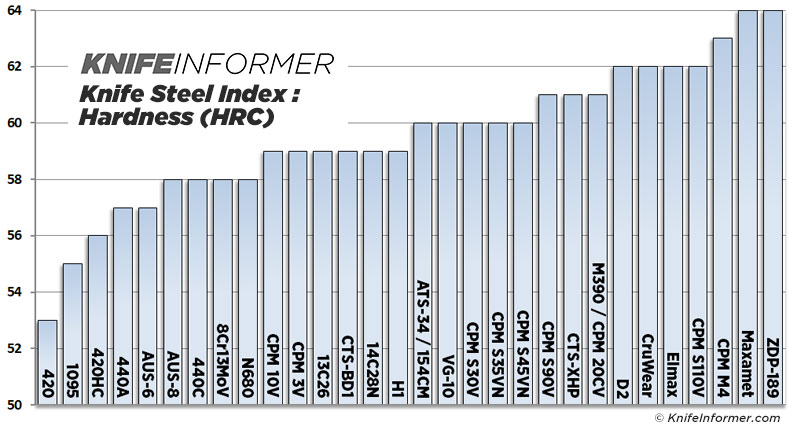
- Hardness: How well steel holds an edge. Measured on the Rockwell C scale.
- Toughness: How well a blade resists chipping or breaking.
- Corrosion resistance: How well steel resists rust and staining.
This knife steel guide will use these ideas to compare steels and to help you choose the right one for tasks like kitchen use, everyday carry, or outdoor survival.
Steel properties explained
Steel behavior comes from alloying elements and structure. Each element plays a role.
Important alloy elements:
- Carbon: Raises hardness and edge retention but can lower corrosion resistance.
- Chromium: Improves corrosion resistance and hardenability when above ~12%.
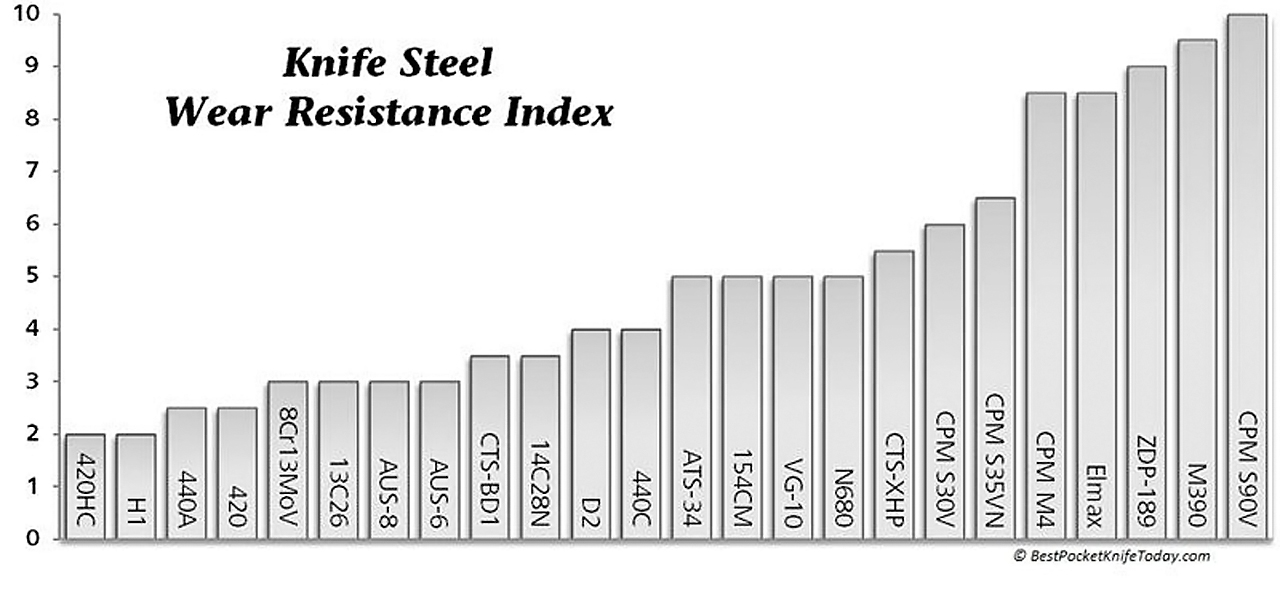
- Vanadium, Molybdenum, Tungsten: Improve wear resistance and refine grain structure.
- Nitrogen: Can increase strength and corrosion resistance in some modern alloys.
How properties trade off:
- Higher hardness often improves edge life but reduces toughness.
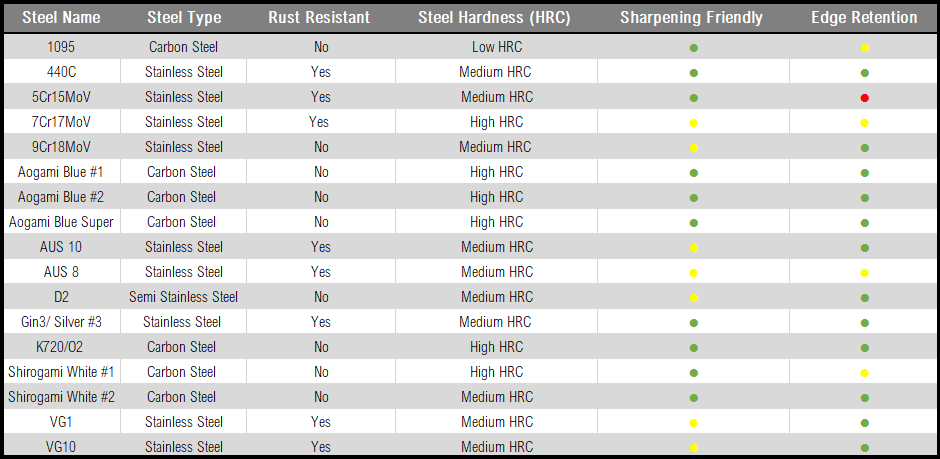
- Stainless steels resist rust but can be harder to sharpen if very wear resistant.
- Tool steels can be tough and take a keen edge but often need more care.
Understanding these fundamentals makes the rest of this knife steel guide easier. You’ll learn to pick steels that fit your priorities, not trends.
Common steel types and popular grades
Steel falls into broad families. Each family suits certain uses.
Stainless steels
- 440C: Classic, good balance of edge and corrosion resistance for the price.
- VG-10: Japanese, sharpens well and holds an edge; common in kitchen knives.
- S30V / S35VN: Powder metallurgy stainless steels with great edge retention and toughness.
High-carbon/tool steels
- 1095: Simple carbon steel. Tough and easy to sharpen but rusts without care.
- D2: High-chromium tool steel. Very wear resistant; semi-stainless but can stain.
- O1: Good toughness and toughness-to-cost ratio; needs oiling to prevent rust.
Powder metallurgy (PM) steels
- CPM-3V, CPM-S30V, CPM-S35VN: Fine, uniform structure. Combine good toughness, wear resistance, and edge stability.
- MP-197 or CTS-20CP: Modern PM steels with high chromium and vanadium for strong edges.
How to read grade lists:
- Look for chromium content for corrosion resistance.
- Check secondary carbides (vanadium, tungsten) for wear resistance.
- Powder metallurgy steels often cost more but give consistent performance.
This knife steel guide covers all the major choices so you can match a steel to how you use your knife.
Heat treatment and its impact
Heat treatment changes a steel’s real-world performance more than small chemistry shifts. Two blades of the same grade can behave very differently after heat treat.
Key heat-treatment steps:
- Hardening: Heating and quenching to form martensite.
- Tempering: Reduces brittleness and sets final hardness.
- Cryogenic treatment: Sometimes used to stabilize microstructure and improve toughness.
What to look for:
- Manufacturer specs on Rockwell hardness. Hardness often falls between 56–64 HRC for knives.
- Consistency. A well-treated mid-range steel can beat a poorly treated premium steel.
- Blade geometry. Heat treat matters, but thin geometry and grind affect cutting more than a small hardness gain.
From my experience, a good heat treat adds predictable toughness and edge life. When reading this knife steel guide, weigh heat treatment as heavily as the steel name.

How to choose steel for different uses
Choose steel with purpose. These quick rules help.
Everyday carry (EDC)
- Prioritize corrosion resistance and ease of maintenance.
- Good choices: S35VN, VG-10, 440C.
- Avoid steels that need constant oiling unless you enjoy maintenance.
Kitchen knives
- Prioritize sharpness, food safety (stainless), and ease of honing.
- Good choices: VG-10, high-carbon stainless variants, or laminated carbon steels for certain chefs.
Outdoor and survival knives
- Prioritize toughness and ease of field sharpening.
- Good choices: 1095, CPM-3V, D2.
- Consider protective coatings or regular maintenance to prevent rust.
- Many entry-level steels are serviceable when well heat-treated.
- Look for reputable brands that detail heat treatment.
- Recommendation: prioritize blade geometry and heat treat over exotic grade names.
This knife steel guide encourages separating marketing from performance. Choose steel based on real use, not hype.

Care and maintenance by steel type
Care needs vary. Match your routine to the steel.
Low-maintenance steels (stainless)
- Clean with soap and dry after use.
- Occasional polish prevents staining.
- Can go longer between maintenance sessions.
High-carbon steels
- Wipe and oil after use to stop rust.
- Hone often with a fine stone or ceramic rod.
- Store in dry spots; leather sheaths can trap moisture.
Sharpening tips
- Use progressive stones from coarse to fine for faster, durable edges.
- Match angle to use: 20 degrees per side for tough use; 15 degrees per side for fine slicing.
- Hardened steels may take longer to sharpen but keep a better edge.
My real-world tip: I carry a small ceramic rod with an outdoor knife. It saves time and maintains the edge without full sharpening.
Personal experience and testing notes
I’ve sharpened and used dozens of knives across brands and steels. Hands-on testing taught me a few firm lessons.
Lessons learned
- A cheap steel with great geometry often cuts better than an expensive steel with a dull grind.
- Heat treat inconsistency is the biggest cause of poor performance.
- For daily kitchen work, I prefer stainless steels that stay sharp and resist food acids.
Mistakes to avoid
- Buying exotic steel without understanding maintenance needs.
- Assuming higher HRC always means better performance.
- Neglecting edge angle; a fine angle improves slicing more than a marginal hardness boost.
I keep a simple kit for testing: a set of stones, a steel tester, and real tasks like cardboard slicing and food prep. These tests reveal real strengths and weaknesses faster than specifications alone.

Buying guide and practical recommendations
Use a simple checklist before buying.
Checklist for buying
- Define primary use: EDC, cooking, bushcraft, or collection.
- Check reported Rockwell hardness and heat treat notes.
- Read user reviews focused on edge retention and toughness, not just polish.
- Consider after-sale support and sharpening services.
Top picks by category
- Best overall EDC: S35VN or S45VN.
- Best budget daily knife: 440C or AUS-8 with good heat treat.
- Best outdoor survival: CPM-3V or 1095 with proper coating.
- Best kitchen: VG-10 or high-carbon stainless with a thin edge.
This knife steel guide favors choices that balance real-world needs and long-term value. Test or handle a knife when possible.
Frequently Asked Questions of knife steel guide
What is the best steel for everyday carry knives?
Choose a stainless alloy that balances edge retention and corrosion resistance. S35VN, VG-10, or 440C are common, reliable picks.
How does hardness affect knife performance?
Higher Rockwell hardness gives better edge retention but can reduce toughness. The best value is a steel with balanced heat treatment for your use.
Are powder metallurgy steels worth the cost?
Yes, if you want consistent microstructure, better wear resistance, and predictable performance. They cost more but often last longer between sharpenings.
Can I use a carbon steel kitchen knife daily?
Yes, if you clean and oil it after use to prevent rust. Carbon steels often take a finer, sharper edge that cooks love.
How often should I sharpen my knife?
It depends on use. Light daily use may need honing once a week and sharpening every few months. Heavy or outdoor use will require more frequent sharpening.
Conclusion
This knife steel guide gives a clear path to choosing and caring for knife steels. Focus on your main use, then pick steel that matches your needs for hardness, toughness, and corrosion resistance. Start simple: choose a trusted grade, check heat treatment, and keep a consistent care routine.
Take action now: pick one steel from the recommended list that matches your use and try it for a month. Share your results or questions below, or subscribe to get deeper tests and sharpening tutorials.

Maliha Khatun has spent 5 years hands-on testing Japanese knives for everyday home cooks. She has evaluated over 60 blades across nakiri, santoku, gyuto, and petty categories — scoring each on edge retention, steel quality, handle comfort, and value for money. She writes to help home cooks buy the right knife without the guesswork.
Expertise:Japanese Knives • Vegetable Knives • Product Reviews • Kitchen Efficiency • Knife Care
Leave a Reply