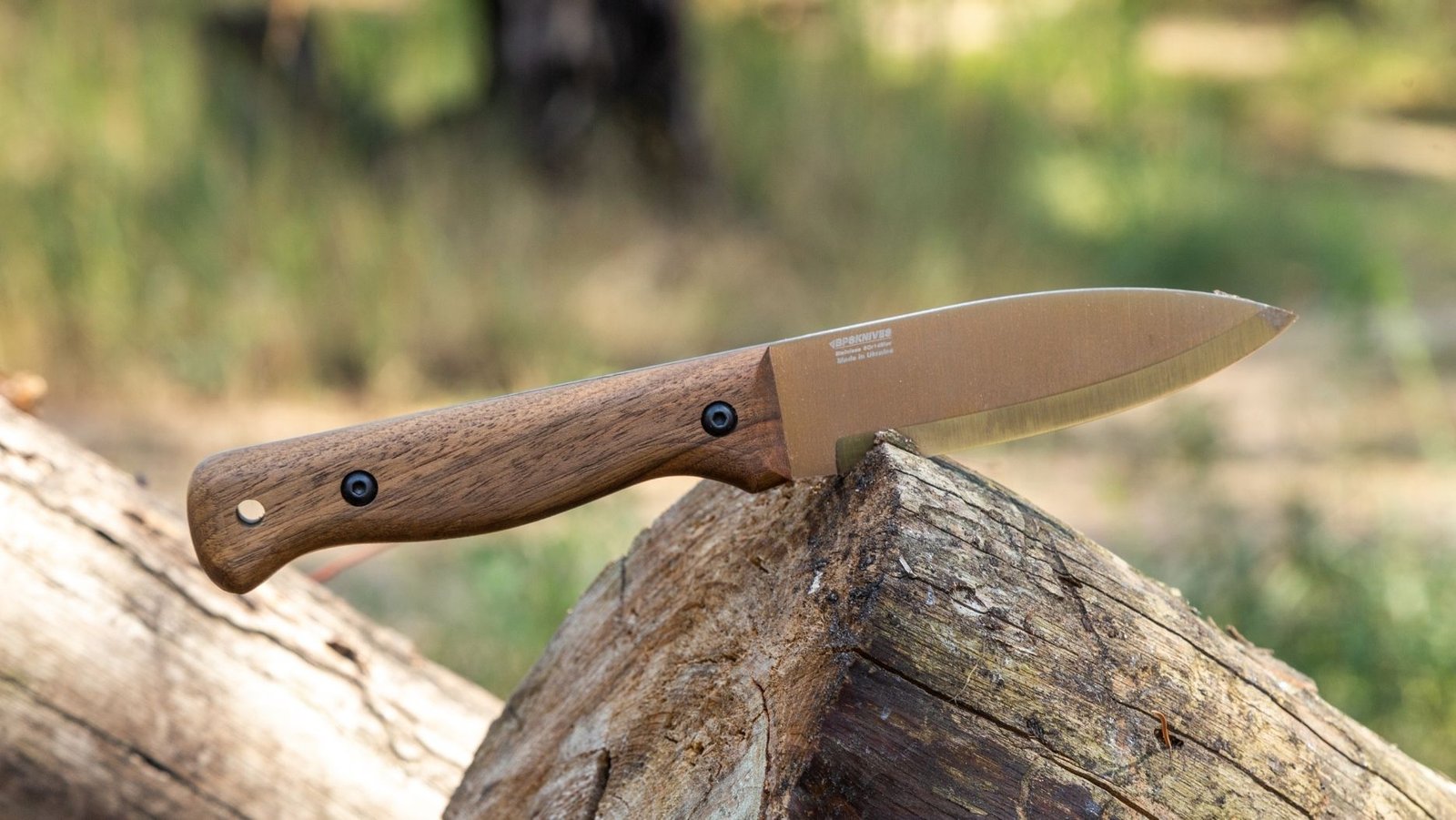
Knife balance means where the weight sits between blade and handle, affecting control and feel.
I have spent years testing knives in kitchens, workshops, and outdoors. This guide on knife balance explained draws on hands-on experience, clear measurements, and practical tips you can use today. Read on to learn how balance shapes performance, how to test it, and how to tune a knife to your needs.

What is knife balance?
Knife balance explained is the study of weight distribution along a knife. It tells you whether the blade or the handle feels heavier when you hold the knife. The balance point is the spot where the knife pivots freely on a finger or a support.
A neutral or center-balanced knife has its balance point near the spine-heel junction. A blade-heavy knife shifts the balance point forward toward the blade. A handle-heavy knife shifts it back toward the handle. Knowing this helps you pick the right knife for the job and for your hand size.
People also ask
What is the ideal balance for a chef’s knife?
The ideal balance for a chef’s knife is usually near the bolster or the front of the handle to allow control during rocking and chopping.
How do you determine if a knife is blade-heavy?
If the cutting edge drops forward when you rest the knife on a finger, the knife is blade-heavy.
How to find the balance point (step-by-step)
Knife balance explained becomes clear when you test a knife yourself. Follow simple steps to measure balance at home.
- Place the knife flat and steady a finger under the spine near the handle.
- Slide the knife back and forth until it balances horizontally.
- Mark the spot where it balances; this is the balance point.
You can also use a thin rod or a purpose-made balance jig for more precise testing. Measure distance from the butt to the balance point to compare knives reliably. Record your results to build a personal reference.

Source: youtube.com
Types of balance and what each means
Knife balance explained covers three common types. Each type suits different tasks and grips.
- Blade-heavy balance
Blade-heavy knives put more work into cutting and chopping. They help when you need forward weight to drive the blade through dense material. - Handle-heavy balance
Handle-heavy knives allow finesse and quick wrist motion. Good for detailed work and long periods of fine cutting. - Neutral or center balance
Neutral knives offer a balance of power and control. They are versatile and often preferred by chefs for general use.
Understanding these types helps you match a knife to tasks like slicing, chopping, piercing, or carving.

Source: bpsknives.com
How balance affects performance and safety
Knife balance explained also means predictable behavior. Balance influences power, control, fatigue, and safety.
- Power: A forward balance adds driven force to cuts.
- Control: A rear balance improves quick maneuvers and tracking.
- Fatigue: Poor balance forces extra wrist work and speeds fatigue.
- Safety: A knife that fights your hand is more likely to slip.
Choose balance to match both the task and your grip style. For example, a rocking motion needs a front-heavy or neutral chef’s knife. For carving, a slightly rear-biased knife can give steadier control.

Source: kireaji.ca
How manufacturers tune balance
Knife balance explained includes how makers control weight. Manufacturers change materials and geometry to move the balance point.
- Tang design controls weight along the handle.
- Bolsters and choils shift mass near the center.
- Handle materials add or reduce rear weight.
- Blade length, grind, and thickness move the balance forward or back.
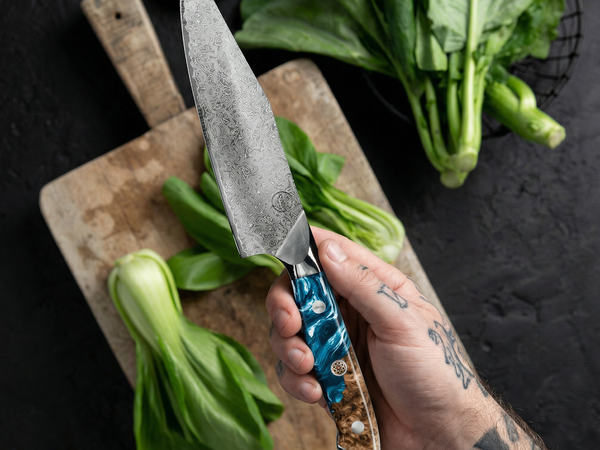
High-end makers test prototypes and adjust proportions to hit target balance points. Budget knives often rely on fixed designs with less fine-tuning.
Source: thecookingguild.com
How to adjust or modify balance
If a knife’s feel is off, you can modify it. Knife balance explained includes several safe, reversible methods.
- Add weight to the handle with removable scales or liners.
- File or thin the blade near the spine to move balance back.
- Swap handle materials to a lighter or heavier option.
- Add a weighted pommel or a mosaic pin for minimal, controlled change.
When modifying, work slowly and test often. Small changes make a big difference. If you are unsure, consult a professional knife maker.

Source: sharpedgeshop.com
Common myths and mistakes
Knife balance explained clears up myths that can mislead buyers and users.
- Myth: Heavier knives are always better.
Reality: Weight helps some tasks but harms precision and increases fatigue. - Myth: Balance should be identical for all chefs.
Reality: Grip, hand size, and preferred cutting motion determine ideal balance. - Mistake: Relying only on spec sheets.
Reality: Specs tell part of the story; holding the knife tells the rest.
Test knives in real use conditions. That gives you reliable answers about fit and function.

Source: youtube.com
Personal experience and practical tips
I have carried many knives across kitchens and trails. Knife balance explained became clear after long shifts and long hikes.
One time I tested two 8-inch chef knives with similar specs. One had the balance at the bolster. The other balanced two inches forward. The forward-balanced knife made chopping root vegetables easier but led to wrist fatigue in long prep. I switched to the bolster-balanced knife for daily prep and kept the forward-balanced tool for heavy tasks.
Tips I learned:
- Match balance to task. Use forward bias for heavy chopping and neutral for prep.
- Test for 10 minutes before deciding to buy. Comfort emerges over time.
- Keep notes on balance points for your favorite knives and why you like them.
These small records help you pick new knives faster.

Source: kireaji.ca
PAA-style quick questions
What does a forward balance do for cutting?
A forward balance adds momentum to the blade, helping drive it through dense material and making chopping easier.
Can you change a knife’s balance without a pro?
Yes. You can add lightweight liners or weighted pins and swap scales, but major changes are best left to professionals.
How does balance relate to blade length?
Longer blades usually shift the balance forward unless handle weight is increased to compensate.
Frequently Asked Questions of knife balance explained
What is the balance point on a knife and where should it be?
The balance point is where the knife pivots and stays level. For most general knives, it should sit near the front of the handle or at the bolster for good control.
How do I test my knife’s balance at home?
Rest the knife on a finger or thin rod and slide until it stays level. Mark that spot and measure from the butt to compare with other knives.
Is a blade-heavy knife bad for kitchen use?
Not at all. Blade-heavy knives excel for chopping and heavy cutting. They can tire the wrist faster during long, detailed prep.
Can I adjust balance by changing the handle?
Yes. Swapping to heavier or lighter scales or adding liners will shift the balance point toward or away from the handle.
How much should balance influence my knife purchase?
Balance is crucial but not the only factor. Combine balance with ergonomics, blade steel, and intended use to choose the best knife.
Does knife balance affect sharpening?
Balance itself doesn’t change sharpening technique, but a poorly balanced knife can shift in your hand while sharpening, affecting consistency. A stable, well-balanced knife improves control during sharpening.
Are certain balance points better for outdoor knives?
Outdoor knives that do chopping and batoning often benefit from forward balance. For detailed carving and whittling, a more rearward balance helps control.
Conclusion
Knife balance explained shows that weight distribution shapes how a knife feels and performs. Measure balance, test knives in use, and choose a balance that matches your tasks and your hands. Small adjustments can make a big difference in comfort and control.
Try testing a few knives this week. Note where the balance point falls and how each knife feels after ten minutes of real use. Share your findings or ask questions below to refine your choice and build a better toolset.
Maliha Khatun has spent 5 years hands-on testing Japanese knives for everyday home cooks. She has evaluated over 60 blades across nakiri, santoku, gyuto, and petty categories — scoring each on edge retention, steel quality, handle comfort, and value for money. She writes to help home cooks buy the right knife without the guesswork.
Expertise:Japanese Knives • Vegetable Knives • Product Reviews • Kitchen Efficiency • Knife Care
Leave a Reply