Clean, dry, strop, sharpen on water stones, and store Japanese knives safely.
If you care about performance, a japanese knife care routine is the secret to laser-sharp cuts and long life. I have sharpened and serviced hundreds of Japanese blades in busy kitchens and home studios. In this guide, I’ll show you a simple, proven japanese knife care routine you can follow right away. Expect clear steps, pro tips, and fixes that protect both high-carbon and stainless Japanese steels.

Daily care essentials
A great japanese knife care routine starts the moment you stop cutting. Small habits prevent big problems.
- Rinse right after use. Use warm water and a drop of mild soap. Avoid soaking.
- Wipe dry at once. Use a soft towel. Dry the spine and heel too.
- Remove food acids fast. Citrus, tomatoes, and onions can stain in minutes. Wipe between tasks.
- Strop lightly. Ten passes on leather or newsprint keeps the bite fresh.
- Store safely. Use a saya, edge guard, or a clean magnetic strip.
Pro tip from the line: keep a folded side towel by the board. Wipe-dry after each ingredient. It adds seconds to your japanese knife care routine and saves hours of sharpening later.

Weekly and monthly maintenance
Plan light weekly touch-ups and a deeper reset each month. This keeps the edge crisp and the blade clean.
Weekly
- Strop with a touch of 1–3 micron compound.
- Check for chips under bright light. Feel gently with a finger pad.
- Wipe a thin film of camellia or food-safe mineral oil on carbon steel.
Monthly
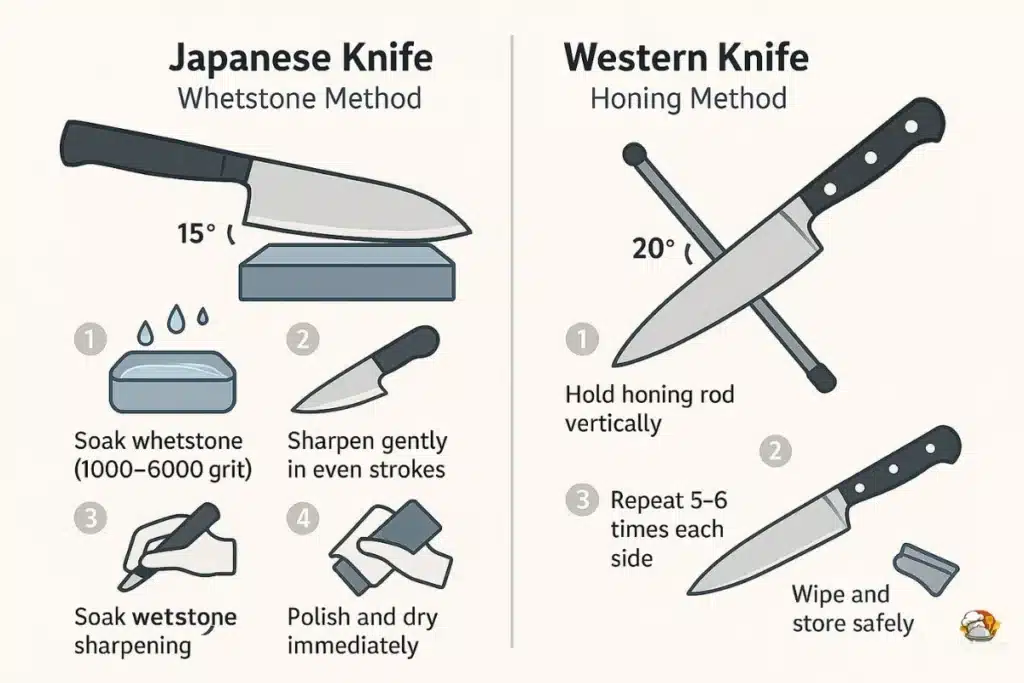
- Sharpen on water stones. A 1000/3000 or 1000/6000 set works for most.
- Flatten stones with a plate or wet-dry sandpaper on glass.
- Clean patina build-up. Use a soft rust eraser or baking soda paste, then rinse and dry.
- Oil wooden handles. A drop of board oil keeps them stable.
These short blocks make your japanese knife care routine reliable and stress-free.
Source: kitchenpluse.com
Sharpening the right way
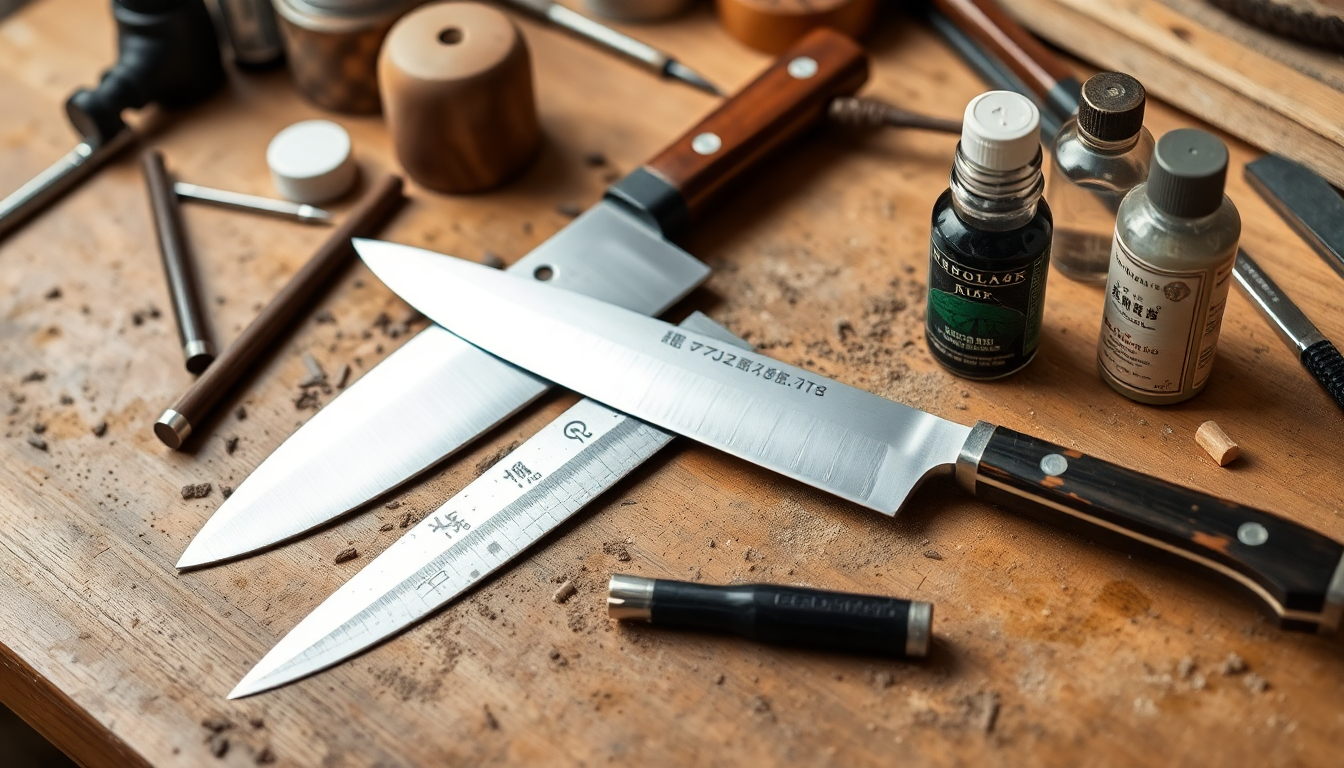
A sharp edge is the heart of any japanese knife care routine. Hard steels need proper stones and gentle hands.
Stones and grits
- 1000 grit is your main workhorse. It sets the edge.
- 2000–3000 grit refines and speeds food release.
- 5000–8000 grit adds polish and precision for protein and fine veg.
- Use a splash-and-go stone for travel. Soakers give great feel at home.
Edge angle and burr
- Aim for 10–15 degrees per side. Hard steel supports a low angle.
- Raise a small, even burr along the full edge. Flip and repeat.
- Keep the angle steady. Think of “locking your wrist” and moving from the shoulder.
Stropping and deburring
- Strop on leather, balsa, or paper on glass.
- Light pressure only. Ten to twenty passes per side.
- Finish with two edge-leading strokes on the stone to clean the wire burr.
How often to sharpen
- Home cooks: every 4–8 weeks with regular stropping.
- Pros: every 1–3 weeks, depending on use and board choice.
- If your tomato squashes before it slices, it’s time.
Avoid heavy steel honing rods on very hard blades. A fine ceramic rod is safer, but water stones and stropping are best for the japanese knife care routine.
Source: japan-knifeshop.com
Storage and safe handling
Storage errors undo good sharpening. Protect the edge from hits and moisture.
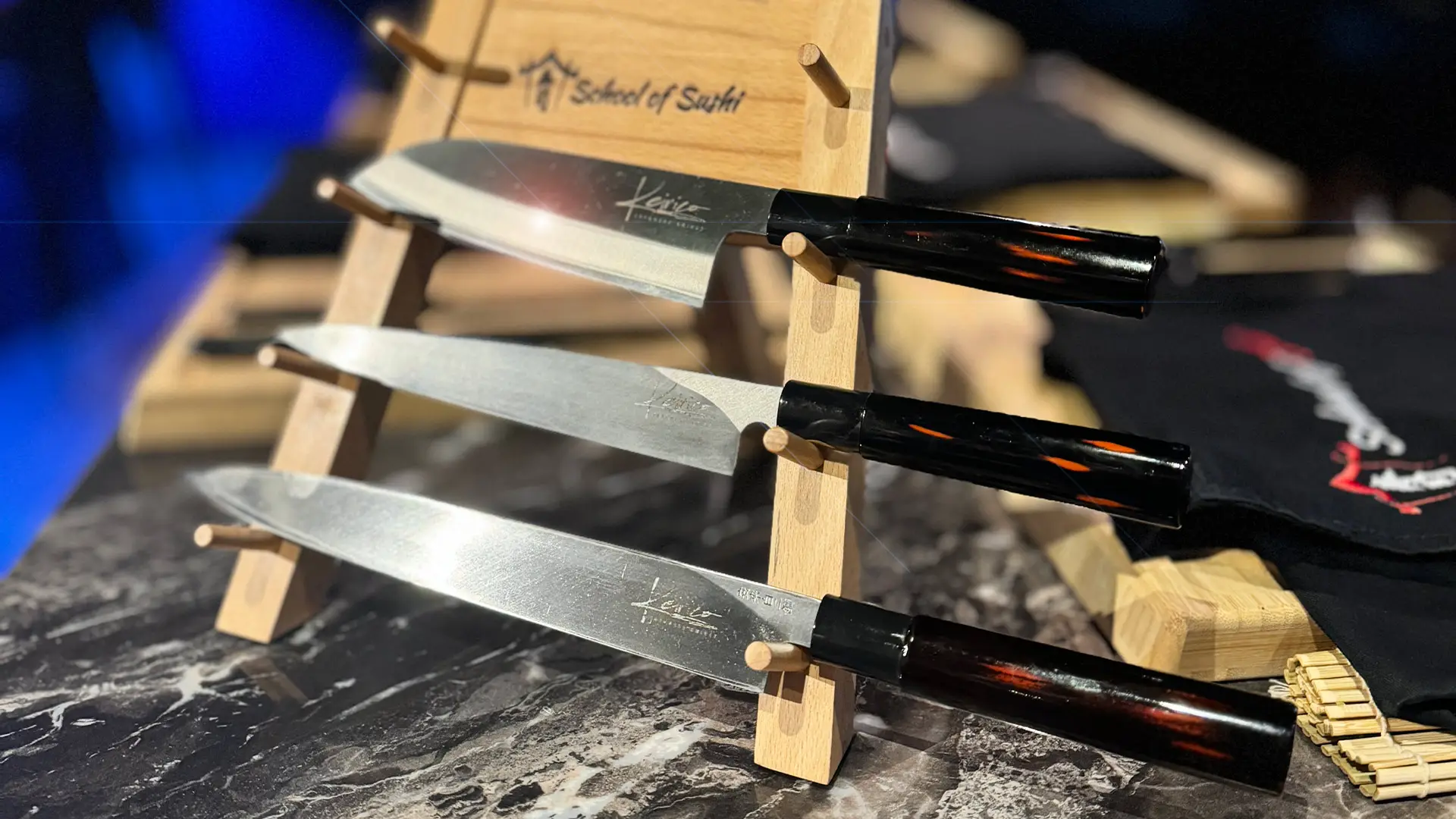
- Use a wood saya or snug edge guard for drawers and travel.
- Magnetic strips are great if they are clean wood or polymer. Keep grit off the magnet.
- Avoid loose drawers. Edges bang, chip, and dull fast.
- Keep knives off damp dish racks. Dry and store right away.
For a tidy japanese knife care routine, set a “home” for each blade. You will reach for it more and fix damage less.
Source: schoolofsushi.com
Cutting surfaces and knife use
Your board decides how long your edge lasts. Hard boards kill edges fast.
- Choose end-grain wood like maple, cherry, or walnut. Soft rubber boards work well too.
- Avoid glass, stone, bamboo, and hard plastic. They dull and chip edges.
- Use push or pull cuts. Let the sharp edge glide.
- Never scrape with the edge. Flip and use the spine, or grab a bench scraper.
One small swap here can double the life of your japanese knife care routine between sharpenings.

Source: zahocho.com
Rust prevention, patina, and stain care
Many Japanese knives use high-carbon steel like White or Blue paper steel. They take a keen edge but need care.
- Wipe often during acidic prep. Do not give rust a head start.
- Build a stable patina. Natural patina can protect the blade from deep rust.
- Oil after drying. Camellia or food-safe mineral oil works well, especially in humid kitchens.
- For light rust, use a soft rust eraser or baking soda paste. Rinse, dry, and oil.
Stainless options like VG-10 or SG2 resist rust, but they still need the same japanese knife care routine. Water and salt can stain any edge if left long enough.

Source: echefknife.com
Travel, work, and outdoor use
If you move with your knife, plan ahead.
- Use a saya or clip-on edge guard that locks in place.
- Wrap in a clean towel inside a roll. Add silica gel packs in humid weather.
- At work, set a wipe-dry habit between tickets. It cuts rust risk to near zero.
- After service, wash, dry, strop, and oil if carbon steel.
A mobile japanese knife care routine is simple when your kit is ready before you leave home.

Source: zahocho.com
Troubleshooting and common mistakes
Most damage comes from a few repeat errors. Fix them and your blades will thank you.
Problem: Microchips along the edge
- Fix: Reduce cutting force. Switch to softer boards. Use a finer finish stone and strop.
Problem: Edge folds fast after sharpening
- Fix: You left a wire burr. Deburr on the stone, then strop lightly.
Problem: Orange rust spots after prep
- Fix: Wipe and dry during service. Oil thinly before storage.
Problem: Blade feels sticky in food
- Fix: Use a slightly higher finish grit. Cut with a shallow angle and a soft draw.
Problem: Uneven bevels
- Fix: Count strokes. Color the edge with a marker to track your angle.
These tiny tweaks bring big gains to any japanese knife care routine.

Source: ubuy.do
Frequently Asked Questions of japanese knife care routine
How often should I sharpen a Japanese knife?
Home cooks can sharpen every 4–8 weeks with light weekly stropping. Pros may sharpen every 1–3 weeks, based on volume and board choice.
Can I use a honing rod on hard Japanese steel?
Use a fine ceramic rod if needed and go very light. Water stones and stropping are safer for hard steels at 60+ HRC.
What oil is best for carbon steel knives?
Camellia oil or food-safe mineral oil works well and stays stable. Apply a thin coat after drying, then wipe before use.
Are dishwashers safe for Japanese knives?
No. Heat, water, and detergent can warp handles and dull edges. Hand wash, dry at once, and store safely.
What cutting board should I use for the best edge life?
End-grain wood or soft rubber boards protect the edge. Avoid glass, stone, and bamboo, which are too hard on the blade.
Conclusion
A smooth japanese knife care routine is a set of small habits that protect sharpness, speed prep, and prevent rust. Wash, dry, strop, store, and plan regular stone work. Choose a soft board, mind your angle, and keep your stones flat.
Start today with one change: switch to an end-grain board and strop after dinner. Your tomatoes, herbs, and sashimi will tell you you made the right call. Want more? Subscribe for detailed stone guides, gear picks, and step-by-step sharpening drills.

Maliha Khatun has spent 5 years hands-on testing Japanese knives for everyday home cooks. She has evaluated over 60 blades across nakiri, santoku, gyuto, and petty categories — scoring each on edge retention, steel quality, handle comfort, and value for money. She writes to help home cooks buy the right knife without the guesswork.
Expertise:Japanese Knives • Vegetable Knives • Product Reviews • Kitchen Efficiency • Knife Care
Leave a Reply