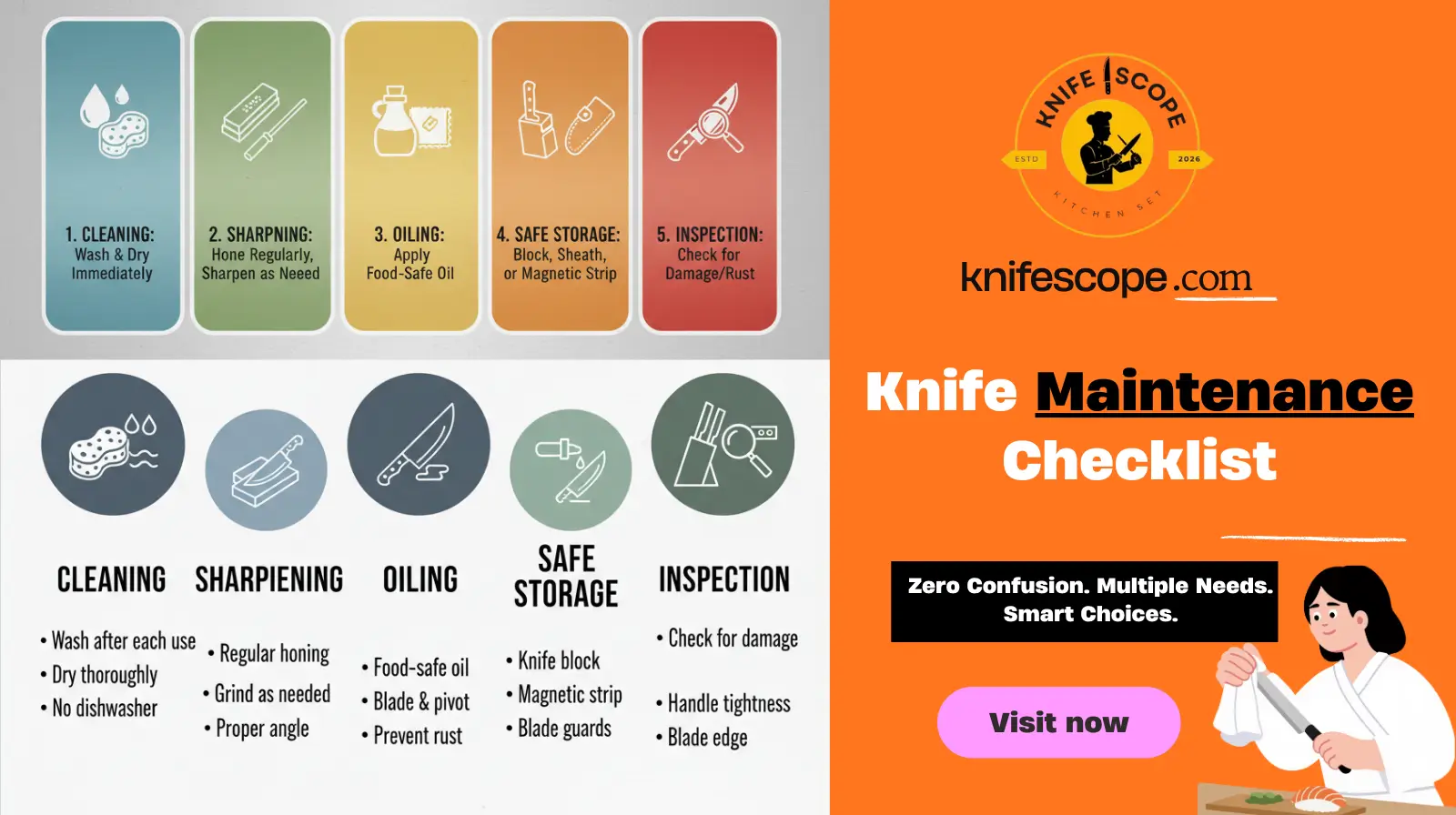
A knife maintenance checklist keeps blades sharp, safe, rust-free, and ready daily.
If you cook, work in a shop, or carry a pocket knife, a reliable knife maintenance checklist is your best friend. I’ve tuned blades for restaurants, campers, and home cooks for years, and the same core steps always win. In this guide, I’ll show you the exact knife maintenance checklist I use, why it works, and how you can adapt it to your knives without guesswork. Read on to keep your edge, prevent rust, and make every cut feel effortless.
What a knife maintenance checklist covers
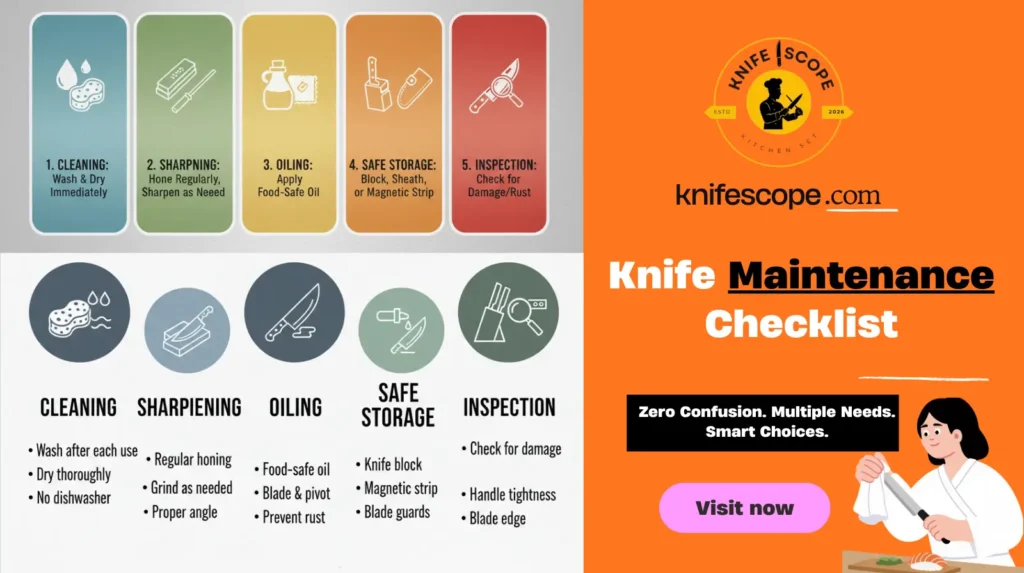
A knife maintenance checklist is a simple plan that keeps your blades in top shape. It covers cleaning, drying, honing, sharpening, oiling, storage, and safety checks. Follow it, and your knives will last longer, cut cleaner, and feel safer in your hand.
I’ll walk you through daily, weekly, and monthly routines. You’ll also get the tools I trust, the steps I use, and the mistakes I learned the hard way. Use this knife maintenance checklist as your go-to routine, whether you use a chef’s knife or a folding knife.
Source: bladeops.com
Daily checklist: before, during, and after use
Daily care prevents damage and saves you time later. These small habits protect the edge and stop rust before it starts. Think of it as brushing your teeth for your knives.
Daily steps:
- Rinse and wipe between tasks Wipe food off the blade as you cook. Avoid long soaks.
- Use the right board Choose wood or quality plastic. Avoid glass, stone, or metal.
- Hand-wash with mild soap Use warm water. Avoid harsh scrubbers and the dishwasher.
- Dry at once Use a clean towel. Dry the spine, handle, and heel.
- Quick hone if needed Use a rod to realign the edge after prep.
If you do nothing else, do this daily set. It makes the rest of the knife maintenance checklist easy and stress-free.

Source: trustercnc.com
Weekly checklist: hone, deep clean, inspect
Weekly care keeps small issues from turning into big repairs. It is a short session that pays off with better performance and safety.
Weekly steps:
- Hone the edge 5 to 10 light passes per side. Keep a steady angle.
- Deep clean the handle Remove grime at the bolster, pins, and liners.
- Check for rust spots Look along the edge and near the handle. Treat at once.
- Inspect alignment and play For folders, check pivot tension and lockup. For kitchen knives, check straightness.
- Light oil touch For carbon steel, wipe a thin coat of food-safe oil.
Add this weekly layer to your knife maintenance checklist to keep edges crisp and hardware solid.
Source: japan-knifeshop.com
Monthly checklist: sharpen, oil, sanitize handles
Monthly care restores the edge and protects the steel. This is when you sharpen, seal, and reset the knife to like-new feel.
Monthly steps:
- Full sharpening Use stones or a guided system. Start with the lowest grit needed.
- Remove burr and strop Finish with leather or fine compound for a crisp edge.
- Oil blades and hinges Use mineral oil on food knives. Use light machine oil on pivots.
- Sanitize and seal handles Clean wood with mild soap. Apply board butter or wax if needed.
- Check sheaths and blocks Clean slots. Remove crumbs and moisture.
A monthly tune-up is the backbone of a strong knife maintenance checklist. It keeps performance high and reduces long-term wear.

Source: trustercnc.com
Tools and supplies for your knife maintenance checklist
You do not need a drawer full of gear. A small, smart kit covers almost every knife at home or in the field. Quality matters more than quantity here.
Core tools:
- Honing rod Ceramic for a fine realign. Steel rods work too, but be gentle.
- Sharpening stones A two-grit set, like 1000 and 3000, fits most needs.
- Strop With leather and a fine compound to finish and refine the edge.
- Food-safe mineral oil Safe for kitchen use. Great for carbon steel.
- Cleaning gear Mild soap, soft sponge, microfiber towel, and cotton swabs.
- Rust eraser or fine abrasive Use lightly to lift patina spots without gouging.
- Angle guide Optional aids help keep a stable angle and build muscle memory.
Having this kit in one place makes your knife maintenance checklist quick and repeatable. That routine is what delivers clean, safe cuts every day.

Source: tlcthelawncompany.com
Step-by-step cleaning and drying process
Good cleaning protects steel and handles without harming the edge. It also stops hidden moisture from creating rust where you cannot see it.
Steps I use:
- Rinse off debris right after use. Do not soak the knife.
- Wash with mild soap and a soft sponge. Keep fingers away from the edge.
- Clean the handle and bolster. Use a cotton swab in tight spots.
- Rinse and towel-dry. Then air-dry for a few minutes.
- Lightly oil carbon steel or exposed hardware. Wipe off any extra.
This simple flow fits any knife maintenance checklist and works for chef’s knives, paring knives, and pocket knives alike.

Source: montanaknifecompany.com
Sharpening and honing essentials
Honing realigns the edge. Sharpening removes metal to form a new edge. Most home cooks need to hone weekly and sharpen monthly or when food starts to slip.
Key points:
- Angle Kitchen knives often like 12 to 20 degrees per side. Pocket knives often sit at 15 to 22.
- Pressure Use light, even pressure. Let the stone do the work.
- Progression Use the lowest grit that bites, then move up. Finish with a strop.
- Burr control Raise a burr on the first side, then switch. Remove the burr at the end.
In my work, a 1000-grit stone plus a strop fixes 80 percent of dull knives fast. Add this to your knife maintenance checklist, and your edge will stay sharp without drama.

Source: getmaintainx.com
Storage, transport, and environment
How you store a knife can undo weeks of good care. Choose storage that protects the edge and keeps moisture away.
Good storage options:
- Magnetic strip Use a wood-backed strip to avoid scratching.
- Blade guards or saya Safe in a drawer or bag. Protects you and the edge.
- Knife block Keep it clean and dry. Insert spine-first if slots allow.
- Dry zone Avoid damp basements or steamy spots. Wipe off condensation.
Safe storage is a must-have line item in any knife maintenance checklist. It protects both the steel and your fingers.
Source: ivycnc.com
Troubleshooting: common issues and quick fixes
Even with a strong routine, problems happen. The fix is simple if you know what to look for and act fast.
Quick fixes:
- Minor rust Stipple with a rust eraser. Rinse, dry, and oil.
- Microchips Drop one grit lower than usual. Sharpen until chips are gone.
- Warped edge Hone first. If it persists, sharpen with even pressure and check angles.
- Loose pivot Add a tiny turn to the pivot screw. Use thread locker if it loosens often.
- Slippery handle Clean with soap. For wood, add wax for grip and seal.
Keep this section bookmarked inside your knife maintenance checklist. It turns small scares into quick wins.
Mistakes to avoid with any knife maintenance checklist
These errors are common and costly. Skip them, and your edge will thank you.
Avoid these:
- Dishwasher heat and detergent They wreck handles and edges.
- Hard boards like glass They kill sharpness fast and can chip the edge.
- Over-honing Too much can round the apex. Be gentle and light.
- Skipping the dry step Water hides at the handle and causes rust.
- Guessing your angle Use a guide or mark the bevel with a marker to track contact.
I learned the dishwasher lesson once on a carbon steel petty. Never again. Bake that warning into your knife maintenance checklist.
Pro tips from the bench
These are habits I teach cooks and campers. They are simple and make a big difference right away.
Practical tips:
- Use the marker trick Color the bevel with a marker. One stroke shows if your angle is right.
- Count your strokes Match stroke counts per side. It keeps your edge centered.
- Strop last A few light passes give a bitey yet smooth cut.
- Oil the pivot of folders After rain or sweat, oil and cycle the blade open and closed.
- Set calendar reminders Treat your knife maintenance checklist like a standing date.
Small routines become big gains. In a month, you will feel the knife glide like new.

Frequently Asked Questions
How often should I sharpen my knives?
Most home cooks can sharpen every 4 to 8 weeks, based on use. Hone weekly to hold the edge between sessions.
What angle should I use to sharpen?
Start at 15 degrees per side for most chef’s knives. Pocket knives often sit between 17 and 20 degrees for durability.
Can I put knives in the dishwasher?
No. Heat, detergent, and banging ruin edges and handles. Hand-wash and dry right away instead.
Do I need a honing rod and stones?
Yes, they do different jobs. The rod realigns the edge, while stones reshape and refine it.
How do I stop rust on carbon steel?
Keep it dry and lightly oiled after cleaning. Store in a dry spot and avoid damp sheaths.
Conclusion
A clear knife maintenance checklist turns guesswork into a quick, reliable routine. Clean and dry daily, hone weekly, sharpen monthly, and store smart. Use the right tools, keep angles steady, and fix small issues fast.
Start today. Pick one knife, run through this checklist, and feel the difference at your next meal or on your next task. Want more guides like this? Subscribe for updates, ask questions in the comments, and share what works in your own routine.

Maliha Khatun has spent 5 years hands-on testing Japanese knives for everyday home cooks. She has evaluated over 60 blades across nakiri, santoku, gyuto, and petty categories — scoring each on edge retention, steel quality, handle comfort, and value for money. She writes to help home cooks buy the right knife without the guesswork.
Expertise:Japanese Knives • Vegetable Knives • Product Reviews • Kitchen Efficiency • Knife Care
Leave a Reply