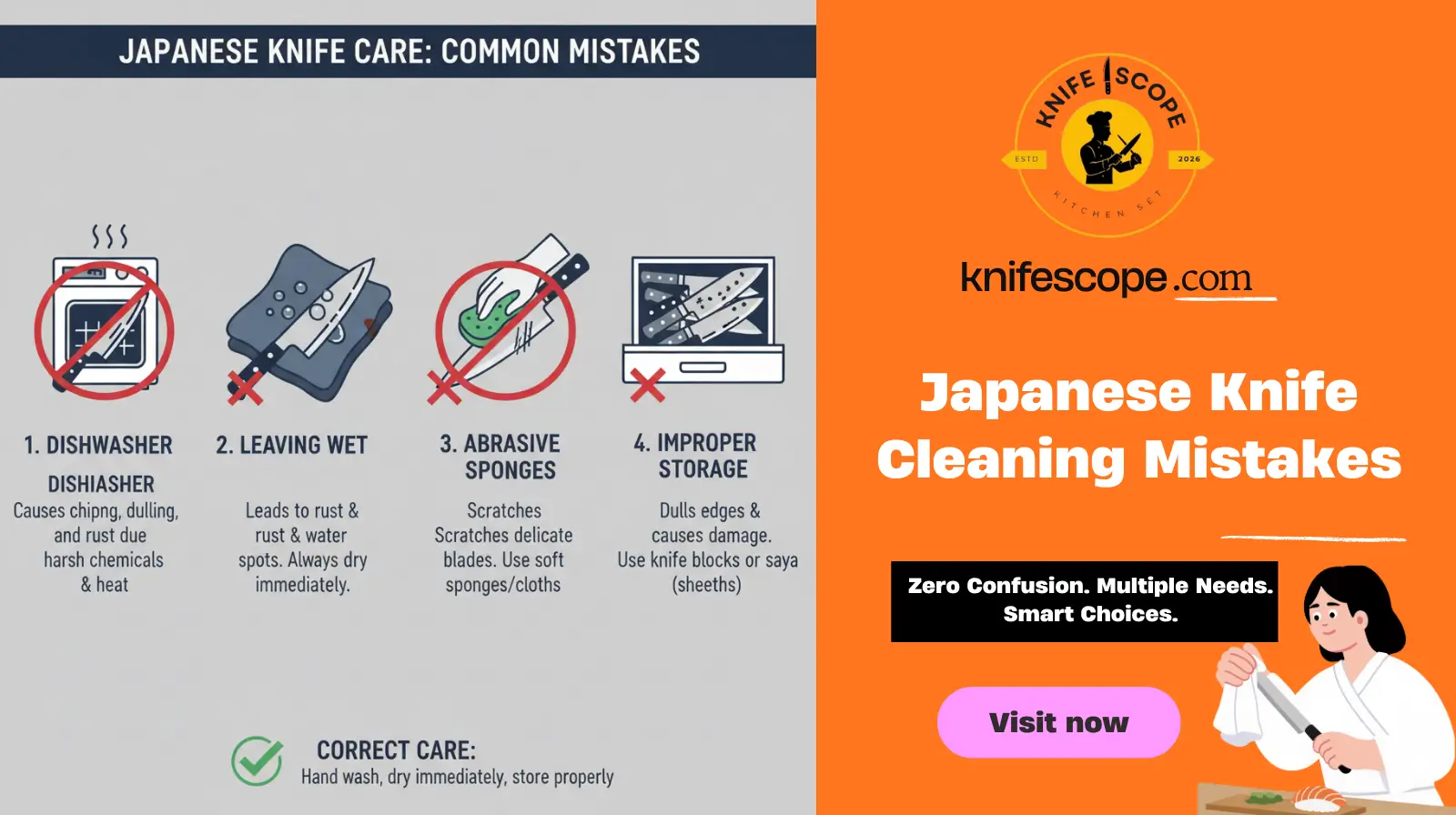
Most damage comes from dishwashers, soaking, harsh chemicals, and slow drying.
Caring for a Japanese knife is simple, but small lapses cause big problems. I’ve spent years sharpening and restoring blades, and I see the same japanese knife cleaning mistakes over and over. In this guide, I will break down what ruins edges, stains steel, and degrades handles, plus the exact habits that keep your knife sharp, clean, and safe for years. Read on to avoid costly errors and build a quick, reliable routine that works every day.
Why Japanese knives react to cleaning
Japanese knives use harder steel than many Western knives. Many sit around 60–65 HRC. This gives amazing sharpness, but it also means the edge is thin and can chip. Some blades use carbon steel that can rust fast. Others use stainless cladding with a reactive core.
Handles often use wood and a hidden tang. Soaking or high heat can swell wood or weaken glue. These traits make small errors add up. This is why we need to avoid common japanese knife cleaning mistakes.

Source: musashihamono.com
The biggest japanese knife cleaning mistakes
Below are the most common japanese knife cleaning mistakes I see in kitchens and shops.
- Putting the knife in a dishwasher The heat and harsh soap eat handles, dull edges, and cause micro chips as the knife bangs around. It also invites rust at the tang.
- Soaking in the sink or a prep tub Water, salt, and food acids attack steel fast. A few minutes can leave orange spots.
- Using bleach, quats, or oven cleaner Strong chemicals pit steel and stain cladding. They also dry out wood.
- Scrubbing with steel wool or rough pads These scratch finishes and can erase Damascus etching. They also bite into the edge.
- Wiping along the cutting edge This is dangerous and can roll or chip the edge. Always wipe from spine toward the edge with care.
- Letting the knife air-dry on a rack Water creeps into the handle and along the edge. Spots form, and rust starts.
- Leaving acidic food on the blade Citrus, tomatoes, onions, and soy sauce speed corrosion. Wipe as you cook.
- Storing loose in a drawer Blades hit hard objects and dull fast. Hidden moisture also lingers.
- Using strong degreasers or high-alkaline soaps These strip protective patina and can etch soft iron cladding.
- Over-polishing carbon steel after every use A blue-gray patina is protective. Trying to make it mirror bright each time removes that layer and invites rust.
Avoid these japanese knife cleaning mistakes and you will prevent most rust and edge damage.

Source: musashihamono.com
Water, rust, and timing
Rust is a race you can win. Clean right after use. Do not soak. Use warm water and a tiny drop of mild dish soap.
Salt and acids speed up rust. If you cut lemons, tomatoes, or onions, wipe the blade during prep. A quick rinse and dry in the middle of a long session helps a lot. This habit alone stops many japanese knife cleaning mistakes.

Source: musashihamono.com
Soaps, sanitizers, and chemicals to avoid
Mild dish soap with neutral pH is safe. Use a very small amount. Rinse well.
Avoid bleach, quats, oven cleaner, and strong degreasers. These can pit steel and damage wood. Alcohol at 70% can sanitize in a pinch, but rinse and dry right away. If you run a professional kitchen, follow your food safety plan, but keep harsh sanitizers off the blade when you can. This choice prevents more japanese knife cleaning mistakes than you might think.
Source: globalcutleryusa.com
Safe tools and wiping technique
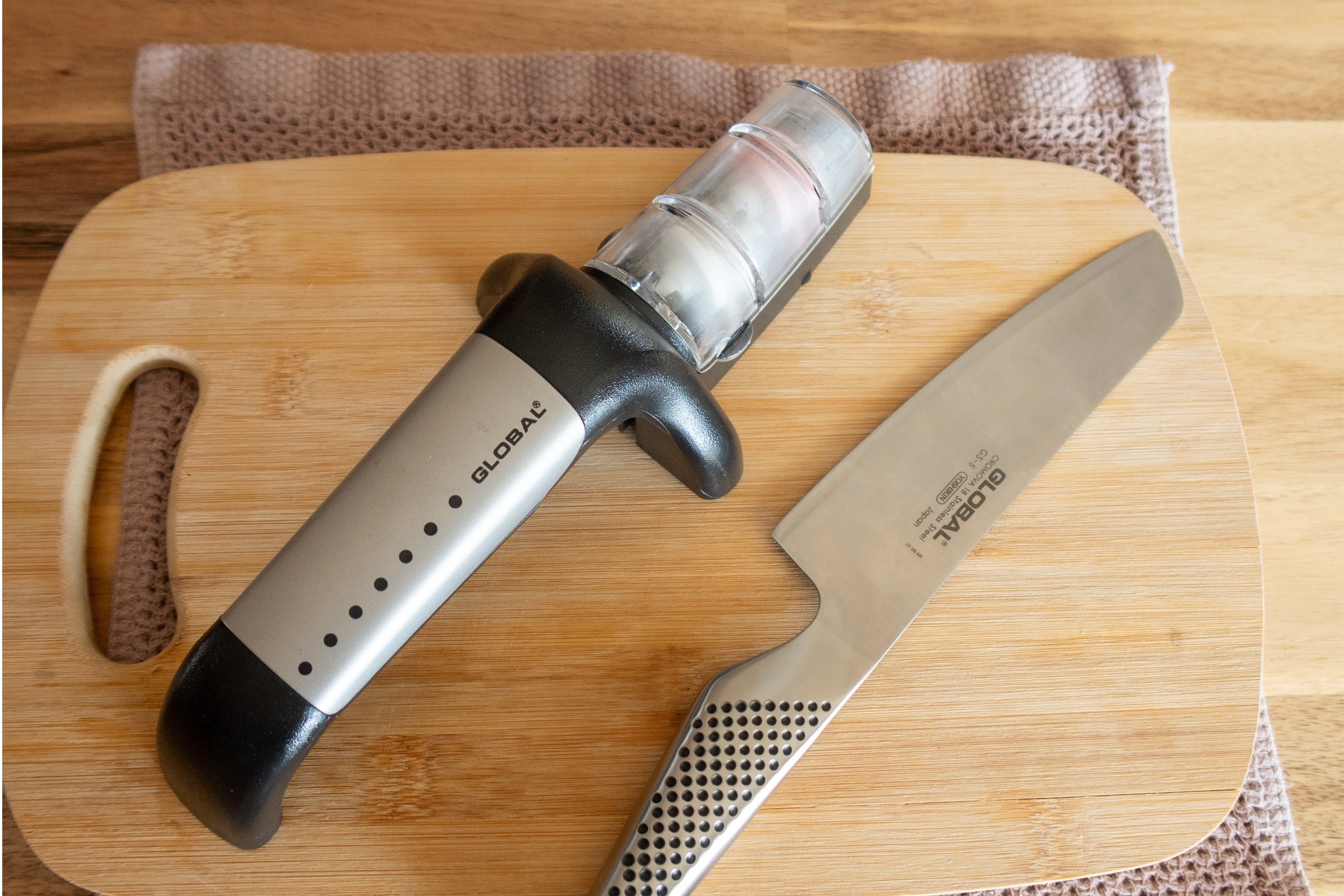
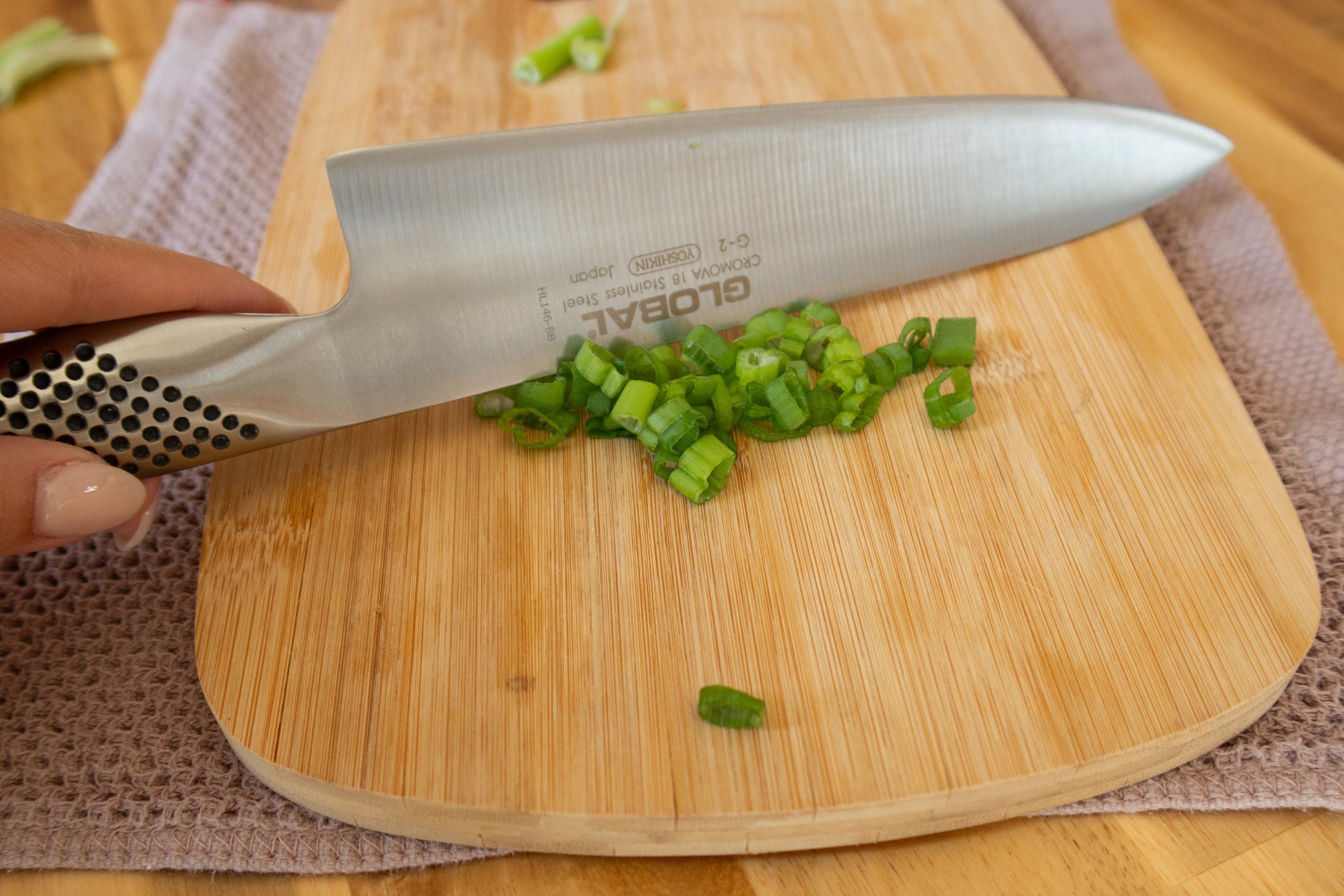
Use a soft sponge or a non-scratch cloth. Microfiber works well. Avoid rough pads, steel wool, and stiff brushes.
Hold the knife by the spine with fingers clear of the edge. Wipe from spine to edge, then heel to tip. Never drag your hand along the edge. Lay the knife flat on a damp sponge and fold the sponge over the blade if you feel unsure. Good technique is simple and prevents slips and scratches, two common japanese knife cleaning mistakes.

Source: knifewear.com
Drying and storage that protect the edge
Dry the blade at once with a lint-free towel. Wipe the handle and ferrule where water hides. Let the knife stand dry for one minute before storage.
Store in a saya, a blade guard, or on a clean magnetic strip. Put the spine on the strip first, then roll the blade on gently. Do not leave knives loose in drawers. These storage ideas help you avoid silent japanese knife cleaning mistakes like trapped moisture and edge hits.
Source: hasuseizo.com
Cleaning by steel type
Carbon steel cores
Carbon steel reacts fast. After cleaning and drying, add a thin coat of food-safe mineral oil or camellia oil. A stable blue-gray patina is good. Do not strip it each time.
Stainless and semi-stainless
These resist rust, but they still stain. Treat them the same way. Rinse, dry, and store with care. Oil is optional.
Damascus or etched cladding
Use only soft cloths. Harsh scrubs can dull the pattern. If stains appear, try a gentle cleanser made for knives, and test a small area first.
Kurouchi (black) finishes
This forge scale offers some protection. Clean it gently. Do not sand or scrub hard. Keep it dry.
These tailored steps keep you safe from the most subtle japanese knife cleaning mistakes for each finish.

Source: co.uk
A simple step-by-step cleaning routine
- Rinse right after use Use warm water. Add a small drop of mild soap if needed.
- Wipe safely Clean with a soft sponge. Move from spine to edge, heel to tip.
- Rinse again Remove all soap. Do not soak.
- Dry at once Use a lint-free towel. Get the handle and ferrule dry too.
- Protect if needed For carbon steel, wipe a thin film of food-safe oil.
- Store well Use a saya, guard, or clean magnetic strip. Never a loose drawer.
Do this each time to avoid common japanese knife cleaning mistakes without extra effort.

Source: com.au
Troubleshooting stains, rust, and odors
- Orange rust spots Use a fine rust eraser or a baking soda paste. Rub gently along the blade, not across the edge, then rinse and dry.
- Dark patina on carbon steel Leave it. It protects the blade. Remove only active orange rust.
- Water spots Hard water leaves marks. Wipe with diluted white vinegar, then rinse and dry. Do not soak in vinegar.
- Sticky film from tape or lacquer Some new knives carry a film. Remove oil with warm soapy water. If a lacquer coat is present, a small amount of acetone on a cloth can work, but protect wood, test first, and rinse well.
- Stubborn stains on stainless A small amount of a gentle cleanser with oxalic acid can help. Use it rarely, rinse well, and avoid on carbon steel or soft iron cladding.
These fixes are simple and prevent small issues from turning into big japanese knife cleaning mistakes.
Maintenance schedule and quick habits
Daily: Rinse, dry, and store as above. Wipe carbon steel with a hint of oil.
Weekly: Check the handle for dryness or swelling. Clean your magnetic strip or inside your saya.
Monthly: Deep clean guards, saya interiors, and drawer liners. Remove any grit that can scratch.
Any time: If you see spots, act now. Fast action beats heavy repair. These steady habits help you skip repeat japanese knife cleaning mistakes and extend edge life.
Frequently Asked Questions of japanese knife cleaning mistakes
Can I put a Japanese knife in the dishwasher?
No. Heat, harsh soap, and banging ruin edges and handles. Hand wash and dry at once.
How fast can rust form on carbon steel?
Within minutes with salt or acid on the blade. Wipe during prep and dry right after use.
Is bleach safe for knife sanitation?
Avoid bleach. It pits steel and damages wood. Use mild soap, rinse well, and dry fully.
Do I need to oil stainless steel knives?
Not usually, but a thin film can help in humid areas. Carbon steel benefits more from oil.
What is the safest way to wipe the blade?
Hold the spine, keep fingers clear, and wipe from spine to edge. Use a soft sponge or cloth.
Will a patina harm my knife?
No. A blue-gray patina protects carbon steel. Remove only active orange rust, not the patina.
Can I use baking soda to remove stains?
Yes. Make a light paste, rub gently, rinse, and dry. Do not scrub hard on etched finishes.
Conclusion
Small habits protect your investment and your fingers. Skip dishwashers and soaking. Clean with warm water, mild soap, and a soft sponge. Dry at once, add a hint of oil to carbon steel, and store with care. These simple moves prevent most japanese knife cleaning mistakes and keep your edge keen and bright.
Make your next cut better than your last. Put this routine to work today, share it with a friend who cooks, and subscribe for more knife care tips and sharpening guides.

Maliha Khatun has spent 5 years hands-on testing Japanese knives for everyday home cooks. She has evaluated over 60 blades across nakiri, santoku, gyuto, and petty categories — scoring each on edge retention, steel quality, handle comfort, and value for money. She writes to help home cooks buy the right knife without the guesswork.
Expertise:Japanese Knives • Vegetable Knives • Product Reviews • Kitchen Efficiency • Knife Care
Leave a Reply