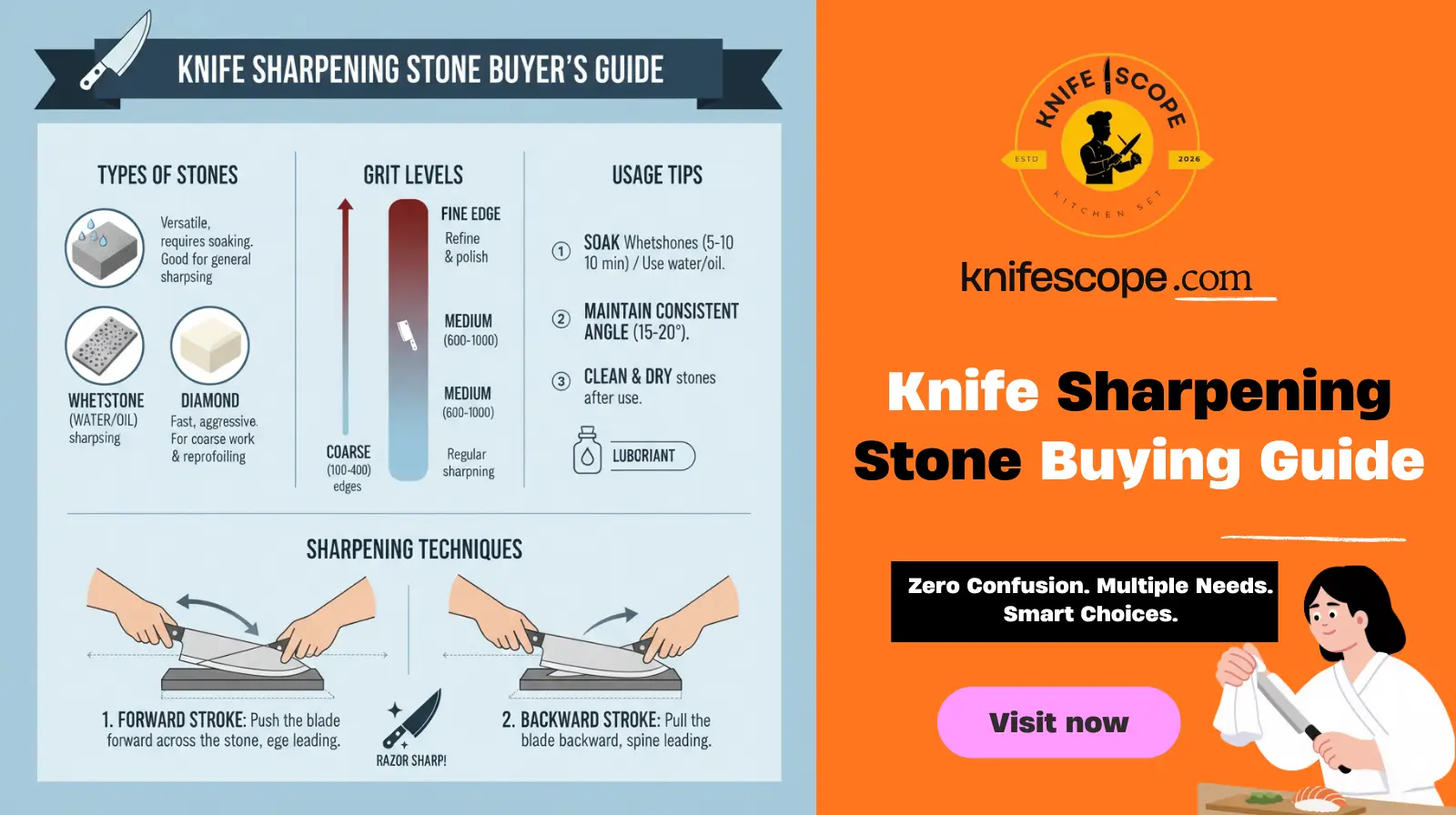
Choose a stone by steel type, grit range, size, and maintenance needs.
If you want sharp, safe knives without guesswork, you’re in the right place. I’ve sharpened everything from soft chef knives to hard powder steel blades, and this knife sharpening stone buying guide will show you what to buy, why it works, and how to avoid costly mistakes. Stick with me and you’ll choose the right stone the first time.
The fast path to the right stone
You can pick a great stone in four steps. Start with your knife steel. Choose the grit range for your task. Pick a size that fits your blade. Match the stone to your time, mess tolerance, and budget.
Use this knife sharpening stone buying guide as your checklist as you shop. It saves time and money. And it keeps you from buying a stone you will hate.
Types of sharpening stones and who they suit
Each stone type feels different, cuts at a different speed, and needs different care.
- Water stones: Fast cutting and friendly feedback. Great for kitchen knives. Some soak, some are splash-and-go.
- Diamond plates: Very fast. Stay flat longer. Best for hard steels and quick work. Rougher feel on the edge.
- Oil stones: Classic and durable. Slower but very controlled. Good for tools and carbon steel.
- Ceramic stones: Hard and low wear. Need a light touch. Often splash-and-go and very clean.
I reach for water stones for most kitchen work. I use diamond plates for very hard steels and for flattening other stones. Use this knife sharpening stone buying guide to match your needs to the right type.
Grit explained: coarse, medium, and fine
Grit is the “speed and polish” dial. Lower numbers cut fast. Higher numbers polish more.
- Coarse (120–400): Fix chips, set new bevels, repair damage.
- Medium (800–2000): Daily sharpening. Builds a keen working edge.
- Fine (3000–8000+): Refine and polish. Boosts push-cut performance.
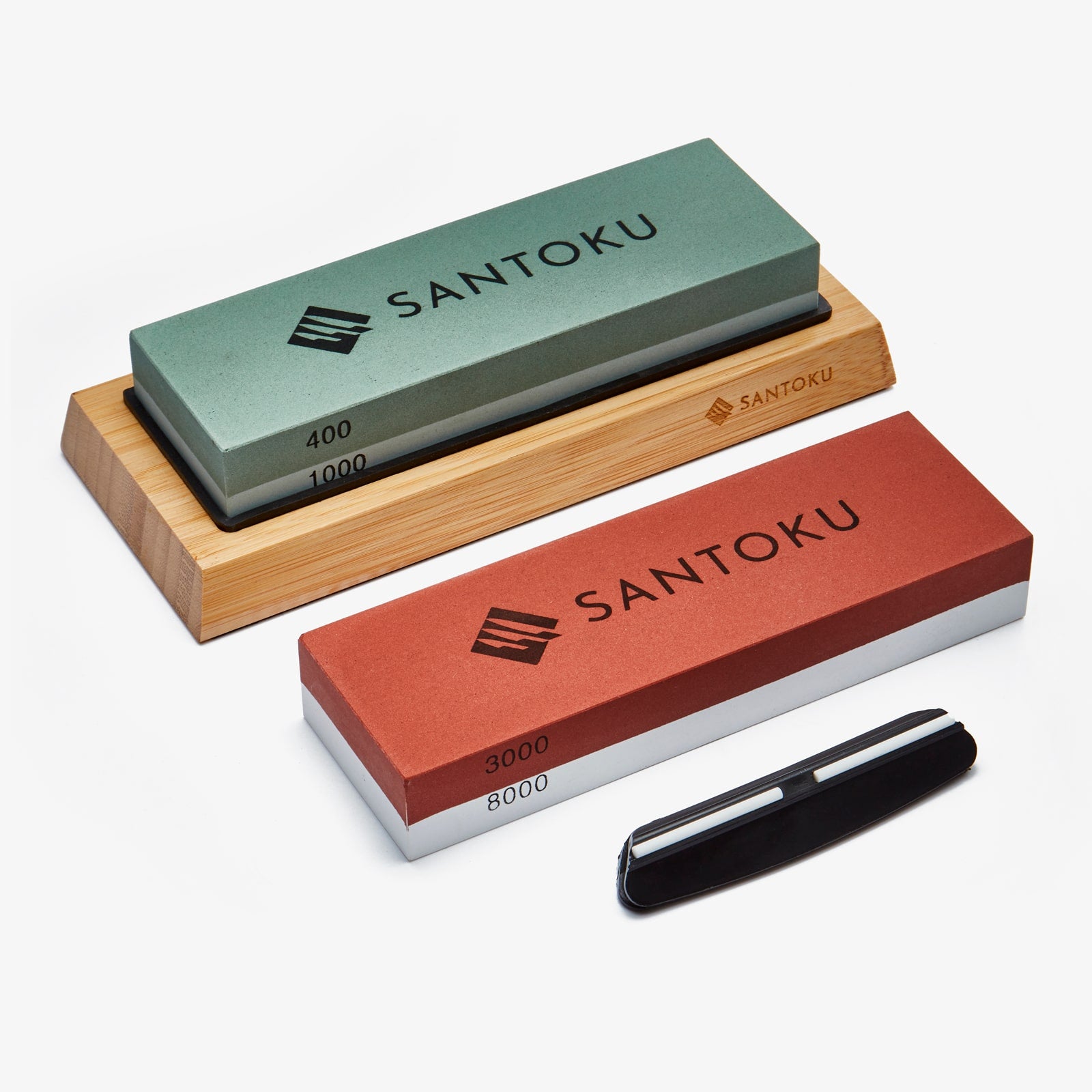
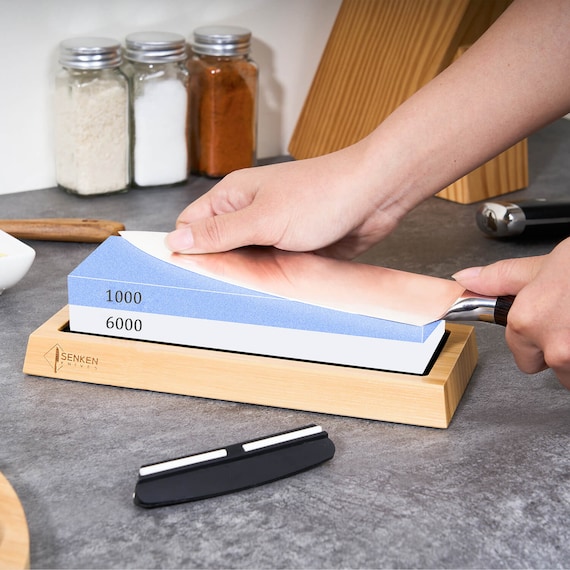
For a first set, a 1000/3000 or 1000/6000 combo works well. Add a 320–400 stone if you often fix damage. This knife sharpening stone buying guide suggests a simple two or three stone progression for most home cooks.

Size, shape, and bases
Bigger stones are easier and safer. They give you a longer stroke and more control.
- Bench size: About 8 x 2 inches (or 210 x 70 mm) is a sweet spot.
- Wide stones: 8 x 3 inches feel very stable for chef knives.
- Pocket stones: Handy for field work, but slower and harder to learn on.
- Bases and holders: A non-slip base or stone holder adds safety and comfort.
I test knives on 8 x 3 stones when teaching, because students learn faster. Keep this knife sharpening stone buying guide close as you compare dimensions.
Match your stone to your steel
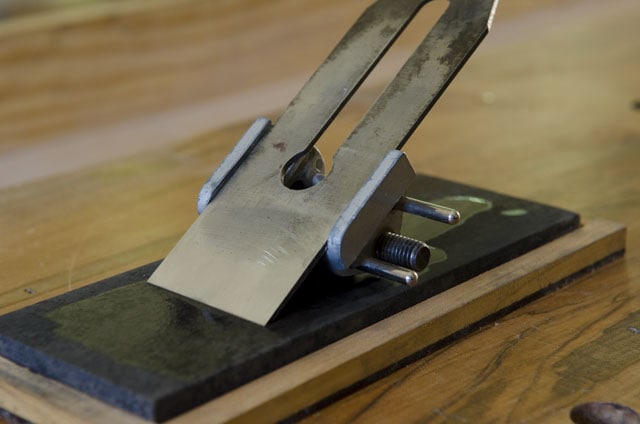
Steel matters. Harder steels need harder, faster abrasives.
- Soft stainless and carbon steel: Water stones and oil stones work well.
- High wear, high vanadium steels: Diamond plates cut better and last longer.
- Very hard blades (60+ HRC): Splash-and-go ceramics or diamond plates shine.
If your knife lists exotic carbides or a high HRC, use diamond for coarse work. Finish on a fine water or ceramic stone for feel. This knife sharpening stone buying guide keeps you from pairing soft stones with tough steels.

Soaking, splash-and-go, and mess factor
Your setup time should fit your life. Some stones ask for a soak. Others are ready in seconds.
- Soaking stones: Need 5–15 minutes in water. Very fast and smooth. A bit messy.
- Splash-and-go: Add a little water and start. Less mess. Great for apartments.
- Oil stones: Use oil. Very controlled, less slurry. Cleanup takes a bit longer.
- Diamond plates: Use water or go nearly dry. Easy cleanup.
I use splash-and-go stones on busy weeknights. I soak on weekends when I enjoy the ritual. Let this knife sharpening stone buying guide steer you to a setup you will actually use.

Budget, value, and trusted brands
You can get sharp on any budget. Spend where it counts.
- Entry level: $20–$40 for a combo stone. Works for most home cooks.
- Mid-tier: $50–$100 per stone. Better speed, feel, and life.
- Pro and diamond: $80–$200+. Fast, flat, and built for hard steels.
Brands with good track records include respected Japanese water stones, well-known diamond plate makers, classic Arkansas oil stones, and quality ceramics. I have used many of these for years in my shop. This knife sharpening stone buying guide helps you weigh cost against performance.
Must-have accessories
A few small tools make sharpening simpler and safer.
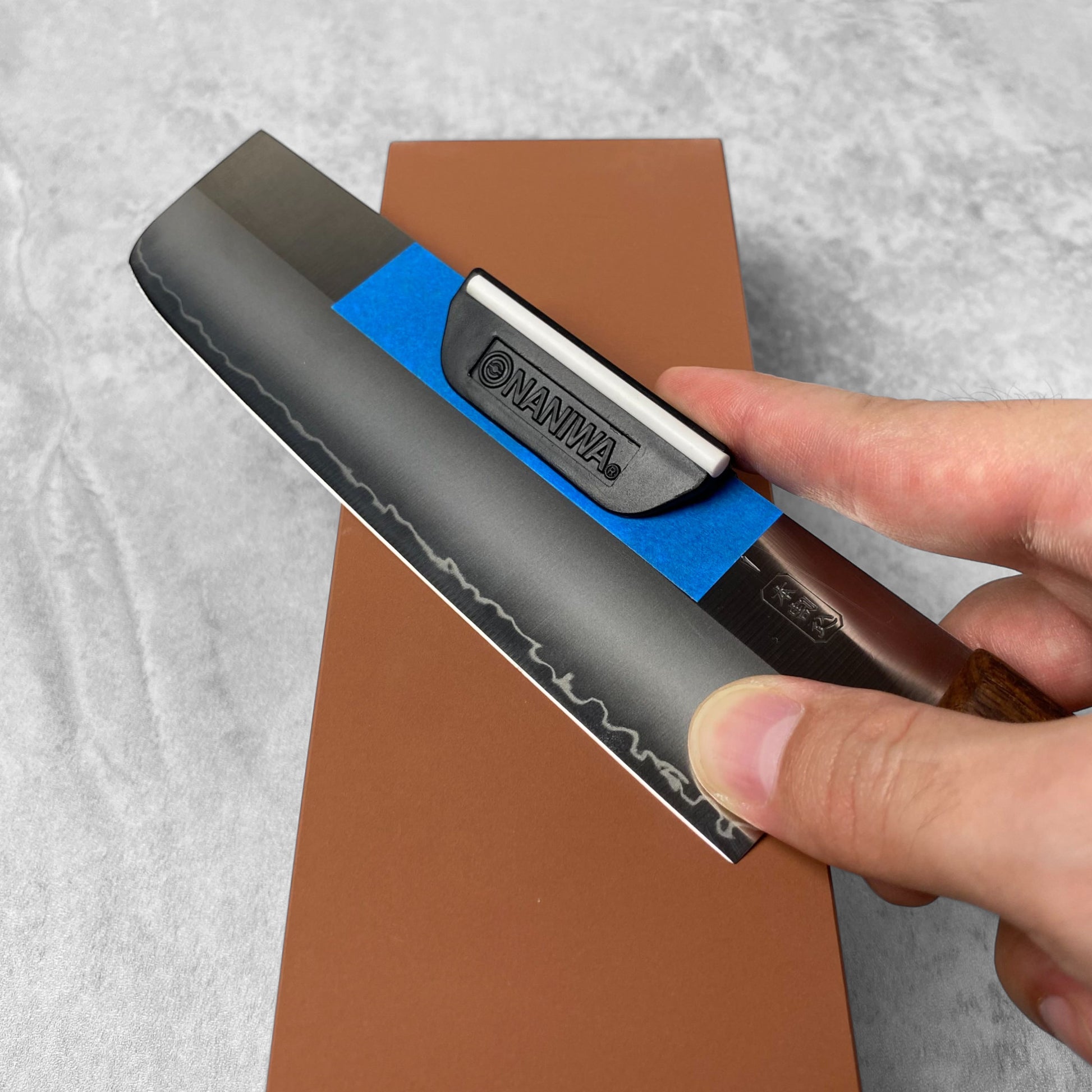
- Stone holder or non-slip mat: Stops sliding and saves fingers.
- Flattening plate or lapping stone: Keeps stones flat and fast.
- Angle guides or a marker: Helps you learn and repeat angles.
- Towels and spray bottle: Keep the area clean and wet.
- Leather strop with compound: Adds a final bit of bite and shine.
These low-cost add-ons pay off fast. Use this knife sharpening stone buying guide to plan the full kit, not just the stone.
How to use and care for your stone
Good habits make sharp edges last longer.
- Set your angle. Color the bevel with a marker to check contact.
- Use light to moderate pressure. Let the grit do the work.
- Work both sides evenly. Count strokes or watch the burr.
- Refresh slurry with a splash of water. Wipe grit as needed.
- Flatten the stone often. A quick lap keeps edges true.
Store stones dry and flat. Avoid oil on water stones. This knife sharpening stone buying guide focuses on simple steps that build skill fast.
Common mistakes and myths
Small changes fix most sharpening problems.
- Skipping grits too soon: Jumping from very coarse to very fine leaves scratches.
- Using too much pressure: You can gouge soft stones and round the edge.
- Never flattening: A dished stone gives a weak, wavy bevel.
- Soaking splash-and-go stones: Some can crack. Check the maker’s guide.
- Chasing mirror polish only: A polished edge is not always the best for bite.
I learned the hard way by over-pressing on a soft 1000 stone and dishing it in a week. Avoid my mistake with this knife sharpening stone buying guide by flattening early and using light pressure.
A quick buying checklist
Use this as your final pass before you buy.
- Steel type and hardness: Match abrasive to wear resistance.
- Grit plan: Coarse for repairs, 1000–2000 for sharp, 3000–8000 for refine.
- Stone size: At least 8 inches long for chef knives.
- Maintenance: Soak vs splash-and-go, and how you will flatten.
- Budget: One good combo now, add coarse or fine later.
- Accessories: Holder, flattening plate, strop, marker.
Print this page or save it to your phone. This knife sharpening stone buying guide turns shopping into a simple checklist.
Frequently Asked Questions of knife sharpening stone buying guide
What grit should a beginner start with?
Start with a 1000 grit stone. It is fast enough to sharpen and easy to control, and you can add a 3000–6000 finisher later.
Do I need a coarse stone?
Yes, if you fix chips or reset bevels. A 320–400 grit stone saves time and protects your finer stones from heavy work.
Are diamond plates better than water stones?
They are better for hard, wear-resistant steels and for flattening. Water stones feel nicer and can give a finer finish on many kitchen knives.
How often should I flatten my stones?
Flatten when you see a hollow or feel a wobble. For most home users, every one or two sessions keeps performance high.
Can one combo stone handle everything?
A 1000/3000 or 1000/6000 combo handles most tasks. Add a coarse stone if you do repairs, and a strop if you want extra bite.
Conclusion
Sharp knives are safe, fast, and fun to use. With the right stone, a simple grit plan, and a few habits, you can keep any kitchen blade in top shape. Use this knife sharpening stone buying guide to pick a stone you will use often, not just admire on a shelf.
Start with one good combo stone and a flattening plan. Practice for ten minutes a week. When you are ready, add a coarse stone or strop. Want more tips? Subscribe for updates, ask a question, or share your results in the comments.
Maliha Khatun has spent 5 years hands-on testing Japanese knives for everyday home cooks. She has evaluated over 60 blades across nakiri, santoku, gyuto, and petty categories — scoring each on edge retention, steel quality, handle comfort, and value for money. She writes to help home cooks buy the right knife without the guesswork.
Expertise:Japanese Knives • Vegetable Knives • Product Reviews • Kitchen Efficiency • Knife Care
Leave a Reply