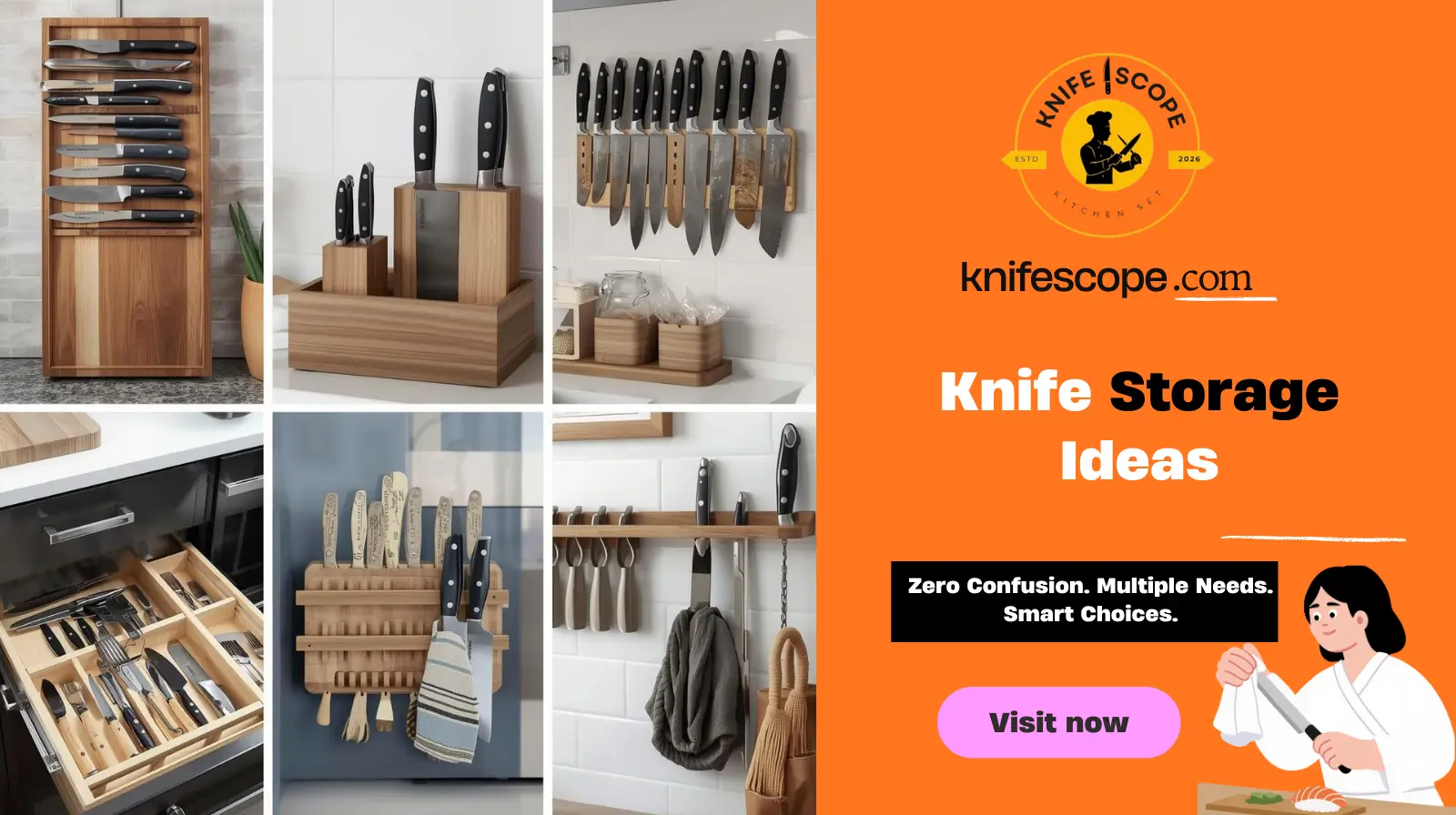
The best knife storage ideas keep blades safe, sharp, and within easy reach.
I have set up knife stations in busy restaurant lines and tiny apartment kitchens. The right knife storage ideas are not one size fits all. This guide breaks down what works, why it works, and how to set it up without stress or guesswork. If you want safe, clean, and stylish ways to store your knives, you are in the right place.
Why smart knife storage matters
Your knives are tools, not decor. Good storage protects edges, your hands, and your counter space. It also makes prep faster because your go-to blade is always where you expect it.
I learned this the hard way in my first apartment. I tossed knives in a drawer and nicked two blades in a week. A simple in-drawer tray fixed it overnight. Great knife storage ideas make your space safer and your knives last longer.
Safety comes first. Keep sharp edges covered or mounted out of reach. Next comes hygiene. Dry blades before storage to reduce rust and bacteria. Finally, protect your investment. A good system stops dulling from bumps, grit, and moisture.
Top knife storage ideas for every kitchen
Here are the best knife storage ideas with quick pros and cons. Pick the one that fits your space, your tools, and your routine.
- Pros: Saves counter space and shows blades at a glance. Easy to clean.
- Cons: Needs secure mounting. Not ideal near a stove or steam.
- Best for: Small kitchens, busy cooks, stylish displays.
- Pros: Fast access. Stable and simple.
- Cons: Uses counter space. Can trap moisture inside slots.
- Best for: Everyday home cooks with 5 to 10 knives.
- Pros: No fixed slots. Fits odd shapes and chef’s knives.
- Cons: Needs regular cleaning. Can dull edges if jammed in.
- Best for: Mixed knife sets and flexible storage.
- Pros: Hidden, safe, and tidy. Great for rentals.
- Cons: Needs a wide drawer. Measure before you buy.
- Best for: Minimalist kitchens and homes with kids or pets.
Under cabinet magnetic rail or pull down rack
- Pros: Uses dead space. Keeps counters clear.
- Cons: Careful mounting needed. Mind clearance above the counter.
- Best for: Small kitchens and frequent cooks.
- Pros: Cheap, safe, and drawer-friendly. Great for travel.
- Cons: One guard per knife. Keep them dry to avoid rust.
- Best for: Students, renters, and cooks on the go.
- Pros: Portable and protective. Perfect for pros.
- Cons: Not great for daily home use on a counter.
- Best for: Chefs, caterers, and campers.
Wall mounted rail with hooks and magnets
- Pros: Modular and expandable. Holds scissors and peelers too.
- Cons: Visual clutter if overfilled.
- Best for: Busy stations and tool lovers.
Cabinet door magnetic bar or slim rack
- Pros: Hidden storage. Saves wall space.
- Cons: Check hinge strength and door balance.
- Best for: Rentals and compact spaces.
Pegboard panel with knife holders
- Pros: Custom layout. Low cost.
- Cons: Needs careful planning to avoid clutter.
- Best for: DIY fans and flexible kitchens.
Use these knife storage ideas to match your space, budget, and style. The key is safe access and clean, dry blades.

Deep dive: choose the right option for your space
Match your knife storage ideas to your lifestyle and layout. Here is a simple way to decide.
If you cook daily and want speed
- Use a magnetic strip near your prep zone.
- Add a small block for utility knives you grab often.
If you have kids or curious pets
- Go in-drawer with a locking child latch.
- Or mount a strip high and out of reach.
If you rent and cannot drill
- Use an in-drawer tray or blade guards.
- Try adhesive-backed rails rated for heavy loads on smooth tile.
If your kitchen is tiny
- Use an under-cabinet rail above your chopping area.
- Or mount a magnetic strip on a side panel or fridge side if safe.
If you own expensive carbon steel knives
- Keep them dry, then store in a block or on a wood-faced magnetic strip.
- Use blade guards when traveling or storing in a roll.
If you live in a humid place
- Avoid deep blocks that trap moisture.
- Go with open-air storage like a strip or rail for better drying.
This is the filter I use with clients. It keeps the choice simple. Pick safe. Pick clean. Pick what fits your daily flow.
Safety and hygiene best practices
Good knife storage ideas must be safe first. These habits help you avoid slips, chips, and germs.
Safe mounting and handling
- Mount magnetic bars into studs or use strong anchors. Test with the heaviest knife.
- Place the spine on the magnet first, then roll the edge down. Reverse when removing.
- Keep strips away from heat, steam, and tight corners.
Clean and dry
- Wash by hand. Dry with a towel right away. No dishwashers for good knives.
- Do not store wet knives in a block. Moisture invites rust and mold.
- Wipe magnetic bars and blocks weekly to clear grease and dust.
Edge care
- Never toss bare knives in a drawer. Use a tray or guards.
- In blocks, avoid scraping the edge on slot walls.
- Thin blades chip on hard magnets. Use wood-faced or leather-faced bars.
Family and guests
- Store knives above counter height if little hands visit your home.
- Use guards for any loose drawer storage.
- Label slots in a tray for a clear home for each blade.
These steps take five minutes a week. They pay off for years.

Maintenance and cleaning for each storage type
A little upkeep goes a long way. Here is how to care for common systems.
Magnetic knife strip
- Wipe with a damp cloth and mild soap. Dry right away.
- If yours is wood-faced, re-oil with food-safe oil every few months.
Countertop block
- Turn it upside down and tap out crumbs.
- Swab slots with a thin bottle brush. Let it air-dry before reloading.
Universal rod block
- Remove the rod insert and wash by hand. Let it dry fully.
- Do not jam knives in. Gentle in, gentle out.
In-drawer tray
- Vacuum crumbs from slots. Wipe clean.
- Add a thin drawer liner under the tray to stop sliding.
Blade guards
- Rinse and dry guards often. Moisture inside can stain blades.
- Replace cracked guards to avoid scratching.
Knife roll or case
- Shake out lint. Wipe sleeves clean.
- Do not store damp blades in a closed roll.
Do these small tasks and your knife storage ideas will stay fresh, safe, and tidy.
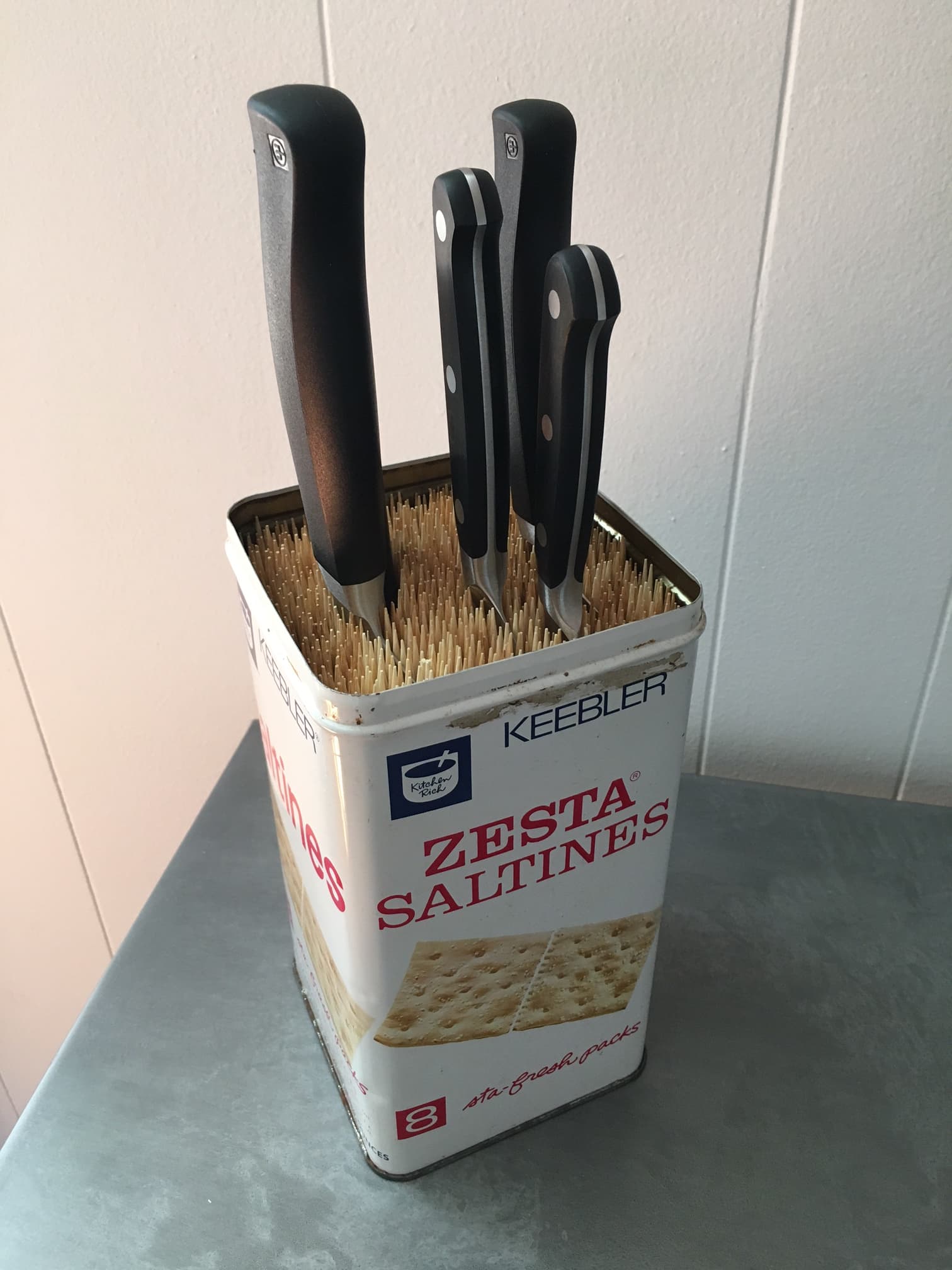
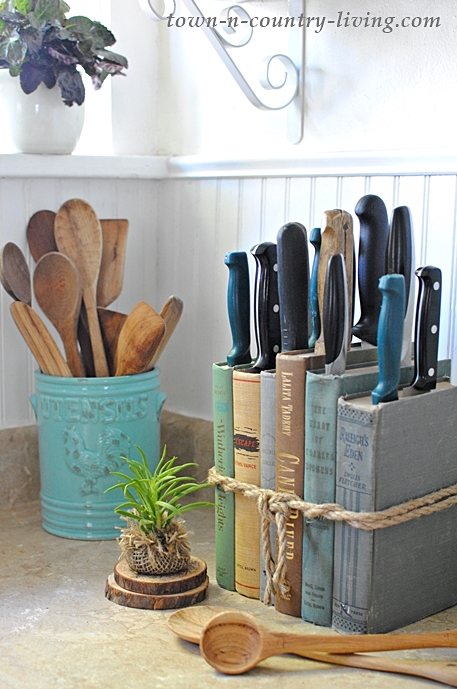
DIY knife storage ideas that look pro
You can build clean, safe, and stylish storage with simple tools. I have tested these in both pro and home kitchens.
Wood-faced magnetic strip
- Use a hardwood plank and strong neodymium magnets in two rows.
- Glue a thin veneer over the magnets so metal never hits metal.
- Mount into studs. Test pull with your heaviest knife.
Hidden in-drawer organizer
- Cut a bamboo board to fit your drawer.
- Route shallow grooves for blades and deeper pockets for handles.
- Sand smooth and oil. Add a non-slip pad below.
Upcycled vintage block
- Pick a solid wood block from a thrift shop.
- Clean, sand, and re-oil. Drill new slots to fit your set.
- Add vents on the bottom for better airflow.
Magnetic knife rail under a shelf
- Use an L-bracket and a slim wood-faced bar.
- Mount it under a shelf near your prep area.
- Check clearance so handles do not hit the backsplash.
These DIY knife storage ideas blend style and function. They also cost less than many premium racks.

Small kitchen and renter-friendly knife storage ideas
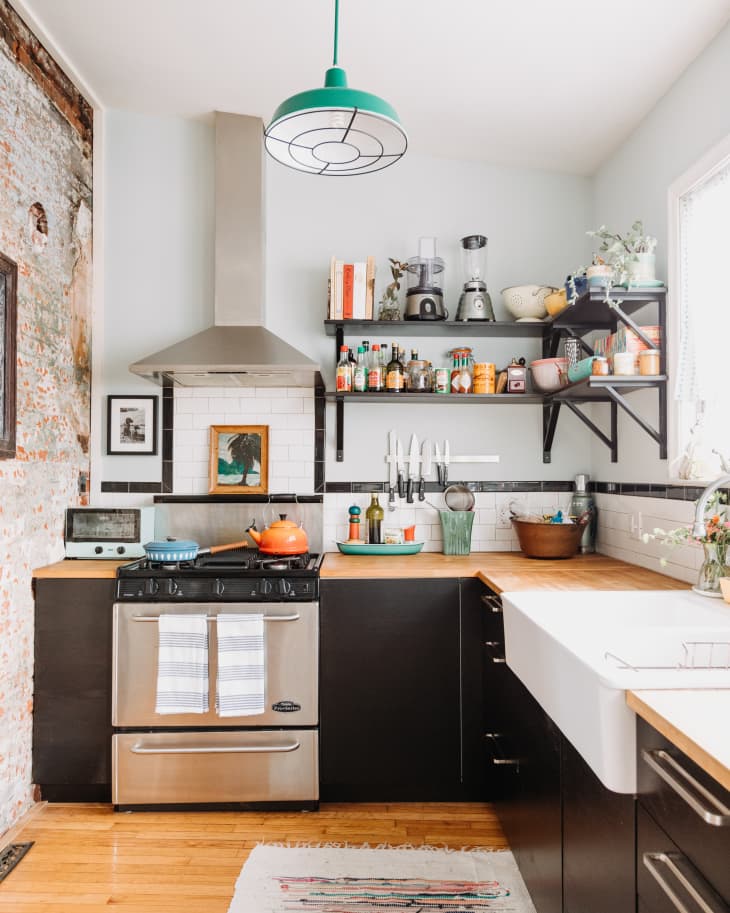
You can have safe, sharp knives even in a studio. These compact knife storage ideas work well and look clean.
For zero-drill setups
- Use a strong adhesive magnetic rail on tile or glass.
- Choose in-drawer trays that can be trimmed to fit.
For tight counters
- Install a slim rail on a cabinet end panel.
- Use a narrow universal block for four to six daily knives.
For hidden storage
- Mount a thin magnetic bar inside a pantry door. Test the hinge strength.
- Add blade guards and stack knives in a shallow drawer.
For multi-use spaces
- A small knife roll doubles as storage and travel.
- Keep a guard on your chef’s knife and store it on a wall rail when home.
These ideas keep your tools safe without holes or clutter.
Budget vs premium: what to buy and what to skip
You do not need to overspend. Invest where it matters and save where it does not.
Where to spend
- A sturdy magnetic strip with strong, even pull. Wood-faced bars are kinder to edges.
- A solid wood block or tray made of maple, walnut, or bamboo.
- Quality blade guards with a snug, soft lining.
Where to save
- Universal rod blocks are fine at mid-range prices.
- Simple bamboo drawer trays work well if sized right.
What to check before you buy
- Even magnet pull across the bar so tips do not slide.
- Smooth slot edges on blocks to reduce rubbing.
- Food-safe finishes and materials that resist moisture.
Nice-to-have upgrades
- Double-row magnet bars for heavy cleavers.
- Vent slots at the bottom of blocks.
- Modular rails that hold shears and honing rods.
Smart buys beat flashy buys. Focus on strength, fit, and easy cleaning. That is how the best knife storage ideas earn their keep.
Common mistakes to avoid
Most storage issues come from a few easy-to-fix habits. Skip these and your setup will shine.
- Storing damp knives in blocks or guards. Dry first to avoid rust and odors.
- Mounting a strip with weak anchors. Use studs or heavy-duty anchors.
- Letting blades knock in a drawer. Use a tray or guards to stop dulling.
- Placing strips near steam or heat. Moisture and heat harm blades and glue.
- Overfilling slots or rod blocks. Crowding dulls edges and traps crumbs.
- Using bare metal bars with thin, hard steel. Add a wood face or use guards.
Small changes here prevent big headaches later.
Frequently Asked Questions of knife storage ideas
What is the safest way to store knives with kids at home?
In-drawer trays with a child lock work well. If you prefer a strip, mount it high and away from climbing paths.
Do magnetic strips damage knives?
No, if used right. Touch the spine first and avoid sliding the edge across the bar.
How many knives should a block hold?
Most home cooks use five to eight knives. Choose a block that fits your set with one or two extra slots.
Can I store knives on the fridge side?
Yes, if the surface is flat and the magnet is strong. Test with your heaviest knife and avoid door panels that flex.
How often should I clean a knife block?
Give it a quick clean monthly if you cook often. Tap out crumbs, brush the slots, and let it dry fully.
Are blade guards worth it if I have a tray?
Yes. Guards add a second layer of safety, protect edges, and help during travel or moves.
Will a universal rod block dull my knives?
Not if you insert and remove them gently. Clean the rods now and then so grit does not rub the edge.
What is the best material for a knife block?
Hardwoods like maple or walnut are durable and gentle on edges. Bamboo is a strong, budget-friendly choice.
Conclusion
Great knife storage ideas do three things well: protect edges, boost safety, and fit your space. Start with your routine, then pick a system that stays dry, secure, and easy to clean. A smart setup saves time every day and keeps your knives sharp for years.
Set up one upgrade this week. Mount a strip, add a tray, or fit guards to your most-used blades. Want more tips and product picks? Subscribe for updates, or drop a comment with your kitchen layout and I will help you choose the best fit.

Maliha Khatun has spent 5 years hands-on testing Japanese knives for everyday home cooks. She has evaluated over 60 blades across nakiri, santoku, gyuto, and petty categories — scoring each on edge retention, steel quality, handle comfort, and value for money. She writes to help home cooks buy the right knife without the guesswork.
Expertise:Japanese Knives • Vegetable Knives • Product Reviews • Kitchen Efficiency • Knife Care
Leave a Reply