A practical fish knife guide helps you pick, use, and care for the right knife for prep or dining.
As a chef and home cook with years of hands-on work filleting, plating, and testing knives, I wrote this fish knife guide to give clear, expert steps you can trust. You will learn the difference between dining fish knives and fillet knives, how to choose the right blade, safe techniques, care tips, and buying advice. Read on for practical tips, real-life lessons, and simple rules that make cutting fish easier and safer.

Understanding what a fish knife is and why it matters
A fish knife has two main meanings. One is a dining fish knife used at the table. The other is a fillet or prep knife for cleaning and cutting fish. This fish knife guide covers both uses so you can choose the right tool for the job.
Dining fish knives are shaped for removing cooked fish from bones and skin. Fillet knives are thin, flexible, and used to remove skin and bones from raw fish. Knowing the difference helps you buy and use the best knife for your needs.
Why this matters: the right knife makes tasks safer, faster, and neater. I have seen hobby cooks try to fillet with a chef's knife and make messy cuts. This fish knife guide will stop that.

Types of fish knives and when to use each
Different tasks need different knives. This section lists the main types and when to use them.
- Dining fish knife
- Shallow, curved blade for eating plated fish.
- Use at formal dinners or when you want neat portions.
- This is not for filleting raw fish.
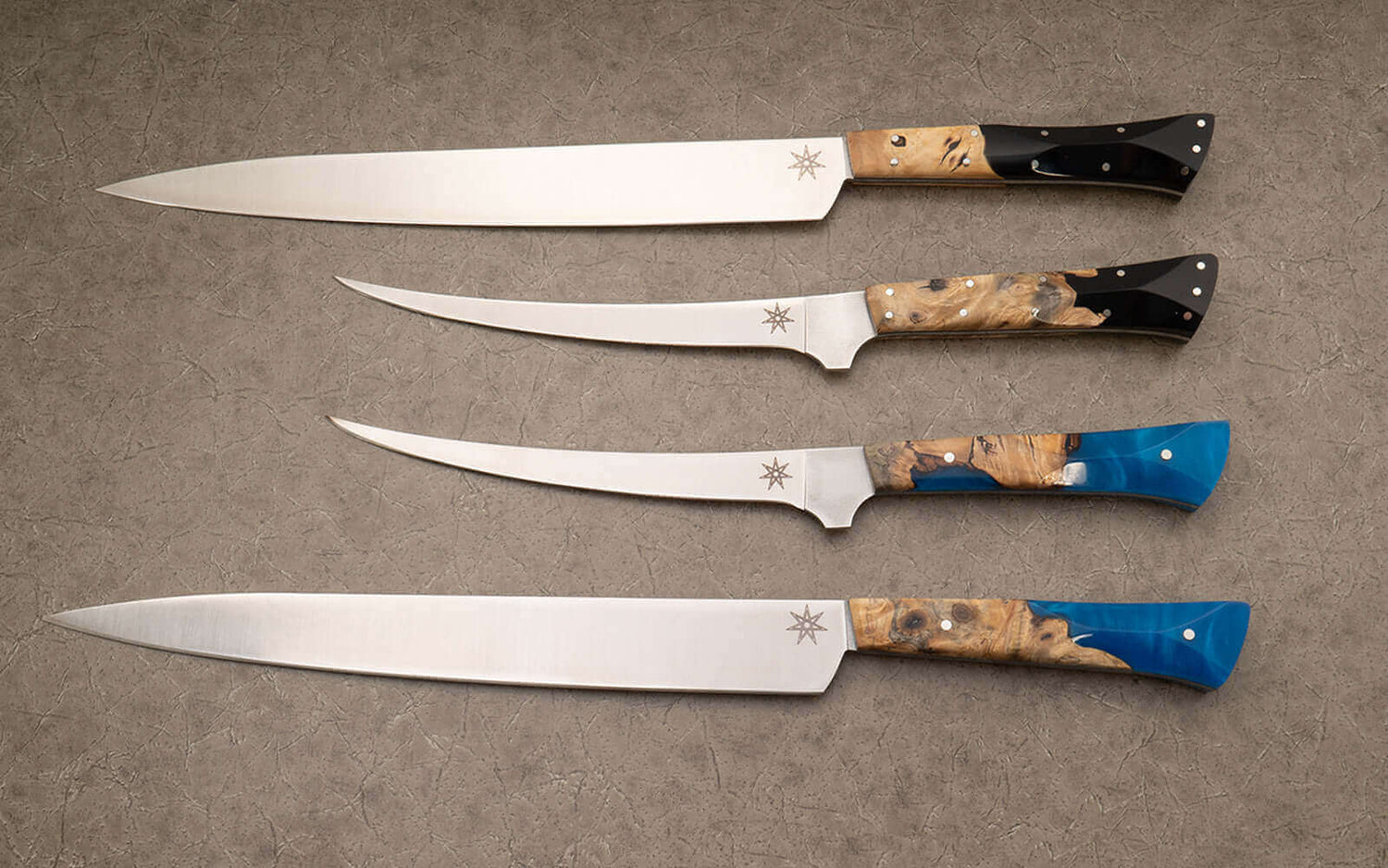
- Fillet knife
- Long, narrow, flexible blade.
- Best for skinning and removing bones from raw fish.
- Sizes usually 6 to 11 inches.
- Boning knife
- Stiffer than a fillet knife with a narrow blade.
- Useful for removing larger bones or working on thicker fish.
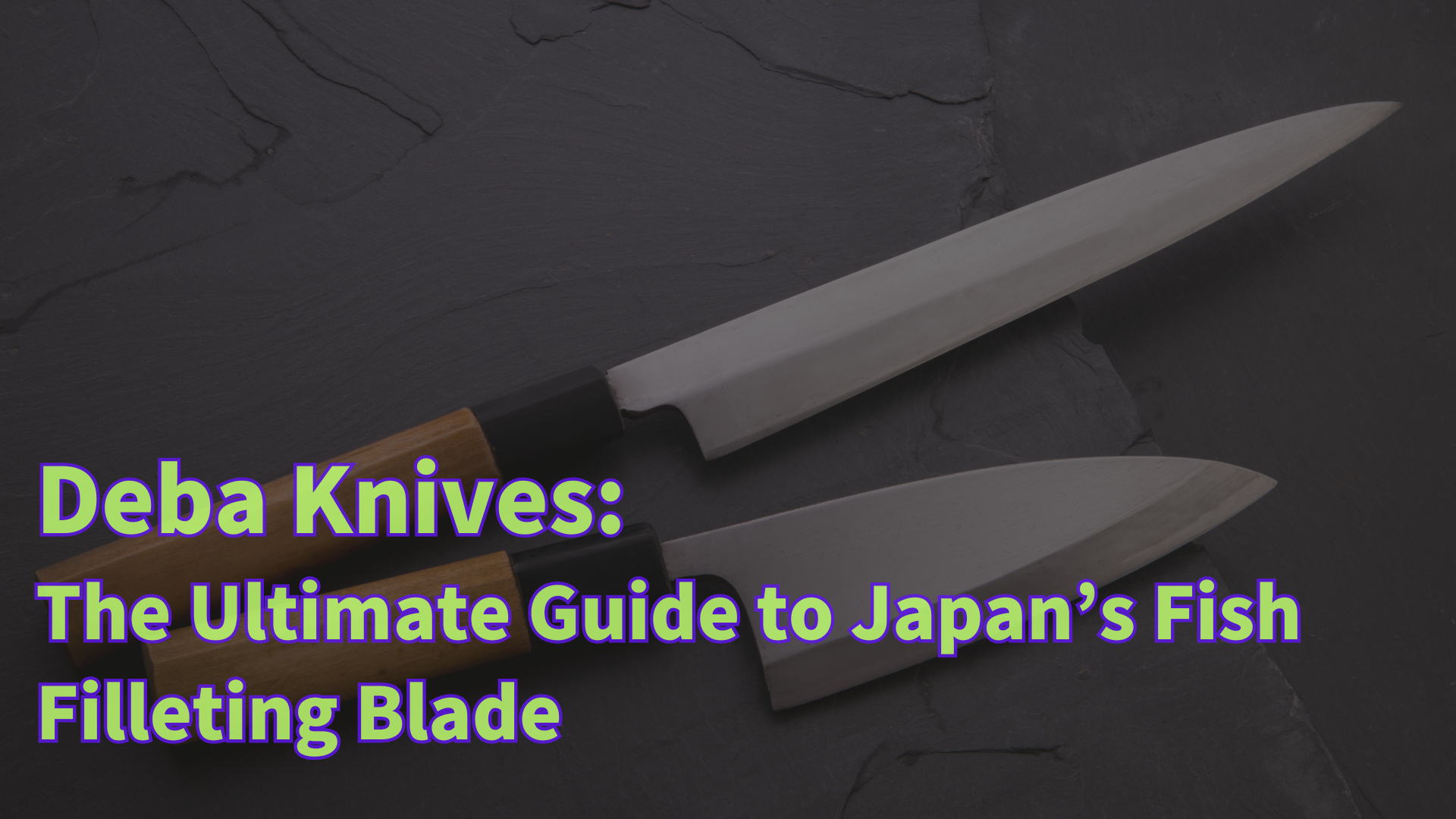
- Deba and Japanese-style knives
- Heavy, sharp blades used to cut heads and bones on larger fish.
- Often used in professional kitchens and for whole fish prep.
- Chef’s knife
- Versatile but not ideal for fine filleting.
- Good for portioning and general prep.
Practical tip: keep both a fillet knife for prep and a dining fish knife for service if you host seafood often. This fish knife guide recommends investing in a solid fillet knife first.
How to choose the right fish knife — a buyer’s checklist
This checklist will help you pick the best knife for your needs.
- Blade length
- For small fish choose 6–7 inches.
- For large fish choose 8–11 inches.
- Flexibility
- Flexible blades follow bones and skin easily.
- Stiff blades cut through thicker meat and bones.
- Material
- High-carbon stainless steel holds an edge and resists rust.
- Pure carbon steel sharpens easily but needs more care.
- Handle comfort
- Look for a non-slip grip.
- Full-tang construction adds strength.
- Edge type
- A plain edge works best for clean fillets.
- Serrated edges help cooked fish flakes at the table.
- Balance and weight
- The knife should feel steady in your hand.
- Too heavy causes fatigue; too light reduces control.
- Price and warranty
- Mid-range knives often give the best value.
- A good warranty signals confidence from the maker.
Personal note: I once bought a cheap fillet knife that flexed too much and tore fillets. Spending a little more on a balanced blade solved that problem. This fish knife guide recommends testing the grip and flex in person if possible.

People also ask
What is the best blade length for filleting fish?
- For most home cooks, 7–9 inches is ideal because it balances control and reach.
Should a fillet knife be flexible or stiff?
- Choose flexible for thin fish and precise skinning; choose stiffer for larger fish or bone removal.
Is stainless steel better than carbon steel for fish knives?
- Stainless resists rust and needs less care; carbon steels can hold a sharper edge but require drying and oiling.

How to use a fish knife safely and effectively
Follow these steps for clean, efficient fillets and plates.
For filleting raw fish
- Place fish on a clean board. Pat dry.
- Cut behind the gill, down to the backbone.
- Run the blade along the backbone with a smooth stroke.
- Keep the tip in contact with bones while you slice.
- Remove skin by holding tail and running the blade between meat and skin.
For dining with a fish knife
- Use the curved dining knife to lift fillets away from bones.
- Keep small utensils handy for delicate flakes.
- Use gentle strokes to avoid tearing cooked fish.
Safety tips
- Always cut away from your body.
- Secure the fish with a towel or non-slip mat.
- Keep a sharp blade; dull blades slip and cause injuries.
Personal tip: I learned to secure the tail with a damp towel. It keeps the fish steady and reduces slips. This fish knife guide stresses safety first.

Care and maintenance to extend a fish knife’s life
Proper care keeps a knife sharp and safe for years.
- Cleaning
- Rinse and wash by hand immediately after use.
- Dry completely to prevent rust, especially on carbon steel.
- Sharpening
- Use a sharpening stone or guided sharpener.
- Maintain a 15–20 degree edge for most fillet knives.
- Honing
- Hone often to keep the edge aligned.
- Use a fine steel or ceramic rod.
- Storage
- Store in a sheath, magnetic strip, or knife roll.
- Avoid loose drawers where blades can dull.
- Other care
- Oil carbon steel lightly after drying.
- Avoid the dishwasher; detergents damage edges and handles.
I sharpen my fillet knives monthly and hone before each use. That keeps fillets neat and reduces mistakes. This fish knife guide recommends a simple routine: wash, dry, hone, and store.

Common mistakes and how to avoid them
Know these errors so you can skip them.
- Using the wrong knife
- Avoid using a chef’s knife to fillet delicate fish.
- Use the right knife for cleaner cuts.
- Cutting on the wrong surface
- Hard surfaces dull blades. Use wood or plastic boards.
- Letting blades rust
- Dry and oil carbon steel after use.
- Not sharpening often enough
- Dull blades increase effort and risk.
- Poor grip or technique
- Learn a steady, controlled stroke and support the fish.
Lesson learned: I once tried to fillet on glass. The knife slipped and dulled. Use proper boards. This fish knife guide helps you build good habits that prevent those errors.
Frequently Asked Questions of fish knife guide
What is the difference between a dining fish knife and a fillet knife?
A dining fish knife is for eating cooked fish and has a curved blade. A fillet knife is long and flexible and made for raw fish prep and skinning.
How often should I sharpen my fillet knife?
Sharpen monthly with regular home use and hone before each session. Heavy use may need more frequent sharpening.
Can I use a chef’s knife to fillet fish?
You can, but it is not ideal. A fillet knife gives cleaner cuts and better control for delicate flesh.
How do I remove the skin from fish without tearing it?
Use a flexible fillet knife, hold the tail, and use a single smooth stroke between skin and flesh. Keep the blade angled slightly downward.
Is stainless steel or carbon steel better for fish knives?
Stainless resists rust and needs less care, while carbon holds a very sharp edge but requires drying and oiling. Choose based on care willingness and preference.
What length fillet knife is best for beginners?
A 7–9 inch fillet knife is a good all-around choice for most fish and gives a balance of control and reach.
How do I store a fillet knife safely?
Use a sheath, magnetic strip, or knife roll to protect the blade and prevent accidents. Avoid loose drawers.
Conclusion
This fish knife guide gives clear steps to choose, use, and care for fish knives whether you prep or serve fish. Start by picking the right type for your work. Keep blades sharp and practice safe strokes. Small investments in the right knife and care pay off with neater fillets and safer work.
Take action: test a fillet knife at a store or buy a trusted mid-range blade, practice basic filleting on a simple fish, and keep a short care routine. Share your results or questions in the comments or subscribe for more kitchen guides.

Maliha Khatun has spent 5 years hands-on testing Japanese knives for everyday home cooks. She has evaluated over 60 blades across nakiri, santoku, gyuto, and petty categories — scoring each on edge retention, steel quality, handle comfort, and value for money. She writes to help home cooks buy the right knife without the guesswork.
Expertise:Japanese Knives • Vegetable Knives • Product Reviews • Kitchen Efficiency • Knife Care
Leave a Reply