A clear, practical guide to the most common Japanese knife types and how to pick them.
I have used and tested Japanese knives for years and I’ll walk you through a focused japanese knife types guide you can trust. This article explains main knife types, how they differ, which to buy, and how to care for them. Read on for hands-on tips, clear comparisons, and real-world advice so you can choose the right blade for your kitchen and skill level.

Understanding core Japanese knife types
Japanese knife types guide covers many blade shapes and uses. Here are the knives you will meet most often.
- Gyuto — A Japanese chef’s knife. Blade length 7–10 inches. Good for meat, fish, and vegetables. Double-bevel and versatile.
- Santoku — Shorter and slightly wider than a gyuto. Blade length 5–7 inches. Great for chopping and push-cutting. Popular for home cooks.
- Nakiri — Thin, rectangular vegetable knife. Blade length 6–7 inches. Made for clean, downward chopping on vegetables.
- Usuba — Traditional single-bevel vegetable knife for pro use. Very thin edge for fine cuts and thin slices.
- Deba — Thick, sturdy blade for cutting fish and small bones. Single-bevel deba is common for filleting and breaking down fish.
- Yanagiba — Long, narrow slicer used for sashimi and sushi. Single-bevel and ideal for long, smooth pulls.
- Sujihiki — Western-style slicer for meat and fish. Double-bevel and often used where a yanagiba is too specialized.
- Petty — Small utility knife. Blade length 3–5 inches. Good for peeling, trimming, and small prep.
Each entry in this japanese knife types guide tells you the typical length, bevel type, and best use. If you cook different cuisines, you may want two or three of these knives to cover all tasks.
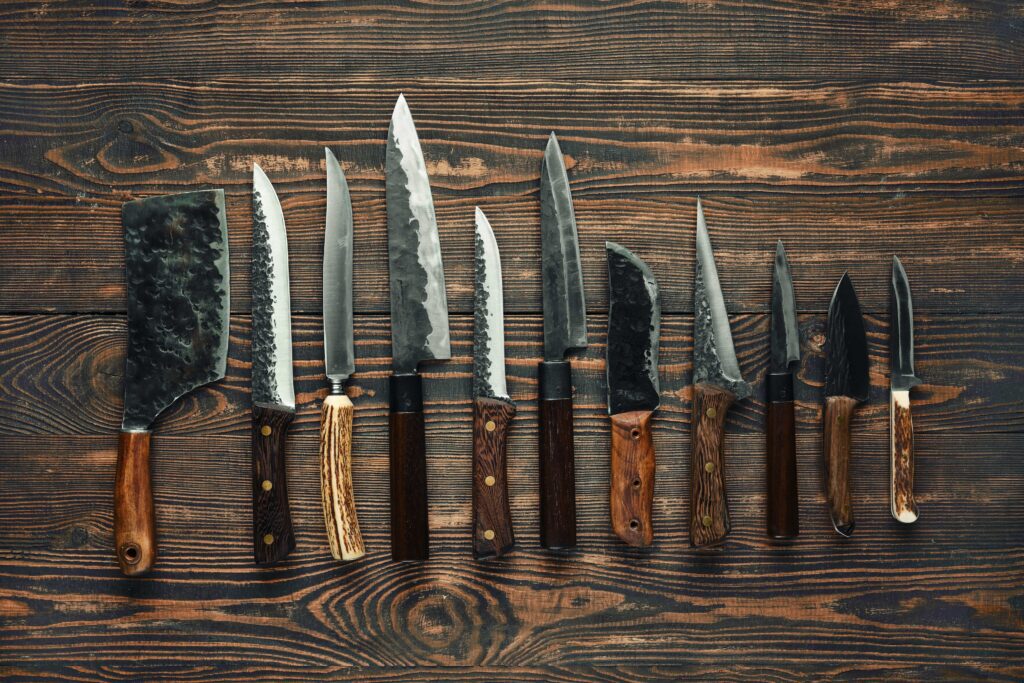
Blade shapes, steel types, and grinds explained
Understanding blade anatomy helps you match a knife to your needs. This section covers shape, steel, and bevel.
- Single-bevel versus double-bevel
- Single-bevel knives have one sharpened side. They offer ultra-fine cuts and are common in professional Japanese knives.
- Double-bevel knives are sharpened on both sides. They are easier to use and maintain for most home cooks.
- Steel types
- Carbon steel: sharpens easily and holds a fine edge. Prone to rust and requires care.
- Stainless steel: low maintenance and rust-resistant. Some stainless steels still sharpen very well.
- Powdered or high-carbon stainless steels: combine edge retention with corrosion resistance.
- Hardness and edge angle
- Japanese knives often run harder (HRC 60+). Harder steel holds an edge longer.
- Edge angles are usually 15° per side for double-bevel. Single-bevel edges can be even sharper on the bevel side.
- Cladding and laminated blades
- Many Japanese knives use a hard core steel clad with softer layers. This adds toughness and limits chipping.
This part of the japanese knife types guide helps you choose the right balance of sharpness, toughness, and ease of care.

How to choose the right knife for your kitchen
Start with what you cook and how much time you want to spend on maintenance. Use these steps to decide.
- Define your main tasks
- If you slice many vegetables, choose a nakiri or santoku.
- If you prepare fish and sashimi, consider a yanagiba or deba.
- For all-around work, a gyuto is the safest pick.
- Think about skill and maintenance
- Beginners benefit from double-bevel stainless knives.
- Experienced cooks who want extreme sharpness may prefer single-bevel carbon steel.
- Consider size and feel
- Try 7–8 inch gyuto if you want a balance of control and length.
- Choose a petty for small hands or delicate tasks.
- Budget and value
- Mid-range knives often give the best mix of steel and construction for the price.
- Invest in a good 1–2 knives rather than many poor-quality blades.
From my experience, I started with a 8-inch gyuto. It handled most tasks and taught me knife skills. Later I added a nakiri for quick vegetable prep. This approach minimized cost and learning time while giving big performance gains.

Care, sharpening, and maintenance
A good blade lasts with simple, regular care. Follow these basic rules.
- Daily care
- Wash by hand with warm water and mild soap. Dry immediately.
- Avoid dishwashers and harsh detergents.
- Storage
- Use a magnetic strip, wood block, or saya (wood sheath) to protect edges.
- Honing and sharpening
- Hone daily with a ceramic rod or light pull-through to align the edge.
- Sharpen on water stones when the blade dulls. Start with a coarse stone, then medium, then fine.
- For single-bevel knives, learn the correct angle and technique, or seek pro sharpening.
- Common mistakes to avoid
- Don’t chop bones with a thin knife meant for vegetables.
- Don’t leave carbon steel wet. It will discolor or rust.
- Avoid cutting on glass or stone surfaces.
I learned the hard way that a sharp blade is safer. Dull blades force you to use more pressure and increase slips. A few minutes of sharpening once a month kept my knives precise and steady.

Buying tips, brands, and budget guide
Buying the right knife is part research and part feel. Use this advice when shopping.
- New versus used
- New knives give warranty and predictable condition.
- Used knives can be great value but inspect for chips and past sharpening.
- Price bands and expectations
- Entry-level: $50–$150. Good starter gyutos and santokus in stainless steel.
- Mid-range: $150–$400. Better steel, hand finish, and balance.
- Premium: $400+. Artisan or high-end steels and unique designs.
- Where to buy
- Specialty retailers let you test feel and balance.
- Reputable online shops offer return policies and clear specs.
- What to check
- Blade steel, hardness, and grind type.
- Handle material and how it fits your hand.
- Return policy and sharpening support.
Stick to the japanese knife types guide rule of buying what you will actually use. A single excellent gyuto will help more than three cheap, poor-quality knives.

Common uses and cutting techniques
Match the knife to the task. Here are practical uses and simple techniques.
- Gyuto
- Use for slicing, dicing, and rocking cuts. Great for meat and mixed prep.
- Santoku
- Use for push-cutting and small dice. Best for home cooks who want one all-purpose blade.
- Nakiri and Usuba
- Use for thin vegetable slices and fine cuts. Chop straight down without rocking.
- Deba and Yanagiba
- Use for filleting and slicing fish. Draw the blade in a single smooth pull to avoid tearing.
- Petty and small knives
- Use for peeling, coring, and small tasks that need control.
Technique tips
- Keep the tip on the board for rocking cuts with gyuto.
- Use the full blade length for long slices like sashimi or roast.
- Use a slight forward push on nakiri to slice cleanly through vegetables.
Using the right knife from this japanese knife types guide will reduce prep time and improve results.

Frequently Asked Questions of japanese knife types guide
What is the best all-purpose Japanese knife?
The gyuto is the best all-purpose Japanese knife. It handles meat, fish, and vegetables with ease and works for most home cooks.
How do single-bevel and double-bevel knives differ?
Single-bevel knives sharpen on one side and give very precise cuts but need skill to use. Double-bevel knives sharpen on both sides and are easier to maintain.
How often should I sharpen my Japanese knife?
Sharpen on a stone when you notice the blade dragging or failing to slice cleanly, typically every few months for home use. Hone lightly every few uses to keep the edge aligned.
Can I use a Japanese knife for bones?
Use deba or a heavier Western-style knife for bones. Thin-edged knives like nakiri or yanagiba will chip if used on hard bones.
Is carbon steel better than stainless for Japanese knives?
Carbon steel often gets sharper and is easier to sharpen, but it rusts more easily. Stainless resists corrosion but can be harder to sharpen and may not reach the same sharpness.
Conclusion
This japanese knife types guide gives you a clear map for choosing, using, and caring for Japanese knives. Start with the knife that fits your cooking style, learn simple sharpening, and treat blades with basic care to get long performance. Pick one good knife, practice technique, and then expand your set as needed. Try a gyuto or santoku first, practice care, and share your progress or questions below to keep learning.
Maliha Khatun has spent 5 years hands-on testing Japanese knives for everyday home cooks. She has evaluated over 60 blades across nakiri, santoku, gyuto, and petty categories — scoring each on edge retention, steel quality, handle comfort, and value for money. She writes to help home cooks buy the right knife without the guesswork.
Expertise:Japanese Knives • Vegetable Knives • Product Reviews • Kitchen Efficiency • Knife Care
Leave a Reply