Most knife sharpening mistakes come from bad angles, too much pressure, and skipping grits.
If your knives still feel dull after “sharpening,” you are not alone. I’ve taught home cooks and pros how to fix knife sharpening mistakes for years. In this guide, I break down what goes wrong, how to correct it, and how to build a simple routine that delivers a clean, lasting edge every time. Read on to sharpen with confidence and avoid costly knife sharpening mistakes.
Common knife sharpening mistakes you’re probably making
Most people do not have a clear angle plan. They change the angle with each stroke. This scrubs the edge flat and wastes steel. Pick an angle and lock it in from heel to tip.
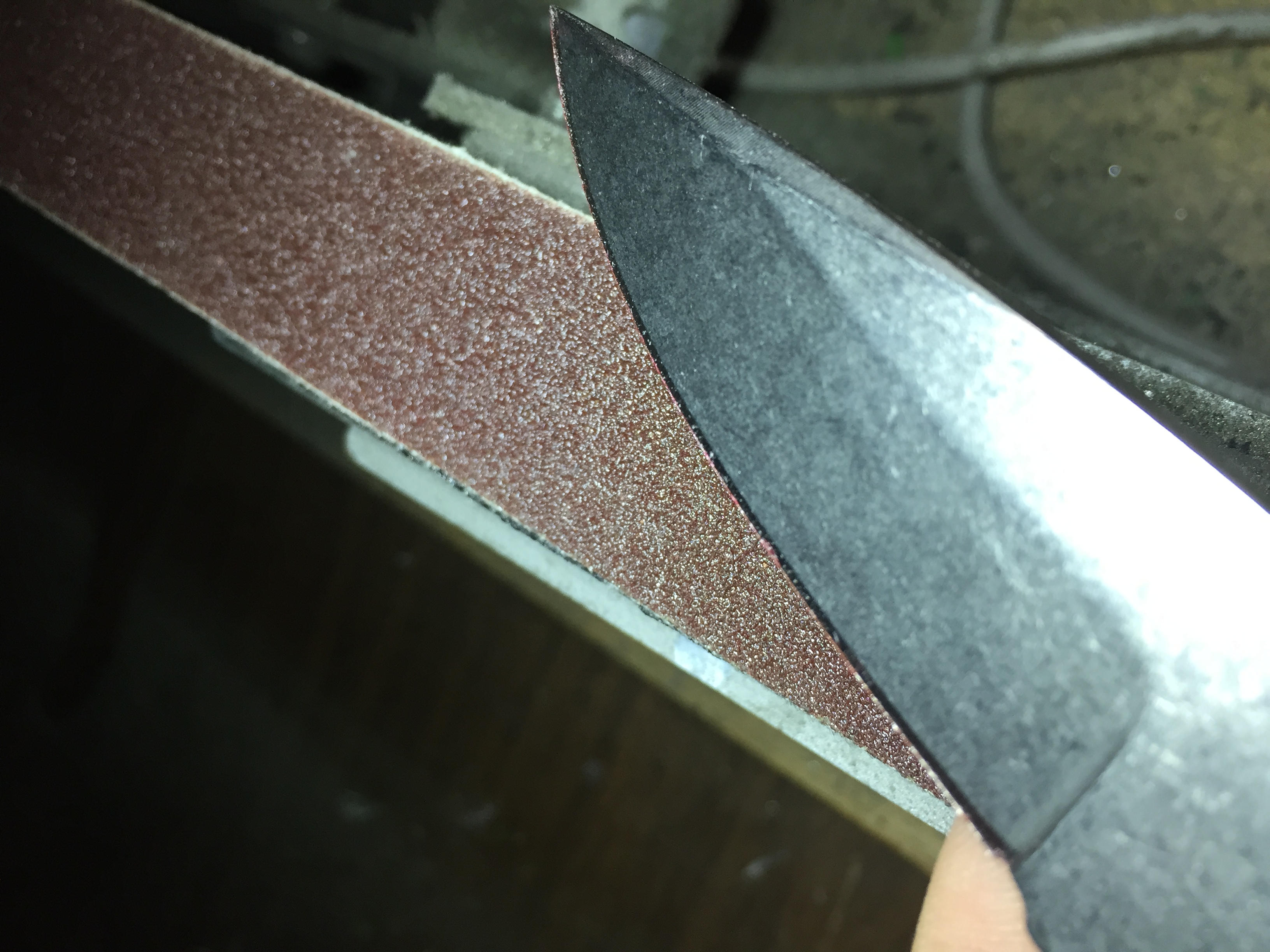
Too much pressure is the next big one. Heavy pressure gouges the stone and rolls the edge. Use light, even pressure and let the grit do the work.
Many skip grit steps. Going from coarse to fine too fast leaves scratches and a weak edge. Move through grits in small steps. Each finer grit should erase the scratches from the last.
People often fail to raise a burr. No burr means you did not reach the apex. Work one side until you feel a consistent burr along the full length. Then switch sides.
Inconsistent stroke length causes uneven bevels. Keep strokes the same length and count on both sides. Use a timer or count strokes to stay even.
Dirty stones and dry stones also cause trouble. Metal swarf clogs pores and kills cutting speed. Clean your stone and use water or oil as the maker suggests.
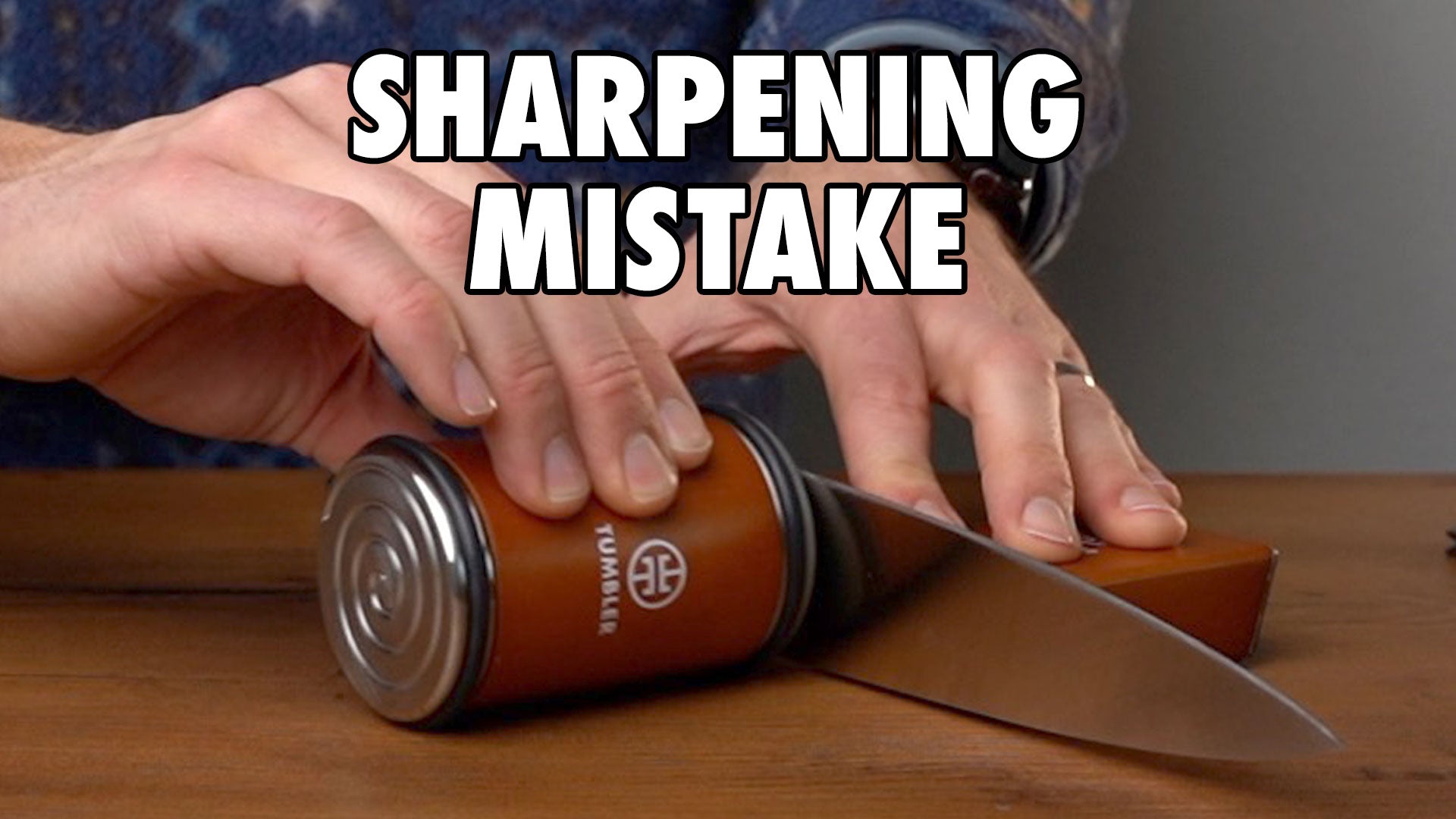
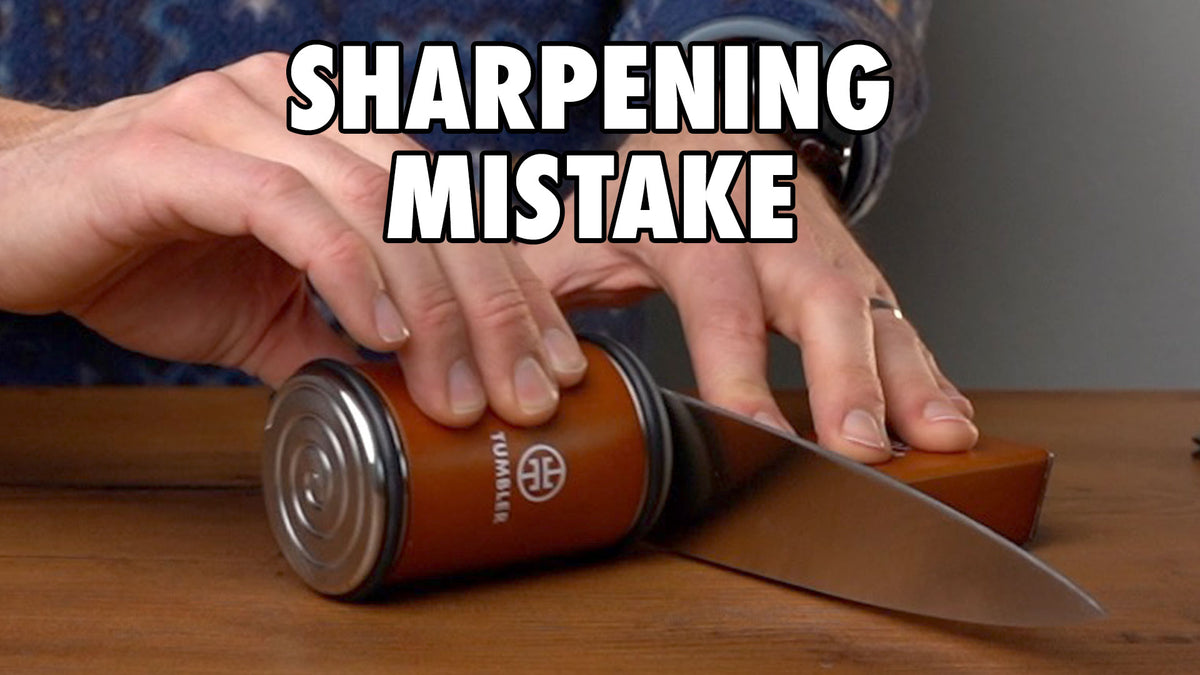
Overreliance on pull‑through gadgets is common. These can work in a pinch but can chip hard steels. Use them gently and not on premium knives.
I also see people try to “sharpen” on a honing rod. A rod hones and aligns. It does not replace a real sharpening on stones when the edge is dull.
Source: mtknives.net
How to fix knife sharpening mistakes, step by step
Start clean. Wipe the blade. Soak or wet the stone if needed. Secure the stone on a non-slip base.
Pick an angle. For most Western chef’s knives, 15 to 20 degrees per side works. For many Japanese gyuto, 12 to 15 degrees is common. Use an angle guide or the marker trick to stay true.
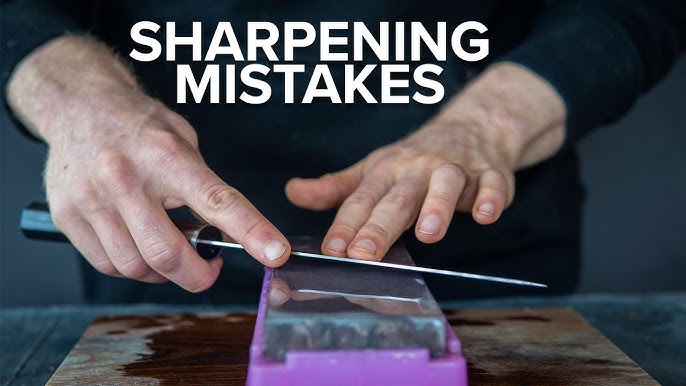
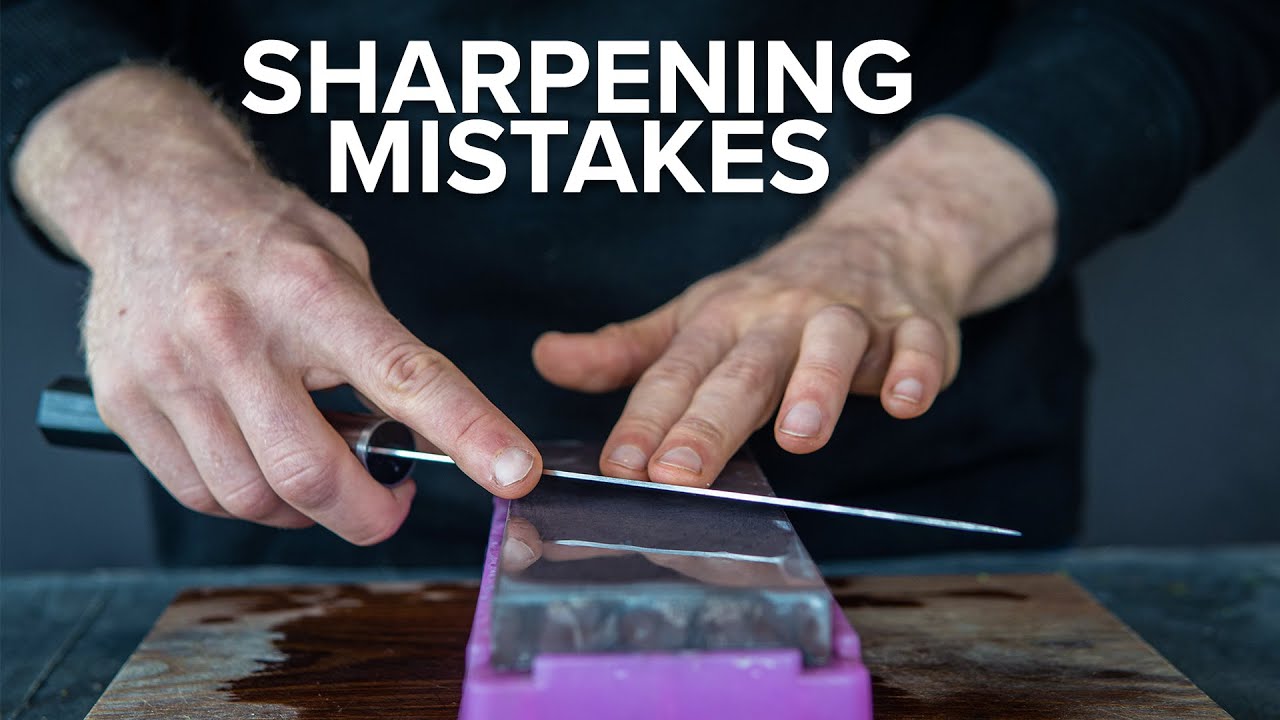
Set the bevel on a coarse grit. Use light pressure. Make slow, even strokes from heel to tip. Count your strokes. Work until you form a steady burr on the far side.
Flip and repeat. Match the angle and build a burr back to the first side. Keep strokes smooth. Do not rush.
Refine the edge. Move to a medium grit. Repeat the same pattern. Your aim is to remove the coarse scratches and thin the burr.
Deburr with care. Use very light alternating strokes. Then strop on leather or a folded newspaper. This removes the wire edge that causes a knife to feel sharp and then dull fast.
Test and clean. Slice paper or shave a tomato skin. If it catches, go back a step and refine. Rinse and dry the knife and the stone.
Source: youtube.com
Choosing the right tools to avoid knife sharpening mistakes
Pick stones that match your knives and skill. A common set is a 400 or 800, a 1000 or 1200, and a 3000 to 6000. This covers repair, sharpening, and polishing.
Diamond plates are fast and flat. They are great for hard steels and for flattening other stones. Ceramic stones cut slow but leave a fine finish.
Use a strop for final deburring. Load it with a fine compound if you like. A few light strokes can boost bite and shine.
Add simple aids. An angle guide helps new users. A loupe lets you inspect the edge. A non-slip mat keeps your station safe.
Skip cheap gadgets that claim to fix all knife sharpening mistakes. If a tool grinds too fast, it removes steel you cannot get back. Choose gear you can control.
Source: youtube.com
Advanced tips: angle, burr, and grit progression
Lock your angle with body mechanics. Keep your wrist firm. Move from your shoulders, not your fingers. This keeps the bevel flat.
Learn the burr. It should feel like a tiny wire lip along the edge. It must run heel to tip. No gaps. A patchy burr means you are not hitting the apex.
Use smart grit jumps. A 2 to 3 times jump works well. For example, 400 to 1000 to 3000. Each step should erase the last set of scratches.
Try a micro-bevel. After your final grit, raise the spine a hair and make two light strokes per side. This adds strength and reduces chipping.
Mind steel types. Tough German steel can handle 20 degrees. Hard Japanese steel likes a lower angle but needs a gentle touch. Adapt your plan to the blade.
Source: tumblerware.com
Safety and maintenance habits that prevent knife sharpening mistakes
Keep your station stable. A sliding stone is an injury risk. Use a base or a damp towel to lock it down.
Protect the edge between sessions. Store knives on a magnetic strip or in a sheath. Tossing a sharp knife in a drawer ruins the edge and your fingers.
Use the right cutting board. Wood or soft plastic is best. Glass, stone, or ceramic will dull an edge fast.
Wipe knives dry after use. Moisture can pit the edge. A little care saves you time on the stones.
Set a simple schedule. Hone lightly each week. Sharpen on stones when honing stops helping. Small, regular touch-ups prevent big knife sharpening mistakes.

Source: sharpeningsupplies.com
Troubleshooting: what your edge is telling you
If the knife slides off tomato skin, your apex is rounded. Go back a grit and reset the bevel. Raise a clear burr.
If the edge feels sharp but dulls fast, you left a wire edge. Deburr with light alternating strokes and strop.
If it cuts paper but tears herbs, the finish is too coarse. Move to a finer grit and strop a little.
If the blade wedges in carrots, your bevels are uneven. Count strokes and check with a marker. Make both sides match.
If chipping shows along the edge, your angle is too low or pressure too high. Add a micro-bevel and use lighter strokes.
Source: tumblerware.com
Frequently Asked Questions of knife sharpening mistakes
How often should I sharpen my kitchen knives?
Hone weekly if you cook often, and sharpen on stones every 2 to 8 weeks. The right interval depends on use, steel type, and your cutting board.
What angle is best to avoid knife sharpening mistakes?
Most Western knives do well at 15 to 20 degrees per side. Many Japanese knives prefer 12 to 15 degrees, but always check the maker’s guidance.
Do I need a strop if I already use fine stones?
A strop removes the last traces of a burr and boosts bite. It is a quick step that makes edges sharper and longer lasting.
Can I fix chips at home?
Small micro-chips are easy to remove with a coarse stone. For deep chips or broken tips, consider a pro to avoid removing too much steel.
Are pull-through sharpeners bad for knives?
They can work for quick touch-ups on soft steels. Use them lightly and not on hard or thin blades to avoid chipping and uneven bevels.
Conclusion
Sharp knives are safe knives, and the path is simple: set the right angle, use light pressure, raise and remove the burr, and move through smart grits. With a steady routine, you can avoid common knife sharpening mistakes and get clean, lasting edges.
Start small this week. Pick one knife, one stone, and one goal: a clear burr and a clean deburr. Share your results, subscribe for more hands-on tips, and drop your sharpening questions so we can solve them together.
Maliha Khatun has spent 5 years hands-on testing Japanese knives for everyday home cooks. She has evaluated over 60 blades across nakiri, santoku, gyuto, and petty categories — scoring each on edge retention, steel quality, handle comfort, and value for money. She writes to help home cooks buy the right knife without the guesswork.
Expertise:Japanese Knives • Vegetable Knives • Product Reviews • Kitchen Efficiency • Knife Care
Leave a Reply