
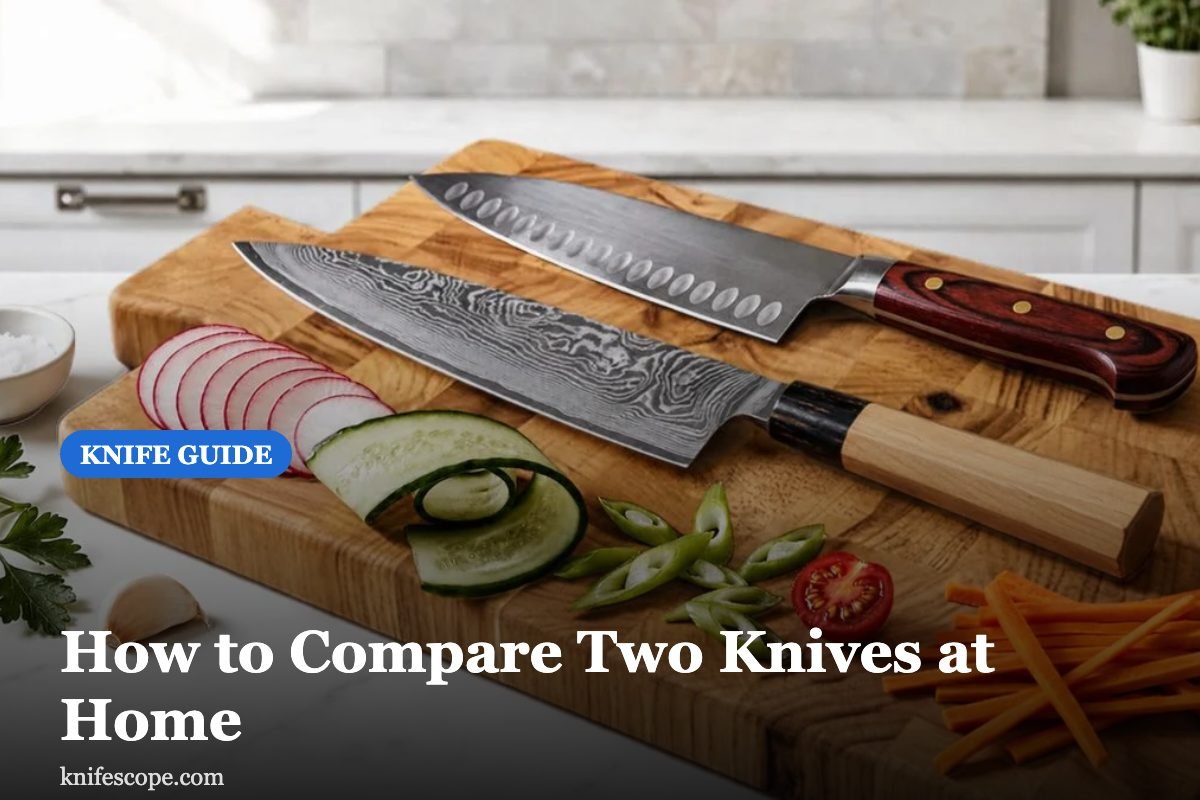
Online reviews rarely agree, and every knife feels great on the first day. If you want to know which of two knives really cuts better for you, the most reliable answer comes from testing them side by side in your own kitchen.
The key is fairness: same food, same board, same day, and the same person cutting. Here is a simple test you can run in about 20 minutes.
What knife performance comparison means
A knife performance comparison checks how well different knives do tasks. It looks at edge hold, sharpness, toughness, corrosion resistance, ergonomics, and ease of maintenance. The goal is to rank blades by real world value, not by looks or hype.
Key goals of a knife performance comparison:
- Measure cutting power and efficiency.
- Track how long the edge lasts under use.
- Test toughness and resistance to chipping.
- Evaluate comfort and safety in use.
A solid knife performance comparison uses repeatable tests. Results reflect real tasks like slicing, chopping, batoning, and precision cuts. That makes findings useful for buyers and pros.
Key factors that determine knife performance
Knife performance comparison centers on a few core factors. Each factor can boost or limit overall blade performance.
Steel and alloy
- Composition controls hardness and corrosion resistance.
- Higher carbon often means better edge but needs more care.
Heat treatment and hardness
- Heat treat affects toughness and edge stability.
- Harder steel holds an edge longer but can be brittle.
Edge geometry and angle
- Thin edges cut better but dull faster.
- A steeper angle is stronger and better for heavy use.
Blade grind and profile
- Flat grinds slice well.
- Convex grinds resist food sticking and are tough.
Handle and ergonomics
- Grip shape affects control and fatigue.
- Balance point matters for precision and power.
Coatings and finish
- Coatings can boost corrosion resistance.
- Finishes affect food release and glare.
These factors must be weighed against intended use. A good knife performance comparison explains how each trait matters.
How to test and measure knife performance
A strong knife performance comparison uses clear tests and simple metrics. Here are common tests I use in field and kitchen checks.
Edge retention test
- Cut standardized materials until the edge fails.
- Count the number of cuts or time before resharpening.
Sharpness test
- Use paper, hair, or standardized sharpness testers.
- Note how easily the blade slices thin materials.
Toughness and chipping
- Strike or press the edge mildly to see if it chips.
- Batoning wood helps reveal brittleness.
Corrosion test
- Expose blade to salt or acidic food for set time.
- Inspect for pitting or surface corrosion.
Ergonomics and control
- Use timed chopping and precision tasks.
- Ask multiple users to rate comfort.
Real life durability
- Use the knife for weeks in daily tasks.
- Track maintenance and resharpen frequency.
A rigorous knife performance comparison combines lab-like tests with long-term use. This mix gives a true feel for daily performance.
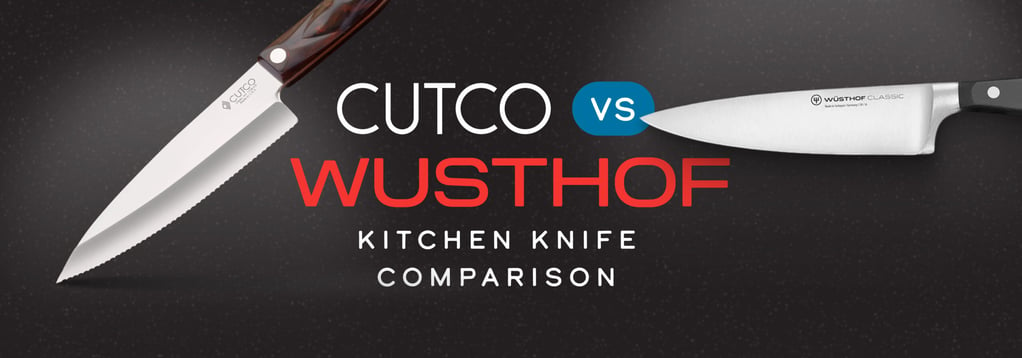
Side-by-side comparisons of common knife types
A direct knife performance comparison helps pick the right tool. Below are short comparisons across types.
Kitchen chef’s knife vs santoku
- Chef’s knives excel at rocking cuts and heavy tasks.
- Santoku blades are flatter and slice cleanly with less drag.
- Choose chef’s knife for versatility and santoku for fast slicing.
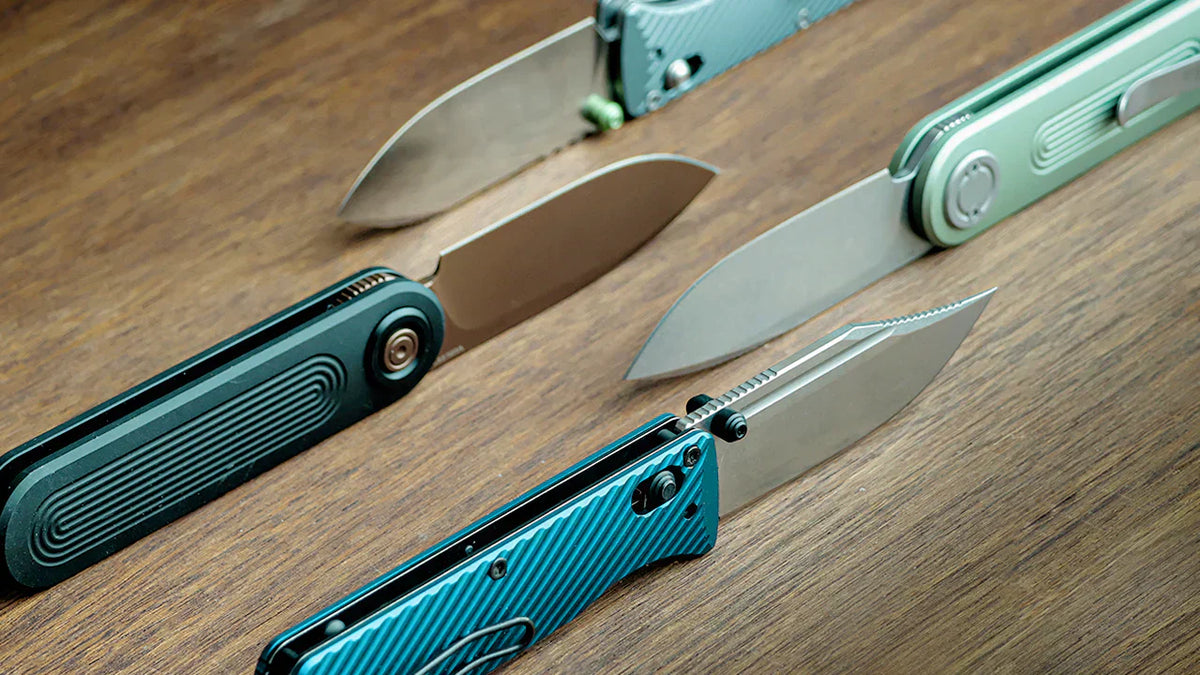
Folding knife vs fixed blade
- Folding knives win on Portability and convenience.
- Fixed blades are stronger for hard use and survive more abuse.
- For bushcraft, prefer fixed blade; for EDC, choose folding.
High-carbon vs stainless steel
- High-carbon steels take a finer edge and sharpen easily.
- Stainless steels resist rust and need less care.
- Choose high-carbon for sharpness and stainless for low maintenance.
Hard, high-HRC steels vs tough, lower-HRC steels
- High HRC holds an edge longer but chips easier.
- Lower HRC steels bend rather than chip and are easier to sharpen.
- Knife performance comparison here depends on task: precision vs heavy duty.
Every knife performance comparison should match type to task. Don’t pick a hunting blade For kitchen work.
Real-world testing and personal experience
I have run side-by-side kitchen sessions and outdoor trips. My tests logged cut counts, resharpen cycles, and comfort notes. One lesson: a cheap steel with great geometry often outperforms a pricey blade with poor grind.
Example field test
- I used Three blades on the same trail for skinning, small wood work, and food prep.
- The mid-range all-rounder stayed sharp longest for mixed tasks.
- The ultra-hard steel looked nice but chipped after batoning.
Care tips I learned
- Match edge angle to task. Thin for slicing, steep for chopping.
- Keep a simple sharpener and strop. Regular quick hones beat long gaps.
- Never use kitchen knives for prying. That ruins the edge.
My knife performance comparison work taught me to favor balanced designs. A blade that is usable every day wins over one that Is perfect only in tests.
Practical tips to choose a knife based on performance
Use these steps to apply a knife performance comparison to your buying choice.
Decide the primary task
- Choose thin, hard edges for slicing.
- Choose tougher steels and thicker edges for heavy work.
Check heat treat and grind
- Ask or research heat treat if possible.
- Look for clean grinds and consistent edge geometry.
Test ergonomics before buying
- Hold the knife and mimic cuts.
- Ensure the handle fits your hand and grip styles.
Look for maintenance needs
- High-carbon needs oil and care.
- Stainless is easier for daily use in wet kitchens.
Set a realistic budget
- Mid-range knives often give the best value in a knife performance comparison.
- Very cheap or very expensive blades often give mixed returns.
Follow these tips and use a short check list when you compare models.
Maintenance habits that improve knife performance
Good maintenance extends performance. Small habits give big gains.
Daily quick hone
- Hone on a steel or ceramic rod each day you use the knife.
- This keeps the edge true between sharpenings.
Regular sharpening
- Use stones or guided systems to reset edge angles.
- Match the stone grit to the steel hardness.
Stropping for polish
- Strop with leather to remove burrs and increase bite.
- A polished edge may feel smoother and cut cleaner.
Clean and dry after use
- Wipe blades and dry to prevent corrosion.
- Use mild soap and avoid dishwashers for fine blades.
Store safely
- Use sheaths, blocks, or magnetic strips.
- Avoid loose contact with other tools.
With steady care you will raise the rank of any knife in a knife performance comparison.

The 5-food test and score sheet
| Test | What it shows | Score 1 to 5 for |
|---|---|---|
| Printer paper | Raw edge sharpness | Clean, quiet slice |
| Ripe tomato | Edge bite on slippery skin | Cuts without pressing |
| Onion dice | Control and food release | Even pieces, little sticking |
| Large carrot | Blade geometry | No cracking or wedging |
| 10 minutes of prep | Comfort and balance | No hand fatigue |
Alternate knives after each item, and if possible ask someone else to hand them to you so you do not know which is which.
A Simple Scoring Sheet for Your Test
Give each knife the same tasks and score each from 1 to 5. Good tasks include slicing a ripe tomato, push-cutting a sheet of paper, dicing an onion, and cutting a carrot to see if the blade wedges. Note comfort and balance as well as sharpness.
To keep it fair, sharpen both knives to a similar level first, use the same board, and let one person do every cut. Write the scores down right away. If one knife loses, check its edge angle with our angle chart before you blame the steel.
Frequently Asked Questions of knife performance comparison
What is the most important factor in a knife performance comparison?
Edge geometry and heat treat are the most important. They dictate cutting efficiency and durability in real use.
How often should I test my knife for performance?
Test informally each month if you use it daily. Formal tests can be done after heavy use or every few months.
Can cheap knives win in a knife performance comparison?
Yes. A well-made, affordable knife with good grind and decent steel can beat an expensive, poorly Finished blade.
How do I measure edge retention at home?
Cut standardized material like rope or cardboard in sets, then check sharpness with paper or a hair test. Count sets until performance drops.
Does hardness always mean better performance?
No. Higher hardness often equals longer edge life but increases chip risk. Balance hardness with toughness based on task.
How does handle shape affect performance?
Handle shape affects control and comfort. A poor handle causes fatigue and reduces cutting precision over time.
Is stainless always better for kitchen knives?
Stainless is easier to care for but may not reach the same sharpness as select high-carbon steels. Choose based on maintenance willingness.
Should I trust blade coatings in a knife performance comparison?
Coatings help corrosion resistance but can hide quality issues. Evaluate steel and grind first, then coatings as a bonus.
What is the best grind for slicing?
Flat or hollow grinds slice best due to thin cutting cross-sections. Convex grinds also slice well while adding strength.
How does the point in a knife performance comparison matter?
Point shape affects piercing and precision tasks. Fine points are better for detail, while robust points handle tougher jobs.
Conclusion
A fair home test beats any spec sheet. Keep the conditions identical, score each knife honestly and pay most attention to comfort over ten minutes of real prep, because that is what decides whether you will reach for a knife every day.

Maliha Khatun has spent 5 years hands-on testing Japanese knives for everyday home cooks. She has evaluated over 60 blades across nakiri, santoku, gyuto, and petty categories — scoring each on edge retention, steel quality, handle comfort, and value for money. She writes to help home cooks buy the right knife without the guesswork.
Expertise:Japanese Knives • Vegetable Knives • Product Reviews • Kitchen Efficiency • Knife Care