
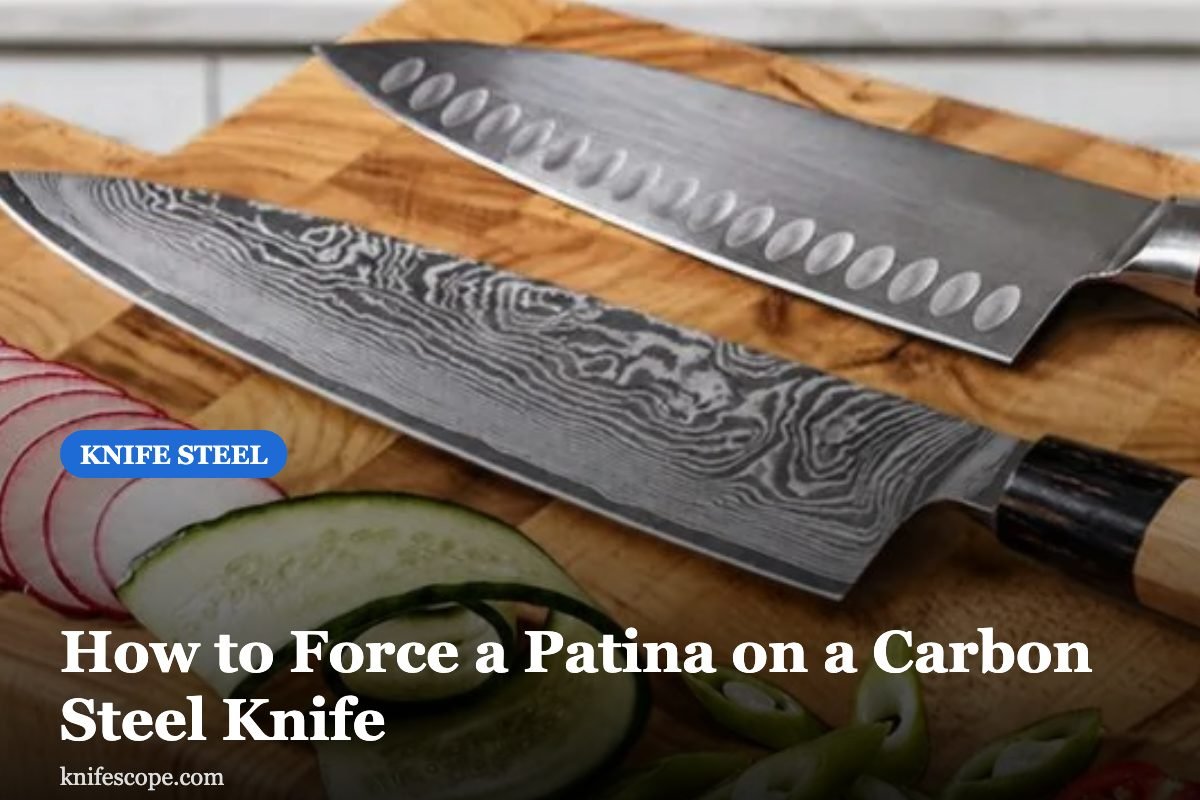
If you own a carbon steel knife, it will change colour. Onions, citrus and raw meat leave blue, grey and purple marks. That layer is a patina, and it is a good thing: a stable oxide that helps protect the steel from orange rust.
You can let it build naturally, or you can “force” an even patina in under an hour. Here are three safe home methods and what to expect from each.
What is a knife patina?
A patina is a thin, controlled layer of oxidation on steel. It forms when iron reacts with acids or oxygen. Patina can look dark, brown, or gray and can cover the blade evenly. This knife patina guide treats patina as both protection and a cosmetic finish.

Why create a patina?
Patina offers several real benefits:
- Protection from rust by slowing active corrosion on carbon steel.
- Hides stains, scratches, and wear, keeping A knife looking better over time.
- Reduces glare and gives a knife a vintage or custom look.
People choose to patina knives to protect a working blade and to personalize the knife’s look. This knife patina guide explains why that trade-off often makes sense for carbon blades.

What steels take patina and which resist it?
Not all steels behave the same:
- Carbon steels such as 1095, O1, and 5160 patina easily and predictably.
- High-chromium stainless steels resist patina and often need stronger acids or abrasives to discolor.
- Powder metallurgy and high alloys vary; some take a light patina, others need forced methods.
This knife patina guide recommends testing on a small area first. If you don’t know the steel type, proceed with mild methods and patience.
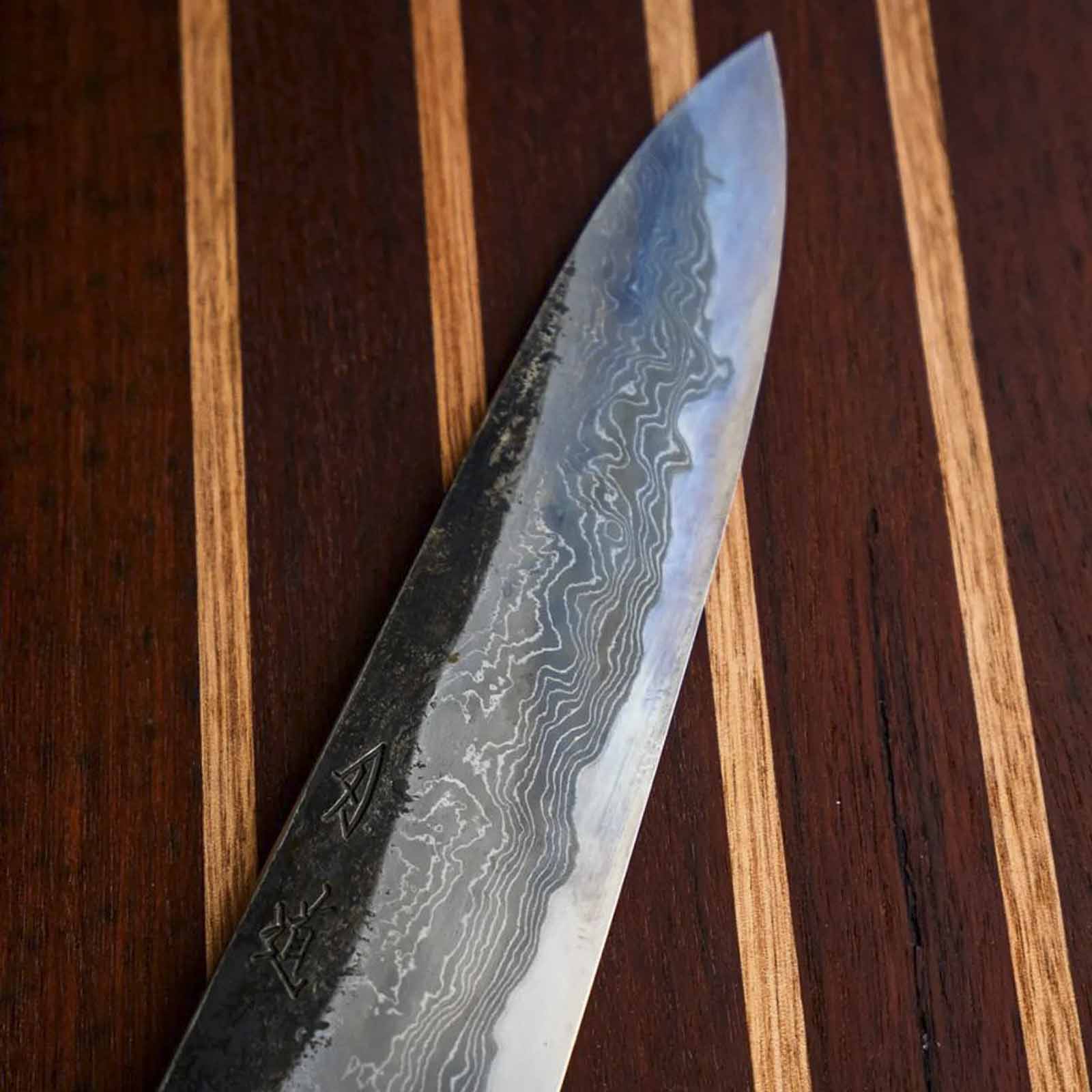
Safe methods to create a patina (step-by-step)
Use safe gear: gloves, eye protection, and a well-Ventilated area. Follow these tested steps.
Vinegar dip (gentle, controlled)
- Clean blade with mild soap and water. Dry it fully.
- Rub a small area with light abrasive to remove factory finish if desired.
- Submerge only the blade in white vinegar for 1–10 minutes. Check every minute.
- Neutralize in baking soda and water, rinse, and dry.
Vinegar makes a light, uneven patina that you can layer.
Mustard or apple cider vinegar (gentle, food-safe)
- Apply mustard or cider vinegar thinly. Let sit for 30–60 minutes.
- Rinse and neutralize. Repeat to darken the patina slowly.
Ferric nitrate and acid dips (faster, stronger)
- Use small amounts in a plastic container. Dip for seconds to minutes.
- Neutralize immediately after desired color appears.
- This method is stronger and needs more safety care.
Tea, coffee, or smoke (natural-looking)
- Brew strong tea or coffee and submerge blade for hours to days.
- Smoke from wood or leather creates warm tones and character.
These methods yield warm, subtle tones and are low risk.
Forced patina with heat (rare)
- Light heat and salt can encourage oxidation in a controlled way.
- This method is less predictable and requires experience.
Neutralize and seal
- After the patina forms, neutralize acids with baking soda and water.
- Dry the blade fully and apply a thin protective oil like mineral oil or camellia oil.
This knife Patina guide favors neutralizing and sealing to lock color and protect steel.
Safety and common sense
- Always work in a ventilated area.
- Wear gloves and eye protection.
- Dispose of acid solutions properly and never mix chemicals.
People also ask:
Will vinegar ruin a knife?
Vinegar can remove protective coatings but will not ruin carbon steel if you neutralize and oil the blade afterward.
How long does a patina take?
Time ranges from minutes with acids to days with tea. It depends on steel and method.
Can I remove a patina later?
Yes. Use fine abrasives or polish to remove a patina, then reapply a new finish or protective oil.
This knife patina guide gives step-by-step choices so you can pick a method that matches your comfort level.

Maintenance and care for a patina finish
Simple care keeps a patina looking good:
- Wipe the blade after use with a dry cloth.
- Reapply a thin coat of oil after cleaning or if you store the knife.
- Remove water spots quickly by buffing with a cloth and oil.
If a patina wears unevenly, reapply a light patina touch-up. For active use, frequent oiling is better than heavy re-patining. This knife patina guide recommends a light oil after every heavy duty session.
Mistakes to avoid and troubleshooting
Common errors and how to fix them:
- Leaving acid on too long. Fix: neutralize quickly and polish lightly.
- Skipping neutralization. Fix: rinse thoroughly with baking soda solution.
- Using steel wool on stainless. Fix: switch to non-ferrous pads to avoid contamination.
If spots appear, reapply a mild, even patina or polish the area and start again. The knife patina guide warns against haste; slow, repeated treatments make a better finish.

My experience and real-life tips
I started with mustard dips on Old kitchen knives. I learned that patience matters. A slow tea patina gave the most even color on a beloved blade. I once left a vinegar dip too long. The result cleaned up after neutralizing and re-oiling, but the lesson stuck: test first and go slow.
Quick lessons I share:
- Test on an unseen area or scrap steel.
- Keep a log of time, method, and result to repeat good outcomes.
- Use oil as a finish, not wax, for working knives.
This knife patina guide reflects hands-on tests and long-term use to give practical, usable tips.
Three ways to force a patina
| Method | Time | Result |
|---|---|---|
| Yellow mustard (dabbed or brushed on) | 20 to 60 minutes | Spotty, artistic patterns |
| Warm white vinegar (wipe or soak) | 10 to 30 minutes | Even grey finish |
| Hot strong coffee (soak) | 1 to 2 hours | Dark brown to black, quite even |
Before any method: degrease the blade with dish soap or alcohol so the patina forms evenly. Afterwards, rinse, dry completely and wipe with a thin coat of food-safe oil.
Frequently Asked Questions of knife patina guide
What exactly does a patina do for a knife?
A patina slows active rust by creating a barrier on carbon steel and hides small blemishes. It does not make steel rust-proof but reduces visible corrosion.
Can stainless steel get a patina?
Stainless steel resists patina, but acid dips or prolonged exposure can darken it slightly. Results vary by alloy and are less predictable than carbon steel.
Is patina permanent?
Patina is not fully permanent. It changes with use and cleaning, but it can be refreshed easily with repeat treatments.
Is a patina safe for food use?
Yes, many food-safe methods exist, like mustard or tea. Always neutralize acids and rinse thoroughly before food contact.
How do I remove a patina if I dislike it?
Remove a patina with fine abrasive pads or polish and then clean and oil the blade. Start gently to avoid removing too much metal.
Will a patina hurt blade performance?
No. A thin patina does not Affect cutting or edge geometry. It mainly affects appearance and corrosion resistance.
How often should I reapply oil to a patina?
For regular use, oil after every cleaning or weekly if stored. More frequent oiling prevents rust and maintains the patina.
Conclusion
A forced patina is a simple way to give a carbon steel knife some rust protection and a bit of character. Start with vinegar for an even look or mustard for a pattern, and keep up with drying and oiling afterwards.

Maliha Khatun has spent 5 years hands-on testing Japanese knives for everyday home cooks. She has evaluated over 60 blades across nakiri, santoku, gyuto, and petty categories — scoring each on edge retention, steel quality, handle comfort, and value for money. She writes to help home cooks buy the right knife without the guesswork.
Expertise:Japanese Knives • Vegetable Knives • Product Reviews • Kitchen Efficiency • Knife Care