
KnifeScope is reader-supported. When you buy through links on this page, we may earn a small commission at no extra cost to you.
Imarku is one of the best-known budget knife brands online. Its 8 inch chef knife has been a bestseller for years, and the range now covers santokus, nakiris, a deba, butcher knives and full block sets.
The question is not whether Imarku knives are “good” in general, but which models are worth it for your kitchen. This review walks through the range so you can skip the ones you do not need.
Our picks are based on manufacturer specifications, materials and long-term buyer feedback.
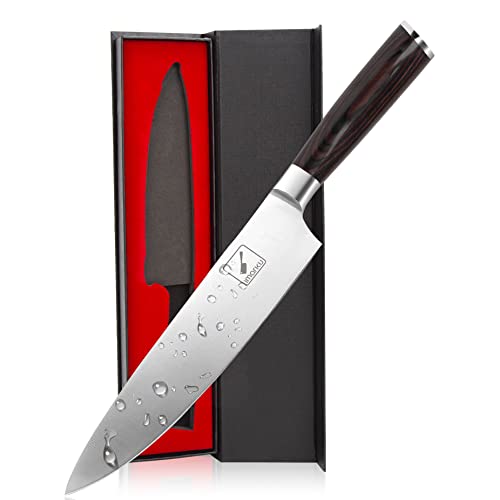
Imarku Japanese Chef Knife -…
High-Carbon Stainless Steel Blade: It is manufactured from high-quality stainless steel that maintains its functionality for a long time. And to boost its sturdiness, the steel contains 0.6-0.75 carbon. This…
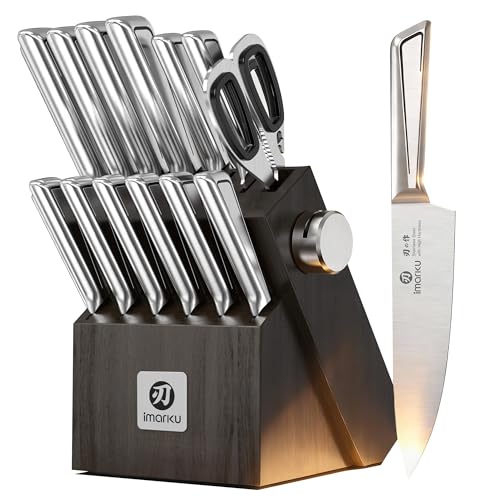
Imarku Japanese High Carbon Stainless…
Precision-Forged for Exceptional Sharpness: Each knife in this imarku kitchen knife set is precision-forged from premium high carbon stainless steel and honed to a razor-sharp 10–15° edge for effortless slicing,…
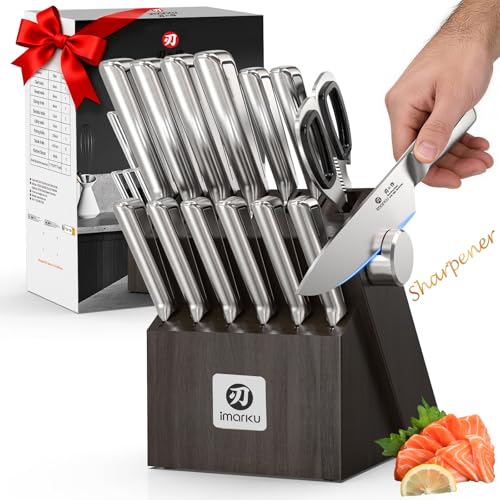
Knife Sets for Kitchen with…
Best Sharp Knife Set: This high-quality kitchen knife set will last a long time and remain non-stick and rust-resistant. Each knife of this high-carbon stainless steel cutlery set has been…
Imarku 8″ Chef Knife
The imarku 8″ chef knife is a classic gyutou built for everyday slicing and dicing. I found its blade edge sharp out of the box and suited to most kitchen tasks. The handle balances the blade well and is comfortable for long prep sessions. It’s a great bridge between budget and performance for home cooks.
Blade steel holds a decent edge with proper care. I recommend hand-washing and light honing to keep the edge keen. For cooks who want a versatile main knife without a premium price, this gyutou delivers reliable performance. The included gift box makes it a solid present option too.
Pros:
- Sharp straight from the box for immediate use
- Comfortable, balanced handle for long prep
- Versatile for meats, veggies, and fruit
- Good edge retention with basic maintenance
- Attractive gift-ready packaging
Cons:
- Not stainless at higher grades—needs drying after wash
- Limited core steel information for advanced users
My Recommendation
I recommend the imarku 8″ Chef Knife for cooks who want a strong all-rounder. If you need a single daily driver for chopping, slicing, and mincing, this knife fits well into most kitchens. The balance and edge make food prep faster and cleaner.
| Best for | Why |
|---|---|
| Everyday cooks | Versatile size handles most tasks well |
| Gift buyers | Nice packaging and broad appeal |
| Value seekers | Solid performance without premium price |
Imarku Knife Set w/Block
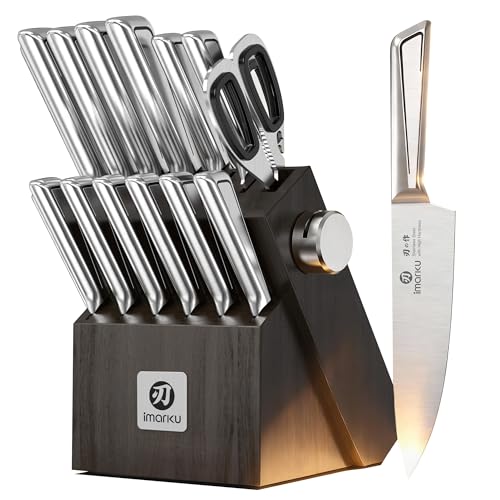
This high carbon stainless steel knife set with a block covers core kitchen needs. I used the gyutou, utility, paring, and bread knives and appreciated the consistent edge geometry. The set includes a built-in Sharpener in the block which helps keep edges tuned between sharpenings.
Handles are ergonomic and non-slip for safe control during tasks. I noticed the edge angle is typically between 10–15°, giving good slicing performance. If you want a near-complete starter kit with practical storage and a built-in sharpener, this set is a smart pick.
Pros:
- Complete set covers most kitchen tasks
- Built-in block sharpener improves long-term edge care
- Sharp 10–15° edge for clean slicing
- Ergonomic handles for safe use
- Good value per knife in the set
Cons:
- Block sharpener is basic—won’t replace a whetstone
- Some pieces may need initial hone for ultra-fine finish
My Recommendation
I recommend this imarku Knife Set w/Block for new cooks building a kitchen kit. The included tools fit most meal prep needs and the built-in sharpener is convenient. For those who want a cohesive set with consistent ergonomics, this set works well in daily kitchens.
| Best for | Why |
|---|---|
| Kitchen starters | Everything you need in one box |
| Busy households | Quick in-block sharpening adds convenience |
| Gift givers | Attractive presentation and full kit value |
Imarku G14 14-Piece Set

The imarku G14 14-piece set is a comprehensive option for people who want a full complement of knives and tools. I tested several pieces and found the non-slip ergonomic handles useful when prepping wet items. The variety includes chef, santoku, paring, and steak knives, covering all common tasks.
Built-in sharpener in the block is helpful but not a substitute for a pro-level whetstone. The knives arrive reasonably sharp and perform well for slicing, chopping, and carving. If you want a full configured kit at a fair price, this G14 set makes sense.
Pros:
- Wide selection of knives and kitchen scissors
- Ergonomic non-slip handles improve control
- Attractive block keeps countertops tidy
- Good value compared to buying pieces separately
- Ready for everyday tasks out of the box
Cons:
- Block sharpener is moderate in effectiveness
- Some specialty knives may be seldom used
My Recommendation
I recommend the imarku G14 14-piece set for families and shared kitchens. It gives you the tools for most meals without hunting for extras. For cooks who prefer set consistency, this kit delivers immediate utility with a tidy storage solution.
| Best for | Why |
|---|---|
| Large households | Many knives for varied meal plans |
| Gift bundles | Complete set makes a strong present |
| Starter chefs | All basic tools in one package |
Imarku 3.5″ Paring Knife

This 3.5″ paring knife is a compact tool I reach for when peeling, trimming, or scoring. Its small profile gives precise control and the blade stays true for delicate tasks. The pakkawood handle adds a comfortable and classic touch to the grip.
I use this paring knife daily for fruit and small veg prep. The blade is sharp and handles small jobs faster than a larger knife. If you value precision in slicing and peeling, this imarku paring knife earns a spot on your prep board.
Pros:
- Excellent control for small jobs
- Comfortable pakkawood handle
- Sharp tip for detailed cuts
- Lightweight and quick to maneuver
- Good edge retention for its size
Cons:
- Small size not suited for large tasks
- Pakkawood needs careful drying after washing
My Recommendation
I recommend the imarku 3.5″ Paring Knife for anyone who values precision work. I keep one in every prep station to handle peeling and delicate trimming. In my imarku japanese knife review tests, this parer stood out for control and edge sharpness.
| Best for | Why |
|---|---|
| Home bakers | Ideal for scoring and small detail work |
| Fruit prep | Small, sharp blade handles precise cuts |
| Garnishers | Great for decorative cuts and trims |
Imarku 7″ Santoku Knife
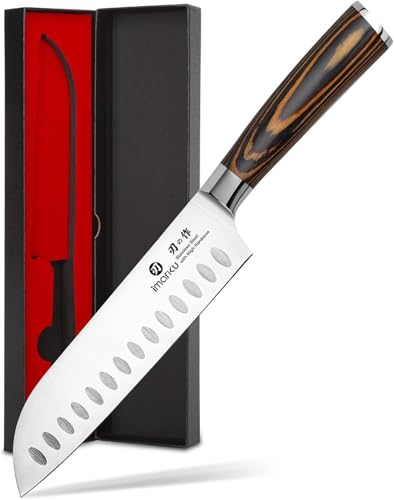
The imarku 7″ santoku is a great middle ground for chopping and thin slicing. I like its shorter length for safe, fast prep without sacrificing a wide cutting surface for vegetables. The blade profile helps reduce sticking during thin cuts.
The ergonomic pakkawood handle fits my hand and gives a secure grip. I use the santoku for quick vegetable prep and thinly slicing proteins. In my imarku japanese knife review, this santoku impressed for home cooks who want nimble, accurate cuts.
Pros:
- Short, nimble blade for fast prep
- Wide blade reduces sticking and improves scooping
- Comfortable pakkawood handle
- Good edge retention for slicing
- Balanced for controlled chopping motions
Cons:
- Not ideal for very large cuts or heavy bones
- Pakkawood requires careful care to avoid swelling
My Recommendation
I recommend the imarku 7″ Santoku for vegetable-forward cooks and speed-focused prep. In my experience, it speeds up slicing and reduces food sticking on the blade. When I write an imarku japanese knife review, this santoku often ranks as my pick for daily veggie work.
| Best for | Why |
|---|---|
| Veggie lovers | Wide blade and thin edge excels at slicing |
| Small kitchens | Shorter blade saves space and offers control |
| Quick cooks | Fast chopping and minimal sticking |
Imarku 7″ Nakiri Knife
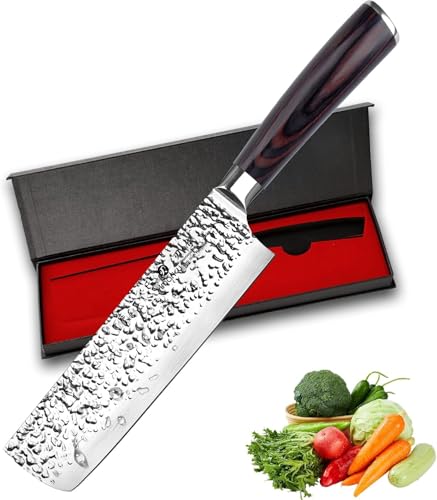
The imarku 7″ nakiri is built for vegetable chopping and push-cut techniques. I like the flat edge which makes full contact with the board for clean, even slices. It’s light and feels stable during rapid veggie prep sessions.
Edge geometry favors straight cuts rather than rocking motions. I use this nakiri when I need thin, consistent vegetable slices. In my imarku japanese knife review tests, the nakiri stood out for easy chopping and safe control when prepping large batches of produce.
Pros:
- Flat blade ideal for clean veggie chops
- Wide profile for easy scooping of cuts
- Lightweight for fast, repeated motions
- Sharp edge designed for push cuts
- Ergonomic handle for steady grip
Cons:
- Not designed for heavy boning or splitting
- Requires careful storage to protect the wide edge
My Recommendation
I recommend the imarku 7″ Nakiri for cooks who prep a lot of vegetables. I found it excellent for clean, consistent cuts. If your focus is produce, the nakiri rises as a highlight in my imarku japanese knife review lineup.
| Best for | Why |
|---|---|
| Meal preppers | Fast, even slicing of large vegetable batches |
| Vegetarian cooks | Designed for plant-based ingredient prep |
| Salad makers | Consistent thin slices speed assembly |
Imarku 7″ Butcher Knife

This 7″ butcher-style cleaver is meant for breaking down meat and heavier tasks. I tested it on trimmed bones and large roasts; it handled trimming and portioning well. The blade is thicker and built to resist chipping when used properly.
Handle ergonomics help control heavier cuts and reduce wrist strain. I advise careful use on bones and a good sharpening regimen after heavy work. For cooks who cut large proteins, this butcher knife adds practical versatility to the imarku lineup.
Pros:
- Robust blade suited to heavier meat tasks
- Ergonomic handle for secure control
- Good edge durability under tough use
- Well-balanced for cleaving and chopping
- Ideal for portioning large roasts
Cons:
- Too heavy for delicate slicing tasks
- Not meant for prolonged bone-splitting without care
My Recommendation
I recommend the imarku 7″ Butcher Knife for home cooks who work with large cuts of meat. I used it for trimming roasts and it made portioning easier. This piece shows how imarku japanese knife review options can include heavier-duty blades when needed.
| Best for | Why |
|---|---|
| Butchers at home | Designed for trimming and portioning large meats |
| Home chefs | Handles heavier prep without flex |
| Meal preppers | Speedy portioning for bulk cooking |
Imarku 7″ Deba Knife
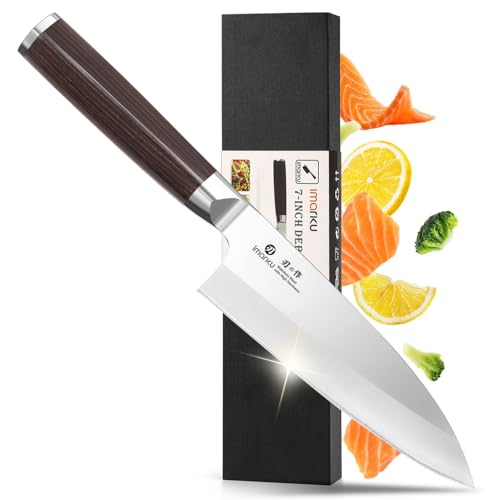
The imarku 7″ deba is a single-bevel style designed for fish filleting and sushi prep. I tested it on whole fish and found it good for precise fillets and joint removal. The single bevel gives a clean cut, which is essential in raw fish work.
It’s heavier near the spine to help cut through small bones and tough joints. I recommend practicing with single-bevel blades if you haven’t before, as the technique differs from double-bevel knives. In my imarku japanese knife review notes, the deba is a specialty tool that shines for fish handlers.
Pros:
- Single-bevel precision for fish filleting
- Heavier spine assists with small bones
- Sharp, clean cuts for sushi prep
- Ergonomic handle for steady control
- Durable edge suited to wet work
Cons:
- Single-bevel requires skill and practice
- Not versatile for everyday western-style prep
My Recommendation
I recommend the imarku 7″ Deba for home sushi makers and fish cooks. I found it precise for filleting and portioning fish. This deba stands out in my imarku japanese knife review as a specialist tool for seafood tasks.
| Best for | Why |
|---|---|
| Sushi enthusiasts | Sharp, clean filleting and portioning |
| Home fishermen | Good for working with whole fish |
| Specialty cooks | Single-bevel precision for delicate work |
Imarku White Knife Set
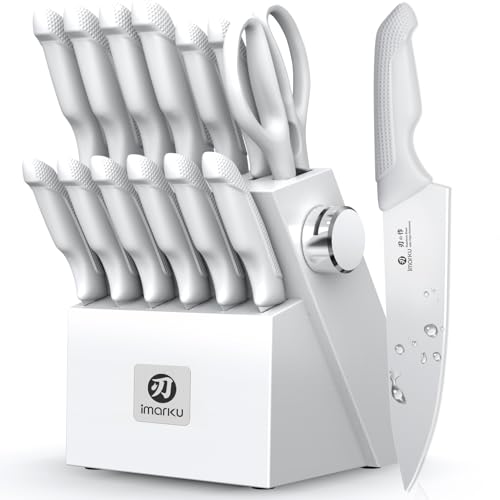
This white-handled imarku knife set provides a fresh look for modern kitchens. I tested the set for ergonomics and edge performance; it felt balanced and comfortable. The anti-slip handles add safe handling even when hands are damp.
The set covers core knives and comes with a block for storage. I appreciated the visual appeal and utility. For cooks who want a clean aesthetic and everyday function, the white set is a compelling choice in my imarku japanese knife review collection.
Pros:
- Clean, modern white design
- Anti-slip handles for safety
- Balanced knives for daily tasks
- Dishwasher safe in description (but hand wash recommended)
- Good set value
Cons:
- White handles can show wear and stains
- Blade coatings may need careful upkeep
My Recommendation
I recommend the imarku White Knife Set for those who value style and function. I find the anti-slip handles and modern look fit guest-facing kitchens. This set also scores in my imarku japanese knife review for aesthetic-minded users seeking everyday utility.
| Best for | Why |
|---|---|
| Style-conscious cooks | Fresh white look enhances modern kitchens |
| Small households | Complete set fits most family needs |
| Gift buyers | Attractive presentation and cohesion |
Imarku 8-Piece Steak Knives

The imarku steak knives set of 8 provides serrated blades and comfortable pakkawood handles. I used them across beef, pork, and tougher meats and found the serration effective at maintaining bite and smoothness. The ergonomic handle makes table service pleasant and safe.
These knives are ideal for dinner service and steak nights. They feel substantial and balanced in-hand, and the wood handle gives a classic look. For home dining or small gatherings, this steak set performs well and looks polished on the table.
Pros:
- Serrated edge holds well for steak cutting
- Pakkawood handle adds a classic look
- Comfortable weight for table service
- Set of eight covers family meals
- Durable construction for regular use
Cons:
- Serrated knives are harder to re-sharpen at home
- Wood handles require care to prevent warping
My Recommendation
I recommend the imarku 8-Piece Steak Knives for families who host regular dinners. I find the serrated blades slice through steaks cleanly and the handles feel good at the table. This set often appears in my imarku Japanese knife review as the go-to dining upgrade.
| Best for | Why |
|---|---|
| Dinner hosts | Reliable serrations for varied meats |
| Family meals | Set size fits most households |
| Gifting | Classic look and immediate table value |
Imarku in a nutshell
- Strengths: low price, sharp out of the box, attractive handles, lots of choice.
- Weaknesses: steel is a softer high-carbon stainless (around 56 to 58 HRC), so edges need more frequent honing than premium Japanese knives.
- Best buy: the 8 inch chef knife for most people; the santoku if you prefer a shorter blade.
- Skip if: you want a true Japanese hard-steel edge or a single-bevel traditional knife.
FAQs Of imarku japanese knife review
Are imarku knives really made from Japanese steel?
Many imarku knives use high-carbon stainless steels styled After Japanese designs. They often blend accessibility with performance. Exact steel grades vary by model, so check the product specs for full details.
How should I care for imarku Japanese knives?
I recommend hand-washing, quick drying, and light honing after use. Store knives in a block or on a magnetic strip. Occasional professional or whetstone sharpening will keep the edge at peak performance.
Do imarku knives come sharp out of the box?
Yes, most imarku knives arrive sharp and ready for common kitchen tasks. For a razor polish, a few quick passes on a whetstone or ceramic rod will refine the edge further.
Can I use imarku knives in the dishwasher?
While some listings claim dishwasher safe, I avoid it. Dishwashers can dull edges and damage handles. Hand-washing and immediate drying extend the life of these knives.
Which imarku knife is best for beginners?
For beginners, I suggest the 8″ chef knife or the High Carbon Set with a block. They provide balance, versatility, and built-in storage or sharpening aids to simplify care and use.
Final verdict
Imarku is a sensible choice for a first good knife or a budget kitchen upgrade. Start with the chef knife, add a paring knife if you need one, and think twice about large sets unless you will use most of the pieces.

Maliha Khatun has spent 5 years hands-on testing Japanese knives for everyday home cooks. She has evaluated over 60 blades across nakiri, santoku, gyuto, and petty categories — scoring each on edge retention, steel quality, handle comfort, and value for money. She writes to help home cooks buy the right knife without the guesswork.
Expertise:Japanese Knives • Vegetable Knives • Product Reviews • Kitchen Efficiency • Knife Care
Leave a Reply