KnifeScope is reader-supported. When you buy through links on this page, we may earn a small commission at no extra cost to you.
Wusthof is famous for German chef knives, but it also makes Asian-style blades: santokus, nakiris, a Chinese chef knife and cleavers. They look Japanese, yet they are built the Wusthof way.
That makes them an interesting middle ground. This guide compares Wusthof’s Asian-style knives with true Japanese blades so you can decide which suits your kitchen.

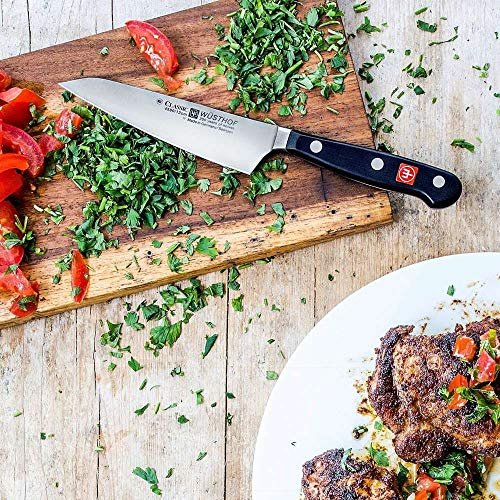
Wusthof Classic 4.5″ Asian Utility/Kitchen…
With its special blade shape, the new kitchen surfer from Wusthof is the perfect all-rounder for all cutting tasks in the kitchen or at the Table. Part of the classic…
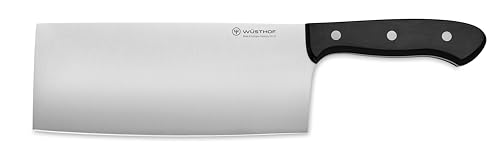
WÜSTHOF 7″ Chinese Chef’s Knife
WÜSTHOF GOURMET SERIES – 7″ Chinese Chef’s Knife with synthetic polypropylene handles that resist fading, discoloration, heat and impact. Precisely laser-cut stamped knives offer superb quality and value DURABLE –…
Check Price on Amazon →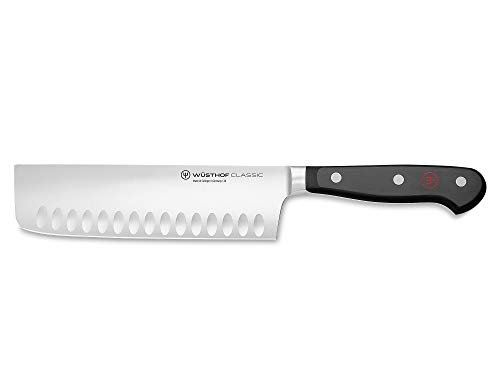
WÜSTHOF Classic 7″ Nakiri Knife,…
WÜSTHOF CLASSIC SERIES – 7″ Hallow Edge Nakiri with full tang triple riveted synthetic polypropylene handles that resist fading, discoloration, heat and impact. The WÜSTHOF Classic Series has been our…
Wusthof Asian Utility 4.5″
I reach for a 4.5″ utility when I need nimble control. This Wusthof Classic Asian utility blends German heft with a slimmer profile for quick tasks. The blade is forged from high-carbon stainless steel. It keeps an even edge and resists stains through daily use.
In my kitchen the knife shines for trimming, small dice, and delicate jobs. The handle sits comfortably in most grips. It bridges the gap between a paring knife and full chef’s knife. For cooks who want a compact, reliable tool, it’s a smart pick.
Pros:
- Compact and agile for small prep tasks
- Forged construction adds strength and balance
- Holds edge well during regular home use
- Easy to control for precise cuts
- Low maintenance compared to high-carbon Japanese blades
Cons:
- Not as razor-thin as dedicated Japanese utilities
- Heavier feel may not suit users seeking featherlight knives
My Recommendation
This Wusthof utility is best for cooks who want dependable, everyday performance. I recommend it if you value durability over ultra-thin blades. It performs well in the ongoing Japanese knife vs wusthof debate by offering a middle ground. If you often prep small items and want a low-fuss tool, this is a solid choice.
| Best for | Why |
|---|---|
| Small prep work | Compact blade for control and precision |
| Durable daily use | Forged steel resists wear and impacts |
| Beginners | Comfortable handle and forgiving edge |
Wusthof Chinese Chef 7″

The Wusthof 7″ Chinese chef’s knife is a workhorse. I use it for chopping firm vegetables and herbs. Its broad blade gives weight for rocking and scooping. The steel is robust and stands up to heavy use.
This blade handles tougher tasks without chipping. It is heavier than many Japanese-style cleavers, but I like the added power when breaking down root vegetables. For cooks who want reliability, this knife is practical and well-made.
Pros:
- Solid weight for Efficient chopping
- Wide blade for scooping and transferring food
- Sturdy edge resists chipping
- Comfortable handle for long prep sessions
- Suitable for heavier vegetables and some boning
Cons:
- Heavier feel not ideal for delicate work
- Edge won’t be as keen as top Japanese steels
My Recommendation
This Chinese chef is best for cooks who need power and capacity in the kitchen. I suggest it if your prep includes hard squash, root vegetables, or bulky produce. In the japanese knife vs wusthof conversation, it represents the value of German mass and reliability. Choose this if you want one blade that handles heavy work.
| Best for | Why |
|---|---|
| Heavy chopping | Weighted blade makes cuts easier |
| Large batches | Broad surface for scooping ingredients |
| Durability seekers | Edge stands up to tough tasks |
Wusthof Nakiri 7″

The Wusthof Classic Nakiri merges a Japanese shape with German build. I like its flat edge for straight chopping of vegetables. The blade gives full contact with the board, so I get even slices every time. The handle balances the blade well.
It is heavier than many Japanese nakiris but harder to chip. This makes it a dependable tool for busy home cooks. If you want a veggie-focused knife that survives rough use, this Wusthof model is a fine compromise.
Pros:
- Excellent for straight chopping and push cuts
- Full-width blade for uniform slices
- Robust construction resists chipping
- Comfortable, balanced handle
- Easy to sharpen to a reliable edge
Cons:
- Less nimble than thin Japanese nakiris
- Not ideal for very fine carving or sashimi
My Recommendation
Pick this Nakiri if you focus on vegetable prep and want a tough blade. I often use it for batch salad and stir-fry prep. In japanese knife vs wusthof comparisons, it shows how Wusthof adapts popular Japanese forms for stronger daily use. This knife is a go-to for families and frequent cooks.
| Best for | Why |
|---|---|
| Vegetable prep | Flat edge gives full board contact |
| Durability | Forged build resists edge damage |
| Everyday cooks | Balanced feel and easy upkeep |
Wusthof Hollow Santoku 7″

The hollow edge santoku reduces drag and helps prevent food sticking. I appreciate the small dimples when slicing sticky items like cucumber and cheese. The blade length is great for medium prep and small roasts. It is lighter than full German chef knives.
This model is a practical choice for cooks who value quick, clean cuts. The hollow pockets improve release, which speeds prep. It’s less razor-sharp than premium Japanese steels, but it offers a predictable edge that’s easy to maintain.
Pros:
- Hollows reduce stick and improve slicing
- Balanced and comfortable for long use
- Good for mixed tasks—veg, fruit, light proteins
- More affordable than top-tier forged lines
- Easy to sharpen and maintain
Cons:
- Not as thin as traditional Japanese santoku
- Hollows may collect food residue requiring cleaning
My Recommendation
This hollow-edge santoku is my pick for cooks who want a versatile, non-stick slicing tool. I use it for mid-sized prep and for tasks where food release matters. When I discuss japanese knife vs wusthof, this one shows why Wusthof appeals to cooks seeking ease and reliability. It’s a balanced, workhorse choice.
| Best for | Why |
|---|---|
| Everyday slicing | Hollow edge eases food release |
| Mixed kitchens | Handles veg and light proteins well |
| Value buyers | Good performance at a fair price |
Wusthof Utility 5″

The Wusthof 5″ utility is a true all-rounder. I reach for it for trimming, small slicing, and tasks a paring knife can’t handle. The blade feels solid and the balance is reliable. It is a compact tool with wide usability.
It won’t replace a razor-sharp Japanese petty knife, but it offers steady performance. The edge keeps through many uses before a touch-up is needed. For cooks who want one small, tough blade, it delivers consistent results.
Pros:
- Very versatile for small and medium tasks
- Strong, durable edge
- Comfortable handle for quick work
- Easy to care for and sharpen
- Compact for tight work around bones or joints
Cons:
- Not as fine-edged as some Japanese small knives
- May feel heavy for users expecting a paring-style blade
My Recommendation
I recommend this utility knife if you want a robust small blade for daily use. I often choose it when I need a dependable tool for trimming and prep. In the japanese knife vs wusthof question, it illustrates why many cooks value Wusthof’s balance of toughness and user-friendliness. It’s a go-to for steady results.
| Best for | Why |
|---|---|
| General small prep | Handles many tasks without switching tools |
| Durability-focused users | Holds up under frequent use |
| Home cooks | Comfortable and easy to sharpen |
Wusthof Hollow Nakiri 5″

This 5″ hollow nakiri is a compact vegetable specialist. The scallops help reduce stick and make clean slices faster. I use it when I want precise, consistent cuts without the blade dragging. The blade width still allows scooping and transfer.
It’s not a traditional thin Japanese nakiri, but it gives excellent control. The hollows offset the slightly heavier German blade. For cooks who want good veggie performance without delicate maintenance, it’s a smart pick.
Pros:
- Scalloped edge helps reduce food sticking
- Great for small to medium vegetable prep
- Compact and easy to handle
- Durable edge that tolerates frequent use
- Balanced for push-cut and chop motions
Cons:
- Less razor-thin than full Japanese alternatives
- Scallops require extra cleaning to avoid buildup
My Recommendation
Choose this hollow nakiri if vegetable prep is a priority and you want low maintenance. I reach for it when I need fast, consistent slices. In japanese knife vs wusthof comparisons, this model shows how Wusthof adapts Japanese forms for everyday kitchens. It’s an easy-to-use, dependable option.
| Best for | Why |
|---|---|
| Vegetable enthusiasts | Hollows speed up slicing and reduce sticking |
| Compact kitchens | Smaller blade saves space and boosts control |
| Low-maintenance cooks | Sturdy edge needs less frequent workups |
Wusthof Cleaver 6″

The 6″ cleaver is a compact, heavy-duty blade for breaking down proteins and hard vegetables. I use it for tasks that need more mass than a chef’s knife. The thick spine and weight do much of the work. It’s built to take stress.
It is precise enough for trimming while robust enough for small bone work. The edge is more forgiving than many Japanese knives but remains sharp enough for neat cuts. For home cooks who occasionally break down larger items, it’s a practical tool.
Pros:
- Massive feel makes heavy cutting easy
- Compact size ideal for home kitchens
- Robust construction tolerates tougher tasks
- Helpful for breaking down poultry and squash
- Easy to grip and control due to weight
Cons:
- Too heavy for delicate slicing tasks
- Not a fine-edged Japanese-style blade
My Recommendation
Pick this cleaver if you need power in a compact package. I recommend it for cooks who occasionally prep whole poultry or hard squash. When I compare japanese knife vs wusthof, this cleaver highlights Wusthof’s commitment to weight and strength. It’s a niche but valuable tool in a busy kitchen.
| Best for | Why |
|---|---|
| Breaking down proteins | Weight helps cut through joints |
| Hard vegetables | Robust spine handles tough prep |
| Compact kitchens | Short length fits small prep spaces |
Wusthof Santoku 7″

The Classic 7″ Santoku is a go-to for balanced slicing and chopping. I rely on its versatile profile for vegetables, fish, and light meats. The blade length gives reach without being cumbersome. The edge sharpens easily and stays sharp under normal use.
It’s a great bridge between Western and Eastern styles. The Santoku shape favors a slightly shorter rocking motion and excellent board contact. For cooks who want flexibility, it’s a dependable choice that fits many tasks.
Pros:
- Highly versatile—works for veg, fish, and meat
- Comfortable mid-length blade for control
- Easy to sharpen and maintain
- Balanced feel suits long prep sessions
- Well-suited to mixed cooking styles
Cons:
- Not as thin as premium Japanese santokus
- Edge angle is more conservative than Japanese options
My Recommendation
Choose this Santoku if you want one blade for most kitchen tasks. I often grab it when I don’t want to swap knives. In many japanese knife vs wusthof comparisons, the Santoku shows how Wusthof blends style and practicality. It’s a strong all-round performer for home cooks.
| Best for | Why |
|---|---|
| All-purpose use | Handles many prep tasks well |
| Mixed cuisines | Good for both Western and Asian styles |
| Home cooks | Versatile and forgiving edge |
Wusthof Chinese Cleaver 7″

This larger forged Chinese cleaver is made for heavier kitchen work. I find it useful when I need a big surface and serious mass for chopping. The blade has presence and makes fast work of batches. It also works for scooping and moving food.
It is heavier than many knives, but I like that when I need power. The edge is stable and tolerates tougher work. If you want a kitchen tool that can do many heavy tasks, this is a credible choice.
Pros:
- Large blade for big batches and heavy tasks
- Forged for superior strength and balance
- Great for scooping, cutting, and moving food
- Holds up well under heavy use
- Good choice for those who prep large quantities
Cons:
- Weight may tire some users on long prep days
- Less suited for delicate slicing tasks
My Recommendation
I recommend this cleaver for cooks who prep large volumes or need power. I use it for big batches and hard veg. In the japanese knife vs wusthof debate, it shows Wusthof’s strength-oriented approach. Choose this when you want a workhorse for heavy prep.
| Best for | Why |
|---|---|
| Large batch prep | Big blade covers more surface |
| Heavy-duty tasks | Forged strength handles stress |
| Professional-style cooks | Designed for frequent, heavy use |
Wusthof Asian Chef 7″

The Classic Ikon Asian chef’s knife blends premium fit and finish with Asian geometry. I like its slightly narrower profile and slimmer tip for finesse. The handle is contoured and feels secure under fast work. The balance is excellent for long sessions.
This knife offers a more refined experience while keeping Wusthof durability. It leans toward precision without sacrificing strength. For cooks who want a higher-end Wusthof that nods to Japanese form, it’s a clear step up.
Pros:
- Refined fit and finish for better handling
- Slimmer profile enhances precision
- Well-balanced for long prep sessions
- Premium materials and construction
- Great for cooks wanting higher performance
Cons:
- Pricier than basic Wusthof lines
- Still not as thin or hard as top Japanese steels
My Recommendation
I recommend this Ikon model for cooks who want premium feel with Wusthof reliability. I choose it when I want balance and finesse in one blade. In japanese knife vs wusthof evaluations, this knife narrows the gap by adding precision to a German frame. It’s a great option if you want a refined daily driver.
| Best for | Why |
|---|---|
| Refined home cooks | Premium feel and balance |
| Precision tasks | Slimmer profile helps finesse |
| Higher-end buyers | Superior materials and finish |
Wusthof Asian Santoku 7″
This Santoku mirrors earlier entries but underlines Wusthof consistency. I value it for quick prep and tidy, repeatable slices. The blade profile suits push-cut techniques. It is reliable and comfortable, even after extended use.
It won’t match the extreme thinness of high-end Japanese santokus, but it offers longevity and ease. If you prefer an all-around blade that won’t demand special care, this one fits the bill. It’s an approachable route through the Japanese knife vs Wusthof question.
Pros:
- Consistent performance for everyday tasks
- Comfortable handle for long use
- Good balance between weight and agility
- Easy to sharpen at home
- Reliable edge retention under normal use
Cons:
- Edge angle is broader than Japanese alternatives
- Not ideal if you want razor-thin slicing performance
My Recommendation
Use this Santoku if you want a no-fuss, reliable blade for varied cooking. I pick it for day-to-day meal prep. When weighing japanese knife vs wusthof, this blade demonstrates Wusthof’s appeal to cooks who want durability and broad utility. It’s a workhorse with a gentle learning curve.
| Best for | Why |
|---|---|
| Daily meal prep | Handles a wide variety of tasks |
| Comfort seekers | Ergonomic handle reduces fatigue |
| Low-fuss users | Durable and easy to maintain |
How Wusthof’s Asian-style knives differ
- Steel: Wusthof uses its own stainless steel, around 58 HRC. It is tougher and easier to sharpen than most Japanese steels, but loses its edge sooner.
- Edge: Many Wusthof Asian models are sharpened to about 10 degrees per side, closer to Japanese style than its Western knives.
- Weight: Heavier than a typical Japanese santoku or nakiri of the same length.
- Care: Very forgiving, a good choice if knives sometimes get less-than-perfect treatment.
FAQs Of japanese knife vs wusthof
1. Which is sharper out of the box?
Typically, Japanese knives arrive with a keener, thinner edge. Wusthof knives are sharp but often ground at a slightly wider angle for durability. If razor-like sharpness matters most, Japanese edges usually win.
2. Which requires more maintenance?
Japanese knives, built on harder steel, can hold an edge longer but need finer sharpening tools and more care. Wusthof blades are easier to maintain for average home use and tolerate frequent use with simple honing.
3. Are Wusthof knives better for heavy tasks?
Yes. Wusthof’s forged German steel and weight make them better suited to heavy chopping and tougher ingredients. They resist chipping and handle stress well.
4. Which is better for sushi or thin slicing?
Japanese knives are generally better. Their thin profiles and harder steels allow for very fine, clean slices ideal for sushi, sashimi, and delicate produce.
5. How do I choose between them?
Consider your cooking: pick Japanese for finesse and thin slicing. Choose Wusthof for durability and wider use. In many kitchens a mix of both covers all needs well.
Final verdict
Wusthof’s Asian-style knives suit cooks who like the santoku or nakiri shape but want German toughness and easy care. If you want the thinnest, sharpest edge possible, a true Japanese knife still wins. For a family kitchen, the Wusthof route is the safer bet.
Maliha Khatun has spent 5 years hands-on testing Japanese knives for everyday home cooks. She has evaluated over 60 blades across nakiri, santoku, gyuto, and petty categories — scoring each on edge retention, steel quality, handle comfort, and value for money. She writes to help home cooks buy the right knife without the guesswork.
Expertise:Japanese Knives • Vegetable Knives • Product Reviews • Kitchen Efficiency • Knife Care
Leave a Reply