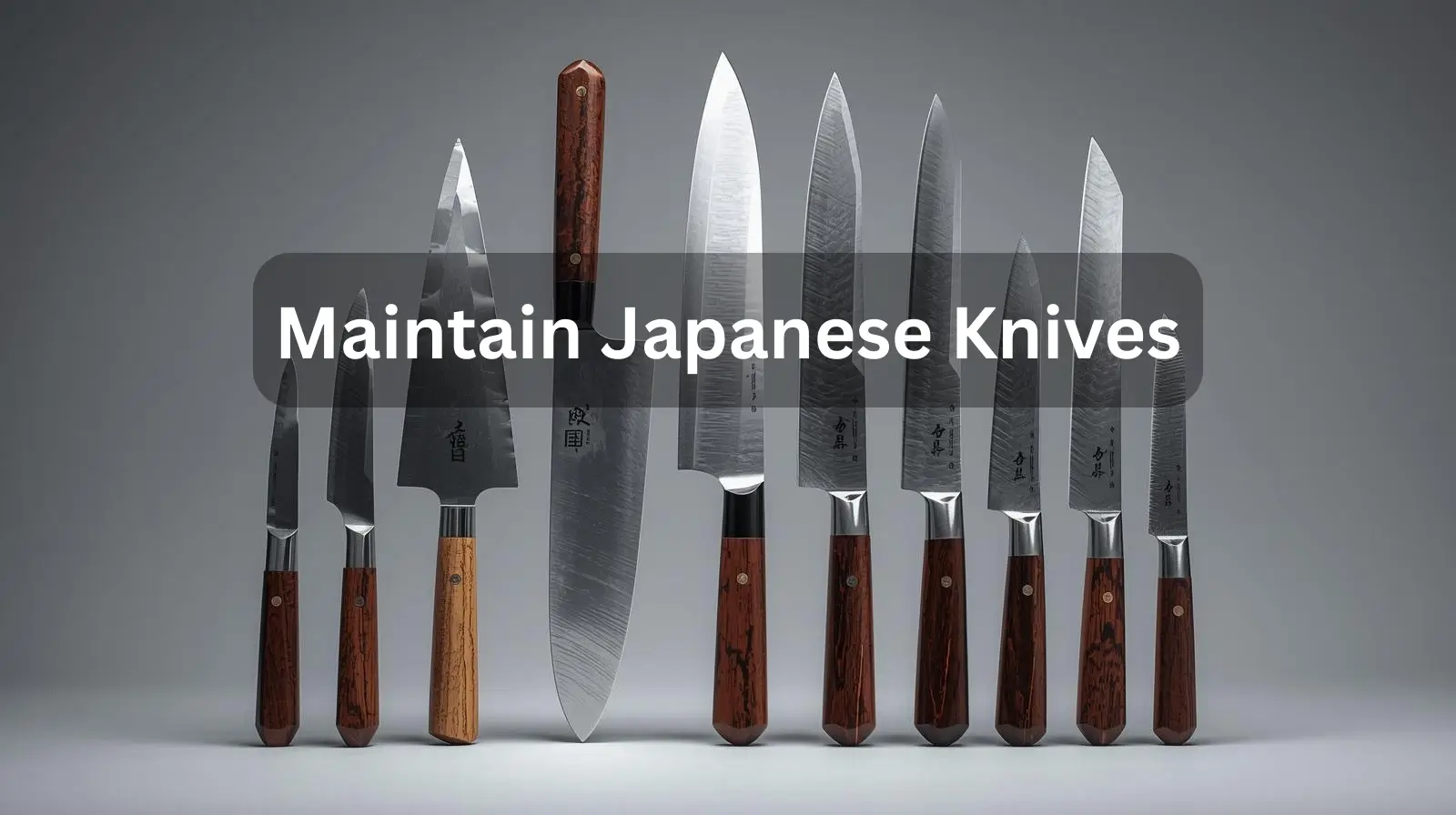
Japanese knives require regular sharpening, proper storage, and gentle cleaning. These exquisite cutting tools are prized for their precision and craftsmanship, but maintaining them involves more than just routine care. Keeping your Japanese knives in peak condition enhances their performance and longevity, whether you’re a professional chef or a home cook. Dive into this comprehensive guide to learn the best practices and techniques for maintaining these cutting-edge tools.
Sharpening Techniques
Japanese knives, known for their sharpness and delicate edges, require specific sharpening techniques. Using the correct method ensures you maintain the blade’s integrity.
- Whetstone Use: Regularly sharpen your knives with a whetstone. Soak the stone in water for 10-15 minutes before use. Hold the knife at a consistent angle (typically 15 degrees) and slide the blade back and forth across the stone.
- Honning Rods: While honing is less common for Japanese knives, if used, ensure the rod is made of ceramic to prevent damage.
Safe Cleaning Practices
Caring for your Japanese knives means knowing how to clean them properly. Avoid any routine that could dull or damage them.
- Hand Wash Only: Never place Japanese knives in the dishwasher. Hand wash with warm water and mild detergent immediately after use.
- Dry Thoroughly: Use a soft towel to dry the knife completely after washing. This prevents rust and keeps the blade in top condition.
Proper Storage Solutions
Storing your knives correctly is crucial. It prevents accidental dulling and keeps them easily accessible.
- Magnetic Racks: Store your knives on a magnetic strip to protect blades and keep them within easy reach.
- Knife Blocks or Sheaths: If space is limited, use a wooden knife block or protective sheath to avoid blade contact with other utensils.
Avoiding Common Mistakes
Learning from mistakes ensures you maintain your knives’ quality.
- Cutting Surfaces: Always use wooden or plastic cutting boards. Hard surfaces like glass or stone can chip the blade.
- Proper Use: Avoid using Japanese knives for tasks like opening cans or cutting bones, which can damage the blade.
Personal Experience Insights
As a seasoned home cook, I learned through trial and error that maintaining Japanese knives involves respect and care. Once, using a dull edge served as a reminder of the importance of regular sharpening. Opt for consistent care rather than waiting for issues to arise.
Frequently Asked Questions of How to Maintain Japanese Knives
How often should I sharpen my Japanese knife?
Sharpen your knife every 6-12 months, depending on use. Regular honing can maintain sharpness between sharpening sessions.
Can I put my Japanese knife in the dishwasher?
No, always hand wash to prevent damage and maintain quality.
What is the best angle for sharpening Japanese knives?
Typically, the best angle is 15 degrees, but refer to your knife’s specifics for the exact angle.
Why is my Japanese knife rusting?
Rust can develop from moisture. Ensure the knife is thoroughly dried after washing.
Can I use any honing rod for a Japanese knife?
Use a ceramic honing rod to avoid dulling the delicate edge.
Conclusion
Maintaining Japanese knives involves understanding their unique needs and dedicating time to care for them. By sharpening regularly, cleaning gently, and storing properly, your knives will continue to perform exceptionally well. Embrace these practices to enhance your kitchen experience and ensure the longevity of your valuable tools. Ready to elevate your culinary skills? Start by mastering the art of knife maintenance. Consider subscribing for more tips and share your thoughts in the comments!

Maliha Khatun has spent 5 years hands-on testing Japanese knives for everyday home cooks. She has evaluated over 60 blades across nakiri, santoku, gyuto, and petty categories — scoring each on edge retention, steel quality, handle comfort, and value for money. She writes to help home cooks buy the right knife without the guesswork.
Expertise:Japanese Knives • Vegetable Knives • Product Reviews • Kitchen Efficiency • Knife Care
Leave a Reply