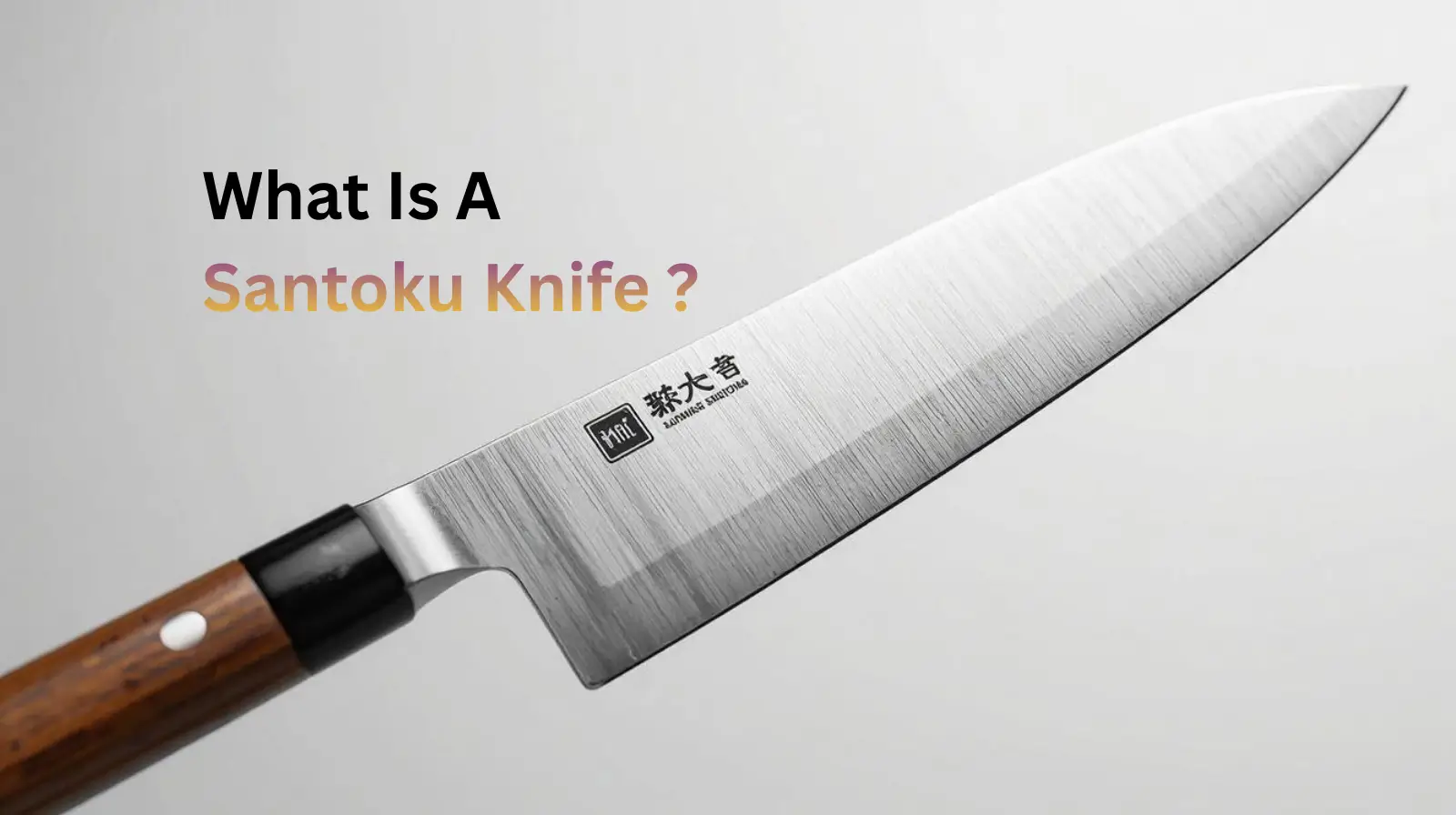
A Santoku knife is used for slicing, dicing, and mincing across everyday foods.
If you’ve ever wondered what is a santoku knife used for, you’re in the right place. I’ve worked with these blades in busy kitchens and slow Sunday meal preps alike. This guide breaks down what is a santoku knife used for with clear steps, real examples, and expert tips. You’ll learn how to get cleaner cuts, faster prep, and a knife you’ll reach for every single day.

What Is a Santoku Knife?
The Santoku is a Japanese all-purpose kitchen knife. Santoku means three virtues, which many cooks tie to slicing, dicing, and mincing. You’ll also hear it linked to its skill with meat, fish, and vegetables.
Most Santoku knives have a 5 to 7 inch blade. The edge is flatter than a Western chef’s knife, with a soft curve and a sheep’s foot tip. Many models have hollow dimples along the blade, often called a granton edge. These dimples help food release as you cut.
Why care about design? Because it shapes what is a santoku knife used for. The flatter edge favors a push-cut, not a heavy rocking motion. This gives you neat slices, less bruising on herbs, and better control on dense items like carrots or sweet potatoes. Many cooks love how nimble a Santoku feels on a small board.

Source: fnsharp.com
What Is a Santoku Knife Used For? Core Kitchen Tasks
If you ask what is a santoku knife used for, the short list starts with everyday prep. The Santoku gives you speed and control for common tasks with fewer swaps between tools.
Use it for:
- Vegetables and fruit slicing Thin sheets of cucumber, tomato, onion, and apple with minimal crush.
- Dicing and mincing Uniform cubes of carrots, potatoes, and squash; fine mince of garlic and shallots.
- Herbs and greens Gentle chiffonade of basil and spinach; fast shredding of cabbage.
- Fish and boneless meat Clean slices for chicken breast, pork tenderloin, or salmon fillets.
- Cheese and delicate foods Smooth cuts through soft cheeses, tofu, and cooked proteins.
When I teach new cooks what is a santoku knife used for, I start with produce. The blade excels at straight down-and-forward motion. That action keeps slices clean and even, which is key for stir-fries, salads, and meal prep bowls.

Source: cutleryandmore.com
Santoku vs Chef’s Knife
Both knives are versatile, but they feel different in hand. A chef’s knife has more belly for rocking. A Santoku has a flatter edge for push-cuts and chop-cuts.
Key differences:
- Edge profile Flatter on a Santoku, smoother rock on a chef’s knife.
- Tip shape Santoku’s sheep’s foot tip gives control for shallow cuts.
- Length Chef’s knives are often 8 inches; many Santokus are 5 to 7 inches.
If you know what is a santoku knife used for, you can choose with confidence. For big herbs and rocking cuts, a chef’s knife feels natural. For straight slicing, tight spaces, and precise veggie work, a Santoku shines.
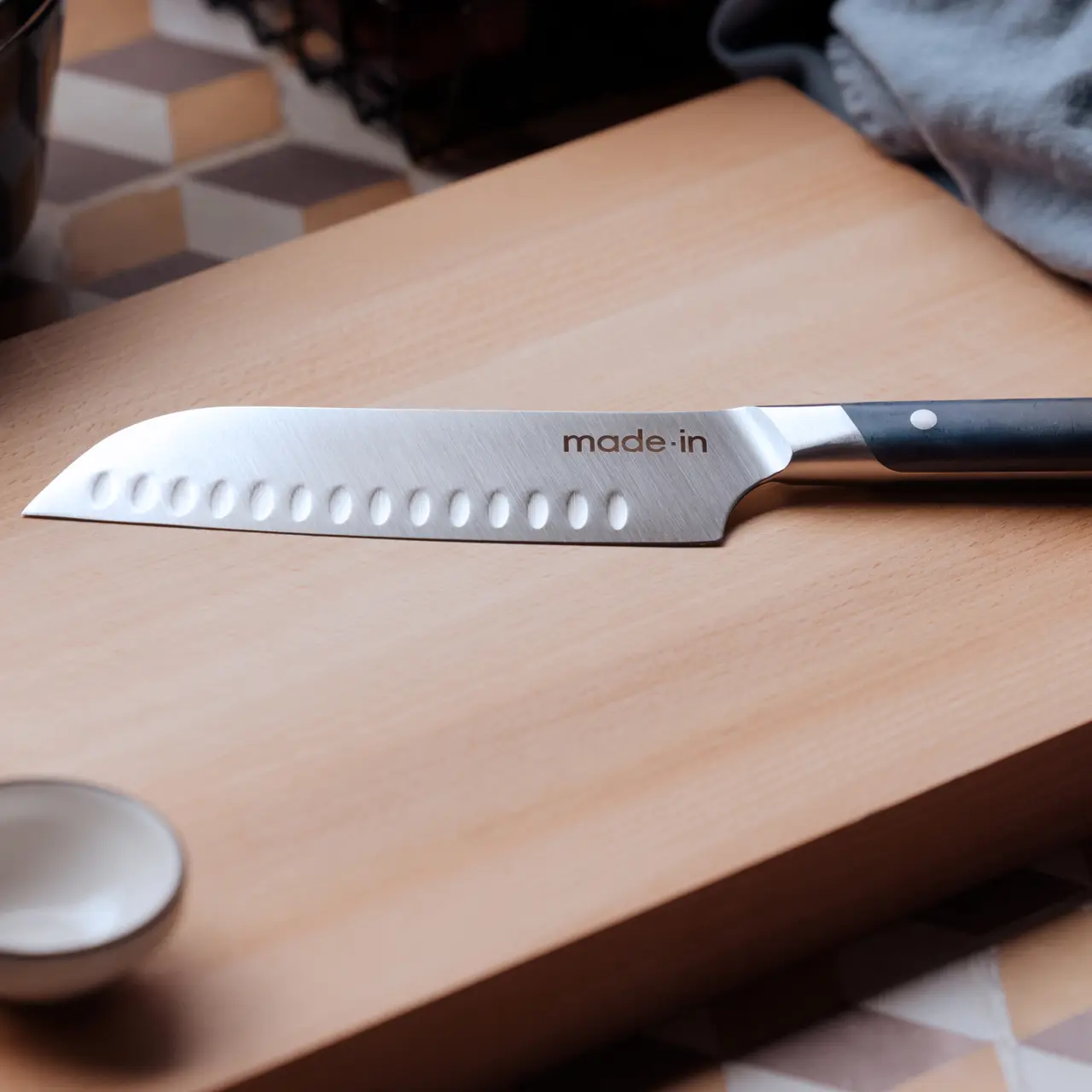
Source: madeincookware.com
How to Use a Santoku Knife the Right Way
To master what is a santoku knife used for, lean into its natural motion. Think glide, not grind.
Try these steps:
- Use a pinch grip Thumb and index finger on the blade’s heel; other fingers around the handle.
- Push-cut and chop-cut Move the blade down and slightly forward. Avoid heavy rocking.
- Keep the tip low For fine slices, let the front third of the blade guide each cut.
- Tuck your fingers Use a claw grip on the food for safe, even slices.
- Aim for clean contact Use a flat, end-grain wood or soft plastic board to protect the edge.
Sharpening angle matters too. Many Japanese-style Santoku knives like a 12 to 15 degree per-side edge. Softer steels often prefer closer to 15 to 20 degrees. A sharper, polished edge keeps cuts neat and exact.

Source: co.uk
Choosing the Right Santoku Knife
Your answer to what is a santoku knife used for will shape your choice. Think comfort first, then steel and size.
Consider:
- Blade length 5 to 7 inches is standard. Smaller feels nimble for tight boards; 7 inches covers most jobs.
- Steel Harder Japanese steels hold a sharper edge longer. German-style steels are tougher and easier to maintain.
- Edge style Granton dimples help with starchy foods like potatoes or squash.
- Handle Fit Try different handles. Western handles fill the palm. Wa-style (octagonal or D) are light and agile.
- Budget A quality entry Santoku can be affordable and still perform for years with care.
If you prep quick weeknight meals, a 6 to 7 inch Santoku with a comfortable grip is a great start. If you do lots of starchy cuts, dimples reduce sticking and save time.

Source: youtube.com
Care, Sharpening, and Safety
If you rely on it for what is a santoku knife used for each day, protect the edge. A little routine goes a long way.
Do this:
- Hand wash only Dry right away. No dishwashers.
- Hone often A few light passes on a ceramic rod keeps the edge aligned.
- Sharpen on a whetstone Keep the angle steady. Finish with a strop for a keen edge.
- Store safely Use a sheath, block, or magnetic strip to prevent dings.
- Use the right board Wood or soft plastic only. Glass or stone will dull your knife fast.
Safety tip I give every new cook: slow down when food gets small. Switch to a smaller item like a paring knife for tiny work, or use a bench scraper to gather bits.
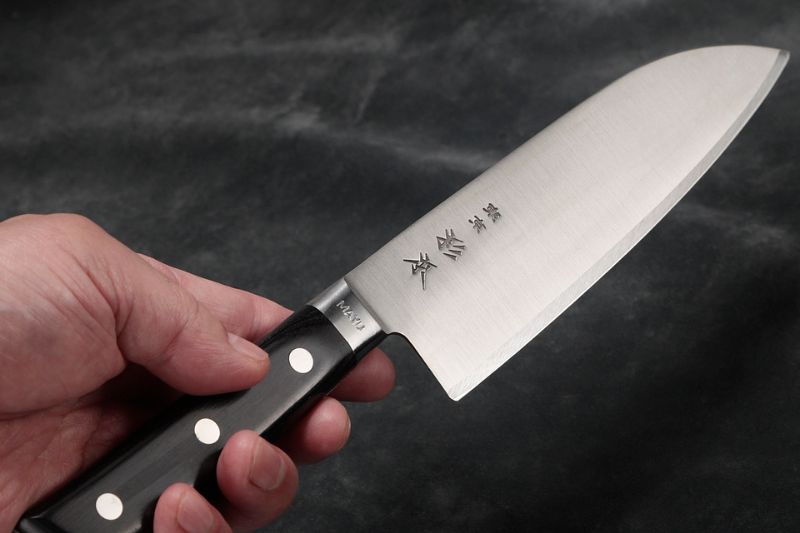
Source: dreamofjapan.com
Real-World Tips and Mistakes to Avoid
Here’s what years of daily prep taught me about what is a santoku knife used for.
What works:
- Start with veggies The Santoku is a veggie machine. Practice even carrot slices and onion dices.
- Wipe the blade Often Food clings. A quick wipe keeps slices neat and safer.
- Use the front third For paper-thin tomatoes or citrus, let the front glide.
Mistakes to skip:
- Forcing a rock The Santoku will fight you if you try to rock like a chef’s knife.
- Twisting the edge Don’t pry or twist in hard squash. Let the spine, not the edge, take pressure.
- Cutting on hard surfaces Avoid plates, granite, or metal sheets. Your edge will suffer.
I learned what is a santoku knife used for the hard way when I tried to split a chicken backbone with one. Wrong tool. Reach for shears or a cleaver for bones. Keep the Santoku for boneless work and produce. Your cuts (and mood) will thank you.

Source: youtube.com
Recipe Tasks Where a Santoku Shines
Here’s what is a santoku knife used for in weekly meals, with simple wins that save time.
Great matches:
- Stir-fry nights Speed through peppers, onions, broccoli, and bok choy with smooth push-cuts.
- Salad prep Chop Romaine, shred cabbage, slice cucumbers, and mince herbs without bruising.
- Sheet-pan dinners Cube potatoes, carrots, and squash in uniform sizes for even roasting.
- Sushi bowls Slice avocado, cucumber, and salmon with clean edges and less drag.
- Breakfast prep Thin-slice tomatoes, onions, and fruit for omelets, toasts, and parfaits.
A Santoku helps you keep knife changes to a minimum. That means less mess and faster meals on busy days.

Source: katto.shop
Frequently Asked Questions of what is a santoku knife used for
What is a Santoku knife used for vs a chef’s knife?
A Santoku is best for push-cuts, straight slicing, and precise veggie work. A chef’s knife excels at rocking cuts and big, sweeping motions.
Is a Santoku good for meat?
Yes, for boneless cuts like chicken breast, pork tenderloin, and fish fillets. Avoid bones and heavy joints; use a cleaver or shears for those.
Do I need a granton edge on a Santoku?
It helps reduce sticking with potatoes, squash, and cheese. If you slice lots of starchy foods, it’s worth it; otherwise, it’s a nice-to-have.
What cutting board should I use with a Santoku?
Choose end-grain wood or soft plastic to protect the edge. Avoid glass, granite, or ceramic boards.
How often should I sharpen my Santoku?
Hone lightly every few uses and sharpen on a whetstone every few months, depending on use. If cuts start to skid or crush, it’s time.
Can a Santoku replace my chef’s knife?
For many home cooks, yes, especially if your style favors straight slicing. If you love rocking cuts or have large hands, keep both.
Conclusion
A Santoku is a compact, precise, all-purpose blade that makes everyday prep fast and calm. Now that you understand what is a santoku knife used for, you can choose one with confidence, use it with the right technique, and keep it sharp for years. Try it on tonight’s veggies, notice the smooth glide, and enjoy better texture in every bite.
Ready for more smart kitchen tips and gear guides? Subscribe, share this with a friend who loves to cook, or ask your questions in the comments.
Maliha Khatun has spent 5 years hands-on testing Japanese knives for everyday home cooks. She has evaluated over 60 blades across nakiri, santoku, gyuto, and petty categories — scoring each on edge retention, steel quality, handle comfort, and value for money. She writes to help home cooks buy the right knife without the guesswork.
Expertise:Japanese Knives • Vegetable Knives • Product Reviews • Kitchen Efficiency • Knife Care
Leave a Reply