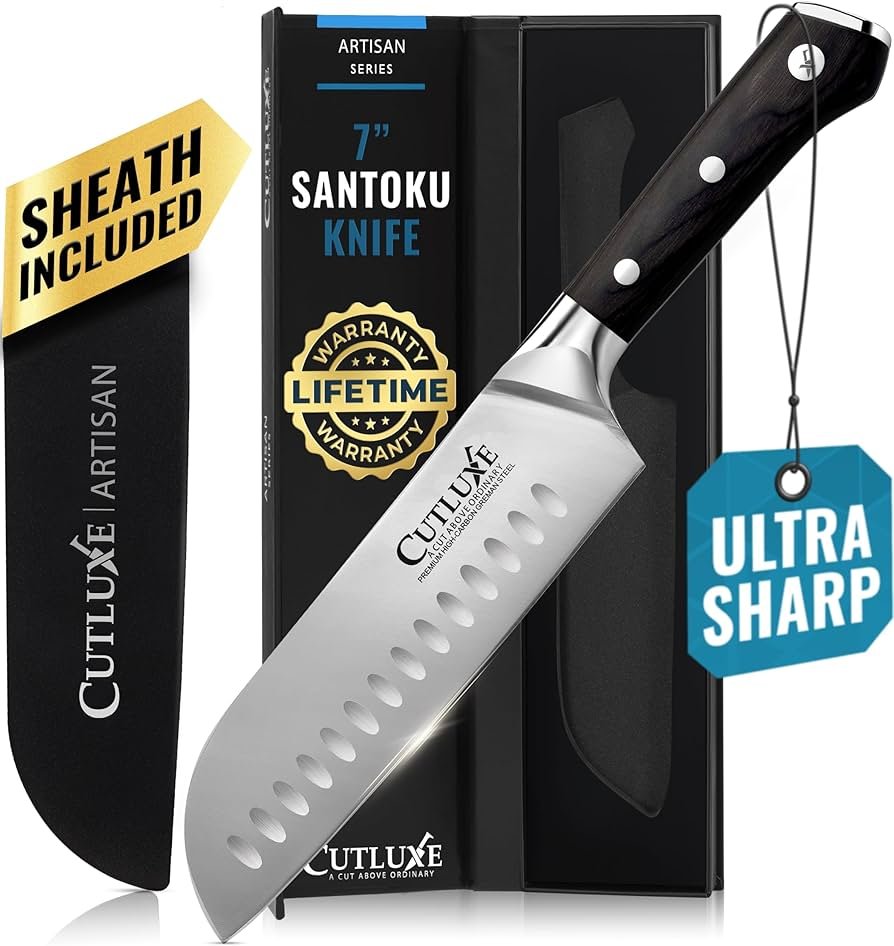
A santoku knife for vegetables makes clean cuts, speeds prep, and improves control.
If you love crisp slices and fast, calm prep, you will love this tool. I have used a santoku knife for vegetables in test kitchens and at home for years. In this guide, I break down the shape, steel, and skills that matter. You will learn how to choose, use, and care for a santoku with confidence.
What Is a Santoku Knife and Why It Shines with Vegetables
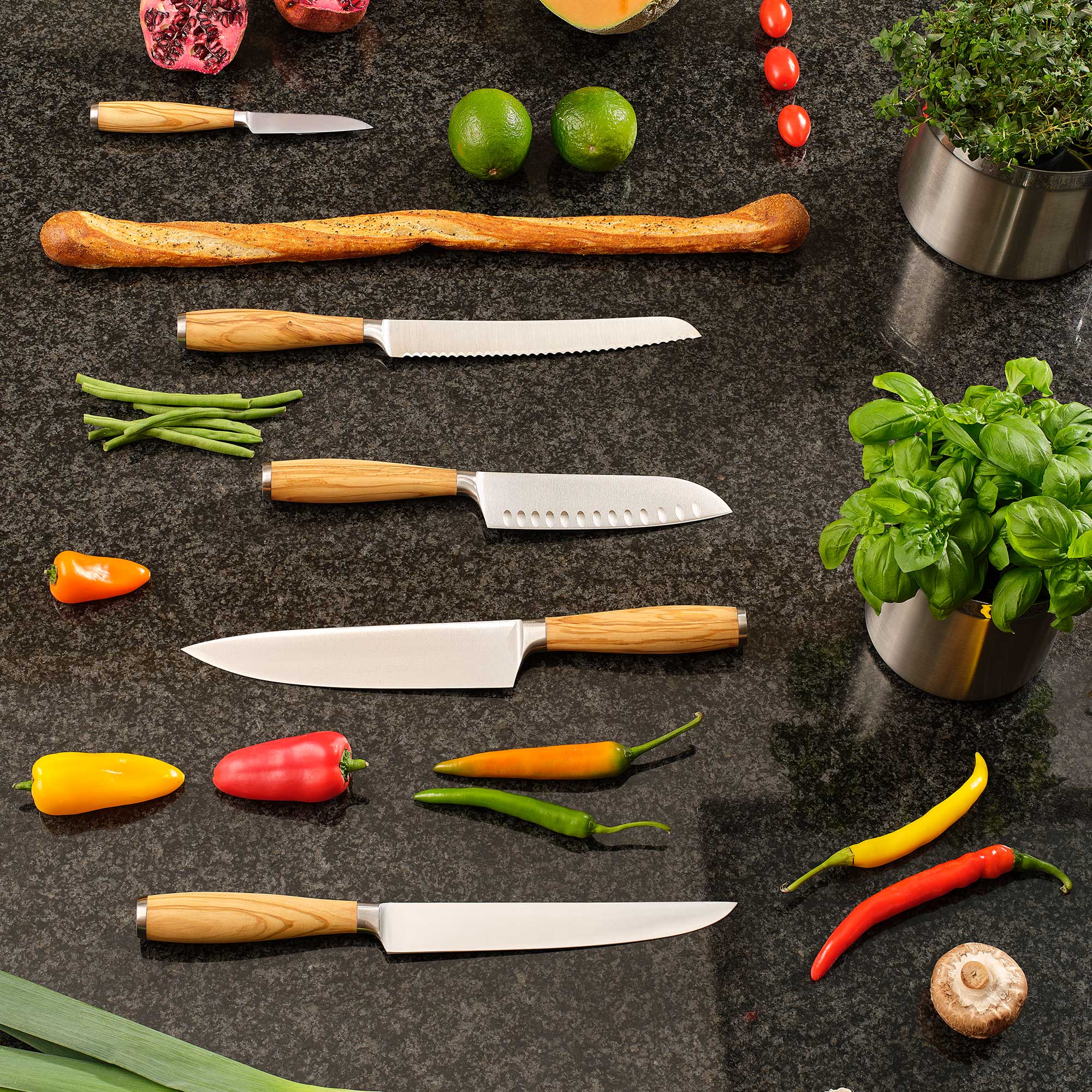
Santoku means three virtues. The knife excels at slicing, dicing, and mincing. It has a flat edge, a gentle curve, and a sheep’s foot tip. The blade is tall, so your knuckles clear the board.
Compared with a chef’s knife, the santoku sits lower and straighter. That shape is perfect for a push cut. You press forward and down. The blade tracks straight, so your cuts are even. That is why a santoku knife for vegetables feels natural and safe.
Many santoku blades have dimples, also called grantons. These shallow scallops help reduce sticking. Wet foods like cucumbers, beets, and squash release easier. Your pace stays smooth.

Source: co.uk
Santoku vs Chef’s Knife for Vegetables
Both are great, but they shine in different moves. A chef’s knife rocks. A santoku glides. For a pile of carrots, herbs, and cabbage, the santoku’s flat edge keeps slices level and thin.
You may still pick a chef’s knife for big melons or heavy squash. The taller, longer blade can lever more force. For daily veg prep, I reach for a santoku knife for vegetables nine times out of ten. It feels quick, quiet, and steady.
If you have small hands or get wrist strain, try a 6 to 7 inch santoku. The short length boosts control and lowers fatigue during long prep.


Blade Materials and Geometry That Matter
Steel decides bite, edge life, and care needs. Most good santoku knives use stainless steel. It resists rust and cleans up fast. Common alloys include VG-10, AUS-8, and X50CrMoV15. These sit around 56 to 61 HRC on the hardness scale. Higher HRC can hold a keener edge but can chip if abused.
Thin geometry is key for a santoku knife for vegetables. A thin spine and a fine grind pass through produce with less push. A blade around 1.5 to 2.5 mm at the spine near the tip feels nimble. A gentle taper to the edge helps the cut feel smooth.
Consider blade height. Tall blades give you room for your guiding hand. This boosts safety with onions, herbs, and greens. Granton dimples do not sharpen the knife, but they can cut sticking on moist foods. That saves time.
Ideal Size, Weight, and Balance
Most cooks do best with 6 to 7 inches for daily veg work. A 5 inch feels very quick for snacks and small boards. A 7 inch reaches across big cabbage and long cucumbers.
Weight affects comfort. Japanese style santoku knives tend to be lighter and thinner. Western style often feel a bit heavier and more forgiving. For a santoku knife for vegetables, aim for neutral balance at your pinch grip. The knife should not tip forward or back in your hand.
Handle choice matters too. Wood feels warm. Micarta and polymer handle water well and grip steady. Try a few if you can. Your hand should lock in without effort or strain.

Source: amazon.com
Edge Types and Sharpening for Veg Prep
Most santoku blades are double bevel. Many are ground 50 and 50 on each side. Some use a slight bias like 60 and 40. A santoku knife for vegetables likes a fine, keen angle. Aim for about 12 to 15 degrees per side.
Use a stone for the best result. A 1000 grit stone resets a dull edge. A 3000 to 6000 grit stone refines it to razor level. Add a tiny micro bevel if you chop hard roots a lot. It trades a hint of bite for better chip resistance.
Skip harsh pull through tools on thin blades. They can tear steel and leave a rough edge. If you hone, pick a fine ceramic rod. Light strokes are enough. If you see a burr or feel drag, it is time to sharpen.
How to Use a Santoku Knife for Vegetables
The santoku loves a push cut. Keep the tip close to the board. Slide forward and down in one smooth move. Lift, reset, and repeat. Use your knuckles as a guide. Tuck your fingertips in.
Try these simple steps.
- Build a flat base. Cut a sliver from round items like carrots or onions so they sit steady.
- Align the blade. Keep it vertical so slices match in thickness.
- Lead with the heel for dense roots. Lead with the tip for herbs and thin skins.
- Wipe as you go. A quick towel wipe reduces water and stick.
Use case tips I use at home and in class.
- Tomatoes and soft fruit. Light draw cuts work better than chops. Let the edge bite and pull.
- Onions. Halve, peel, and make shallow horizontal, then vertical cuts. Finish with a smooth push.
- Herbs. Stack leaves. Slice in fine ribbons. Avoid mashing. A santoku knife for vegetables shines here.
- Cabbage. Quarter the head. Make long, even strokes. The flat edge keeps shreds even.
- Carrots. Cut into planks, then sticks, then dice. Small moves, same size, consistent speed.

Source: amazon.com
Safety, Care, and Maintenance
A sharp knife is a safe knife. Dull edges slip and make you press hard. Keep your board stable with a damp towel under it. Keep your other hand dry to improve grip.
Wash by hand. Dry at once. Never put a santoku knife for vegetables in the dishwasher. Heat and detergent can harm steel and handles. Store the blade in a sheath, on a magnetic strip, or in a block that fits it.
Use the right board. End grain wood feels gentle on edges. Soft plastic is fine for raw proteins and quick sanitizing. Avoid glass or stone. They will wreck your edge fast.
Source: roesle.com
My Tested Picks and What To Look For by Budget
My picks focus on value, edge life, and comfort. I tested these during long prep days and class demos. Your hand, tasks, and care habits still matter most. Try to hold a few before you buy if you can.
Budget under 50 dollars
- Mercer Culinary 7 inch. Tough steel, easy to sharpen, grippy handle.
- Victorinox 7 inch. Light, simple, and honest. Great starter santoku knife for vegetables.
Mid range 50 to 120 dollars
- Tojiro DP 6.7 inch. VG-10 core, thin grind, sharp out of the box.
- MAC Superior 6.5 inch. Nimble, keen edge, nice food release for the price.
Premium 120 to 200 dollars
- Shun Classic 7 inch. Refined fit, VG-MAX steel, elegant feel.
- Global 7 inch. One piece build, light and fast, textured grip.
High end 200 dollars plus
- Miyabi or Takamura lines. Laser thin grinds. Incredible push cut feel. Demands gentle use and care.
What to look for in any price.
- Thin, consistent grind with no waviness near the edge.
- Balance at your pinch grip. Not too tip heavy.
- Handle that locks without hot spots.
- Trusted heat treat. Steel should sharpen and hold, not chip with normal veg work.

Source: amazon.com
Common Mistakes to Avoid with a Santoku Knife for Vegetables
- Rocking like a chef’s knife. The profile is too flat for big rocks. Use push or draw cuts.
- Cutting on hard glass or plates. This kills your edge. Use wood or soft plastic.
- Forcing through hard squash with a thin edge. Score first or switch to a heavier knife.
- Skipping maintenance. A few light stone sessions beat one long rescue grind.
- Washing late. Acidic veg juice can stain steel. Rinse and dry right away.
- Grabbing a size that is too long. A 6 to 7 inch santoku knife for vegetables suits most hands.
Frequently Asked Questions of santoku knife for vegetables
Is a santoku better than a chef’s knife for vegetables?
It depends on your style. If you like push cuts and thin, even slices, the santoku feels better for most veg tasks.
What size santoku is best for vegetables?
Most cooks love a 6 to 7 inch blade. It balances reach, control, and speed for daily prep.
Do I need granton dimples on a santoku knife for vegetables?
They help reduce sticking on wet foods. They are nice to have, not a must.
How often should I sharpen a santoku?
For home use, sharpen every 2 to 3 months. Hone lightly as needed to keep the bite.
Can I use a santoku on meat and fish too?
Yes, but avoid bones or frozen foods. The thin edge is made for clean slices, not heavy prying.
What cutting board works best with a santoku?
End grain wood is ideal. Soft plastic is fine and easier to sanitize.
Is carbon steel good for a santoku knife for vegetables?
Carbon takes a very sharp edge but can rust. Wipe often and dry fast if you pick it.
Conclusion
A santoku knife for vegetables gives you speed, safety, and joy at the board. Its flat edge, thin grind, and tall blade make every slice calm and clean. With the right size, a keen edge, and good habits, prep time drops and your results shine.
Try a few grips and sizes this week. Sharpen at a gentle angle. Practice steady push cuts on onions, carrots, and herbs. You will feel the difference fast. If this guide helped, share it with a friend, subscribe for more tips, or leave a question so I can help you choose your next santoku knife for vegetables.
Maliha Khatun has spent 5 years hands-on testing Japanese knives for everyday home cooks. She has evaluated over 60 blades across nakiri, santoku, gyuto, and petty categories — scoring each on edge retention, steel quality, handle comfort, and value for money. She writes to help home cooks buy the right knife without the guesswork.
Expertise:Japanese Knives • Vegetable Knives • Product Reviews • Kitchen Efficiency • Knife Care
Leave a Reply