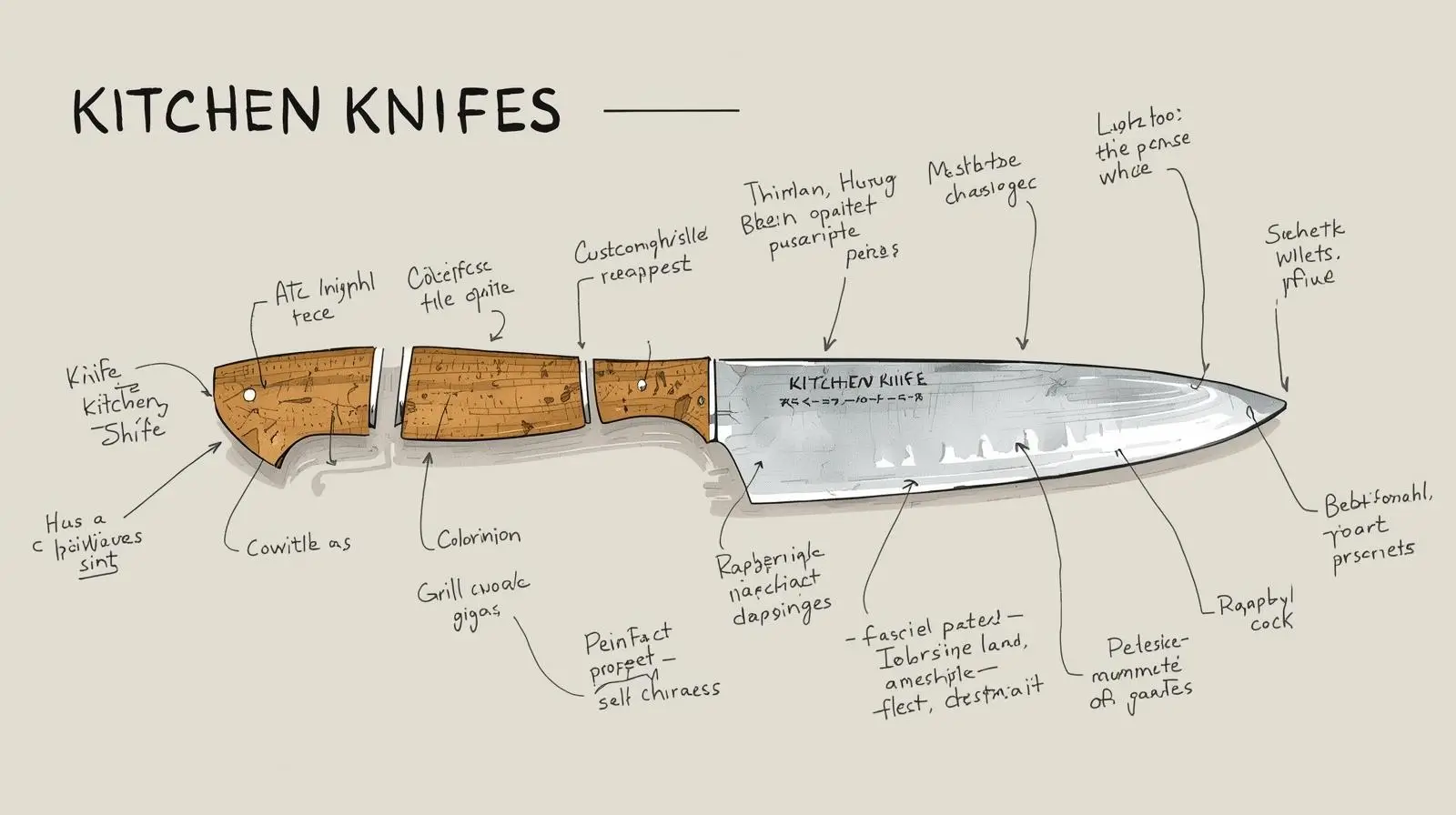
A kitchen knife is a system of parts: blade, edge, spine, tip, tang, handle, bolster.
If you cook often, understanding each part turns a good knife into a great tool. In this guide, Parts of a kitchen knife explained, I share what chefs teach and what I’ve learned sharpening knives for home cooks and pros. You will see how every detail changes comfort, control, and results.
Why knife anatomy matters
If you want Parts of a kitchen knife explained in clear terms, start with use. Each part has a job. You get cleaner cuts, less strain, and safer moves when you know where to place your fingers. It is like knowing the gears on a bike. Your ride gets smoother.
Here is what I see in real kitchens. People fight the knife because they use the wrong part for the task. With the Parts of a kitchen knife explained here, you will match the job to the part and cut with ease.

The blade and edge
This is where steel meets food. Parts of a kitchen knife explained always begin with the blade and edge. The blade holds the grind and the shape. The edge is the thin line that actually cuts.
Edge
- What it is: The very thin cutting line along the blade.
- Why it matters: A sharp edge means less force and clean slices.
- Tip: Sharpen little and often. A few strokes on a honing rod before prep helps.
Belly
- What it is: The curved section of the edge near the middle.
- Why it matters: The curve helps with rocking cuts for herbs and onions.
- Tip: If you rock-chop a lot, look for a gentle, even belly.
Tip and point
- What it is: The front end of the blade. The tip is the thin area; the point is the very end.
- Why it matters: Precision cuts, scoring, and delicate work depend on this area.
- Tip: Keep the tip sharp. It saves time for detail work and reduces slips.
Grind and bevel
- What it is: How the blade tapers to the edge. The bevel is the final angle.
- Why it matters: Thin grinds glide. Thick grinds wedge but can be tough and safe for hard tasks.
- Tip: Western knives often have a wider bevel; many Japanese knives are thinner and slice better.

Spine, heel, and ricasso
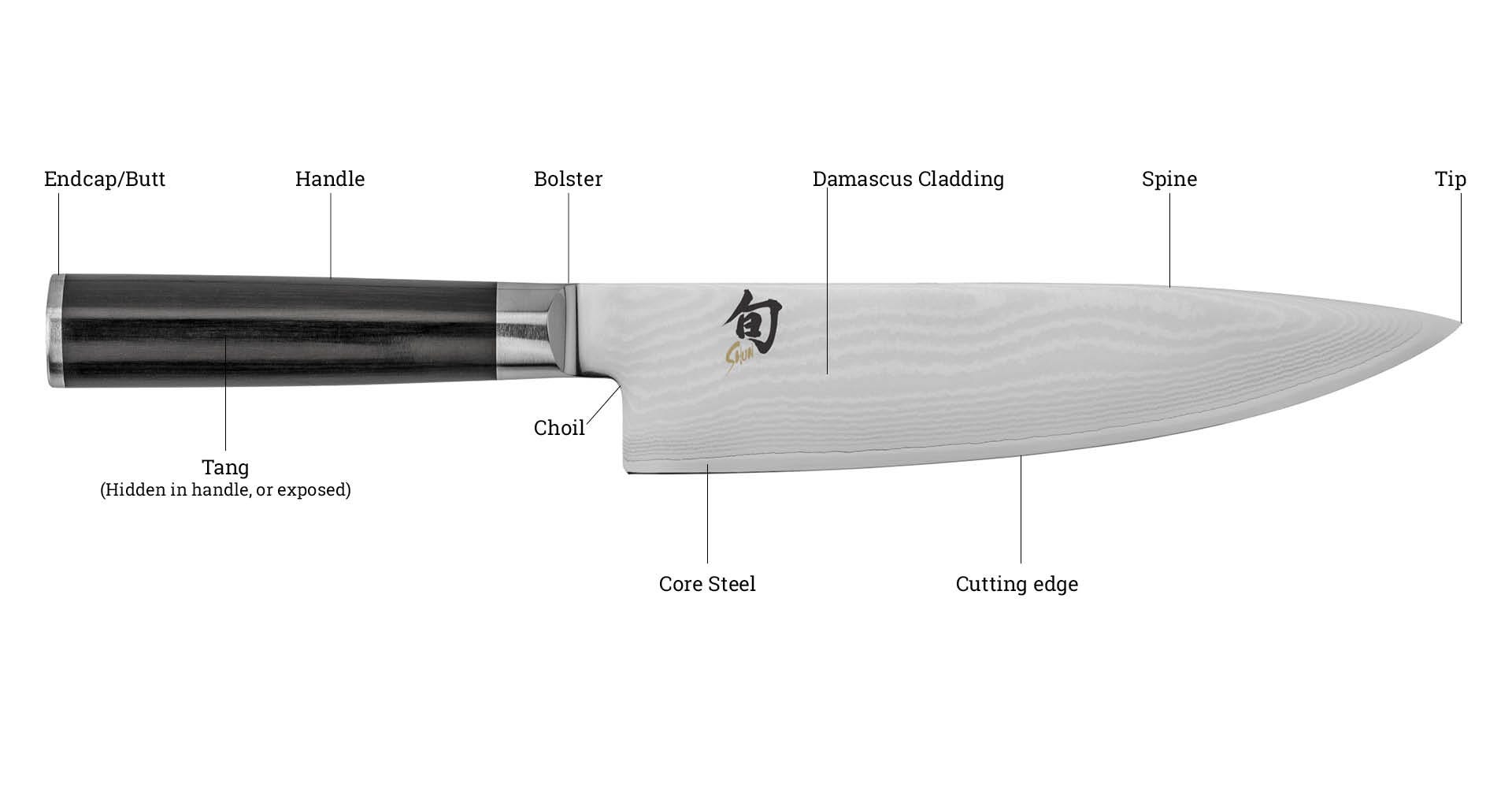
Parts of a kitchen knife explained should include the backbone. The spine is the thick top of the blade. It adds strength and comfort for thumb pressure.
- Spine: The top edge opposite the cutting edge. A rounded spine is nicer on your fingers.
- Heel: The back end of the edge, near the handle. Use it for hard jobs like squash or chicken joints.
- Ricasso: The flat area between blade and handle on some knives. It can add stability and a point to rest your finger.
A thicker spine resists flex and feels secure. A thinner spine slices like a dream but may feel more delicate.

Tang, bolster, and choil
When cooks ask for Parts of a kitchen knife explained in depth, this trio shows up. These parts control balance and safety.
- Tang: The steel that runs into the handle. Full tangs add balance and strength. Hidden tangs can be lighter and nimble.
- Bolster: The thick junction between blade and handle on many Western knives. Think of it like a seat belt for your grip.
- Choil: The cutout or end of the sharpened edge near the handle. It is the safe spot for your index finger in a pinch grip.
From my bench time, a smooth choil and gentle bolster make long prep feel easy. Sharp or blocky choils cause hot spots in your hand.

Handle anatomy
Parts of a kitchen knife explained is not complete without the handle. Comfort rules here. Your handle should fit like a glove.
- Scales: The two slabs on each side of the tang. Wood, micarta, or plastics are common.
- Ferrule or collar: A sleeve at the front of some handles that helps lock parts in place.
- Rivets or pins: The fasteners that hold scales to the tang.
- Butt or pommel: The end of the handle. You can nudge it into your palm for control.
Pick the handle shape that matches your grip. If you pinch the blade, a slim handle often feels better.

Balance and geometry
You will see Parts of a kitchen knife explained in charts, but feel matters most. Where a knife balances changes the way it moves.
- Balance point: Where the knife teeters level on a finger. Near the bolster feels neutral. Forward means more chop power.
- Profile: The outline of the edge. Flat profiles suit push cuts. Curved profiles suit rocking.
- Thickness and taper: Thick at the spine, thin near the edge. A nice distal taper improves control.
In my tests, a neutral balance and smooth taper help new cooks most. It feels calm and steady.

Materials and maintenance by part
Parts of a kitchen knife explained should cover care, not just names. Each material needs a plan.
- Blade steel: Stainless resists rust. High-carbon takes a crazy edge but can stain. Dry after washing and use a board, not stone or glass.
- Edge care: Hone often, sharpen as needed. Use light pressure. Send out for a pro grind if you chip it.
- Handle care: Wood likes a tiny bit of mineral oil. Composites and plastics are low care. Avoid soaking any handle.
- Bolster and choil: Keep clean. A tiny brush helps. If the bolster grows from repeated sharpening, ask a shop to thin it.
A small routine after cooking keeps the edge longer. It is five minutes that saves your blade.

How each part affects common tasks
Here are the Parts of a kitchen knife explained in action. Match the task to the part to work smarter.
- Herbs and greens: Use the belly and tip for a smooth rock. Keep your non-cutting hand in a claw.
- Onions and garlic: Use the tip to score, then a push cut with the mid-blade.
- Tomatoes and citrus: Use a very sharp edge and light touch. A micro-serrated edge also helps.
- Poultry joints: Use the heel and a gentle twist at the joint. Do not force bone.
- Hard squash: Use the heel and spine pressure with care. Make a starter cut with the tip.
In my classes, this simple map speeds prep and reduces slips by a lot.
Buying and fit tips using the parts
You want the Parts of a kitchen knife explained to guide you at the store. Try these checks.
- Grip test: Pinch the blade at the choil. If it feels stable and relaxed, good sign.
- Paper test: A light slice on paper should be clean. If it tears, edge needs work.
- Board feel: On a board, the edge should make full contact. No gaps or rocking stops.
- Balance check: Hold with one finger under the bolster. Too blade heavy or too handle heavy can tire you.
- Spine comfort: Stroke the spine. Sharp edges on the spine can hurt fingers during pinch grip.
Buy the knife that feels right now, not the one you hope to grow into.
Common myths and mistakes
People ask me for Parts of a kitchen knife explained because there is noise out there. Here is what to skip.
- Myth: Heavier knives are always better. Reality: Weight is a tool, not a rule.
- Myth: Stainless never rusts. Reality: It stains less. Still dry your blade.
- Myth: You must use a steel every time. Reality: Hone lightly and sharpen when needed.
- Mistake: Dishwashing your knife. Heat and soap ruin edges and handles.
- Mistake: Glass and marble boards. They dull edges fast.
Small tweaks fix most issues fast.
Frequently Asked Questions of Parts of a kitchen knife explained
What is the most important part of a kitchen knife?
The edge matters most because it does the cutting. Keep it sharp, and almost every task feels easier.
What is the difference between tip and point?
The tip is the thin front section; the point is the very end. Use them for detail work and scoring.
Do I need a full tang?
Not always. Full tangs add balance and strength, but hidden tang knives can be lighter and still strong.
What does the bolster do?
It adds balance and a safe grip spot. It can also stop your hand from sliding onto the edge.
How often should I sharpen versus hone?
Hone lightly before or after sessions. Sharpen when honing no longer restores bite, often every few weeks for daily cooks.
Conclusion
You now have the Parts of a kitchen knife explained so you can choose, use, and care for your blade with confidence. Focus on the edge, match the part to the task, and let balance work for you. Small habits with care and grip turn prep into flow.
Put this guide to work tonight. Pick one tip, like honing before you chop or using the heel on squash. Want more deep dives and gear tests? Subscribe or leave a question and I will help you pick the right knife for your kitchen.
Maliha Khatun has spent 5 years hands-on testing Japanese knives for everyday home cooks. She has evaluated over 60 blades across nakiri, santoku, gyuto, and petty categories — scoring each on edge retention, steel quality, handle comfort, and value for money. She writes to help home cooks buy the right knife without the guesswork.
Expertise:Japanese Knives • Vegetable Knives • Product Reviews • Kitchen Efficiency • Knife Care
Leave a Reply