The best cutting board for Japanese knives is end‑grain maple or soft rubber.
If you love sharp, hard steel, the board matters as much as the blade. I test gear daily in a pro kitchen and at home. In this guide, I break down the best cutting board for Japanese knives, why it protects your edge, and how to choose the right size and material for your space and style. Stick around for clear picks, care tips, and lessons learned the hard way.
What Japanese blades need from a board
Japanese knives are harder than most Western knives. Many sit around 60–65 HRC. A hard edge chips if the board is too tough. A good board should be slightly forgiving, quiet under the knife, and easy on the edge.
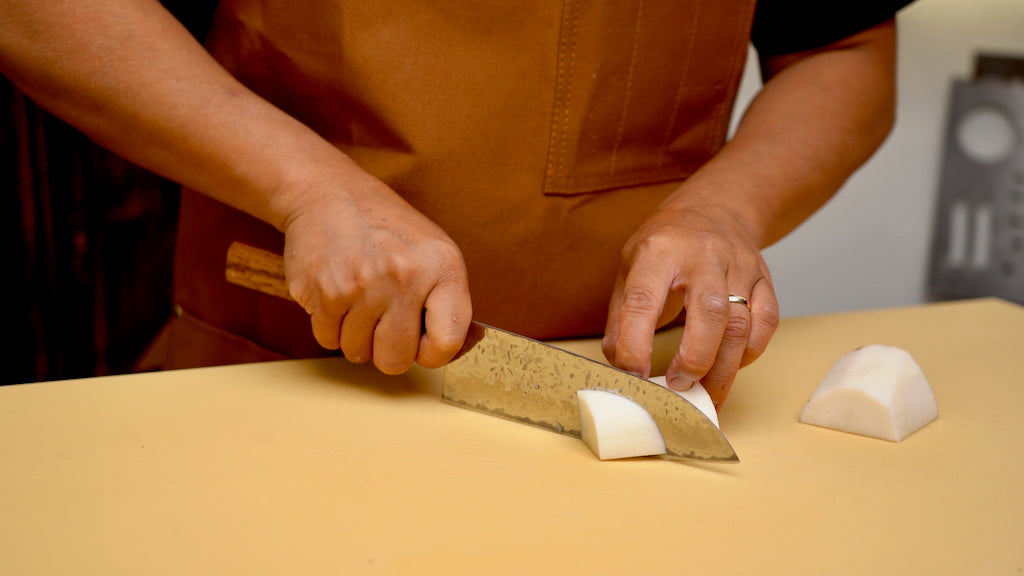
You want a board that lets the edge sink a hair into the surface. That “give” reduces micro chipping and keeps the grind crisp. The best cutting board for Japanese knives absorbs shock and keeps your slices clean and straight.
Texture also matters. A board should grip food but not grab the edge. If the knife feels sticky or skates, you lose control. That is how tips snap and edges roll.
Material guide: choosing the best cutting board for Japanese knives
Picking the best cutting board for Japanese knives starts with material. Each option has trade‑offs in edge safety, care, and cost.
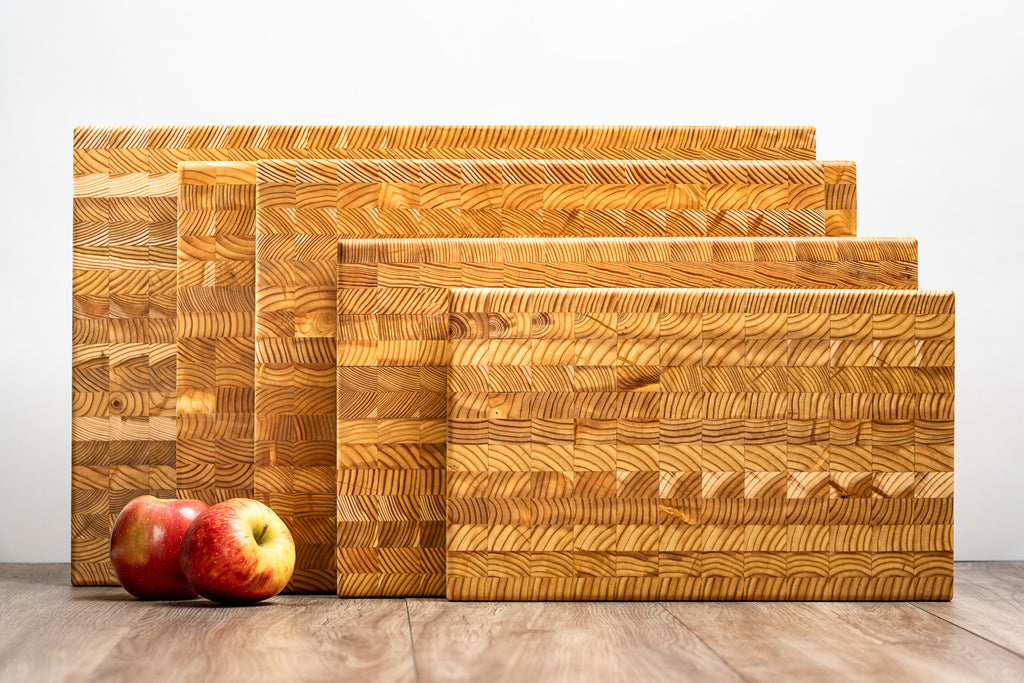
End‑grain hardwood (maple, beech, cherry)
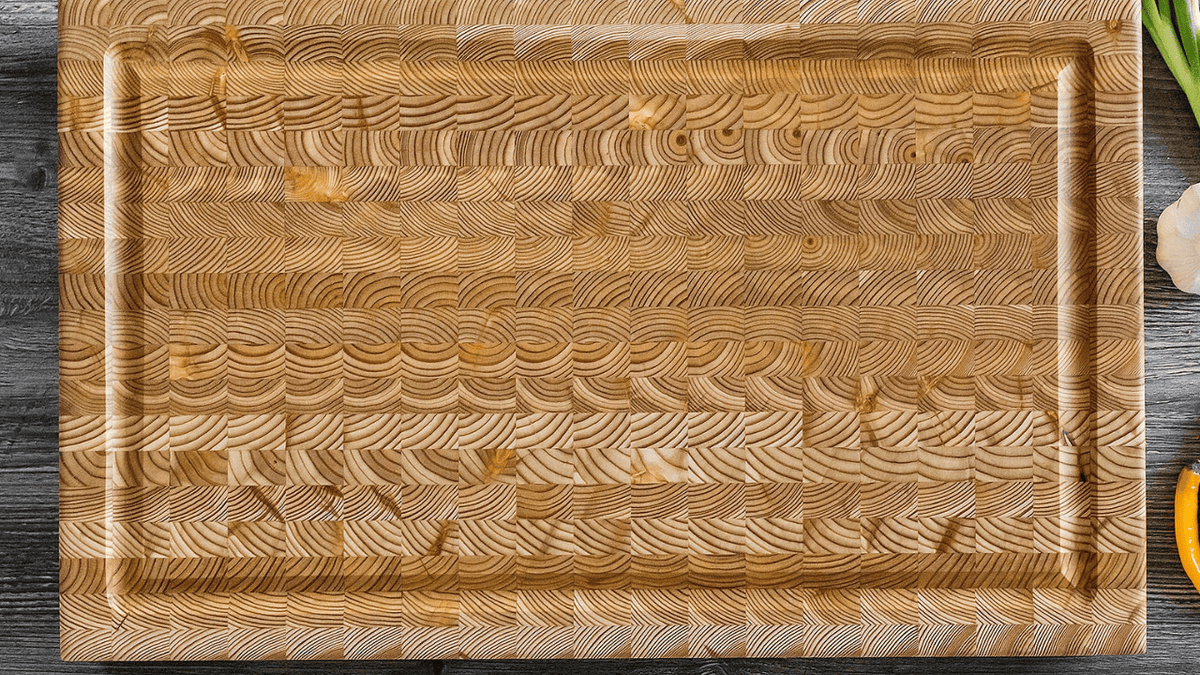
End‑grain shows the wood’s fibers like a brush standing up. The knife slides between those fibers. That is why chefs love it.
- Pros: Very gentle on edges, self‑healing surface, stable feel.
- Cons: Heavier, higher price, needs oiling, can stain with beets or turmeric.
- Best use: Daily prep, push cuts, long sessions with a gyuto or nakiri.
Japanese hinoki (cypress)
Hinoki is soft, light, and has a clean scent. It is a traditional pick in Japan.
- Pros: Very edge‑friendly, quiet, light, easy to move.
- Cons: Dents and marks fast, needs gentle care, can warp if soaked.
- Best use: Sashimi slicing with a yanagiba, vegetable work, fine cuts.
Rubber boards (Hasegawa, Hi‑Soft style)
Quality rubber is common in sushi bars. It is soft, grippy, and easy to sanitize.
- Pros: Extremely forgiving, low noise, stable, easy to clean.
- Cons: Can pick up odors, some smell new, heat can warp.
- Best use: Fish prep, fast line work, damp environments.
HDPE plastic
Dense, commercial plastic boards are common at home and in restaurants.
- Pros: Affordable, light, dishwasher safe, color‑coding for food safety.
- Cons: Harder on edges than rubber or end‑grain, can get deep grooves.
- Best use: Raw proteins, backup board, travel.
Bamboo
Bamboo is a grass with natural silica. That silica can dull edges faster.
- Pros: Cheap, eco‑friendly image, stiff.
- Cons: Too hard for fine edges, glue lines, noisy.
- Best use: Avoid for high‑HRC knives you care about.
Glass, stone, ceramic
These look nice but are the worst for edges.
- Pros: Easy to wipe.
- Cons: Destroys edges, loud, slippery, dangerous for tips.
- Best use: Never for knives.
If you need one pick, the best cutting board for Japanese knives is end‑grain maple or a high‑quality soft rubber board. Hinoki is a close second if you accept faster wear on the surface.
My tested picks and why they work
I rotate boards based on task and space. These are picks I trust after years of use and pro testing.
- End‑grain hard maple, 18 x 12 inches, 2 inches thick. This is my main block. It keeps my gyuto razor sharp through a long prep day. It is the best cutting board for Japanese knives when you want a permanent station.
- Hinoki medium board, around 17 x 10 inches, 1 inch thick. Light and fast. I use it for sashimi and delicate veg. The knife glides and stays keen. It is the best cutting board for Japanese knives when you want soft touch and quiet cuts.
- Hasegawa‑style wood‑core rubber, large size. The rubber face is soft, and the core keeps it stiff. No warping or bounce. Great for fish and long push cuts.
- Sani‑Tuff or Hi‑Soft rubber, 16 x 20 inches. This is my wet‑work board. It grips the counter and cleans fast. It is gentle on single‑bevel edges.
Here is my simple rule. For the best cutting board for Japanese knives, choose the softest safe surface you can maintain daily. Your stones will thank you.

Size, thickness, and features that matter
Board size changes everything. A small board crowds your knife and causes mistakes.
- Size: Aim for at least 18 x 12 inches for everyday cooking. If you can fit 20 x 15 inches, even better.
- Thickness: Go 1.5 to 2 inches for end‑grain. Hinoki can be thinner. Rubber can be around 0.75 to 1 inch.
- Feet: Non‑slip feet are handy, but reversible boards give two working faces.
- Groove: Skip juice grooves unless you carve roasts. Grooves can catch the tip.
- Weight: Heavier boards stay put. Use a damp towel under lighter boards.
A roomy board reduces tip crashes and keeps the edge safer. That is one quiet way the best cutting board for Japanese knives pays you back.

Care and maintenance for longer edge life
Good maintenance extends both board and blade life. It also keeps food safe.
- Cleaning: Wash with warm, soapy water. Rinse and dry at once. No soaking.
- Sanitizing: For wood, wipe with diluted vinegar or 3% hydrogen peroxide. For rubber or plastic, you can use a mild bleach solution. Rinse well.
- Oiling: For end‑grain, use food‑grade mineral oil weekly at first, then monthly. Add board cream with beeswax for water resistance.
- Stain control: Salt and lemon help on wood. Sunlight can fade odors. Avoid harsh scrubbers.
- Flattening: If it warps, dry it flat with airflow on both sides. For end‑grain, light sanding restores the surface.
A clean, hydrated surface is softer and safer for edges. That is why proper care supports the best cutting board for Japanese knives over time.
Technique tips to protect your edge
Method matters as much as material. Small tweaks save your blade.
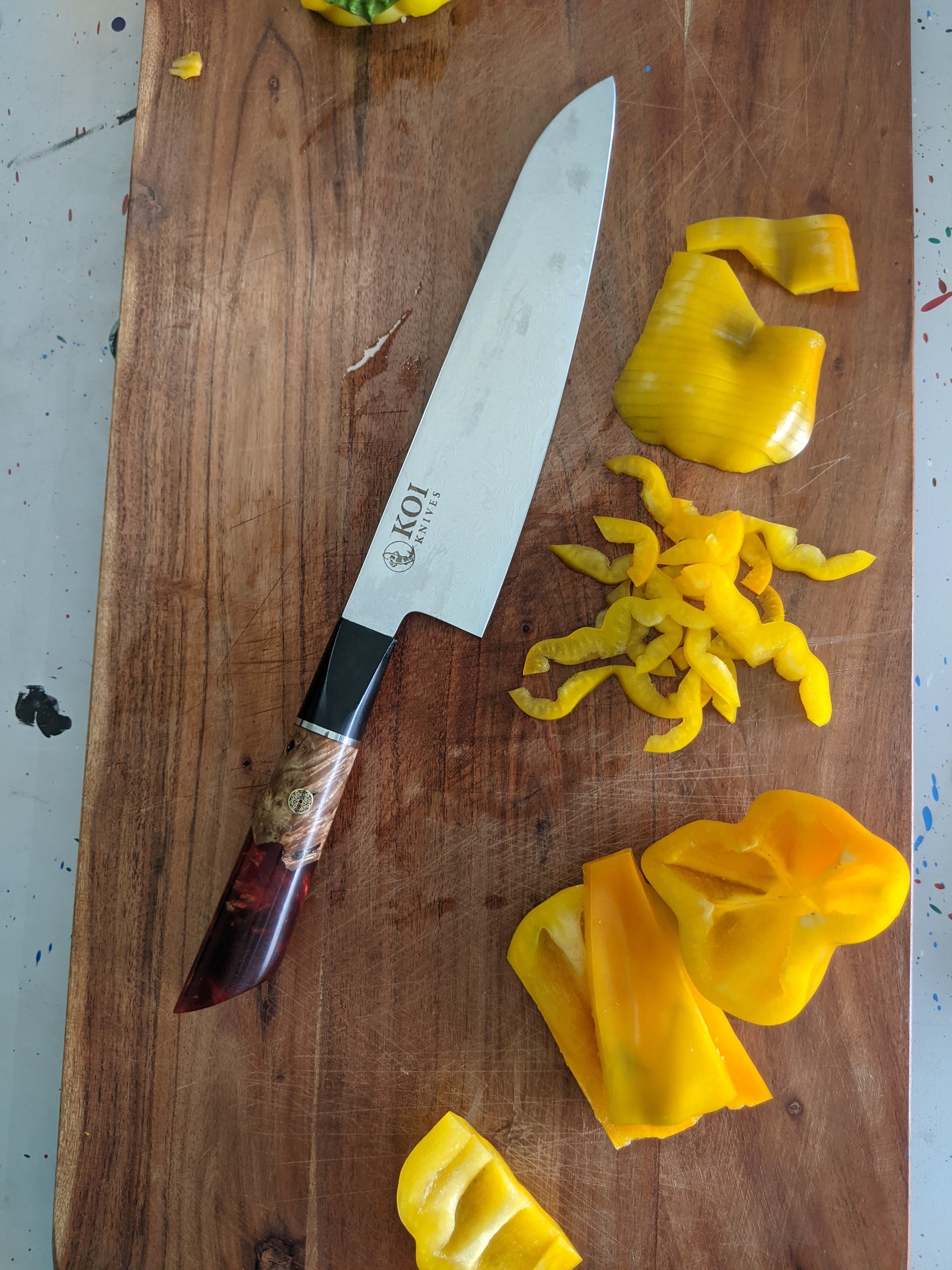
- Use push and pull cuts. Avoid heavy rocking on hard spots.
- Do not twist the edge in the board. Lift and reset instead.
- Scrape with the spine, not the edge.
- Keep the board damp but not wet during long sessions. It reduces friction.
- Wipe grit and salt from the surface. Grit is sandpaper for your edge.
These habits turn a good board into the best cutting board for Japanese knives in daily use.
:max_bytes(150000):strip_icc()/faw-chefs-knives-aug-24-test-mac-professional-series-hollow-edge-8in-rkilgore-0041-1-9a7257b0ecfb460e890085cb8d013916.jpeg "Best Cutting Board For Japanese Knives Buyer's Guide 7")
Budget and buying tips
You can protect your knives without overspending. Shop smart, then care well.
- Start with one quality surface. End‑grain maple or rubber are great first buys.
- Get a second plastic board for raw meat. Keep it out of the knife’s daily rotation.
- Check return policies. Warping and odor issues show up fast if they will happen.
- Smell test rubber boards. A slight odor fades. Strong smells may linger.
- Buy the largest board you can store and clean easily.
If money is tight, a solid rubber board is often the best cutting board for Japanese knives per dollar. Upgrade to end‑grain when you can.
 japanese knives”
style=”max-width: 100%; height: auto; border: 2px solid black; border-radius: 10px; display: block; margin: 0 auto;”
loading=”lazy”
/>
Frequently Asked Questions of best cutting board for japanese knives
What is the single best material for Japanese knives?
End‑grain maple is the top all‑rounder for edge safety and feel. Soft rubber is a close second for wet work and fish.
Is hinoki too soft for daily chopping?
Hinoki marks fast, but that softness protects edges. If you can accept more dents and gentle care, it is great for daily use.
Will bamboo dull my Japanese knives?
Yes, bamboo is harder and can contain silica that blunts edges. It is not ideal for high‑HRC blades.
How big should my board be for a 210 mm gyuto?
At least 18 x 12 inches gives you room to work safely. Larger boards like 20 x 15 inches are even better.
Can I put a wooden board in the dishwasher?
No, heat and water will warp and crack it. Hand wash, dry fast, and oil as needed.
How often should I oil an end‑grain board?
Weekly for the first month, then monthly or when it looks dry. A well‑oiled board stays flatter and feels softer under the knife.
Are rubber boards safe for slicing sashimi?
Yes, many sushi bars use soft rubber boards. They are gentle, grippy, and easy to sanitize.
Conclusion
Pick a board that is kind to hard steel, and your knife will stay sharp longer. End‑grain maple, hinoki, and quality rubber are the front‑runners. Match the board to your space, your style, and how much care you can give.
Set up your station with the best cutting board for Japanese knives, add a spare plastic board for raw proteins, and practice gentle technique. Your edges will last, your cuts will improve, and prep will feel smooth. Ready to dial in your setup? Subscribe for more knife care guides, or drop your questions in the comments.

Sophia Martinez is a culinary tools reviewer with 7+ years of experience analyzing kitchen knives and food prep tools. She specializes in practical testing, comparison reviews, and helping users improve kitchen efficiency through better equipment choices.
Expertise: Knife Reviews, Kitchen Tools, Meal Prep Optimization