If you’re in the market for a new kitchen knife, the Santoku knife is one tool that no chef or home cook should be without. Originating from Japan, the best Santoku knife has earned its reputation for versatility, precision, and efficiency in the kitchen. Whether you’re chopping, slicing, or mincing, this knife promises to handle it all, often better than traditional knives.
But with so many Santoku knives available, how do you know which one is truly the best? The key is understanding the design features, blade materials, and brand reputation. In this article, we’ll break down everything you need to know about the best Santoku knives in 2026. From comparing top products to offering expert tips and real-world performance tests, you’ll find all the guidance you need to make an informed decision and add a reliable knife to your kitchen arsenal.
Understanding the Santoku Knife
What is a Santoku Knife?
The Santoku knife is a traditional Japanese kitchen tool, originally designed for three tasks: slicing, dicing, and mincing. Its name, which translates to “three virtues,” refers to these three essential cutting functions.
Santoku knives are distinguished by their shorter, wider blade compared to the traditional chef’s knife. The blade typically ranges from 5 to 7 inches in length, offering precision for tasks like chopping vegetables, slicing fish, and even cutting through meats with ease. Unlike the longer and narrower chef’s knife, the Santoku’s flat cutting edge enables you to chop with a rocking motion, making it more efficient for quick and accurate cuts.
Why Choose a Santoku Knife?
The Santoku knife is not just for professional chefs—it’s perfect for home cooks who want an all-around, go-to knife for their kitchen. Here’s why you might consider adding one to your collection:
- Versatility: It can tackle a wide variety of tasks, from vegetables to fish.
- Efficiency: The blade design allows for quick, clean cuts, saving you time in the kitchen.
- Comfort: The wider blade often provides better hand comfort and control during long prep sessions.
If you’re looking for a knife that does it all, a Santoku might be the ideal addition to your kitchen arsenal.
Key Features to Look for in the Best Santoku Knife
Blade Material
The material of the blade can significantly affect the knife’s performance and longevity. Here are the most common types:
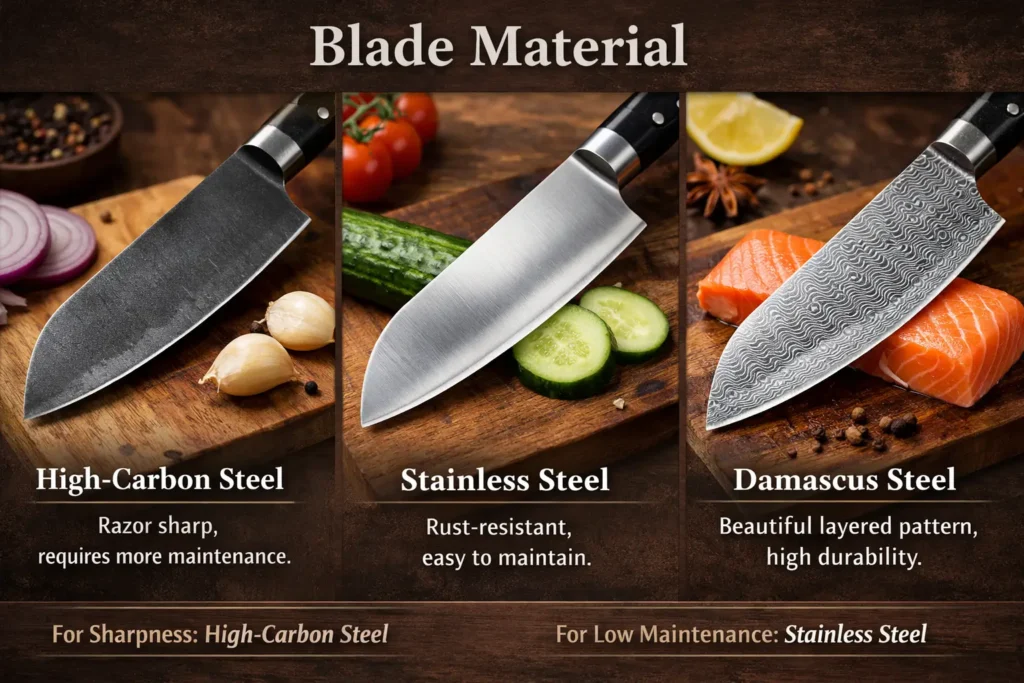
- High-Carbon Steel: Known for its sharpness and edge retention, but it requires more maintenance to prevent rust.
- Stainless Steel: Rust-resistant and easier to maintain but may not stay sharp as long as high-carbon steel.
- Damascus Steel: Famous for its beautiful layered design and exceptional durability, though it comes at a higher price point.
When choosing your Santoku knife, consider how much maintenance you’re willing to put in. If you’re okay with regular care, high-carbon steel is ideal for sharpness. If you prefer something low-maintenance, stainless steel is a good choice.
Blade Length & Shape
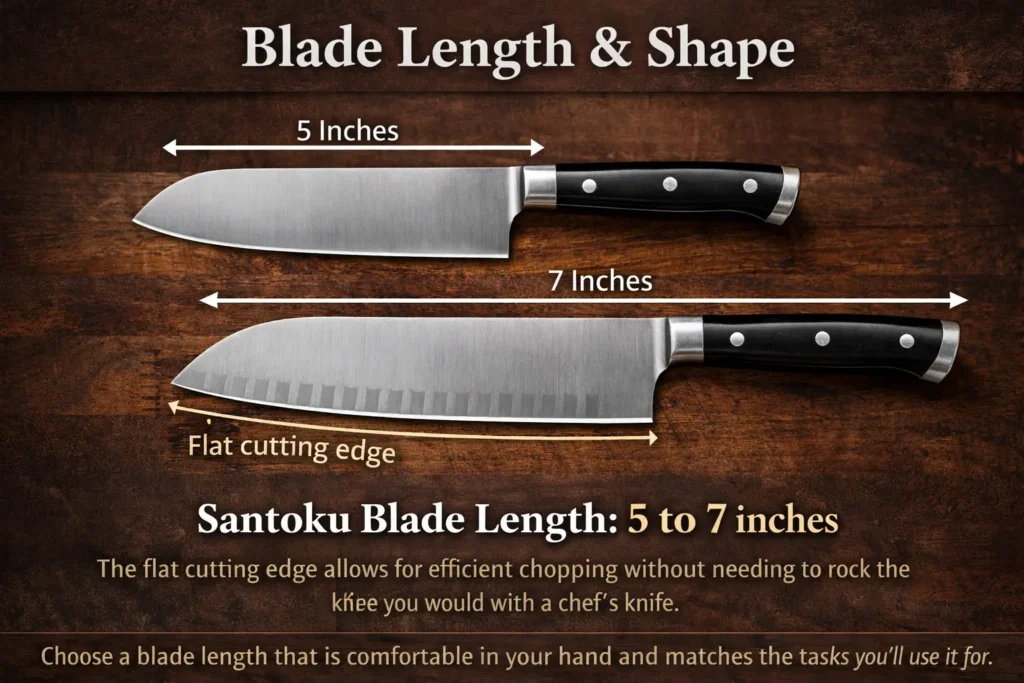
Santoku knives typically have a blade length of 5 to 7 inches, which strikes the perfect balance between control and cutting capacity. The flat cutting edge allows for efficient chopping without needing to rock the knife like you would with a chef’s knife. Choose a blade length that fits comfortably in your hand and matches the tasks you’ll use it for.
Handle Design & Comfort
The handle of the knife plays a crucial role in your cutting experience. Look for a ergonomically designed handle that fits well in your hand, with materials like wood, micarta, or Pakkawood offering a comfortable grip. A well-balanced handle will give you more control during slicing and chopping.
Balance and Weight
The Santoku knife should feel well-balanced between the blade and handle, offering comfort and precision during use. It shouldn’t feel too heavy or too light—just enough to give you control without straining your wrist. Consider the weight of the knife based on your personal preference: heavier knives offer more stability, while lighter ones provide greater agility.
How to Choose the Best Santoku Knife
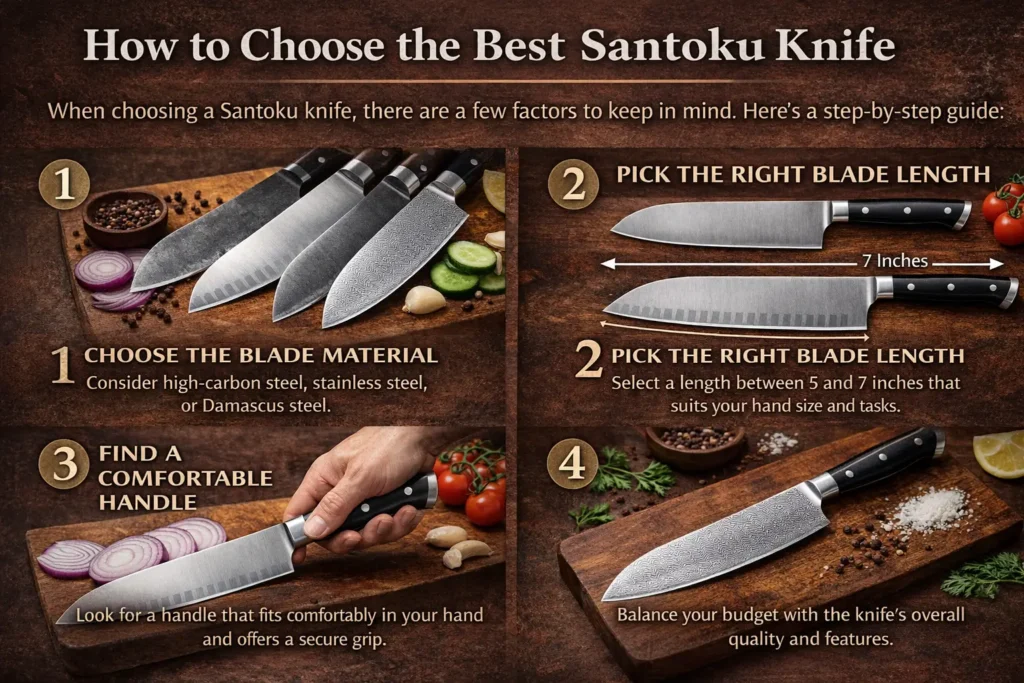
When choosing a Santoku knife, there are a few factors to keep in mind. Here’s a step-by-step guide:
Budget Considerations
Santoku knives can vary significantly in price, with entry-level models starting around $30 and high-end knives reaching up to $200 or more. Determine your budget and choose a knife that offers the best value within your price range.
Professional vs. Home Use
If you’re a professional chef, you’ll want a high-quality Santoku knife that can withstand daily use. For home cooks, a budget-friendly yet durable option will likely be sufficient. In either case, make sure the knife’s materials and design align with your specific cooking needs.
Where to Buy Your Santoku Knife
You can find Santoku knives in physical stores or online retailers. Websites like Amazon, KnifeScope, or Sur La Table are excellent places to find a variety of models and read customer reviews. Don’t forget to check for free shipping or return policies, especially when buying online.
Top 5 Best Santoku Knifes in years
Here’s a look at the top Santoku knives for 2026, each selected for its excellent performance, durability, and customer satisfaction.
1. Babish High-Carbon Santoku Knife
- Blade Material: High-carbon stainless steel
- Blade Length: 6.5 inches
- Handle Material: Pakkawood
- Weight: Medium-heavy
Pros:
- Super sharp edge for fine slicing
- Comfortable handle with non-slip grip
- High durability and rust resistance
Cons:
- Slightly heavier than other Santoku knives
2. HOSHANHO Damascus Santoku Knife
- Blade Material: Damascus steel
- Blade Length: 7 inches
- Handle Material: Micarta
- Weight: Medium
Pros:
- Stunning Damascus pattern
- Superior edge retention
- Lightweight design
Cons:
- More expensive than other knives
3. NAGOMI All-Purpose Santoku Knife
- Blade Material: Stainless steel
- Blade Length: 6 inches
- Handle Material: Wood
- Weight: Light
Pros:
- Affordable yet effective
- Sleek and traditional design
- Easy to maintain
Cons:
- Blade may not stay sharp as long as high-carbon steel
Real World Performance Testing
Cutting Vegetables
The Santoku knife excels when slicing vegetables like onions, tomatoes, and peppers. Its flat edge allows for smooth, uniform cuts without bruising the produce, making meal prep quick and easy.
Slicing Meat
While the Santoku knife is versatile, it’s not ideal for cutting through thick bones. However, it performs well for slicing fish or thin cuts of meat like chicken breasts or pork loin.
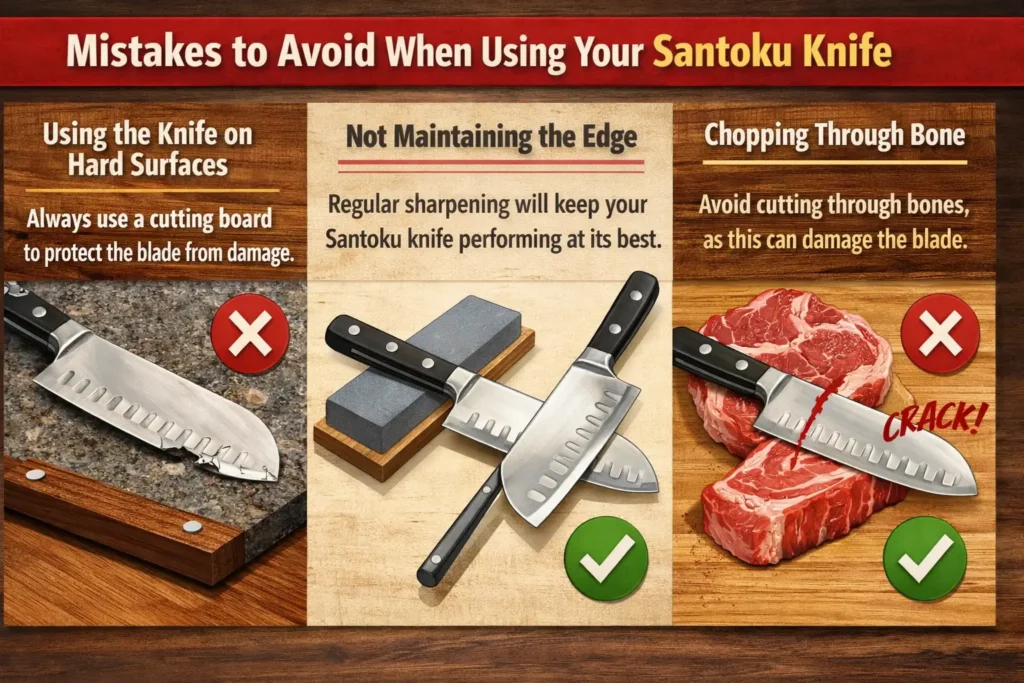
Mistakes to Avoid When Using Your Santoku Knife
- Using the Knife on Hard Surfaces: Always use a cutting board to protect the blade from damage.
- Not Maintaining the Edge: Regular sharpening will keep your Santoku knife performing at its best.
- Chopping Through Bone: Avoid cutting through bones, as this can damage the blade.
Pros & Cons of Santoku Knives
Pros:
- Extremely versatile for various cutting tasks
- Easier to handle for those with smaller hands
- Provides a precise and clean cut
Cons:
- Not ideal for cutting through tough materials like bone
- May require more maintenance than other knives
Who Should Buy a Santoku Knife?
- Professional Chefs: Perfect for fast-paced kitchen environments where precision is key.
- Home Cooks: A must-have tool for everyday cooking tasks, especially for those who want an all-purpose knife.
Who Should Avoid a Santoku Knife?
- Butchers or Those Who Work with Bone: The Santoku’s flat edge makes it unsuitable for cutting through bones.
- Specialized Knife Users: If you already own a chef’s knife and are happy with it, you might not need a Santoku knife.
Product Comparison Table
| Knife Name | Blade Material | Blade Length | Customer Rating | Pros | Cons |
|---|---|---|---|---|---|
| HOSHANHO Damascus Santoku Knife | Damascus Steel | 7 inches | 4.8/5 | Great edge retention, durable | Expensive |
| Babish High-Carbon Santoku Knife | High-carbon Steel | 6.5 inches | 4.7/5 | Affordable, sharp | Needs frequent sharpening |
| NAGOMI All-Purpose Santoku Knife | Stainless Steel | 6 inches | 4.5/5 | Budget-friendly, easy to maintain | Less sharpness retention |
Maintenance & Care Guide
- Cleaning: Wash your Santoku knife with warm water and mild soap. Avoid using the dishwasher.
- Sharpening: Use a whetstone or honing rod regularly to maintain the sharpness of the blade.
- Storage: Store your Santoku knife in a knife block, magnetic strip, or protective sheath to prevent dulling.
FAQ
What’s the best way to sharpen my Santoku knife?
Use a whetstone to sharpen the blade at a 20-degree angle. This helps maintain its edge and ensures precision cuts.
Can I use a Santoku knife for meat?
Yes, but avoid using it on tough cuts or bones. It’s best for slicing boneless meat and fish.
How do I clean my Santoku knife?
Hand wash the knife with warm water and mild soap. Dry it immediately to prevent rust.
Final Verdict & Call to Action
In conclusion, the best Santoku knife is one that meets your specific needs in the kitchen, whether you prioritize sharpness, comfort, or ease of use. We’ve reviewed top knives to help you find the perfect fit.
Ready to purchase the best Santoku knife for your kitchen? Check out our recommended options and take the first step toward upgrading your cooking experience!

Maliha Akter is a kitchen knife reviewer and food preparation specialist with over 6 years of experience testing Japanese kitchen knives and everyday cooking tools. She focuses on performance, safety, durability, and real-world usability to help home cooks choose the right knives for efficient and enjoyable cooking.
Expertise:Japanese Knives • Vegetable Knives • Product Reviews • Kitchen Efficiency • Knife Care