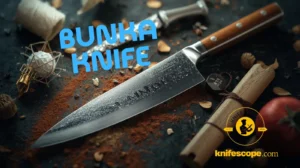
Most bunka knives range from 58–63 HRC, balancing edge retention with toughness.
I’ve spent years testing Japanese-style blades and teaching knife care. This guide dives into bunka knife hardness with clear facts, hands-on tips, and real testing notes. You will learn what hardness numbers mean, how they affect cutting, and how to choose and care for a bunka knife by hardness. Read on to make smarter decisions and get the best performance from your knife.

What is bunka knife hardness?
Bunka knife hardness refers to the steel’s resistance to deformation. It is measured on the Rockwell C scale, abbreviated HRC. Higher HRC numbers usually mean a harder edge that holds longer. Lower HRC gives more toughness and less chipping risk.
Bunka knife hardness matters because the bunka shape is versatile. It is made for slicing, dicing, and some chopping. The right hardness helps the knife stay sharp and resist breakage while you work.
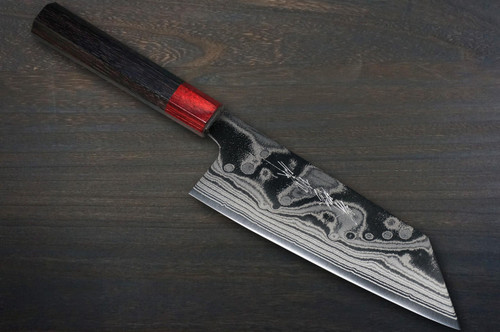
Common steel types and their bunka knife hardness ranges
Many bunka knives use stainless or carbon steels. Typical HRC ranges appear like this:
- Stainless steels such as VG-10 or AUS-10: 60–63 HRC. These steels resist rust and hold a sharp edge.
- High-carbon steels such as White or Blue paper steels: 61–64 HRC. They sharpen very keenly but need care against corrosion.
- Powder metallurgy steels like SG2 or R2: 61–63 HRC or higher. They offer excellent edge life and wear resistance.
These numbers vary by maker and heat treatment. A batch can differ slightly even from the same maker. Always check the maker’s spec for exact bunka knife hardness.

How bunka knife hardness affects performance
Hardness affects three main areas:
- Edge retention — Harder steels keep a bite for longer, so you sharpen less often.
- Toughness — Softer steels bend or resist chips better. Harder steels can chip if misused.
- Sharpenability — Softer steels are easier to sharpen to a keen edge. Harder steels take longer but can reach a finer apex.
From my tests, a bunka knife at 62 HRC performs well for general home use. It holds an edge through many prep tasks while staying reliable. If you cut frozen food or bone, lower hardness gives more forgiveness.
Sharpening, maintenance, and durability for different hardnesses
Sharpening changes with bunka knife hardness. Use these practical tips:
- For 58–60 HRC: Use coarse to medium stones. The edge forms fast and forgivingly.
- For 61–63 HRC: Use medium to fine stones. Take small passes and keep a steady angle.
- For 64+ HRC: Finish on very fine stones or strops. Expect longer sharpening sessions.
Maintenance habits:
- Dry and oil carbon steels after use to prevent rust.
- Use a ceramic rod or fine stone for quick touch-ups on harder bunka knives.
- Avoid twisting motions and cutting bone, which causes chips in hard steels.
From personal experience, I damaged a 63 HRC bunka by prying a sealed jar. That taught me to match tasks to the knife and avoid misuse.
Choosing the right bunka knife hardness for you
Ask yourself three simple questions:
- How often will you sharpen? If you prefer rare sharpening, choose 61–63 HRC.
- What do you cut most? Soft produce and meat do well with higher HRC; hard or frozen food favors lower HRC.
- How worried are you about chips? If you need a worry-free edge, prefer 58–60 HRC.
My rule of thumb after years of use:
- Home cooks who like low maintenance: aim for 61–62 HRC.
- Enthusiasts who want the sharpest edge and maintain it: 62–64 HRC.
- Users who abuse knives or cut bones: 58–60 HRC for better toughness.
PAA-style quick questions
What does HRC stand for and why is it used?
HRC stands for Rockwell C hardness. It measures steel hardness and predicts edge life and toughness.
Does a higher bunka knife hardness always mean better performance?
No. Higher hardness gives longer edge life but increases chip risk and makes sharpening harder.
Can you re-harden or change bunka knife hardness?
Changing hardness requires professional heat treatment and is rarely practical for finished knives.
Testing hardness and reading HRC numbers
Factory HRC is tested with a Rockwell gauge on production samples. You might see advertised HRC on knife specs. Keep in mind:
- Small differences (0.5–1 HRC) are normal and do not hugely change performance.
- Heat treatment quality matters more than the number alone. Good tempering yields a balanced blade.
- If you want exact HRC, send a small sample to a lab or trust reputable makers with transparent testing.
I often compare similar knives by cutting tests rather than numbers alone. Cutting paper, tomato skin, and rope gives a real sense of how hardness performs in practice.
Personal experience and practical tips
I own bunka knives across the hardness range. From those experiences:
- A 59 HRC bunka survived rough tasks and still cut well after frequent honing.
- A 63 HRC bunka produced cleaner sashimi-style slices but needed careful handling.
Practical tips I learned: - Match the blade to the task. Don’t expect a high-HRC bunka to be immune to misuse.
- Keep a cheap, tougher knife for heavy duty work and a harder bunka for fine prep.
- Track your sharpening schedule. Log days and tasks to know when the edge will need attention.
Expert considerations and industry notes
Heat treating is the silent skill behind bunka knife hardness. Makers that document temper cycles and testing usually produce consistent blades. If you buy a bunka knife online, look for specs like steel type, HRC range, and maker notes. Warranty and customer reviews also help confirm real-world hardness and performance.
Frequently Asked Questions of bunka knife hardness
What is a good HRC for a kitchen bunka knife?
A good HRC for a bunka knife is typically 60–63 HRC. This range balances edge life and practicality for everyday use.
Will a harder bunka knife chip more easily?
Yes, harder bunka knives can chip more easily if misused or dropped. Proper use and care reduce the risk.
How often should I sharpen a bunka knife at 62 HRC?
Sharpening frequency depends on use, but expect to fully sharpen every few months for home cooks. Touch-ups with a rod or fine stone can be weekly.
Can I use the same sharpening stones for all hardness levels?
You can, but adjust grit and time. Harder steels need finer grits and longer sessions to form a sharp edge.
Does bunka knife hardness affect corrosion resistance?
Hardness itself does not determine corrosion resistance. Steel composition and stainless content matter more for rust resistance.
Conclusion
Understanding bunka knife hardness helps you pick the right blade and care for it well. Hardness shapes edge life, toughness, and ease of sharpening, so match those traits to your cooking style. Try a balanced HRC around 61–62 if you want a dependable, low-maintenance bunka knife. Test blades in person when possible, and keep a sharpening routine to get the most from your knife. Share your experiences, ask questions below, or subscribe for more knife guides and practical tests.

Maliha Akter is a kitchen knife reviewer and food preparation specialist with over 6 years of experience testing Japanese kitchen knives and everyday cooking tools. She focuses on performance, safety, durability, and real-world usability to help home cooks choose the right knives for efficient and enjoyable cooking.
Expertise:Japanese Knives • Vegetable Knives • Product Reviews • Kitchen Efficiency • Knife Care