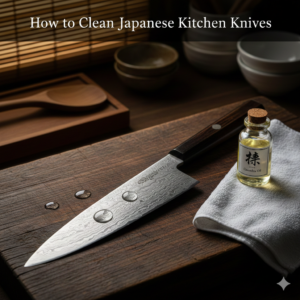
Wipe dry, oil lightly, and sharpen often to stop rust and keep bite.
If you want your knife to slice like day one, you need a simple plan. In this guide, I share what works from years of sharpening and chef-side testing. You’ll get clear, proven steps for carbon steel knife care, with real fixes for rust, patina, and dull edges. Follow along and your blade will stay sharp, clean, and ready for work.
What Makes Carbon Steel Different (and Worth It)
Carbon steel takes a very keen edge. It also responds fast to a stone. That feel on the board is why many cooks love it. But it will react with air, water, and acid. That is normal.
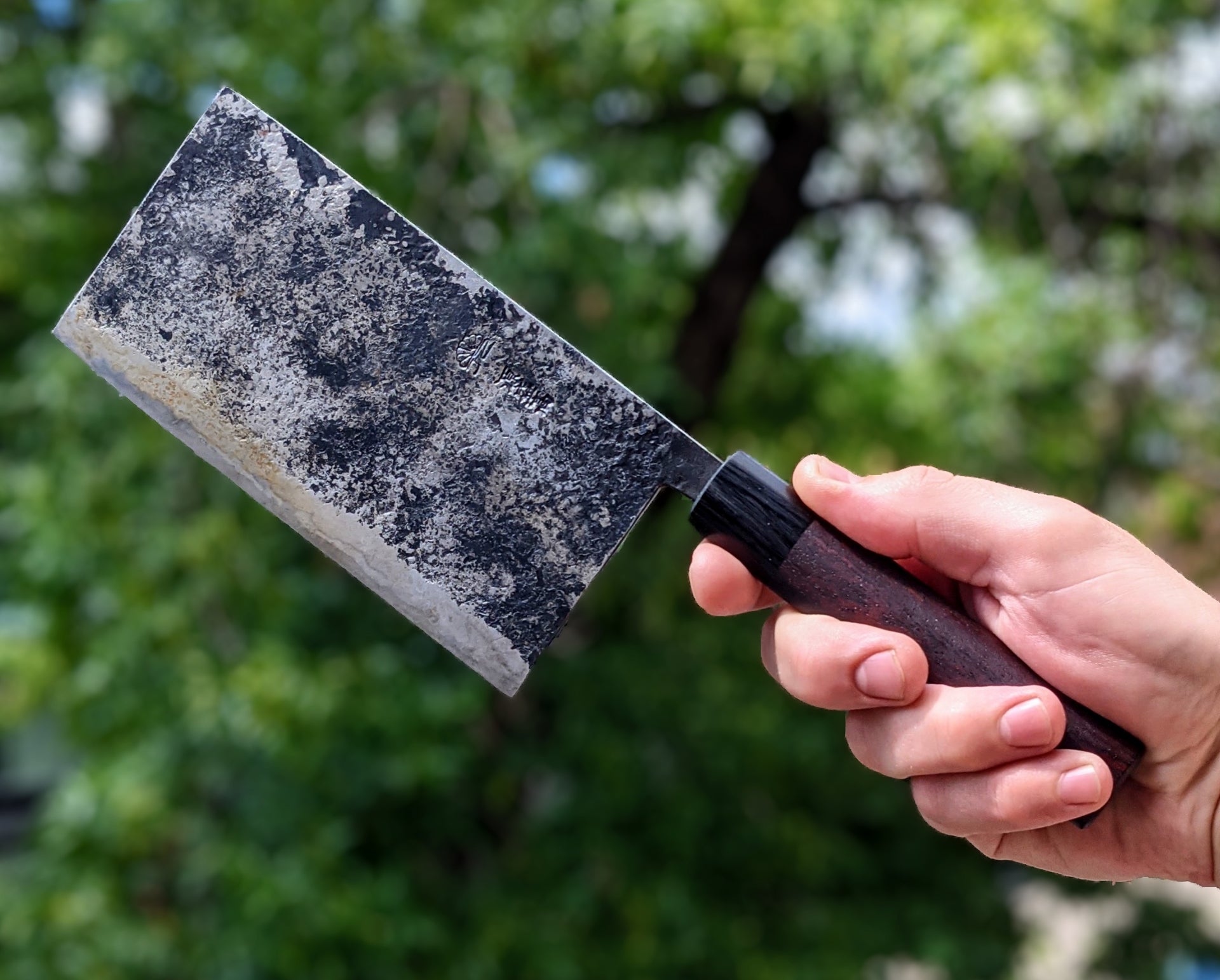
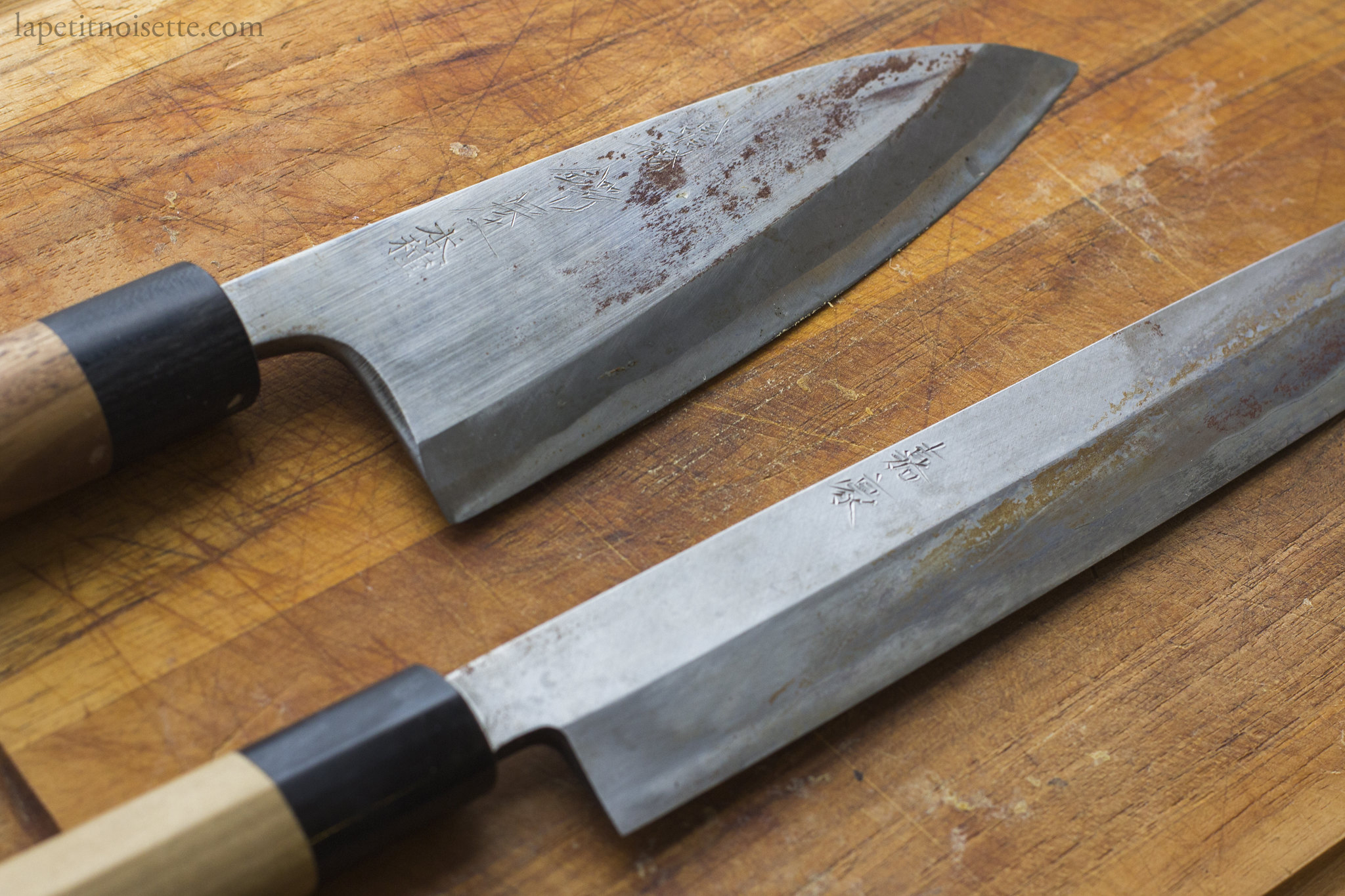
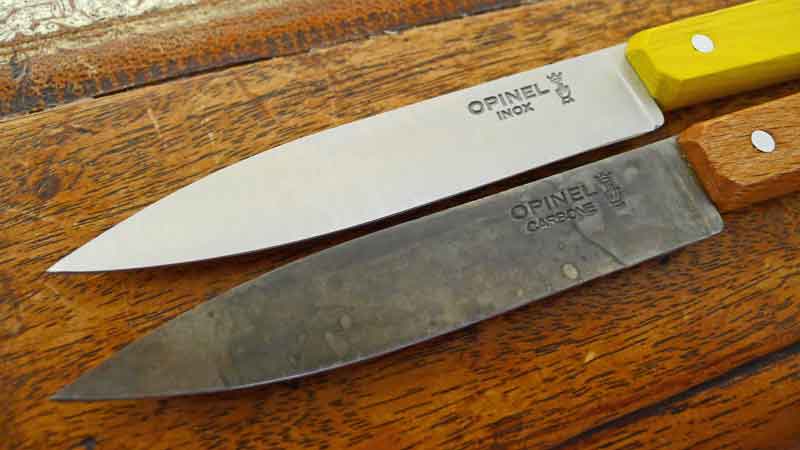
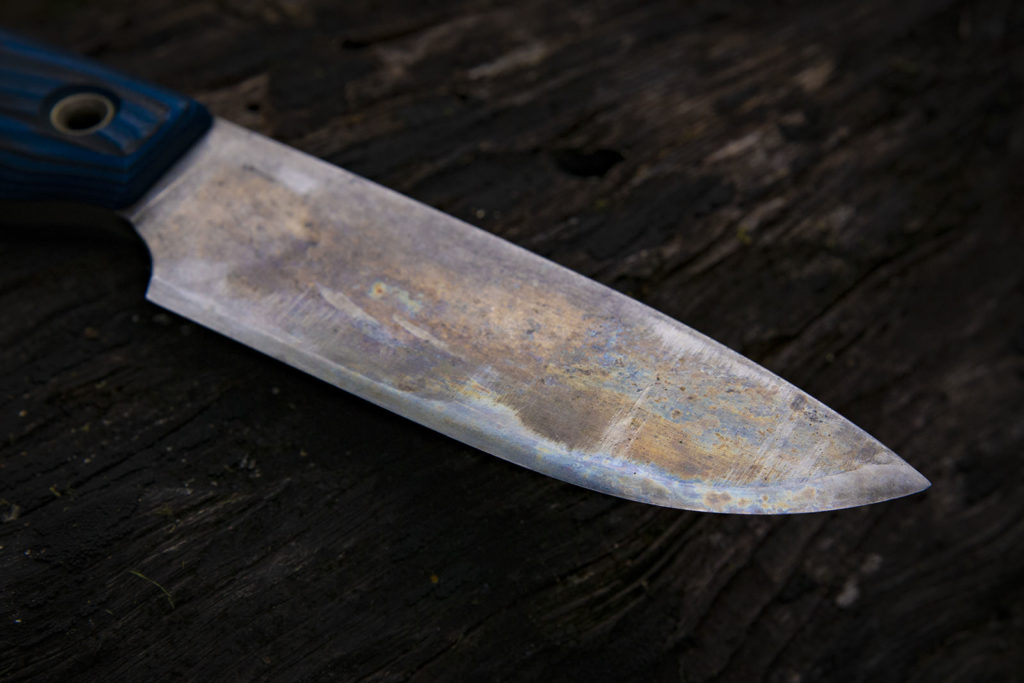
Over time, the blade darkens. This gray-blue coat is a patina. Patina helps guard the steel. Rust is red or orange and rough. You want patina. You do not want rust. Carbon steel knife care is about guiding that change.
I learned this the hard way in a busy line. I sliced a case of lemons. I forgot to wipe. Rust spots bloomed before service ended. A quick clean and oil saved it. Lesson learned.
Source: knifewear.com
Daily Carbon Steel Knife Care Routine
Keep a towel near you. Wipe as you work. Do not let water sit on the blade. Move with a simple loop:
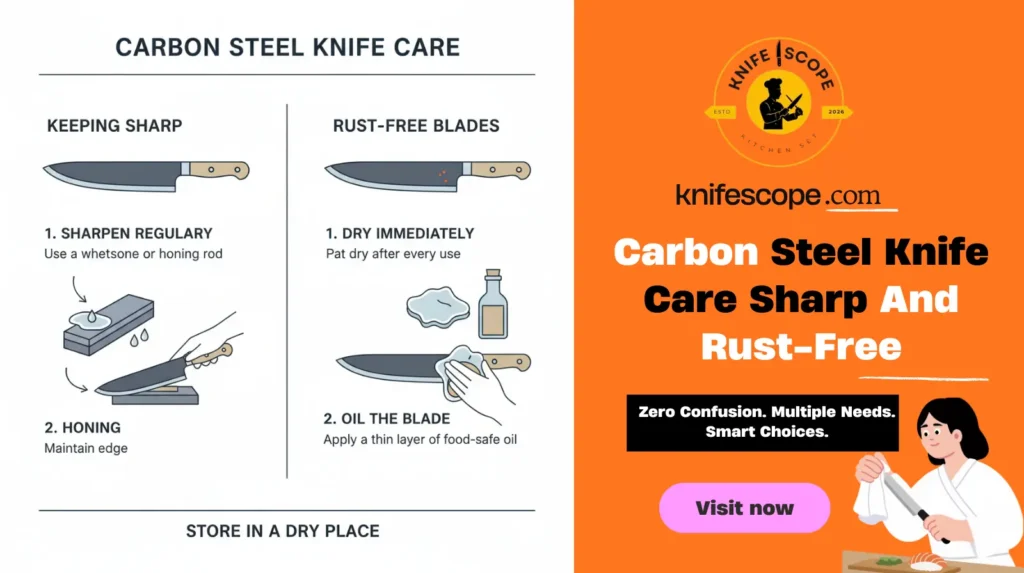
- Before prep: Wash by hand, dry, and add a thin coat of food-safe oil.
- During prep: Wipe the blade dry every few minutes, more with acidic foods.
- After prep: Hand wash, dry well, then oil again before storage.
This small habit stops rust. It also helps a stable patina grow. Carbon steel knife care is a daily rhythm, not a big chore.
Source: thejapanesefoodlab.com
Wash, Dry, and Store the Right Way
Always hand wash with mild soap and warm water. Never use the dishwasher. Heat, water jets, and detergents can pit the edge. Dry right away with a soft towel.
Use a thin coat of food-safe oil. Mineral oil works well. Camellia oil also works. Store the knife in a sheath, saya, or on a magnet that does not scrape. Keep it off wet wood and away from steel-on-steel contact.
Do this and you will avoid surprise rust. You will also keep the edge from rolling in storage. These basics are the heart of carbon steel knife care.
Patina vs Rust: Friend and Foe
Patina is stable and dark. It smells like clean steel. Rust is powdery and orange. It smells metallic. Patina protects. Rust eats the blade. Your job is to build patina and remove rust fast.
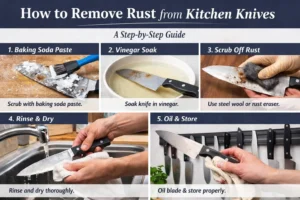
To build patina, cut neutral foods first. Then move to mild acids like apples. Wipe between cuts. Avoid long soaks in vinegar. That can etch. If rust shows up, rub it with a rust eraser or 0000 steel wool and oil. Baking soda paste can help lift light spots.
Rinse, dry, and oil after any rust fix. Do not scrub the edge itself. Work just up to it. Carbon steel knife care means gentle steps that respect the grind and the heat treat.
Source: damas-knives.com
Sharpening and Honing That Fit Carbon Steel
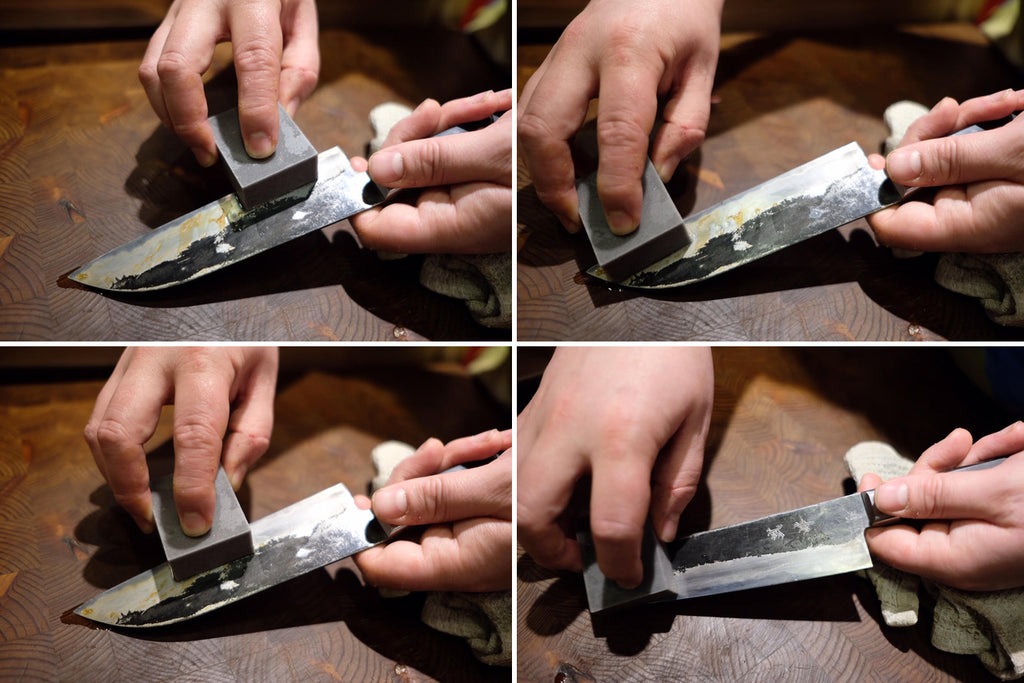
Most carbon steel likes stones. A 1000 grit stone sets the edge. A 3000 to 6000 grit stone refines it. Keep your angle steady. About the height of two stacked coins is a good start for many chef knives.
Raise a burr, flip, then deburr with light strokes. Finish with edge trailing passes. Use a fine ceramic rod for touch-ups. Avoid harsh pull-through tools. They can chip or tear the edge.
Wipe the blade clean after you sharpen. Add a light oil coat before storage. Regular, gentle sharpening is the backbone of carbon steel knife care.
Food Prep Habits That Protect Your Blade
Use a wood board. End grain is best. Avoid glass and stone. They will kill your edge. Do not twist the tip in hard food. Use a rocking or push cut instead.
Limit long contact with onions, citrus, and tomatoes. Wipe and dry between tasks. If you need to pause, wash, dry, and oil the blade. These tiny moves boost carbon steel knife care without slowing you down.

Source: wildiowaoutfitters.com
Maintenance Schedule You Can Stick To
Set a simple schedule. It keeps the blade in top shape. It also saves time.
- Daily: Hand wash, dry, and oil before storage.
- Weekly: Deep clean the handle, check screws or pins, and inspect for rust.
- Monthly: Sharpen on stones and reset the patina if needed.
- Seasonally: Refresh your board and check your storage setup.
Write it on a note near your station. This builds a habit. That habit is carbon steel knife care in action.
Source: saurosandroni.it
Fixing Common Problems Fast
If you see orange spots, stop and clean them now. Use a rust eraser with oil. Wipe, wash, dry, and oil again. If you smell a metallic scent on food, give the blade a deep clean. Then cut apples or steak to rebuild patina.
If the blade feels sticky, you used too much oil. Wipe with a dry towel, then a damp one, then dry. If the edge chips, inspect your board and your angle. Thin carbon steel can chip with hard bones. Sharpen out the chips with a 1000 grit stone, then refine.
Carbon steel knife care is about fast, calm fixes. Small actions beat big repairs.
Frequently Asked Questions of carbon steel knife care
How often should I oil a carbon steel knife?
Lightly oil after each wash and dry. If you live in a humid place, add a tiny coat before bed.
Can I use olive oil for the blade?
Olive oil can go rancid over time. Use mineral or camellia oil for safer, cleaner carbon steel knife care.
What’s the best way to build a patina?
Cut neutral foods first, then mild acids like apples. Wipe often, wash after, dry, and oil.
Is a dishwasher safe for carbon steel knives?
No. Heat and harsh soap will cause rust and dull the edge fast. Always hand wash.
Do I need a honing rod if I have stones?
Use a fine ceramic rod for touch-ups. Still plan regular stone work to keep a crisp, clean apex.
How do I remove heavy rust safely?
Use a rust eraser or 0000 steel wool with oil. Rinse, dry, and oil, then rebuild patina with normal use.
Can I sharpen carbon steel with a pull-through tool?
Avoid it. It can tear the edge. Stones or a pro service are better for long-term carbon steel knife care.
Conclusion
Treat your blade like a tool, not a toy. Wash by hand, dry at once, and oil light. Build patina, stop rust fast, and sharpen on a steady schedule. That is carbon steel knife care that works day after day.
Start today. Pick one habit to lock in, like wiping as you work. Want more tips and step-by-step sharpening guides? Subscribe, share your wins in the comments, and tell me what blade you use.

Maliha Akter is a kitchen knife reviewer and food preparation specialist with over 6 years of experience testing Japanese kitchen knives and everyday cooking tools. She focuses on performance, safety, durability, and real-world usability to help home cooks choose the right knives for efficient and enjoyable cooking.
Expertise:Japanese Knives • Vegetable Knives • Product Reviews • Kitchen Efficiency • Knife Care