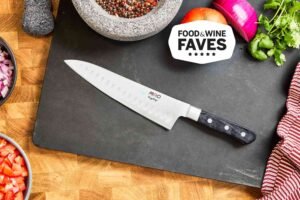
A chef knife guide explains how to pick, use, sharpen, and care for your main kitchen blade.
I have worked in kitchens and tested dozens of blades, so this chef knife guide pulls together practical rules, clear facts, and usable tips. You will learn how chef knives differ by shape, steel, and size, how to match a blade to your cooking style, how to sharpen and care for it, and how to shop smart. Read on for step-by-step advice, real-world examples, and quick checks that save time and money.
Chef knife anatomy: know the parts before you buy
A chef knife guide starts with the parts of the knife. Knowing the anatomy helps you pick the right tool and care for it properly.
- Blade
- The main cutting surface. Length affects tasks and control.
- Edge
- The sharpened area that slices food.
- Tip
- Used for delicate work and piercing.
- Spine
- The top, unsharpened back of the blade. Thicker spines add strength.
- Heel
- The rear part used for chopping and tough cuts.
- Bolster
- The thicker junction between handle and blade. Some knives have full bolsters, some partial, and some none.
- Tang
- The metal extension inside the handle. Full tangs add balance and durability.
- Handle
- Material and shape affect grip, hygiene, and balance.
This chef knife guide uses these terms later for care and technique. Knowing them makes sharpening and maintenance easier.

How to choose a chef knife: fit, feel, and function
Choosing a knife is personal. This chef knife guide focuses on fit and the tasks you do daily.
- Size choices
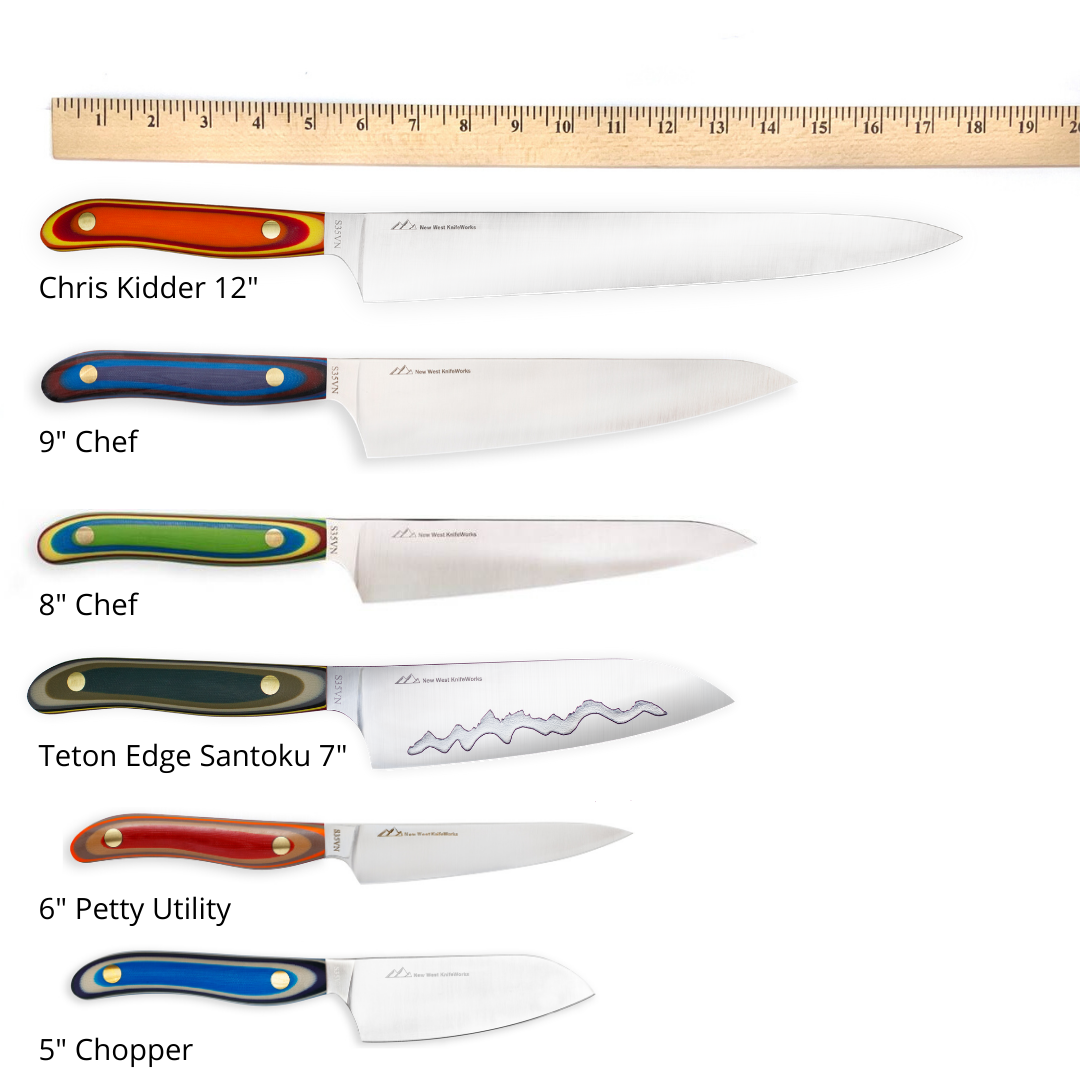
- 6- to 8-inch blades suit most cooks. 8-inch is a common all-rounder.
- 10-inch knives help with big tasks but take more skill to control.
- Weight and balance
- Heavier knives cut through dense food with less force.
- Lighter knives allow faster, finer work. Balance between handle and blade matters.
- Handle shape and material
- Wood gives warmth and grip but needs care.
- Composite and polymer handles resist moisture and are easy to clean.
- Blade profile
- Curved blades favor rocking cuts.
- Straighter blades are better for push cuts and precise slicing.
- Edge angle
- Narrow angles (12–15° per side) are sharper but more fragile.
- Wider angles (20°+ per side) are tougher and last longer.
Test grip before you buy when possible. A good chef knife guide always recommends handling the knife to feel balance and comfort.

Materials and construction: stainless, carbon, and hybrids
Material affects sharpness, edge retention, corrosion resistance, and maintenance. This chef knife guide simplifies the choices.
- Stainless steel
- Low rust risk. Easy to maintain. May need more frequent sharpening.
- Carbon steel
- Takes a very sharp edge. Prone to patina and rust if not dried and oiled.
- High-carbon stainless
- A hybrid that balances sharpness and corrosion resistance.
- Damascus and layered steels
- Multiple layers for strength and aesthetics. Performance varies by core steel.
- Monosteel vs. clad construction
- Monosteel is a single piece. Clad adds protective outer layers.
For most home cooks, high-carbon stainless offers the best mix of sharpness and low maintenance. This chef knife guide favors practical options for busy kitchens.

Blade shapes and edge types: match shape to tasks
Different profiles and edges suit different work. This chef knife guide explains common shapes.
- Western chef knife
- Broad blade, curved edge for rocking motion.
- Santoku
- Shorter, flatter profile for precise slicing and scooping.
- Gyuto
- Japanese-style chef knife. Nimble and often thinner with a sharper angle.
- Nakiri and Usuba
- Vegetable knives for thin, clean cuts.
- Granton edge
- Hollowed dimples reduce sticking for sticky foods.
Choose a shape that fits your cutting style and the foods you cook most often. This chef knife guide recommends trying a few to see what feels natural.

Knife sizes and ergonomics: measuring comfort and control
Size matters. This chef knife guide breaks down what size to pick by body, board, and task.
- Home cooks
- 8-inch chef knives are versatile and popular.
- Small hands
- 6- to 7-inch blades improve control and reduce fatigue.
- Professional settings
- 8- to 10-inch knives are common for volume work.
- Handle ergonomics
- Look for a handle that sits flush in your palm and supports a pinch grip.
- Balance test
- A balanced knife’s midpoint sits near the bolster or where the blade meets the handle.
Comfort beats prestige. If a knife feels awkward, it will slow you down. This chef knife guide emphasizes fit over brand.
Care and maintenance: daily habits that extend life
Good care keeps edges sharp and steels healthy. This chef knife guide gives simple, repeatable steps.
- Daily cleaning
- Wash by hand in warm water and mild soap. Dry immediately.
- Storage
- Use a knife block, magnetic strip, or blade guards to protect edges.
- Avoid dishwashers
- Heat and detergent dull edges and can warp handles.
- Minor rust or stains
- Remove with light abrasive pads and a tiny amount of oil for carbon steel.
- Regular honing
- Use a honing rod to realign the edge between sharpenings.
Small habits give the biggest return. I once ruined a good blade by leaving it wet overnight—learn from that mistake.

Sharpening and honing: keep the edge working
Sharpening and honing are different. This chef knife guide shows when to use each.
- Honing
- Realigns the edge. Do it often, even daily.
- Sharpening
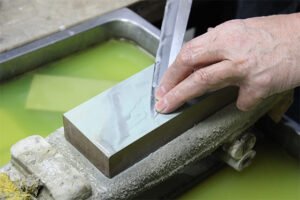
- Removes metal to form a new edge. Use stones, guided systems, or professional services.
- Angle control
- Match the original angle when sharpening to preserve performance.
- Stones vs. systems
- Water stones are flexible and effective but need skill. Guided sharpeners are easier for beginners.
- How to check sharpness
- Slice a sheet of paper or feel for smooth, even resistance on tomatoes.
I sharpen with a 1000/6000 water stone every few months for home use. For a quick tune, I use a guided sharpener after lots of chopping. This chef knife guide recommends practicing on cheaper blades first.

Safe handling and cutting techniques: protect fingers and food
Technique protects you and your knife. This chef knife guide covers basic cuts and safety.
- Pinch grip
- Thumb and forefinger pinch the blade near the bolster. Other fingers wrap the handle.
- Claw grip
- Tuck fingertips under and use knuckles as a guide to protect fingers.
- Rocking motion
- Good for curved chef knives and fast chopping.
- Push cut
- Straight forward slicing used for fine cuts on thinner blades.
- Cutting board choice
- Use wood or plastic. Avoid glass and stone to preserve edges.
Practice slowly. I teach new cooks basic cuts in short sessions. Good technique matters more than a costly blade.
Buying guide and budget options: where to invest
This chef knife guide helps you decide what to spend and where to save.
- Starter range
- Budget knives can be fine for new cooks. Expect more frequent sharpening.
- Mid-range
- Solid balance of materials, construction, and warranty. Often the best value.
- Premium
- Handmade or high-end steels give long edge life but need care.
- What to prioritize
- Fit, balance, and steel quality over brand name.
- Try before you buy
- Test grip, weight, and length in store or buy from retailers with good return policies.
A single good mid-range chef knife will serve most cooks for years. This chef knife guide recommends investing in one reliable blade and adding specialty knives later.
Personal experience and practical tips from the kitchen
I spent years cooking and sharpening knives in busy kitchens. This chef knife guide shares lessons I learned the hard way.
- Keep one reliable chef knife
- I worked with a favorite 8-inch knife for daily prep. It saved time and reduced mistakes.
- Learn a simple sharpening routine
- Regular 5-10 minute sessions keep the edge useful and reduce the need for major sharpening.
- Match knife to task
- Use a smaller utility knife for small fruits. This preserves the chef knife edge.
- Mistakes to avoid
- Do not use your chef knife to cut bones or frozen food. It chips the edge quickly.
- Budgeting tip
- Buy a mid-range chef knife and a low-cost paring knife. This covers most kitchen needs.
Trust your hands. If a knife feels right, you will use it more and care for it better. This chef knife guide aims to steer you to lasting choices.
People also ask — quick answers
Q: How often should I sharpen my chef knife?
A: Sharpen every few months for regular home use. Hone more often, even weekly.
Q: What size chef knife is best for beginners?
A: An 8-inch chef knife is a great starter. It balances control and reach.
Q: Is a carbon steel knife better than stainless?
A: Carbon steel sharpens well but needs more care. Stainless resists rust and is lower maintenance.
Q: Can I use a chef knife to cut bones?
A: No. Use a cleaver or boning knife. Cutting bones chips and damages chef knives.
Q: How do I remove rust from a carbon steel blade?
A: Gently scrub with a soft abrasive and oil the blade. Dry and store properly after cleaning.
Frequently Asked Questions of chef knife guide
What is the best size for a chef knife?
Most cooks do best with an 8-inch chef knife. It offers balance, reach, and control for common tasks.
How do I tell when a knife needs sharpening?
If the knife tears food or struggles on tomatoes and paper tests, it needs sharpening. Regular honing can delay full sharpening.
Should I buy a Japanese or Western chef knife?
Choose based on style and tasks. Japanese knives often have thinner blades and are great for precision. Western knives suit heavy-duty chopping.
How do I store my chef knife safely?
Use a knife block, magnetic strip, or blade sheath. These protect the edge and reduce accident risk.
Can I wash my chef knife in the dishwasher?
Avoid the dishwasher. Heat, moisture, and detergent dull the edge and can warp the handle.
How often should I hone my chef knife?
Hone your knife before or after use, depending on frequency. Do it weekly or whenever the edge feels misaligned.
Is a forged knife better than stamped?
Forged knives often have thicker bolsters and full tangs, which can add balance and durability. Stamped knives can still perform well and cost less.
What angle should I sharpen my chef knife at?
Match the manufacturer’s angle if known. A typical home chef knife sits between 15° and 20° per side.
Conclusion
A clear chef knife guide helps you pick tools that match your hands, cooking style, and maintenance habits. Choose a comfortable size, learn simple care routines, and practice basic cutting technique to get the most from your blade. Start with one reliable chef knife, hone often, and sharpen when needed to save money and improve speed. Try a few knives in person, then commit to care routines that keep your knife sharp and safe. Share your experiences, ask questions below, or subscribe to learn more about choosing and caring for kitchen tools.

Maliha Akter is a kitchen knife reviewer and food preparation specialist with over 6 years of experience testing Japanese kitchen knives and everyday cooking tools. She focuses on performance, safety, durability, and real-world usability to help home cooks choose the right knives for efficient and enjoyable cooking.
Expertise:Japanese Knives • Vegetable Knives • Product Reviews • Kitchen Efficiency • Knife Care