A complete knife guide gives clear, practical advice on knives, care, sharpening, and safe use.
I’ve spent years teaching knife skills in professional kitchens and testing blades for home cooks and outdoorspeople. This complete knife guide pulls that hands-on experience together with clear explanations so you can choose the right knives, maintain them, and use them safely. Read on for practical tips, tried-and-true techniques, and buying advice to help you get the most from every blade.
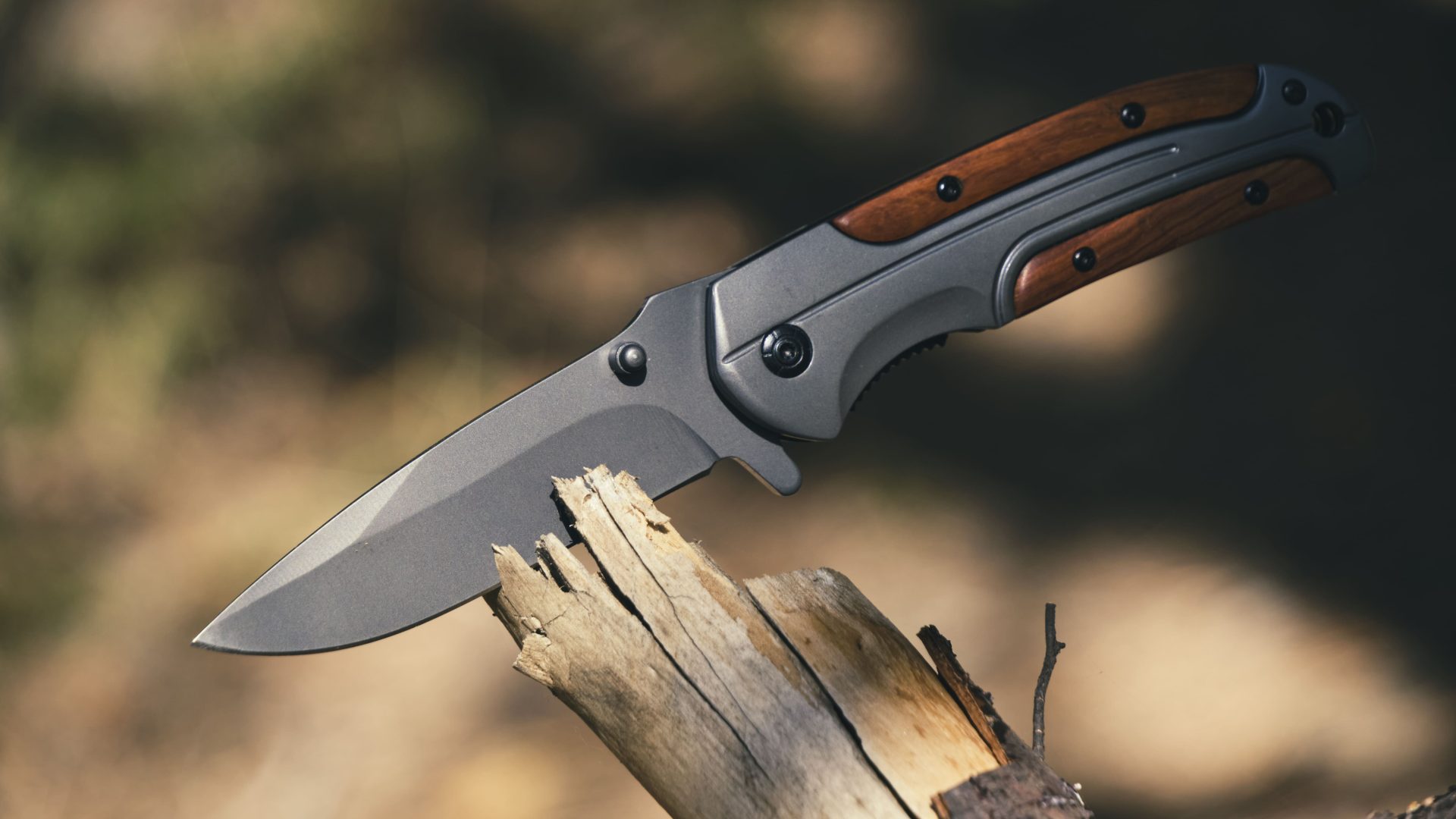
Types of knives and what they do
Choosing the right knife starts with understanding the common types. This section breaks down the knives you’ll see most often and why each matters for a complete knife guide.
- Chef’s knife — A versatile all-purpose blade for chopping, slicing, and dicing. It’s the backbone of most kitchens.
- Paring knife — Small and nimble for peeling, trimming, and small precision cuts.
- Utility knife — Mid-size between paring and chef’s knife, useful for sandwiches, small roasts, and trimming.
- Bread knife — Serrated blade designed to slice breads and crusty foods without crushing them.
- Boning knife — Narrow, flexible blade for separating meat from bone and trimming fat.
- Santoku — A Japanese all-purpose knife often used for slicing and fine work; good for thin, precise cuts.
- Cleaver — Thick, heavy blade for hacking through bones and tough vegetables.
- Fillet knife — Long, flexible blade for fish filleting and delicate trimming.
As part of a complete knife guide, understand that one or two high-quality knives can cover most tasks. Start with a chef’s knife and a paring knife, then add specialized blades as needed.
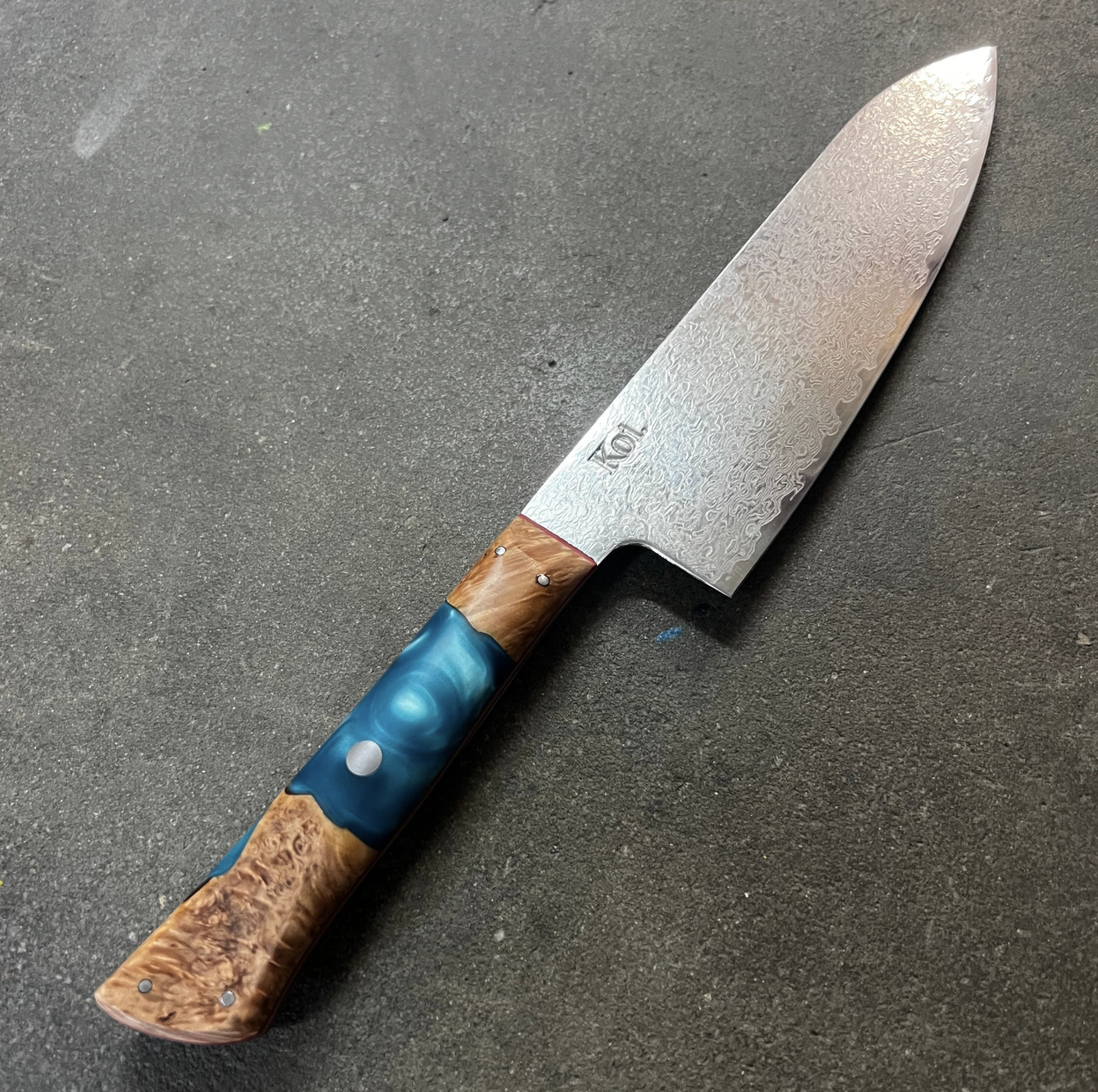
Anatomy of a knife: terms every user should know
Knowing parts of a knife helps you evaluate blades and care for them properly. This quick glossary supports the practical tips in this complete knife guide.
- Blade — The cutting part; shape and length vary by knife type.
- Edge — The sharpened portion of the blade.
- Tip — The pointy end used for precise work.
- Spine — The thick back of the blade; adds weight and rigidity.
- Bolster — Thick junction between blade and handle on some knives; provides balance and finger protection.
- Tang — The extension of the blade into the handle; full tang offers strength and balance.
- Handle — Where you grip the knife; materials include wood, plastic, and composites.
- Heel — Rear portion of the blade used for heavy cutting.
Understanding these parts makes it easier to talk about sharpening, balance, and handle comfort, all key topics in a complete knife guide.
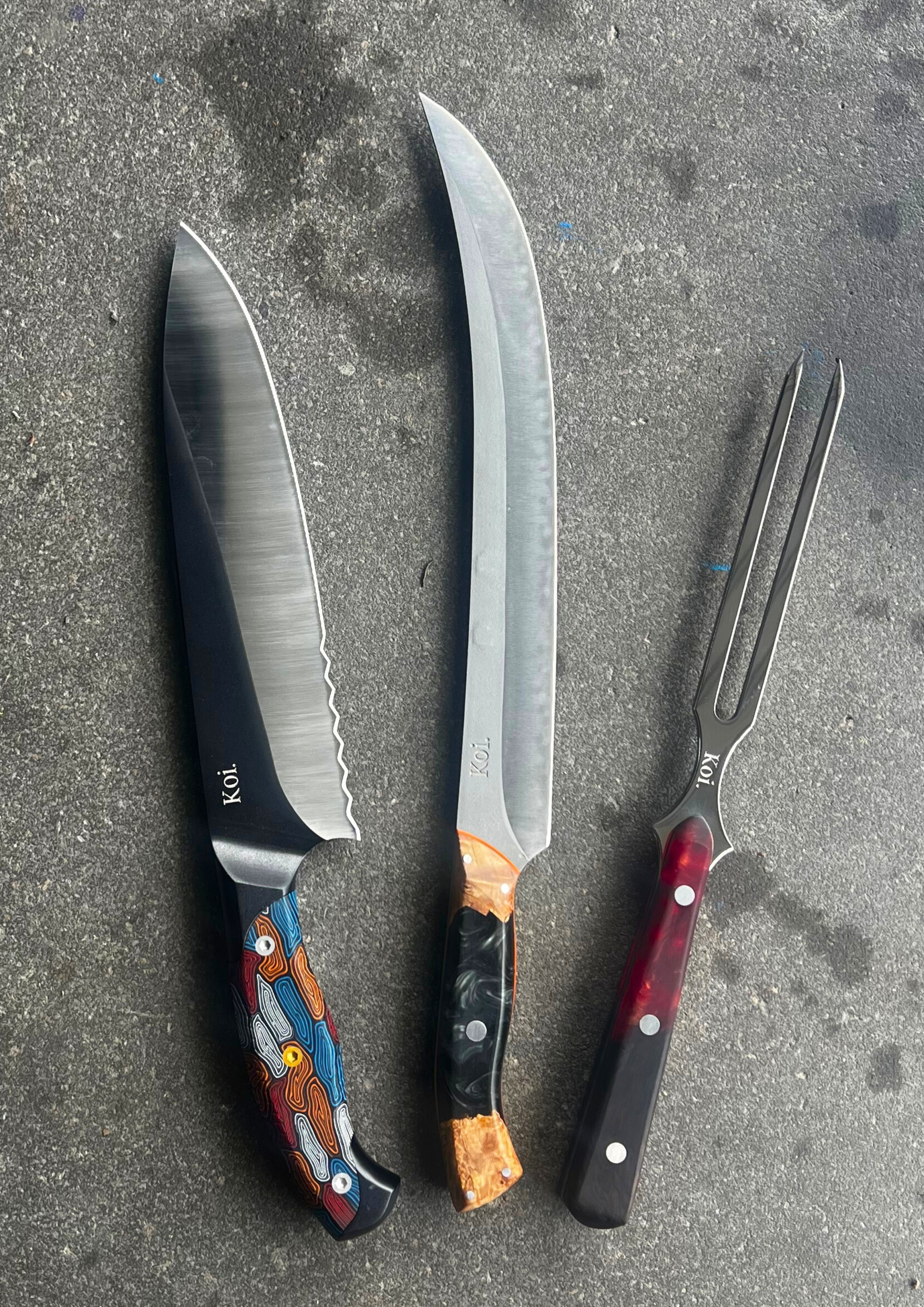
Knife steels and materials: what affects performance
The metal and materials determine how a knife holds an edge, resists corrosion, and how easy it is to sharpen. This is central to any complete knife guide.
- Stainless steel — Easy to maintain and resists rust; modern stainless steels can hold good edges.
- Carbon steel — Sharpens easily and holds a keen edge but needs care to avoid rust and discoloration.
- High-carbon stainless — A middle ground offering edge-holding and corrosion resistance.
- Tool steels and powdered steels — Often used in premium knives for exceptional edge retention and toughness.
- Ceramic — Extremely hard and keeps an edge long but can chip and is hard to sharpen.
Blade hardness is measured on the Rockwell (HRC) scale. Higher HRC usually means better edge retention but can mean more brittle blades. For home cooks, a blade in the HRC 56–62 range balances sharpness and durability.

How to choose the right knife for your needs
A good decision-making process helps you invest wisely. This section provides an actionable approach for this complete knife guide.
- Identify your primary tasks — Cooking, hunting, camping, or EDC (everyday carry).
- Set a budget — Quality is worth paying for, but you don’t need the most expensive knife to get great performance.
- Try before you buy when possible — Feel the balance, size, and grip in your hand.
- Consider maintenance — If you won’t sharpen often, favor stainless or low-maintenance steels.
- Buy reputable brands or custom makers with known quality and warranty.
Personal tip: I started with a mid-range chef’s knife and upgraded after two years. The difference in balance and edge retention was immediate. That experience shaped my advice in this complete knife guide: meet the knife in hand before committing.

Care and maintenance: keep blades sharp and safe
Good care extends a knife’s life and keeps it safe. This practical section is essential to the complete knife guide.
- Hand wash and dry immediately — Avoid dishwashers to prevent edge damage and handle wear.
- Store properly — Use a magnetic strip, knife block, or blade guards to protect the edge.
- Regular honing — Use a honing rod often to realign the edge between sharpenings.
- Timely sharpening — Sharpen based on use; frequent home cooks may need a proper sharpen every few months.
Tip from experience: A simple daily routine of quick honing and hand washing made my knives perform like new for years. That small habit is a cornerstone of this complete knife guide.

Sharpening and honing: how to restore the edge
Sharpening is a skill you can learn. This section gives practical methods and steps to help you master blade care as covered in this complete knife guide.
- Honing vs sharpening — Honing realigns; sharpening removes metal to form a new edge.
- Stones — Use water or oil stones for controlled, precise sharpening. Start coarse then finish fine.
- Guided systems — Helpful for beginners to keep consistent angles.
- Electric sharpeners — Fast and easy but can remove more metal; use carefully.
- Stropping — Use a leather strop to polish the edge and remove burrs after sharpening.
Step-by-step stone sharpening (simplified)
- Soak a water stone if required and place it on a stable surface.
- Hold the knife at the correct angle (usually 15–20 degrees) and stroke the blade across the stone from heel to tip.
- Repeat evenly on both sides and progress to finer grits.
- Finish on a strop for a razor-like feel.
From my workshops: beginners often press too hard. Light, steady pressure preserves the stone and gives a cleaner edge. This practical insight is a key part of the complete knife guide.

Knife safety and storage best practices
Safety keeps you and your knives in good shape. This section offers easy rules to follow from lessons in this complete knife guide.
- Keep fingers clear of the path of the blade.
- Use a stable cutting board and non-slip mat.
- Cut away from your body and use a claw grip on the food.
- Store knives securely — don’t toss them in drawers.
- Transport blades safely in sheaths or cases.
I once had a deep cut from a loose kitchen drawer; since then I recommend dedicated storage as a non-negotiable habit. That story is part of why this complete knife guide stresses secure storage.

Using knives effectively: techniques and tips
Good technique boosts efficiency and safety. This part of the complete knife guide covers common skills to practice.
- The claw grip — Tuck fingertips and use knuckles as a guide to keep hands safe.
- Rock-chop motion — Keep tip on the board for quick, consistent chopping.
- Slicing vs sawing — Use a smooth slice for vegetables and a gentle saw for bread.
- Portioning meat — Use long, single strokes for clean protein slices.
- Practice simple drills — Dice an onion, julienne carrots, and practice for accuracy and speed.
Real-life practice: I taught students to do 500 cuts slowly and correctly rather than 100 fast and sloppy. That repetition builds muscle memory and is central to mastering tips in this complete knife guide.

Buying guide: what to look for and how much to spend
This shopping checklist helps you make a confident purchase decision within this complete knife guide.
- Balance — The knife should feel balanced between handle and blade.
- Handle comfort — Try different shapes and materials to see what fits your grip.
- Blade length — 8-inch chef’s knives suit many people; 6-inch for smaller hands, 10+ inches for larger tasks.
- Warranty and service — Look for brands that offer sharpening or repair services.
- Try sets or single pieces — Start with single high-quality knives, then expand as needed.
Budget tiers (rough guidance)
- Entry-level ($30–$80) — Good for beginners; stainless options that are low-maintenance.
- Mid-range ($80–$200) — Strong edge retention and better balance.
- Premium ($200+) — High-quality steels, craftsmanship, and long-term performance.
Legal and travel considerations for knives
Knives are tools, but laws vary. This section gives an overview to include in your complete knife guide.
- Know local laws — Blade length, locking mechanisms, and intent can affect legality.
- Airline travel — Most knives are not allowed in carry-on luggage; pack them in checked bags and sheathe them.
- International travel — Laws can change by country; research before traveling.
- EDC rules — Keep blades concealed and abide by municipal ordinances.
When in doubt, choose safety and transparency. I once avoided a legal issue by checking local rules before a camping trip — a small step that avoided a big problem and is worth noting in this complete knife guide.
People also ask
What size chef’s knife should I buy?
An 8-inch chef’s knife is a good universal choice for most cooks because it balances control and cutting surface.
How often should I sharpen my knives?
Sharpening frequency depends on use; home cooks often sharpen every 2–6 months and hone regularly between sessions.
Can I sharpen ceramic knives at home?
Ceramic knives require diamond abrasives and are best sharpened by professionals or with specialized tools.
Frequently Asked Questions of complete knife guide
What is the most important knife to own?
The chef’s knife is the most important for versatility, handling most daily kitchen tasks.
How do I test if a knife is sharp?
Carefully slice through a sheet of paper; a sharp blade will cut cleanly without tearing.
Is stainless steel better than carbon steel?
Stainless resists rust and is low maintenance; carbon steel offers easier sharpening and a keener edge but needs more care.
Can I put my knives in the dishwasher?
No. Dishwashers can dull the edge and damage handles; hand wash and dry immediately.
How should I store knives safely?
Use a magnetic strip, dedicated block, or blade guards to prevent damage and reduce injury risk.
Conclusion
This complete knife guide gives you practical, expert-backed advice to choose, use, and care for knives with confidence. Start with a quality chef’s knife and a paring knife, practice safe cutting techniques, and adopt simple maintenance habits like regular honing and proper storage. Take one small step today: pick the right blade for your needs and commit to a weekly care routine. If this guide helped, leave a comment, share your knife questions, or subscribe for more hands-on tips and reviews.

Maliha Akter is a kitchen knife reviewer and food preparation specialist with over 6 years of experience testing Japanese kitchen knives and everyday cooking tools. She focuses on performance, safety, durability, and real-world usability to help home cooks choose the right knives for efficient and enjoyable cooking.
Expertise:Japanese Knives • Vegetable Knives • Product Reviews • Kitchen Efficiency • Knife Care