A Damascus steel knife blends layered steel for beauty, bite, and balance.
If you want a clear, practical Damascus steel knife guide, you are in the right place. I have tested, sharpened, and used many patterns and steels in real kitchens and in the field. This Damascus steel knife guide walks you through what matters, what does not, and how to buy, use, and care for the knife you will love for years.
What is Damascus steel?
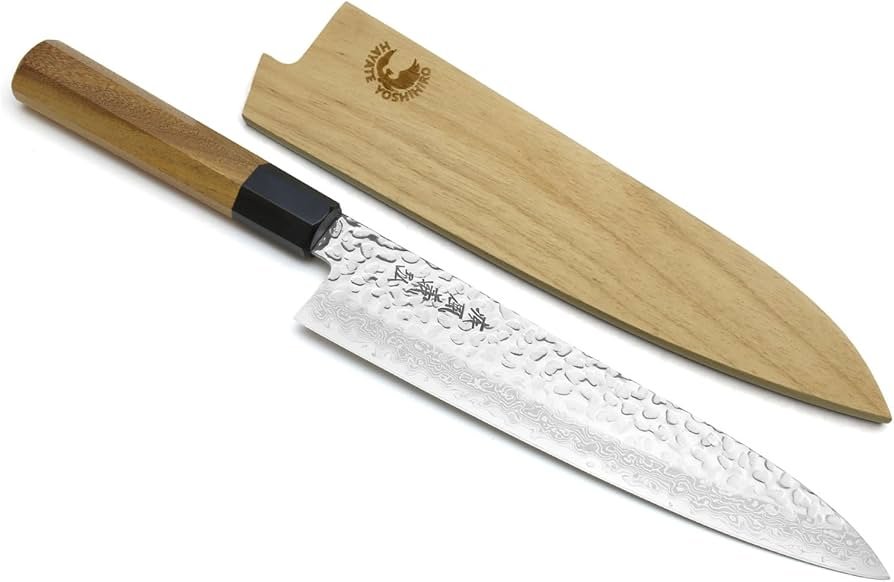
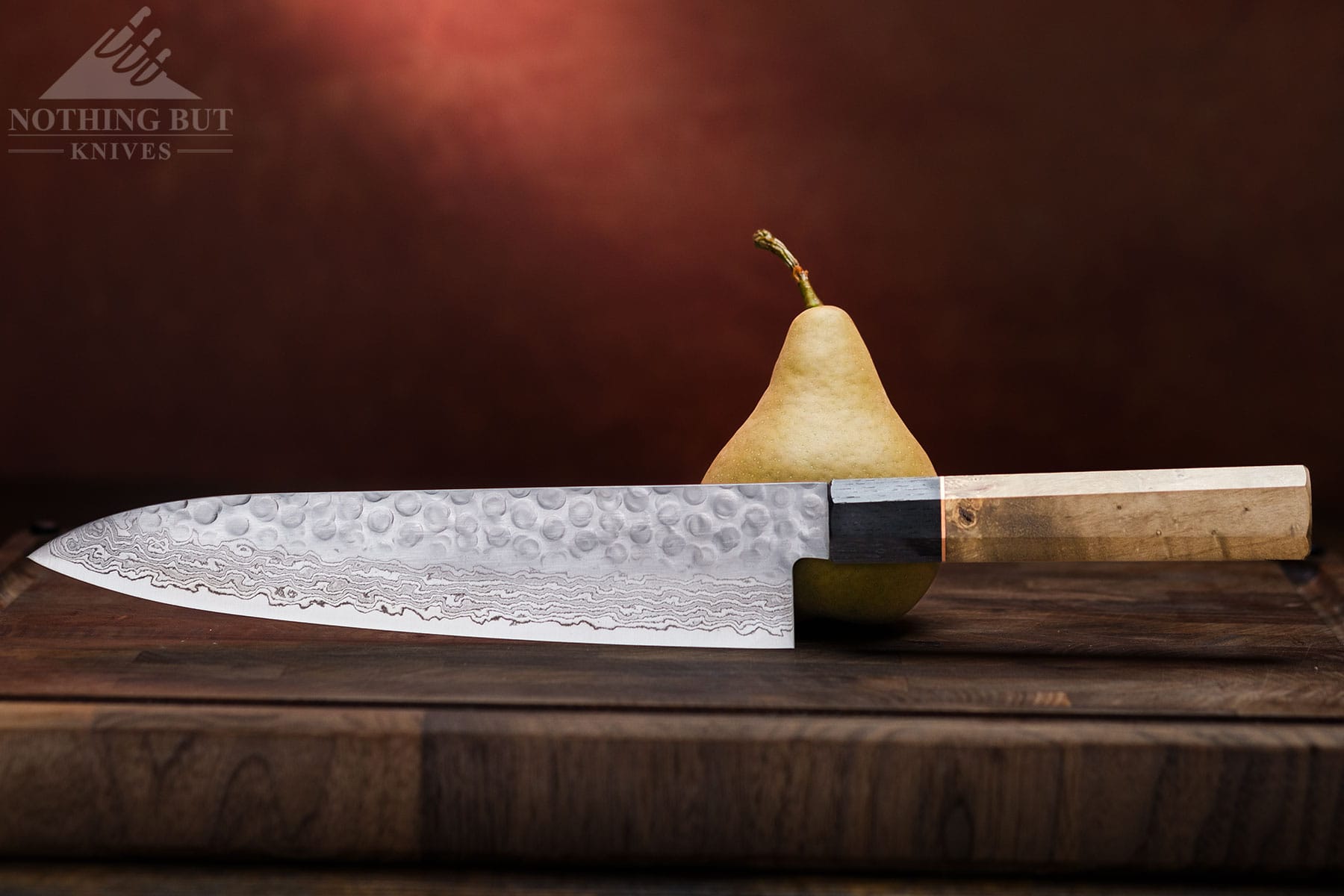
Modern Damascus steel is pattern-welded steel. Makers stack two or more steels, forge weld them together, fold or twist, then etch the blade. The contrast creates the flowing pattern you see.
The pattern is not only for looks. It can add bite at the edge and reduce sticking in food. But performance comes more from heat treatment and the core steel than from the pattern alone. That is a key point in this Damascus steel knife guide.
How Damascus steel knives are made
Most modern blades use layered tools steels or a hard core with Damascus cladding. The goal is a hard, tough edge with a stable body.
Common steps you will hear:
- Stack: The maker stacks layers of two steels with different alloys.
- Weld: They forge weld the stack under heat and pressure.
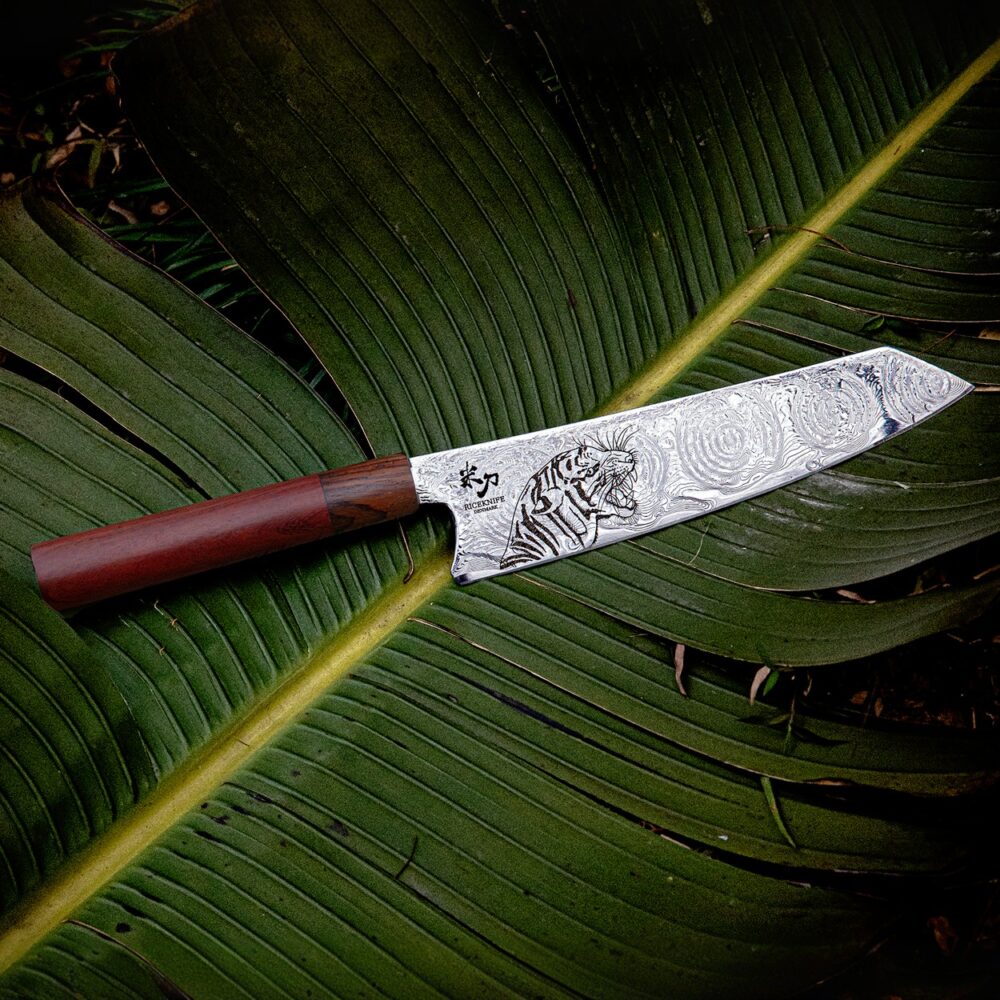
- Work: They draw, fold, twist, ladder, or feather to build the pattern.
- Shape: They profile, grind, and heat treat the blade for hardness and toughness.
- Etch: They etch in acid to reveal contrast between layers.
- Finish: They handle, sharpen, and seal the blade.
Each choice changes look and feel. The heat treat step sets the edge life more than the layer count. This is one reason a Damascus steel knife guide must stress core steel and heat treat over looks.

Pros and cons of Damascus steel knives
Damascus can be great, but it is not magic. Here is a simple view from years of use.
Pros:
- Visual appeal: Unique patterns that stand out on a rack or belt.
- Bite at the edge: Micro-serration feel from layered steels and etch.
- Food release: Some patterns help reduce sticking on wet cuts.
- Craft value: Many are hand made, with pride and care.
Cons:
- Care need: Carbon versions can rust if left wet or salty.
- Price: True pattern-welded blades cost more than plain mono-steel.
- Myths: Hype on layer count or “indestructible” claims can mislead.
- Fake patterns: Printed or laser-etched fakes are common online.
Balance these with your real needs. That is the heart of any honest Damascus steel knife guide.
How to choose the right Damascus steel knife
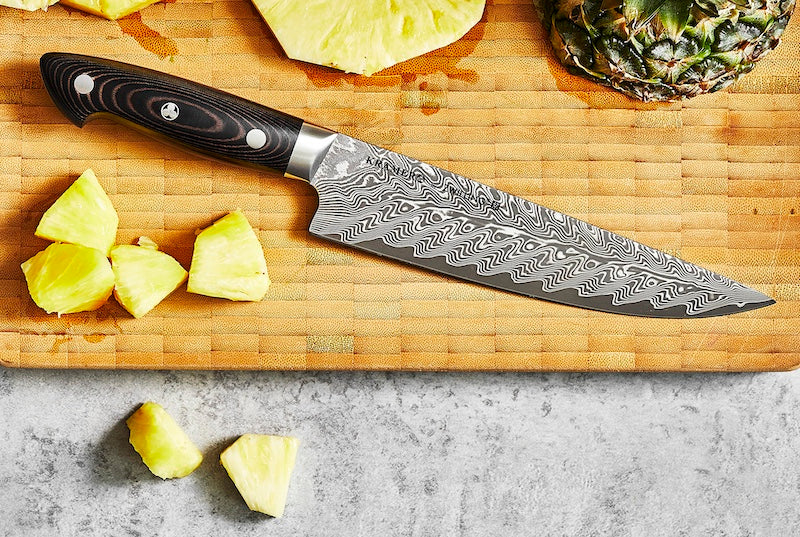
Start with use. A chef who slices all day needs a different blade than a hiker dressing game. This Damascus steel knife guide uses a simple checklist.
- Core steel or hardness: Ask for the steel and hardness target. Good ranges for kitchen use are often 60–63 HRC for harder edges, 58–60 for tougher work.
- Stainless vs carbon: Stainless cladding or stainless core helps in wet areas. Carbon can take a keener edge but needs more care.
- Grind and thickness: Thin behind the edge cuts easier. A high flat or convex grind works well for food. For outdoors, pick a tougher grind.
- Geometry over layers: More layers do not mean sharper or better. Pick geometry and heat treat first.
- Handle fit: Try pinch grip and hammer grip. Look for smooth transitions and no hotspots.
- Balance and weight: For long prep, a balance at the pinch point reduces strain.
- Maker and warranty: Buy from known makers or dealers who stand by heat treat and repairs.
- Budget: Plan your spend on steel that fits your work. Skip flashy extras if the budget is tight.
When in doubt, message the maker or dealer. A good Damascus steel knife guide always points you to clear specs and honest answers.
Care and maintenance
A little care keeps the pattern crisp and the edge sound.
Daily care:
- Wash by hand: Use warm water, mild soap, soft sponge.
- Dry at once: Wipe fully, tip to heel, then handle.
- Light oil: A drop on the blade stops rust. Use food-safe oil for kitchen knives.
Long-term care:
- Protect the etch: Do not scrub with harsh pads or bleach.
- Avoid dishwashers: Heat, steam, and banging will ruin the edge and handle.
- Patina on carbon: A gray patina is normal and helps resist rust.
If you treat it like a fine tool, it will serve you for years. That is a core message in this Damascus steel knife guide.

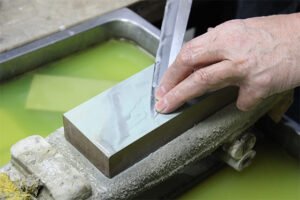
Sharpening and edge retention
You can sharpen Damascus like other steels. Focus on angle and burr control.
- Angle: Many kitchen blades like 12–15 degrees per side. Outdoor blades often run 18–22 for strength.
- Stones: Use water stones or diamond plates. Start coarse enough to set the bevel, then refine.
- Raise and chase the burr: Feel for it, then flip sides until it is gone.
- Strop: Light strokes on leather help clean the edge.
- Micro-bevel: One or two light passes at a slightly higher angle can boost edge life.
I have found that a calm, slow set of strokes beats speed. Keep notes on the angle that works on each blade. A consistent method is the secret this Damascus steel knife guide wants you to remember.
Price, value, and spotting fakes
Real pattern-welded blades have depth and grain. Fakes often look flat or printed.
Spot fakes with these checks:
- Pattern at the spine and choil: Real layers show in 3D areas, not only on flats.
- Etch depth: Light relief feels real. A flat, glossy print is suspect.
- Claims: Wild stories about “ancient secret steel” with no steel data are a red flag.
- Price vs process: True forging takes time. Very low price with bold claims is a warning.
- Seller transparency: Ask for steel names and heat treat data. Honest sellers share details and defects.
This Damascus steel knife guide urges calm buying. Take time to read real reviews and ask for close-up photos.

Best uses and popular styles
Pick the right shape for the job. Match grind and length to tasks you do most.
Kitchen:
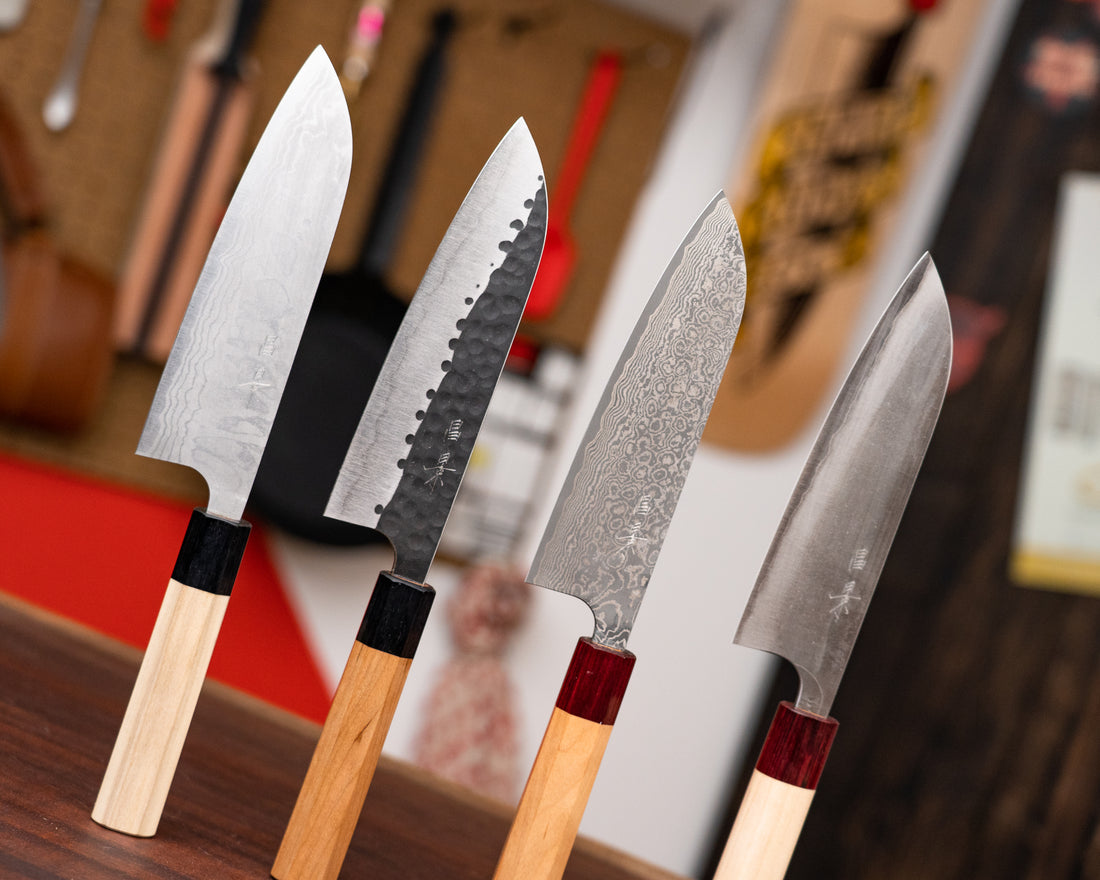
- Gyuto or chef’s knife: All-round prep, chop to slice.
- Santoku or bunka: Compact control, great for veg.
- Petty: Small work and detail cuts.
- Nakiri: Veg push cuts with tall blade for knuckle room.
Outdoor and EDC:
- Drop point: General use and game.
- Skinner: Curved belly for clean skinning.
- Utility or slicer: Thin and keen for food on the go.
Use this Damascus steel knife guide to map shape to tasks. The right profile saves time and effort.

Safety and storage
Good storage keeps edges keen and fingers safe.
- Edge guards: Simple and low-cost for drawers or travel.
- Magnetic bars: Hold blades off the counter. Use wood-faced bars to protect the finish.
- Blocks or saya: Wood sheaths or slots shield edges from bumps.
- Cutting boards: End-grain wood helps the edge last. Avoid glass and stone.
For carry, use snug sheaths and keep edges covered. This Damascus steel knife guide puts safety above style every time.
Myths and facts about Damascus
Let’s clear the air so you can buy with confidence.
- More layers are better: False. Heat treat and geometry matter more than layer count.
- Damascus never rusts: False. Carbon versions can rust fast if left wet or salty.
- All Damascus is the same: False. Steels, heat treat, and maker skill vary a lot.
- Etch is only cosmetic: Partly false. Etch reveals the pattern and can add micro-bite, but edge life comes from steel and heat treat.
- You cannot sharpen it at home: False. With basic stones and good habits, you can get a great edge.
A solid Damascus steel knife guide cuts through myths and keeps you focused on facts.
Environmental and ethical notes
Knifemaking uses energy and materials. You can choose better.
- Ask about sourcing: Some makers share steel sources and local supply chains.
- Buy once, buy well: A long-lived tool beats many cheap throwaways.
- Support small shops: Many recycle offcuts and use careful heat treatment to cut waste.
- Maintain your knife: Care and sharpening extend life and reduce impact.
Sensible choices add up. This Damascus steel knife guide favors durable tools over hype.
Frequently Asked Questions of Damascus steel knife guide
Is Damascus steel stronger than regular steel?
Not always. Strength and edge life depend more on heat treat and core steel than on pattern. A good mono-steel can perform as well or better.
Will a Damascus knife rust?
Stainless versions resist rust, but carbon versions can rust fast if left wet. Dry and oil your blade to prevent spots.
How often should I sharpen a Damascus knife?
Sharpen when the edge slips on tomato skin or paper. Light stropping between sessions can double the time between full sharpenings.
How can I tell if a Damascus knife is real?
Look for pattern at the spine and choil, not only on the flats. Ask for steel types and heat treat data; vague answers are a red flag.
What angle should I use to sharpen?
For kitchen use, 12–15 degrees per side is common. For outdoor use, 18–22 adds durability for rough tasks.
Does more layer count mean better performance?
No. Layer count affects look more than cutting. Geometry and heat treat drive real-world results.
Can I put a Damascus knife in the dishwasher?
No. Heat, chemicals, and banging will dull and damage the blade and handle. Hand wash and dry right away.
Conclusion
A great Damascus knife blends beauty with real performance. Choose by steel, heat treat, and geometry, not hype or layer count. Use this Damascus steel knife guide to pick the right shape, care for it well, and sharpen with a steady hand.
Ready to find your match? Revisit this Damascus steel knife guide when you shop, compare real specs, and ask clear questions. Subscribe for more hands-on tips, or drop a comment with your use case and budget, and I will help you narrow the field.

Maliha Akter is a kitchen knife reviewer and food preparation specialist with over 6 years of experience testing Japanese kitchen knives and everyday cooking tools. She focuses on performance, safety, durability, and real-world usability to help home cooks choose the right knives for efficient and enjoyable cooking.
Expertise:Japanese Knives • Vegetable Knives • Product Reviews • Kitchen Efficiency • Knife Care