Honing vs sharpening: Honing realigns an edge; sharpening removes metal to restore it.
I have spent years working with knives and tools in kitchens and workshops. I will explain honing vs sharpening with clear facts, simple steps, and practical tips. You will learn when to use a honing rod and when to reach for a stone. This guide draws on hands-on experience and tested methods. Read on to make your blades safer, sharper, and longer lasting.

What honing and sharpening mean
Honing and sharpening are not the same. They serve different goals for blades.
Honing realigns the blade edge. It moves tiny folds back into place. Honing keeps a sharp edge between real sharpenings. It does not remove significant metal.
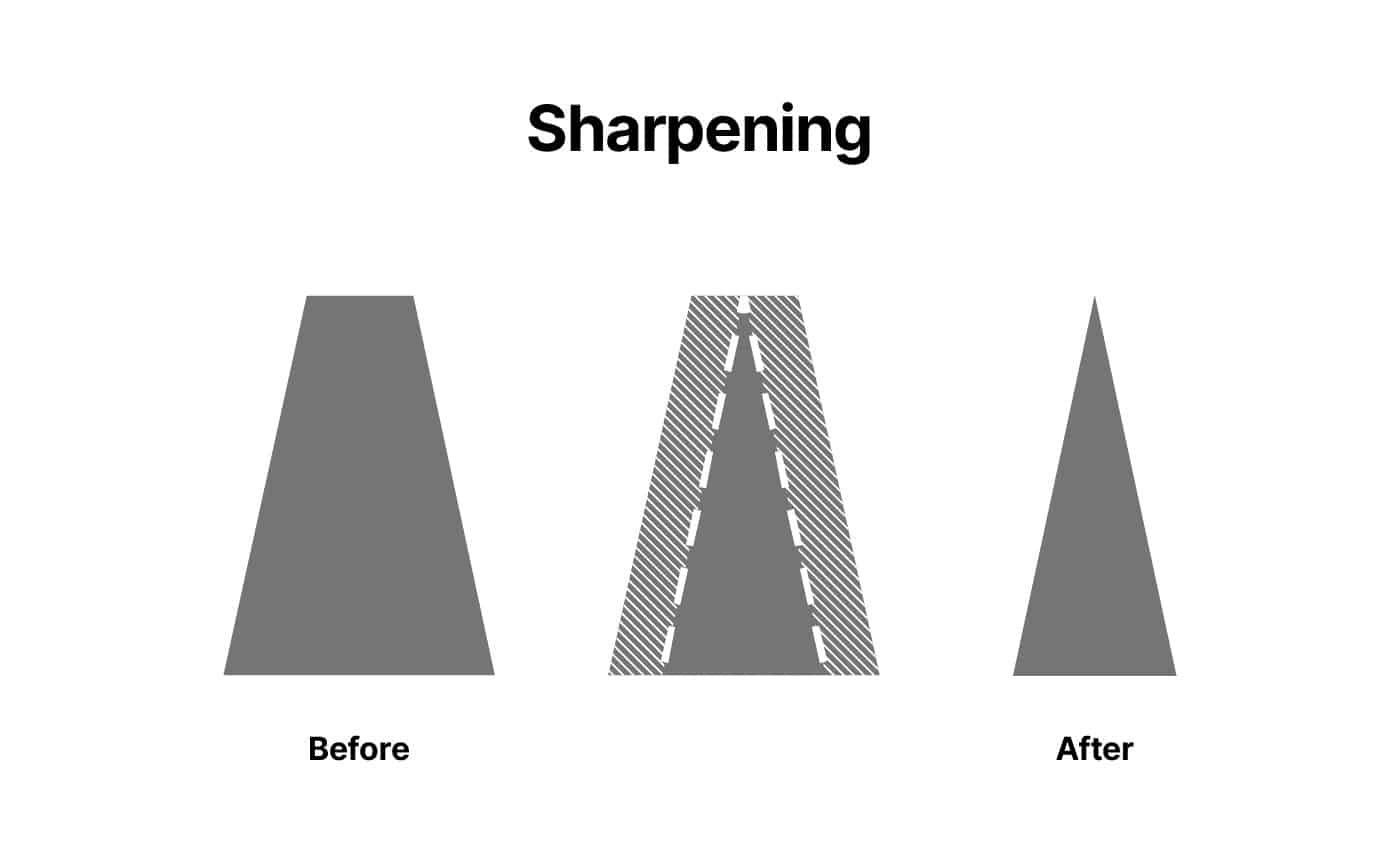
Sharpening removes metal to form a new edge. It grinds away dull metal. Sharpening restores a blade that is blunt or damaged. You use stones, belts, or powered systems for sharpening.
Honing vs sharpening matters for care, cost, and safety. Use the right method at the right time to keep knives performing well.
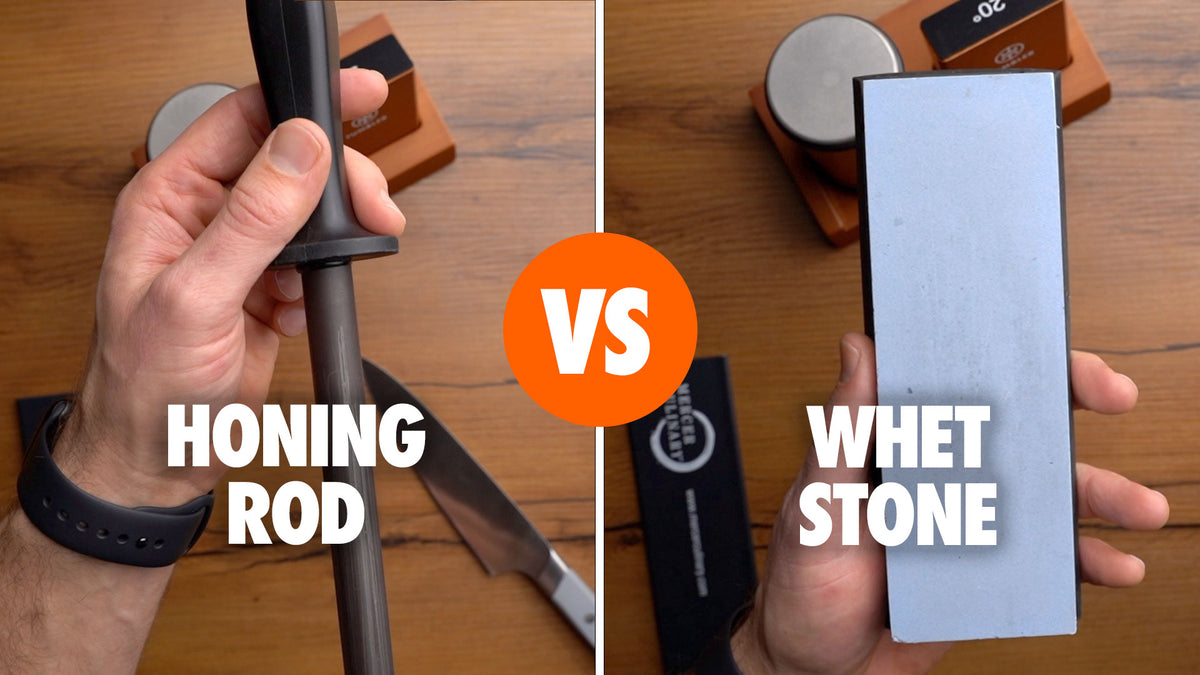
Key differences between honing vs sharpening
Understanding the core differences helps you choose what to do.
- Purpose: Honing refines the existing edge. Sharpening recreates the edge.
- Material change: Honing does not remove much metal. Sharpening removes metal.
- Frequency: Hone often. Sharpen rarely.
- Tools: Honing rod or strop for honing. Stones or powered systems for sharpening.
- Time: Honing takes seconds to minutes. Sharpening takes more time and skill.
- Results: Honing improves cutting feel. Sharpening restores cutting ability.
When you think about honing vs sharpening, picture gentle nudges versus rebuilding. Honing nudges a tired edge straight. Sharpening rebuilds a dull one.
Tools and techniques for honing vs sharpening
Choose the right tool for the job. Tools vary by cost and skill.
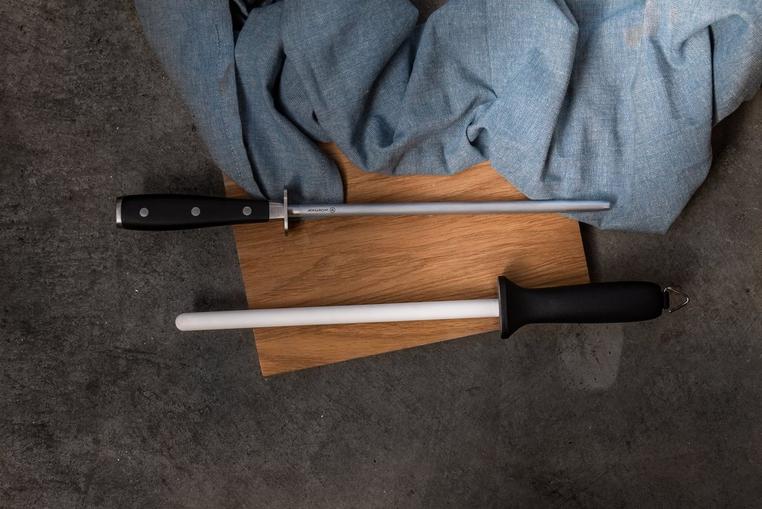
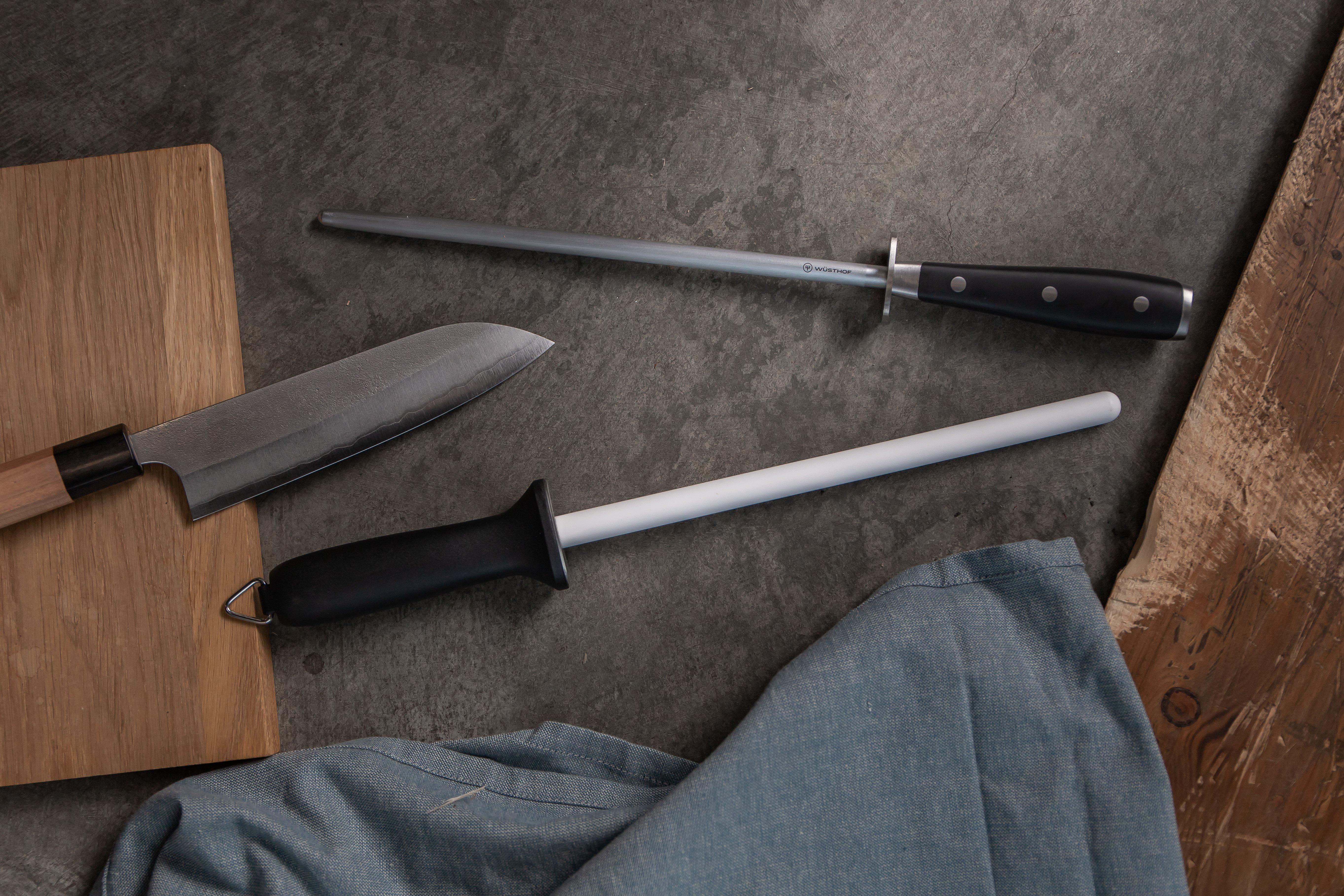
- Honing rod
- Ceramic and steel rods are common.
- Use a light angle and a few strokes per side.
- Leather strop
- Polishes the edge and removes burrs.
- Good after sharpening for a razor finish.
- Whetstones
- Use coarse to fine grits for sharpening.
- Soak or wet stones as recommended.
- Diamond stones and plates
- Fast cutting and durable.
- Great for hard steels.
- Sharpening systems
- Guides keep angles steady.
- Good for beginners.
- Electric sharpeners
- Quick but can remove too much metal.
- Use them carefully.
Technique tips:
- Keep a consistent angle when sharpening.
- Use light pressure when honing.
- Clean stones and tools after use.
I prefer an oil or water stone for sharpening most kitchen knives. A ceramic rod is my go-to for daily honing. My tests show this combo keeps edges reliable with less metal loss.

When to hone vs sharpen
Knowing when to hone or sharpen saves time and preserves blades.
Signs to hone:
- The knife drags slightly on tomatoes.
- Thin slices feel less smooth.
- Use a honing rod after every few uses.
Signs to sharpen:
- The knife can’t slice paper cleanly.
- The edge chips or has visible damage.
- Frequent honing no longer helps.
Frequency guide:
- Hone every 1–4 uses for kitchen knives.
- Sharpen every few months for home cooks.
- Sharpen more often for heavy use or soft steel.
Personal note: I honed my chef’s knife weekly and sharpened it twice a year. This kept it strong and reduced metal removal.
PAA-style questions:
How often should I hone a knife?
Hone after every few uses or once a week for regular cooks. It keeps the edge aligned and makes cutting safer.
Will honing fix a dull knife?
Honing can temporarily improve a slightly dull edge. If the blade is very dull, sharpening is needed.
Step-by-step: how to hone and how to sharpen
Simple steps make both tasks safe and effective.
How to hone:
- Hold the rod vertically with tip on a stable surface.
- Place the knife at the correct angle (about 15–20 degrees for kitchen knives).
- Draw the blade down and across the rod from heel to tip.
- Repeat 3–5 times per side with light pressure.
- Test on a tomato or paper.
How to sharpen with a whetstone:
- Soak or wet the stone as instructed.
- Start with a coarse grit if very dull.
- Hold the blade at the target angle.
- Move the blade across the stone in a sweeping motion.
- Keep strokes even and count them per side.
- Switch to finer grits to refine the edge.
- Finish on a strop to polish the edge.
Practice makes both safer. I learned by watching experts and by feeling the burr form. Start slow and count strokes to keep both sides even.

Common mistakes and safety tips
Avoiding errors keeps blades safe and lasting longer.
- Using the wrong angle
- A bad angle wastes steel and dulls the blade fast.
- Applying too much pressure
- Heavy pressure removes too much metal.
- Skipping progression of grits
- Jumping to fine grit can leave a poor edge.
- Honing a chipped edge
- Honing will not fix chips; sharpening is needed.
- Using an electric sharpener carelessly
- It can overheat and remove too much metal.
Safety tips:
- Secure stones and rods on a stable surface.
- Keep fingers away from the edge.
- Wear cut-resistant gloves if you are unsure.
- Work slowly until you feel confident.
I once overused an electric sharpener and shortened a favorite knife. From that day, I track sharpening events and prefer manual methods for most blades.

Maintenance schedule, cost, and blade lifespan
Plan care to save money and keep blades healthy.
Maintenance schedule:
- Hone every few uses.
- Sharpen every 3–12 months depending on use.
- Strop after sharpening for best polish.
Cost overview:
- Honing rod: low cost, under $30.
- Whetstones: $20–$150 depending on spread and quality.
- Diamond stones: $40–$200.
- Guided systems: $50–$300.
- Professional sharpening: $5–$30 per knife.
Blade lifespan:
- Proper care prolongs blade life.
- Excessive sharpening shortens lifespan.
- Honing reduces the need for frequent sharpening.
Budget tip: Spend on a good stone and learn to use it. That saves money long-term and keeps the edge true.
Frequently Asked Questions of honing vs sharpening
What exactly does honing do to a knife?
Honing straightens microscopic folds on the edge. It restores alignment and improves cutting feel without removing much metal.
Can I hone any blade?
You can hone most kitchen knives and many tools that have a thin edge. Very damaged or rounded edges need sharpening instead.
How long does sharpening take?
Sharpening takes 10–30 minutes for a single blade, depending on dullness and skill. Faster with electric tools, slower with hand stones.
Is sharpening better done by a pro?
A pro gives a reliable edge and can fix damage. Learning to sharpen at home saves money and is rewarding.
Will honing replace sharpening?
No. Honing keeps the edge aligned between sharpenings. Sharpening is required when the edge is worn or damaged.
Conclusion
Honing vs sharpening are two sides of blade care. Honing keeps an edge straight. Sharpening rebuilds an edge by removing metal. Use a honing rod often and sharpen with stones or a pro when needed. Track your sharpening, use proper angles, and avoid heavy pressure. Try a routine: hone weekly, sharpen every few months, and strop for a fine finish. Start small, practice safely, and you will keep tools sharper and last longer. Share your experience or ask a question below and subscribe for more practical guides.

Maliha Akter is a kitchen knife reviewer and food preparation specialist with over 6 years of experience testing Japanese kitchen knives and everyday cooking tools. She focuses on performance, safety, durability, and real-world usability to help home cooks choose the right knives for efficient and enjoyable cooking.
Expertise:Japanese Knives • Vegetable Knives • Product Reviews • Kitchen Efficiency • Knife Care