Sharpen a Japanese knife every 2–6 weeks; hone or strop weekly based on use.
If you want a clean slice and long edge life, you need a plan. In this guide, I break down how often to sharpen Japanese knife edges in real kitchens. I draw from years of sharpening at the bench and on the line. You will learn what really sets the schedule, how to read the edge, and simple routines that work.

How often should you sharpen a Japanese knife?
The short answer is a range. The real answer depends on use, steel, and care. Here is a simple path that fits most cooks.
- Daily pro use on a line. Hone or strop each shift. Sharpen every 1–2 weeks.
- Busy home cook, 5–7 meals a week. Hone weekly. Sharpen every 4–6 weeks.
- Light home use, 1–3 meals a week. Hone every other week. Sharpen every 8–12 weeks.
- After heavy prep of acidic or hard foods. Hone right after. Sharpen if bite is gone.
I use this with my gyuto and petty at home. It works. It also answers how often to sharpen Japanese knife tools when life gets busy. If you want the edge to sing, the key is small, steady care.
What affects your sharpening frequency
Your schedule is not one-size-fits-all. These factors push it up or down.
- Steel hardness and type. Harder steels like SG2 or Aogami Super hold an edge longer. Softer stainless like AUS-8 needs more touch-ups.
- Edge angle. Low angles, like 12–15 degrees per side, cut fast but can chip. They may need light, more frequent care.
- Knife style and grind. Thin lasers lose bite faster than thick workhorses. Tall grinds can wedge and feel dull sooner.
- Cutting board. End-grain wood is gentle. Glass or marble kills edges fast.
- What you cut. Proteins are easy. Hard squash, bones, frozen food, and acidic fruit wear edges.
- Skill and technique. Clean push cuts are kind. Twisting or scraping the board is hard on the edge.
- Storage and washing. Drawer contact dulls. Dishwashers heat-cycle the steel and can warp.
These points guide how often to sharpen Japanese knife edges in your kitchen. Think of them as dials you can tune.
Clear signs your knife needs sharpening
Do not guess. Test the edge. Fast checks save time and steel.
- Paper test. Slice printer paper with a slow push cut. Snags or tears mean it is time.
- Tomato test. If the skin slides or crushes, the bite is gone.
- Onion test. If the tip skates on the skin, you need micro-tooth.
- Light test. Hold the edge to a lamp. Shiny spots mean flat spots.
- Fingernail test. Gently set the edge on a nail. If it slides, not bites, it is dull.
- Feel for a burr. If a burr lingers after honing, the edge needs a stone.
When these show up, that is how often to sharpen Japanese knife edges in real life: right now.

Honing vs sharpening vs stropping
These are not the same. Use each at the right time.
- Honing. A ceramic or fine rod realigns a rolled edge. Use weekly, or daily in pro work.
- Sharpening. Stones remove steel to form a new apex. Do this when honing no longer helps.
- Stropping. Leather with fine compound refines and deburrs. Use after stones and for quick touch-ups.
This trio sets how often to sharpen Japanese knife blades. Honing and stropping extend the time between stone work. Stone work restores true sharp.

A simple maintenance plan you can follow
Here is a plan I give new cooks. It is easy and it works.
- After each session. Rinse, wipe dry, and store in a sheath or on a rack.
- Weekly. Hone 5–10 light passes per side on a fine ceramic rod.
- Every 4–6 weeks at home, 1–2 weeks in pro use. Sharpen on a 1000 grit stone. Deburr on 3000–6000. Strop 10 passes per side.
- Every 3–6 months. Thin the blade if it starts to wedge. Use 400–800 grit, then refine.
This routine nails how often to sharpen Japanese knife edges while keeping steel loss low.

How to sharpen on a whetstone the right way
You do not need to be a pro. Focus on a few key steps.
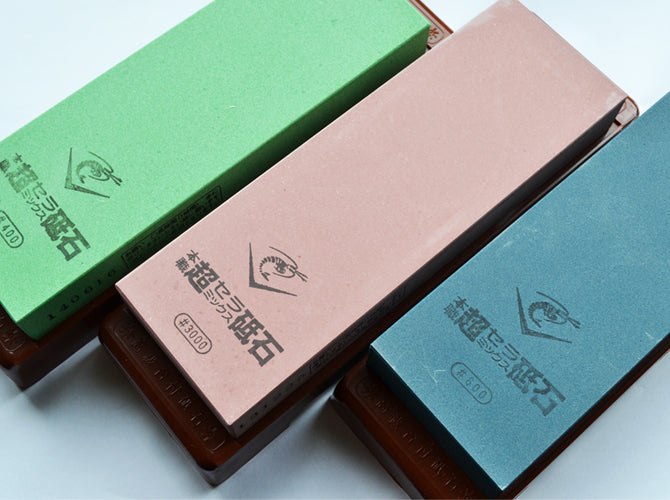
- Soak your splash-and-go or water stone as needed. Keep it flat with a lapping plate.
- Set the angle. Aim for 12–15 degrees per side for most gyutos. Match the factory bevel if unsure.
- Raise a burr on the first side with a 1000 grit stone. Use short, even strokes. Check the full edge.
- Flip and repeat. Raise a burr on the second side. Use the same angle and pressure.
- Refine at 3000–6000 grit. Use lighter pressure. Remove the burr and polish the apex.
- Deburr well. Use edge-leading strokes, a cork, newsprint, or a bare leather strop.
- Rinse, dry, and test on paper and tomato.
Do this well and you will reduce how often to sharpen Japanese knife blades because each edge lasts longer.
Steel types and real-world intervals
Different steels change the schedule. Here is what I see day to day.
- VG-10. Good stainless with fine carbides. Hone weekly. Sharpen every 4–6 weeks at home.
- SG2/R2 (powder steel). Hard and wear resistant. Hone weekly. Sharpen every 6–10 weeks at home.
- Aogami Super (Blue Super). Great bite and edge life. Hone weekly. Sharpen every 6–8 weeks at home.
- White #2 (Shirogami). Takes a scary edge fast. Hone weekly. Sharpen every 3–5 weeks at home.
- AUS-8 or AUS-10. Softer but tough. Hone weekly. Sharpen every 3–5 weeks at home.
Use this as a start for how often to sharpen Japanese knife steels you own. Adjust for use and board.
Common mistakes that dull your knife fast
Avoid these and your edge will last longer.
- Using glass, stone, or steel plates as boards. Switch to end-grain wood or soft plastic.
- Twisting the blade mid-cut. Lift and reset instead.
- Dragging the edge on the board to move food. Use the spine or a bench scraper.
- Too much pressure on a steel rod. Use light strokes on a fine ceramic instead.
- Pull-through sharpeners. They can tear steel and chip thin edges.
- Skipping deburring. A wire edge feels sharp, then dies fast.
Fixing these can cut how often to sharpen Japanese knife edges by half.
When to see a pro
Sometimes a pro touch is best.
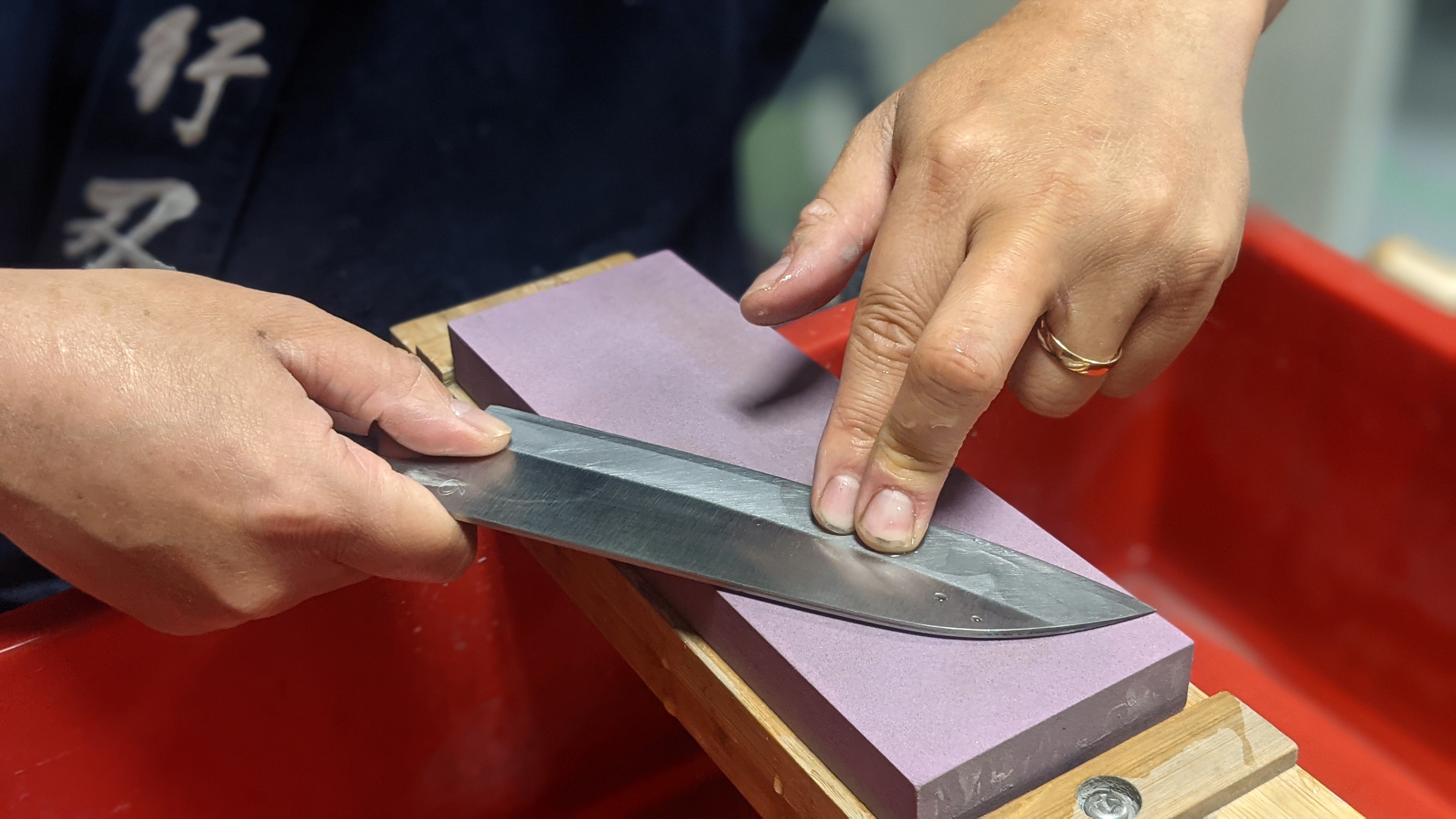
- You have chips, flat spots, or a bent tip. A pro can reprofile and thin.
- The blade is thick behind the edge. Thinning brings back glide.
- You want a full polish or single-bevel work. It needs skill and flat stones.
A pro tune-up once or twice a year is smart. It resets the baseline and can change how often to sharpen Japanese knife edges at home.
Frequently Asked Questions of how often to sharpen japanese knife
How often to sharpen Japanese knife for a home cook?
Most home cooks can sharpen every 4–8 weeks. Hone weekly and strop after each stone session.
How often to sharpen Japanese knife for a professional chef?
In pro kitchens, sharpen every 1–2 weeks. Hone or strop each shift to keep the edge alive.
Does steel type change how often to sharpen Japanese knife?
Yes, harder steels like SG2 or Aogami Super go longer between sessions. Softer stainless needs more frequent touch-ups.
Can honing replace sharpening?
No. Honing realigns a rolled edge but does not create a new apex. When honing fails, sharpen on stones.
What grit should I use when I sharpen?
Start with 1000 for the main work. Refine on 3000–6000, then strop to finish.
Will a better cutting board change how often to sharpen Japanese knife?
Yes. End-grain wood or soft plastic can double edge life. Avoid glass or stone boards.
Is 15 degrees per side safe for Japanese knives?
Yes for most double-bevel knives. Go a touch higher for tough tasks and lower for fine prep.
Conclusion
A sharp Japanese knife is a system, not a single act. Set a simple plan, read the edge, and use light, regular care. If you balance honing, stropping, and smart stone work, you will know exactly how often to sharpen Japanese knife edges in your world.
Try the weekly hone and 4–6 week sharpen plan for a month. Track how it feels on onions and tomatoes. Then tweak for your steel and board. Want more tips and stone picks? Subscribe for new guides, or drop a comment with your knife and use case.

Sophia Martinez is a culinary tools reviewer with 7+ years of experience analyzing kitchen knives and food prep tools. She specializes in practical testing, comparison reviews, and helping users improve kitchen efficiency through better equipment choices.
Expertise: Knife Reviews, Kitchen Tools, Meal Prep Optimization