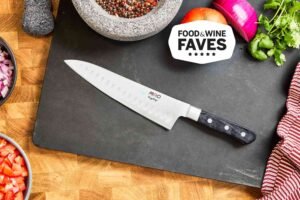
Start with an 8-inch chef’s knife that fits your hand, holds an edge, and is easy to maintain.
Choosing your first kitchen knife can feel like a maze. I’ve coached home cooks and young line cooks through this choice for years. In this guide, we’ll break down how to choose your first kitchen knife with simple tests, clear specs, and honest trade-offs. You’ll learn what truly matters, what doesn’t, and how to buy with confidence your first time.

Step-by-step: how to choose your first kitchen knife
First, get clear on the core. For most cooks, an 8-inch chef’s knife covers 90% of prep. If you follow these steps, you will know how to choose your first kitchen knife without guesswork.
Decide on the job
- If you cook daily, choose a chef’s knife.
- If you chop mostly veg, a santoku can work.
- Avoid niche blades until you master the basics.
Pick the length
- 8 inches fits most kitchens and boards.
- 6 inches is nimble but limits big tasks.
- 10 inches adds reach but needs skill and space.
Choose the steel
- Look for stainless or semi-stainless for easy care.
- Aim for hardness around HRC 56–60 for balance.
- Avoid very soft steel that dulls fast.
Check the grind and thickness
- A thin blade behind the edge cuts easier.
- A clean, even bevel aids sharpening later.
- Factory sharpness matters, but geometry matters more.
Test the handle and balance
- Use a pinch grip and move as if slicing.
- The balance should feel neutral near the pinch point.
- No hot spots. No slip. No strain.
Set a budget
- Spend what you need for comfort and control.
- Skip big sets. Buy one good knife and learn it.
- Leave room for a rod and a board.
Plan maintenance
- Hone often. Sharpen when honing no longer helps.
- Store on a strip, in a block, or with a guard.
- Avoid the dishwasher at all costs.
If you follow these steps, you will know how to choose your first kitchen knife and pick a blade that suits your hand, your food, and your routine.
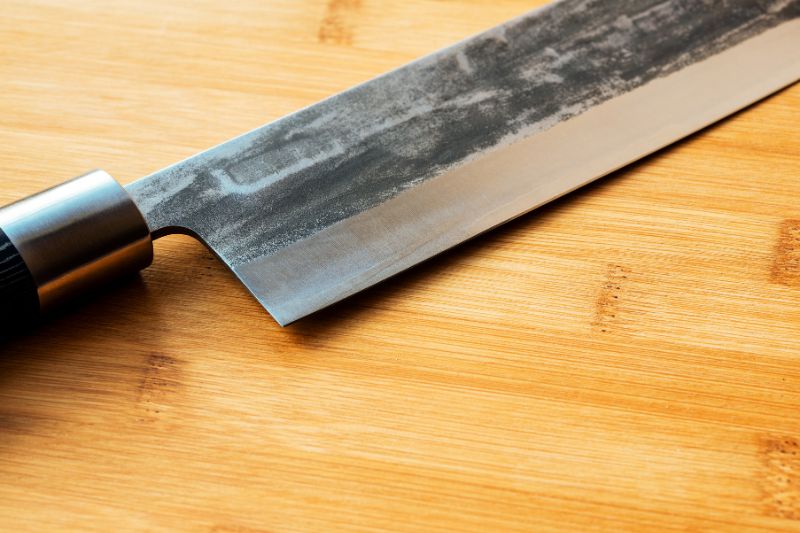
The must-have knife: why an 8-inch chef’s knife wins
An 8-inch chef’s knife is the sweet spot for most homes. It slices, chops, minces, and carves. It has the reach for squash and the control for herbs. It also fits standard boards and small sinks.
A santoku is a fine choice if you like a flat push cut. It shines with veg, tofu, and fish. But the shorter tip and flatter belly can feel tight for rocking cuts or taller items.
Here is what you gain with a classic chef’s knife:
- Versatility across ingredients and techniques.
- A pointed tip for detail work, like trimming and scoring.
- A curved profile for rocking and speed.
If you want one tool to learn with, this is it. If you are still unsure of how to choose your first kitchen knife, start here and you will not go wrong.

Blade steel and hardness explained
Steel choice shapes edge life, ease of care, and sharpening feel. Harder steel holds an edge longer but can chip if abused. Softer steel is tougher and easier to sharpen but dulls faster.
Common, beginner-friendly options:
- German-style stainless around HRC 56–58. Forgiving, easy to maintain, low rust risk.
- Mid-grade stainless like AUS-8 or 14C28N around HRC 58–60. Better edge life with simple care.
- Carbon steel takes a wicked edge and sharpens fast. It can rust and needs wiping during prep.
Edge retention, toughness, and corrosion resistance trade off. Independent tests show that heat treat often matters as much as the steel label. When learning how to choose your first kitchen knife, remember that a well-treated mid steel can beat a poorly treated premium steel.

Edge geometry, grind, and factory sharpness
Thinness behind the edge matters more than hype. A thin blade slips through onions and carrots with less force. Thick edges wedge and crush.
Angle basics:
- Western edges are often 20 degrees per side. They are sturdy and forgiving.
- Japanese edges trend to 12–15 degrees per side. They are sharper but may chip if misused.
- A micro-bevel adds strength with little loss in bite.
Factory sharpness fades; geometry stays. If you want the best cut and still wonder how to choose your first kitchen knife, pick the one that is thin and even along the bevels.
Handle, balance, and weight
Comfort beats specs you cannot feel. A great knife disappears in your hand. A bad one creates hot spots in minutes.
Handle shapes and materials:
- Western handles have a palm swell and full tang feel.
- Wa handles (octagonal or D) are light and nimble.
- Materials like Micarta, G10, stabilized wood, and durable polymers all work well.
Balance tips:
- Pinch the blade at the heel. The balance should sit near your pinch.
- Heavier knives power through dense food. Lighter knives give speed and control.
- If you feel wrist strain fast, try lighter or more neutral balance.
When learning how to choose your first kitchen knife, trust the feel in hand. Your grip, board height, and tasks guide the right choice.
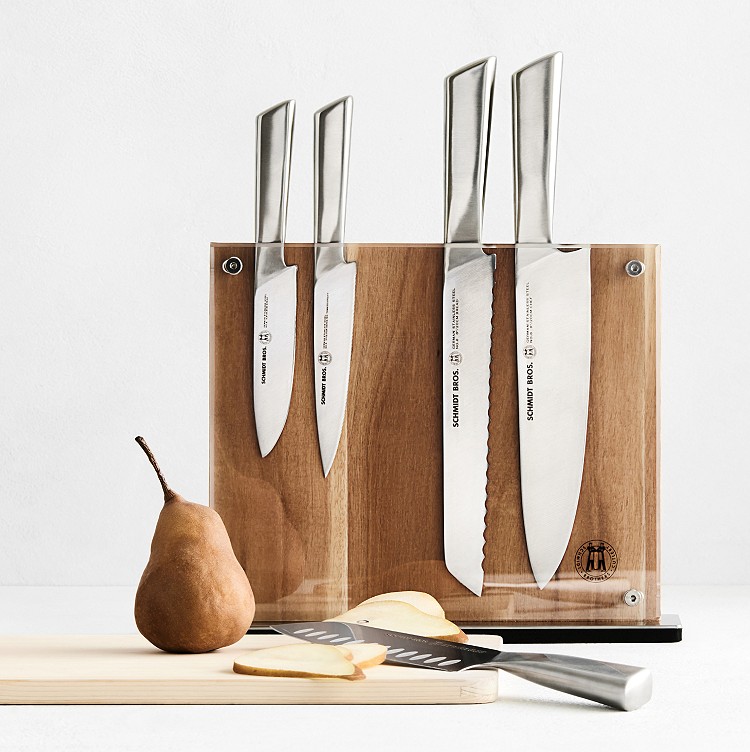
Western vs Japanese styles
A Western chef’s knife has a curved belly and a thicker spine. It suits rock chopping and heavy work. It forgives rough boards and mixed prep.
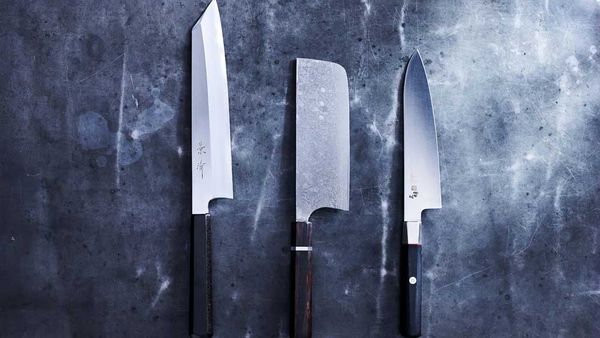
A Japanese gyuto is a slimmer take on the chef’s knife. It is lighter, with a finer edge. It excels at detail and clean cuts. A santoku is shorter with a flatter edge. It is great for straight push cuts. A nakiri is a veggie specialist with a tall, flat profile.
For your first blade, a chef’s knife or gyuto is best. If you are comparing styles and asking how to choose your first kitchen knife, pick the one that matches your cutting motion.

Budget and value: where to spend, what to skip
You can buy well at many price points. Focus on fit, heat treat, and grind. Skip risky fads.
Price tiers:
- Under $50: Good for a test run. Expect more honing and earlier sharpening.
- $50–$100: Solid daily drivers. Good steel and decent heat treat.
- $100–$200: Sharper grinds, better control, stronger warranty.
- $200+: Premium fit and finish. Gains are real but smaller for beginners.
Spend on the blade you use daily. Save on extra knives. When you weigh options and think about how to choose your first kitchen knife, invest in the knife, the board, and a honing rod first.

Care, maintenance, and sharpening
Even the best knife fails without care. Small habits protect your edge and your wallet.
Daily habits:
- Hand wash with mild soap. Dry right away.
- Use wood or soft plastic boards. Avoid glass, stone, or bamboo.
- Store on a magnetic strip, in a block, or with a guard.
Edge care:
- Hone weekly or as needed with a fine rod. This realigns the edge.
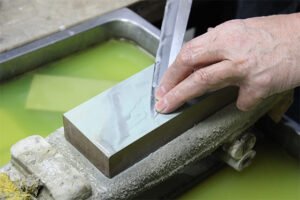
- Sharpen on stones or a pro service when honing fails. Start with a medium grit.
- Pull-through sharpeners can be handy. Use gentle models and light pressure.
A simple routine beats rare deep fixes. If you want long life and still look at how to choose your first kitchen knife, pair it with good habits from day one.

Safety and testing before you buy
A safe knife is a sharp knife with a steady user. Test before you commit.
In-store tests:
- Pinch grip at the heel. Slice a paper strip if allowed.
- Air-chop motion to check track and balance.
- Hold the spine and handle. Check for rough edges or gaps.
At home:
- Mind your cutting board height. About hip height is ideal.
- Keep fingers curled (the claw). Move slow when learning.
- If you still wonder how to choose your first kitchen knife, test two or three and keep the one you reach for without thinking.
Extras that help your first knife shine
A few low-cost tools make a big difference. They protect edges and speed learning.
Useful add-ons:
- A soft wood board, end or edge grain.
- A fine ceramic or steel honing rod.
- A 1000/3000 or 1000/6000 combo stone when you are ready.
- A blade guard for drawers or travel.
- A side towel to wipe and dry as you prep.
These basics help you master how to choose your first kitchen knife and keep it sharp, safe, and ready.
Frequently Asked Questions of How to choose your first kitchen knife
How long should my first kitchen knife be?
Eight inches works for most cooks and kitchens. It balances reach, safety, and control without feeling bulky.
What is the best steel for beginners?
Stainless around HRC 56–60 is a safe bet. It balances edge life, toughness, and easy care for daily use.
How to choose your first kitchen knife on a tight budget?
Focus on fit in hand, a thin grind, and decent steel. Skip sets and buy one good chef’s knife plus a honing rod.
Should I buy a santoku or a chef’s knife first?
A chef’s knife is more versatile. A santoku is great for veg and push cuts but can feel short for larger tasks.
How often should I sharpen my first knife?
Hone often and sharpen when honing no longer restores bite. For most home cooks, that means sharpening every few months.
Is a Japanese gyuto too delicate for beginners?
Not if you use a soft board and good habits. A gyuto can be a perfect first knife if you value light weight and fine cuts.
How do I test comfort before buying?
Use a pinch grip and mimic your cutting motion. If any part rubs or strains your wrist, try another handle or weight.
Conclusion
Your first kitchen knife should feel natural in your hand, cut cleanly, and be easy to care for. Choose an 8-inch chef’s knife or gyuto, pick sensible steel, and test the grip and balance. Learn basic care and you will enjoy sharp, safe cooking every day.
Now it is your turn. Use this guide on how to choose your first kitchen knife and try two or three options. Bring home the one you love to use. Want more? Subscribe for sharpening tips, starter stone guides, and proven knife drills you can master in minutes.

Emily Carter is a kitchen knife specialist with over 8 years of experience testing and reviewing Japanese kitchen knives. She focuses on blade performance, comfort, durability, and real-life cooking usability. Her goal is to help home cooks choose reliable, high-quality knives for everyday cooking.
Expertise: Japanese Knives, Vegetable Cutting, Product Testing