Rust can easily make its way onto your beloved kitchen knives, turning them from shiny and sharp to dull and ineffective. It’s a common problem, especially if knives are left exposed to moisture or improper care. But don’t worry, removing rust from kitchen knives doesn’t have to be a complicated process. With the right tools and techniques, you can restore your knives to their former glory. This guide will walk you through the best methods to remove rust, prevent future damage, and keep your kitchen knives in top condition.
Why Does Rust Form on Kitchen Knives?
Rust forms when steel is exposed to moisture, air, and oxygen. The process of oxidation causes iron particles to react with water or air, leading to the formation of rust. If your kitchen knives are left wet after use or stored in a damp environment, they’re more likely to develop rust spots. Even stainless steel knives, though more resistant to rust, can still develop surface rust under certain conditions, especially if they’re exposed to acids or left wet for prolonged periods.
The Best Methods for Removing Rust from Kitchen Knives
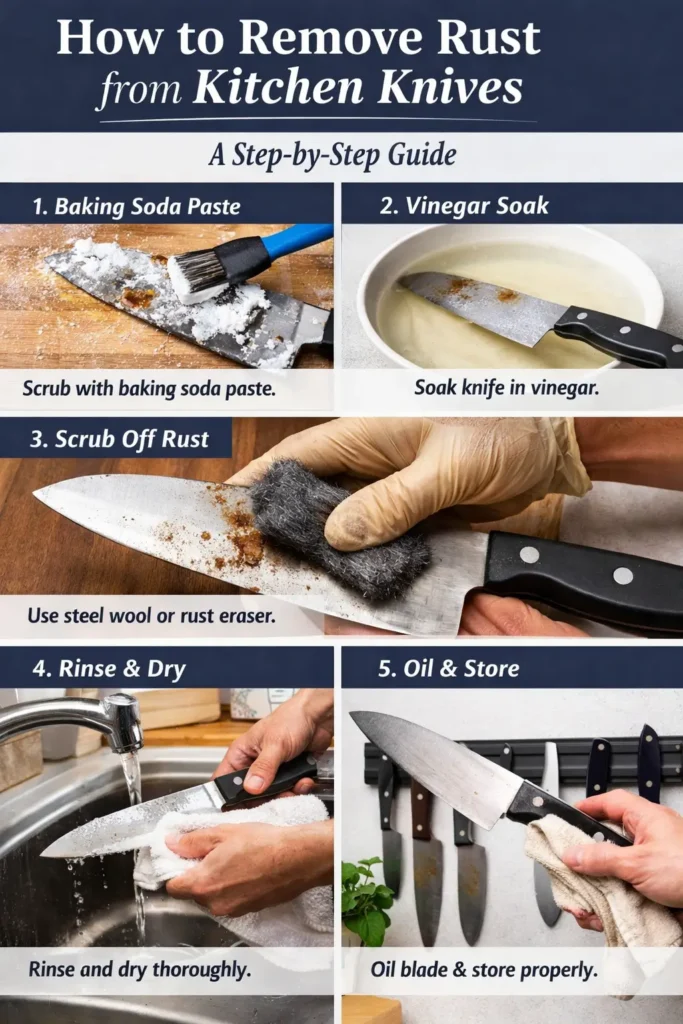
There are several effective methods for removing rust from kitchen knives. Let’s explore the best options:
1. Using Baking Soda Paste
Baking soda is a gentle and effective way to remove rust from kitchen knives. Its mild abrasiveness helps scrub away rust without damaging the steel.
Steps:
- Mix a tablespoon of baking soda with water to create a thick paste.
- Apply the paste to the rusted areas of the knife.
- Let it sit for 15-20 minutes to allow the baking soda to break down the rust.
- Use a soft cloth or sponge to scrub the rust off in circular motions.
- Rinse the knife with warm water and dry thoroughly with a clean towel.
2. Using White Vinegar
White vinegar is another natural solution for rust removal, thanks to its acetic acid content. It helps break down the rust and lifts it off the metal surface.
Steps:
- Soak a clean cloth in white vinegar.
- Wrap the cloth around the rusted parts of the knife.
- Let it sit for 30 minutes to an hour.
- After the vinegar has loosened the rust, use a non-abrasive sponge or cloth to scrub away the rust.
- Wash the knife with warm water and dry it immediately.
3. Using Lemon and Salt
The acid in lemon juice, combined with the abrasiveness of salt, works well to remove rust from kitchen knives.
Steps:
- Sprinkle a generous amount of salt onto the rusted areas of the knife.
- Squeeze fresh lemon juice over the salt to create a paste.
- Let the mixture sit for 10-15 minutes.
- Use a soft cloth or sponge to scrub the rust off.
- Rinse the knife with warm water and dry it thoroughly.
4. Using a Rust Eraser or Sandpaper
For more stubborn rust, you may need to use a rust eraser or fine-grit sandpaper. These tools can be used carefully to scrub away the rust without scratching the blade.
Steps:
- Use a rust eraser or fine-grit sandpaper (around 400-grit) to gently rub the rusted area.
- Work in small, circular motions, being careful not to apply too much pressure.
- Wipe the blade clean with a damp cloth to remove any remaining rust particles.
- Dry the knife thoroughly after cleaning.
5. Using a Commercial Rust Remover
If natural methods don’t do the trick, a commercial rust remover can help. These products are designed to break down and remove rust effectively.
Steps:
- Follow the manufacturer’s instructions on the rust remover product.
- Typically, this involves applying the product directly to the rusted area and allowing it to sit for a short period.
- Scrub away the rust with a soft cloth or sponge.
- Wash the knife thoroughly with water and dry it right away.
Preventing Rust on Kitchen Knives
Now that you’ve learned how to remove rust, the next step is to prevent it from happening again. Here are some essential tips to keep your kitchen knives rust-free:
1. Always Dry Knives Immediately After Use
One of the most common causes of rust on kitchen knives is leaving them wet. Always dry your knives thoroughly after washing them, especially if you use them to cut acidic foods like tomatoes or citrus.
2. Store Knives in a Dry Place
Make sure your knives are stored in a dry area. Avoid leaving them in a damp drawer or on a wet countertop. A knife block, magnetic strip, or drawer insert can help keep knives dry and organized.
3. Regularly Oil the Blade
Applying a thin layer of oil, such as mineral oil, on your knife’s blade can help prevent rust from forming. This is especially important for high-carbon steel knives, which are more susceptible to rust.
4. Avoid Dishwashers
While it may be tempting to throw your knives into the dishwasher, this can cause rust to form. The harsh detergents, heat, and moisture can damage the steel and cause oxidation. Always hand wash your knives.
5. Use a Knife Protector
Using a knife guard or sheath can protect the blade from moisture and damage when it’s not in use. This is especially helpful if you’re storing your knives in a drawer or other confined space.
Practical Tips from Real Kitchen Usage
In a busy kitchen, it’s easy for knives to become rusty if you’re not careful. Here are some practical tips that home cooks and kitchen enthusiasts swear by:
1. Keep Knives Away from Moisture
If you’re working with wet ingredients, always place your knife on a dry surface when not in use. This will prevent moisture from sitting on the blade and causing rust.
2. Use a Knife Maintenance Kit
Investing in a good knife maintenance kit can help you stay on top of your knives’ upkeep. These kits often include sharpeners, rust removers, and oil for maintaining the blade.
3. Sharpen Your Knives Regularly
A sharp knife is not only safer to use but also less prone to rust. Regular sharpening helps remove rust spots and maintain the blade’s edge, ensuring your knives stay in great condition.
Common Mistakes and How to Avoid Them
Even experienced cooks can make a few mistakes when it comes to knife maintenance. Here are some common errors and tips on how to avoid them:
1. Leaving Knives in Water for Too Long
Don’t leave your knives submerged in water for extended periods, especially if they’re made from high-carbon steel. Always dry them promptly to avoid rust.
2. Using Harsh Cleaning Products
Avoid using harsh abrasives or cleaning products that can damage the knife’s surface. Stick to mild solutions like vinegar, baking soda, or lemon juice.
3. Neglecting to Maintain the Knife’s Handle
Rust can form not only on the blade but also on the handle if it’s made from metal. Make sure to dry and oil the handle as well.
4. Using a Knife on Hard Surfaces
Using your knife on hard surfaces like stone or metal can damage the blade and make it more susceptible to rust. Always use a cutting board.
Safety Tips When Cleaning Rust from Kitchen Knives
Working with kitchen knives requires caution. Here are a few safety tips to follow when removing rust from your knives:
- Wear Gloves: If you’re using sandpaper or a rust eraser, consider wearing gloves to protect your hands from sharp edges.
- Use a Soft Cloth: Avoid using abrasive materials like steel wool that can scratch the blade.
- Be Gentle: When applying pressure to remove rust, use gentle motions to avoid damaging the blade or causing injury.
- Handle with Care: Always handle your knife carefully, as rust removal can sometimes make the blade slippery.
Expert Recommendations for Maintaining Your Kitchen Knives
Taking care of your kitchen knives is essential for their longevity. Here are a few expert tips that chefs and knife enthusiasts swear by:
1. Regular Maintenance is Key
It’s much easier to prevent rust than to remove it once it has formed. Clean, dry, and store your knives properly to keep them in top condition.
2. Invest in High-Quality Knives
High-quality knives, like those made of high-carbon steel, are more resistant to rust and damage. If you’re serious about cooking, it’s worth investing in quality knives that will last for years.
3. Don’t Skip the Oil
Oiling your knives is an essential step in maintaining their condition. A small amount of mineral oil or knife-specific oil will keep the blade rust-free and lubricated.
4. Sharpen Regularly
Regular sharpening helps remove small rust spots and ensures your knife stays sharp and effective. Use a sharpening stone or a honing rod to keep the blade in shape.
FAQ: How to Remove Rust from Kitchen Knives
1. Can I remove rust from kitchen knives with toothpaste?
Yes, toothpaste can be an effective rust remover. Apply a small amount to the rusted area, scrub gently with a soft cloth, and rinse.
2. How long should I soak my knife in vinegar to remove rust?
Soaking for 30 minutes to an hour should be sufficient to loosen the rust. After soaking, scrub the rust away with a cloth or sponge.
3. Is it safe to use sandpaper on my knife?
Fine-grit sandpaper (400 grit or higher) can be used carefully to remove rust. Be gentle to avoid damaging the blade.
4. How often should I oil my knives?
It’s recommended to oil your knives every few months or when you notice signs of rust forming. This will protect the blade and maintain its sharpness.
5. Can I use a rust remover on stainless steel knives?
Yes, you can use a commercial rust remover on stainless steel knives. Be sure to follow the manufacturer’s instructions.
6. What’s the best way to store knives to prevent rust?
Store knives in a dry environment, preferably in a knife block or magnetic strip. Avoid leaving them in damp areas like sinks or drawers.
Conclusion: Keep Your Knives Rust-Free with These Expert Tips
Rust on kitchen knives can be frustrating, but with the right methods and regular maintenance, it’s easy to remove and prevent. Whether you use natural remedies like vinegar and baking soda, or opt for commercial rust removers, the key is to act quickly and properly care for your knives. By following the tips outlined in this guide, you’ll keep your kitchen knives sharp, shiny, and rust-free for years to come.
Now, it’s time to get your knives back in shape and continue creating your culinary masterpieces without the worry of rust. Happy cooking!

Maliha Akter is a kitchen knife reviewer and food preparation specialist with over 6 years of experience testing Japanese kitchen knives and everyday cooking tools. She focuses on performance, safety, durability, and real-world usability to help home cooks choose the right knives for efficient and enjoyable cooking.
Expertise:Japanese Knives • Vegetable Knives • Product Reviews • Kitchen Efficiency • Knife Care