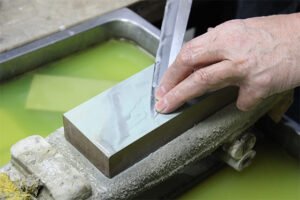
Soak your stones, set a 12° angle, raise a burr, then refine.
If you want a clean cut and a safe kitchen, you must learn how to sharpen a japanese knife the right way. I’ve sharpened knives for years, from home cooks to pros. In this guide, I’ll show you how to sharpen a japanese knife with simple steps, clear checks, and real tips that work at home.

Why Japanese knives need a different approach
Japanese knives are hard, thin, and sharp. Many use high-carbon or powdered steel. This lets them hold a fine edge. But that also means chips if you push the wrong angle or use the wrong stone. To learn how to sharpen a japanese knife, you must match the edge angle and the steel.
Hard steels like VG-10, Aogami, or SG2 like a 10–15 degree angle. Softer steels need a bit more meat. That means 15–17 degrees for peace of mind. Small changes matter on a thin blade.
If you move slow and keep the angle steady, the edge will stay true. This is the heart of how to sharpen a japanese knife.
Tools and materials you need
A simple kit is enough. Start with a good stone and a flat work area. Keep things safe and neat.
Essentials:
- Water stones: coarse 400–800, medium 1000–2000, fine 3000–8000
- A flattening plate or 220-grit wet-dry sandpaper on glass
- A stable base or a damp towel
- A spray bottle or bowl of water
- A marker for the bevel line
- A clean cloth and paper for tests
- Optional: leather strop with fine compound
A two-stone setup works well. Use 1000 grit to set the edge. Use 3000–6000 grit to refine. If the knife is dull or chipped, start at 400–600. You will see why this is key in how to sharpen a japanese knife.
Set up your sharpening station
Clear your sink or counter. Lay a damp towel under the stone so it will not slide. Fill a bowl or tub with clean water. Keep a cloth near your hand.
Soak splash-and-soak stones for 10–15 minutes. Splash-only or ceramic stones need no soak. Keep the surface wet but not a pool. This smooth flow helps you master how to sharpen a japanese knife.
Find and lock the right angle
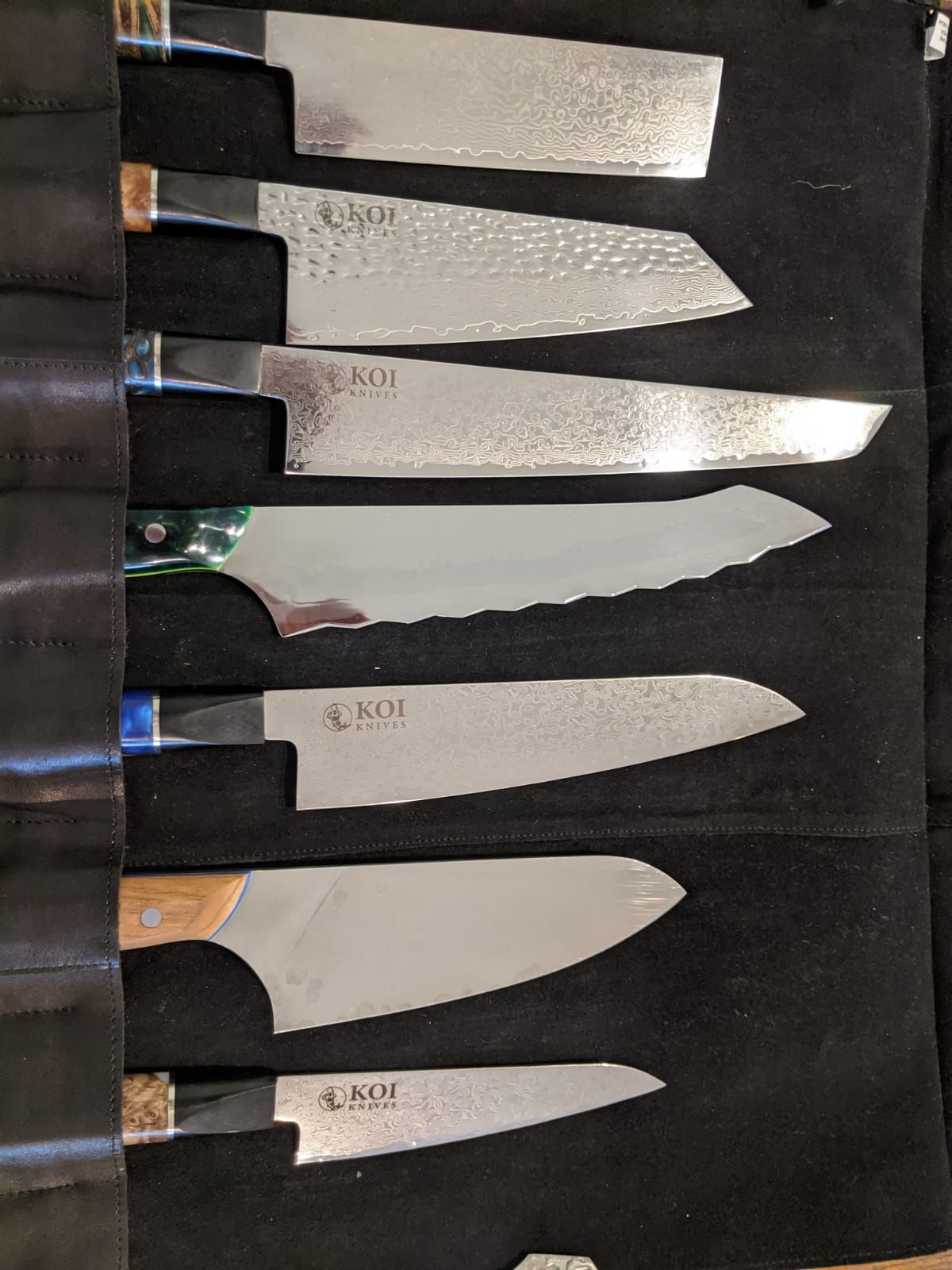
Most double-bevel Japanese gyutos and santokus like 10–15 degrees per side. That is about one to two stacked coins at the spine. Light and steady is better than hard and shaky.
Use the marker trick. Color the bevel. Take a few strokes. Check the ink. If the ink stays near the edge, lower the angle. If it stays near the shoulder, raise it. This fast check is a big win when learning how to sharpen a japanese knife.

Step-by-step: how to sharpen a japanese knife
Follow this plan. It is simple and safe. Go slow. Feel the burr. Let the stone do the work.
- Flatten your stone. A flat stone is a straight road. Rub the stone with a flattening plate in a grid pattern. Rinse the mud and check the surface.
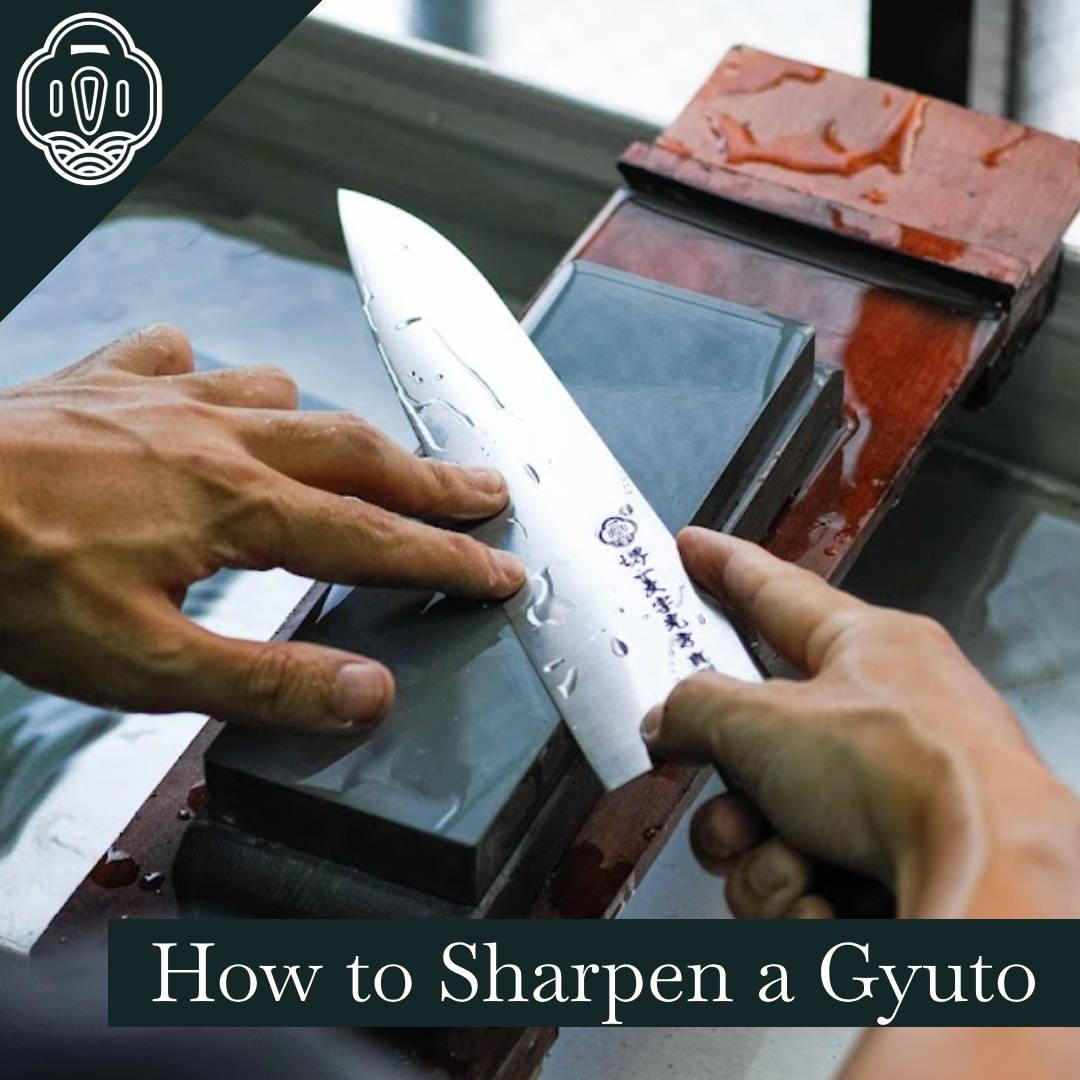
- Set your angle. Place the heel on the stone. Lift the spine to 10–15 degrees. Lock your wrist. Use your other hand to guide the blade near the edge.
- Work the first side. Push and pull in smooth paths. Lead with the edge, heel to tip. Use light to medium pressure. Count strokes if it helps you stay even.
- Raise a burr. After 10–30 strokes, feel for a tiny wire on the other side. Use the pad of your finger with care. A burr tells you the edge has met the stone.
- Switch sides. Keep the same angle. Repeat the same path. Raise a burr back on the first side.
- Reduce pressure. As you get close, use lighter strokes. Think paintbrush, not shovel. Lighter strokes clean the scratch marks.
- Refine on a finer stone. Move to 3000–6000 grit. Repeat the same steps with lighter pressure. Aim for a faint or no burr.
- Deburr. Do 5–10 edge-leading strokes per side. Then one light stroke per side, alternating. Wipe, rinse, and check the edge.
- Optional polish. If you want a mirror edge, go to 8000 grit. Use very light strokes. This helps push performance for soft fruit and fish.
This is the core flow for how to sharpen a japanese knife. Stay patient. Your hands will learn the feel in time.

Finish like a pro: stropping and micro-bevels
Stropping cleans the last bits of burr. Use leather with fine compound. Pull the edge away from the cutting line. Five to ten passes per side is enough.
Add a tiny micro-bevel for tougher work. Raise the spine one hair and take 2–3 light strokes per side on a fine stone. This boosts chip resistance with little loss in bite. It is a smart twist in how to sharpen a japanese knife that many pros use.
Test sharpness the right way
Avoid risky tricks. Keep your fingers safe. Use simple checks.
- Paper test: Slice printer paper from the heel. A clean, smooth cut means success.
- Tomato test: The edge should bite the skin with no push.
- Arm hair test: Shave a small patch with no pull. Do this with care.
- Thumbnail glide: Very gentle. The edge should grip, not skate. Only if you are sure and calm.
If these pass, you nailed how to sharpen a japanese knife.

Common mistakes and how to fix them
Too steep an angle. This makes a thick bevel that will not cut. Lower the spine and re-mark the bevel.
Too much pressure. This causes deep scratches and a wavy edge. Lighten up. Let grit do the job.
Not raising a burr. You are not at the apex. Stay longer on the first side or drop to a coarser grit.
Skipping grits. You leave large scratches that catch. Follow a clean jump, like 1000 to 3000 or 6000.
Not flattening stones. A hollow stone gives a bent edge. Flatten often. This alone can change how to sharpen a japanese knife for you.
Care, maintenance, and storage
Your edge is fresh. Keep it that way. Small habits save time and steel.
- Use a soft board like end-grain wood or soft plastic.
- Wipe the blade dry after use. Avoid the dishwasher.
- Use a rod only if it is ceramic and fine. Light strokes only.
- Touch up on a 3000–6000 grit stone every few weeks.
- Store with a saya, sheath, or on a safe magnet.
Good care cuts how often you must redo how to sharpen a japanese knife.
Special cases: single-bevel and specialty blades
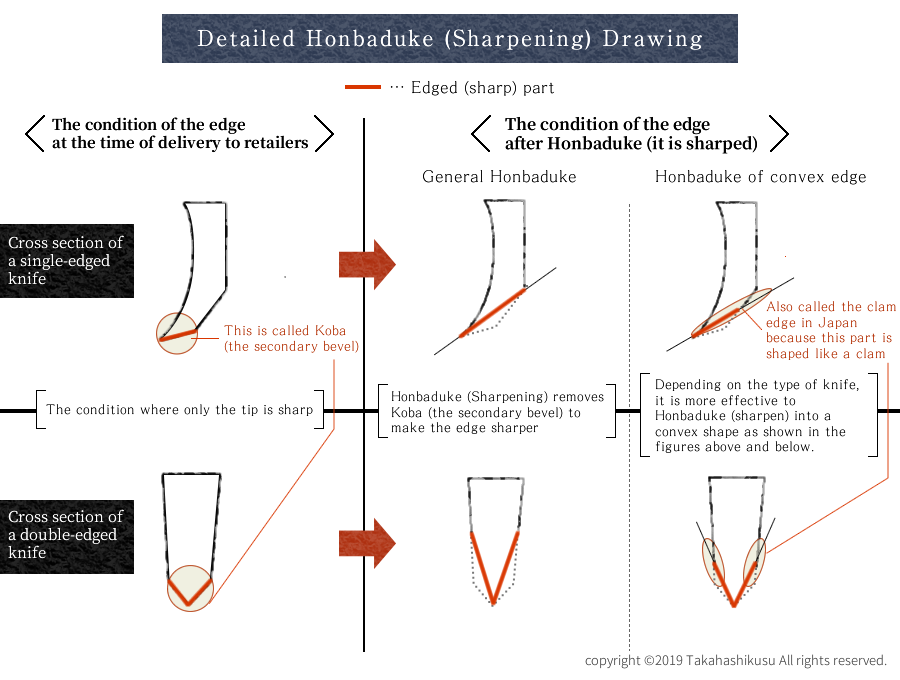
Single-bevel knives like yanagiba, deba, and usuba need a different plan. You work the large bevel (the shinogi side), then kiss the flat side to clear the burr. Keep the ura flat on the stone. Do not round it.
Go slow near the tip and heel. They can dig in. For deba, watch the thick spine and the heel meat. It will need more time. If you learn how to sharpen a japanese knife in this class, train on a cheaper blade first.
Troubleshooting guide
Edge chips after a day. Your angle is too low or the steel hit bone or board too hard. Add a micro-bevel and ease your cut.
Edge feels sharp but stalls. You left a wire burr. Deburr more. Try strop passes and light alternating strokes.
Stone feels slick and slow. It is glazed. Dress or flatten it. Keep a light mud on the surface.
Blade scratches above the bevel. Your angle is drifting high. Use the marker test. Slow down and breathe. These fixes are part of how to sharpen a japanese knife with skill.
Frequently Asked Questions of how to sharpen a japanese knife
What angle should I use for a Japanese chef’s knife?
Aim for 10–15 degrees per side. Harder steels prefer the lower end; softer steels need a touch higher.
How often should I sharpen at home?
For daily cooks, do a light touch-up every 2–4 weeks. Full sharpening may be needed every 2–3 months.
Do I need an 8000-grit stone?
Not always. A clean 3000–6000 finish is great for most food; 8000 adds polish, not always bite.
Can I use an electric sharpener?
Avoid most pull-through or electric units. They can eat steel and kill the thin bevels on Japanese knives.
How do I know I reached the edge?
Feel a burr along the full length, heel to tip. Then switch sides and refine until the burr is faint or gone.
What’s the best board for keeping the edge?
Use end-grain wood or soft plastic. Hard glass or bamboo will dull your edge fast.
Should I use oil on water stones?
No. Use clean water only. Oil can clog the stone and ruin the feel.
Conclusion
You now have a clear path to a keen, safe edge. Set your angle, raise a burr, refine, and deburr. Keep your stones flat and your touch light. That is the heart of how to sharpen a japanese knife with confidence.
Pick one knife and practice this week. Keep notes on angle, grit, and test results. Your hands will learn fast. Want more guides like this? Subscribe, share your progress, or drop your questions in the comments.

Maliha Akter is a kitchen knife reviewer and food preparation specialist with over 6 years of experience testing Japanese kitchen knives and everyday cooking tools. She focuses on performance, safety, durability, and real-world usability to help home cooks choose the right knives for efficient and enjoyable cooking.
Expertise:Japanese Knives • Vegetable Knives • Product Reviews • Kitchen Efficiency • Knife Care