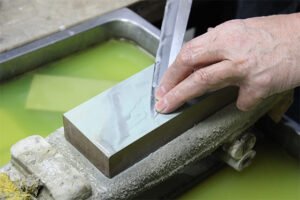
Use water stones, keep a 12–15° angle, raise a burr, refine, and strop.
If you want clean cuts, no wedge feel, and long edge life, you’re in the right place. I’ve sharpened thousands of blades in pro kitchens and at home. In this guide, I’ll show how to sharpen japanese knife the right way, with simple steps, tight angles, and real tips that work, not myths.

Why Japanese knives need a different approach
Japanese knives are hard, thin, and laser sharp by design. Many use high-carbon or powdered steels around 60–65 HRC. That hardness holds an edge but chips if you rush or use the wrong angle.
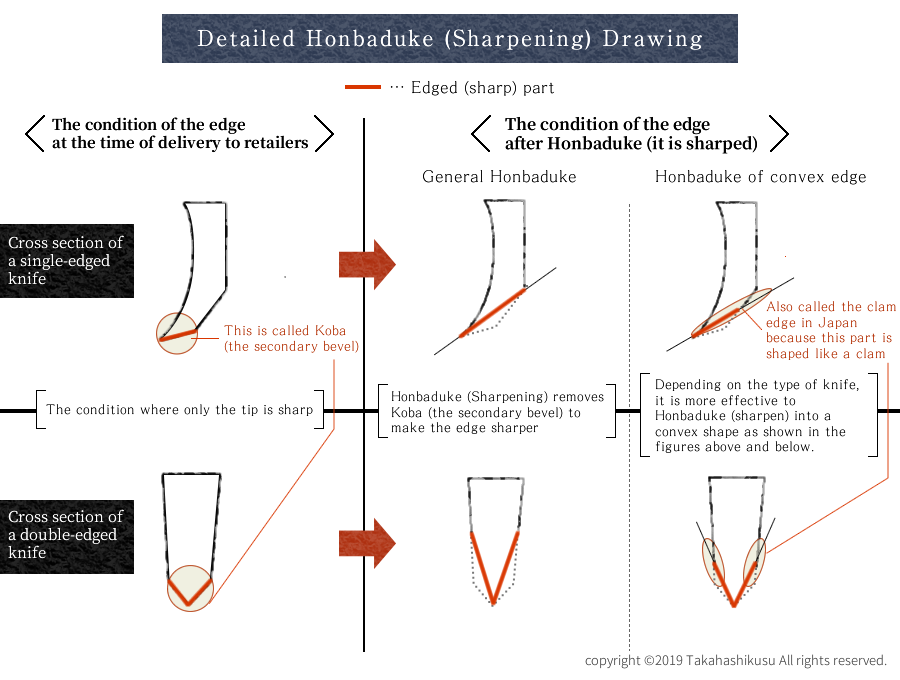
The grind is also different. Double-bevel knives are thin behind the edge. Single-bevel knives have a wide flat face and a micro-bevel. Both need care and a light touch. If you learn how to sharpen japanese knife with the right angle and grit, the blade will reward you in every cut.
I learned this fast after chipping my first Blue #2 gyuto. Heavy pressure and a 20° angle were the problem. Once I slowed down and went to 12–15°, the edge sang.
Tools you need to sharpen a Japanese knife
You do not need a huge kit. A small, smart setup beats a big box of random tools.
- Water stones: 1000 grit for general sharpening, 3000–6000 for refining, 220–400 for repairs, and 8000 for polish if you want it.
- Stone holder or a damp towel: keeps stones from sliding.
- Flattening plate or coarse diamond plate: keeps stones flat.
- Permanent marker: helps track your angle.
- Spray bottle or bowl: for wetting stones.
- Towel and a non-slip mat: for safety and cleanup.
- Leather strop with fine compound or newsprint: for deburring and a final touch.
Good stones are the heart of how to sharpen japanese knife. If budget is tight, start with a solid 1000 and a 3000–6000.
Grit progression that actually works
Grit is the road map. Start as coarse as needed, then climb.
- 220–400: for chips, rolls, and changing the bevel.
- 800–1200: for a dull edge that still cuts paper with force.
- 1000–2000: the workhorse zone. This builds your main edge.
- 3000–6000: refines the scratch pattern and boosts bite and push cut ability.
- 8000 and above: for polish and glide on soft foods.
Most days, I start at 1000, form a burr, then move to 3000–6000. That is the core of how to sharpen japanese knife without overdoing it.
Step-by-step: how to sharpen a Japanese knife on whetstones
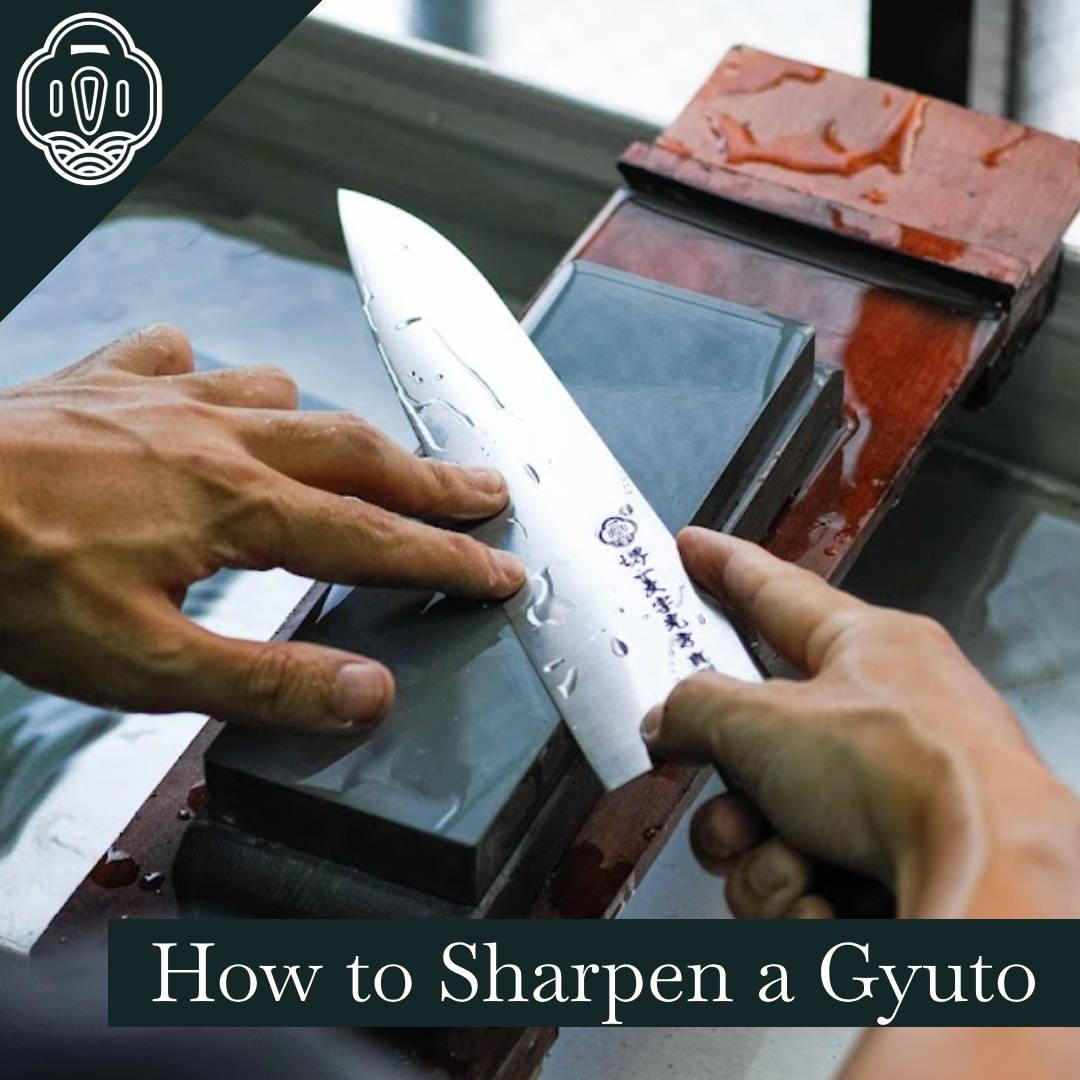
Follow these steps for how to sharpen japanese knife with control and repeatability.
- Soak or splash
- Splash-and-go stones need only water on top.
- Soakers need 10–15 minutes. Do not over-soak resin-bond stones.
- Set your angle
- Aim for 12–15° on double-bevel knives. 10–12° for very thin lasers. 15–17° for tough workhorses.
- Use two stacked coins on the spine as a quick angle guide.
- Color the edge
- Run a marker on the bevel. You will see if you hit the apex.
- Build the burr on the first side
- Use edge-leading strokes. Start heel to tip. Keep the angle steady.
- Use light to moderate pressure. Listen for a smooth hiss, not a grind.
- Check for a burr along the full edge.
- Switch sides and match the burr
- Repeat until the burr flips and is even from heel to tip.
- Deburr at the same grit
- Take a few ultra-light alternating strokes. Think feather touch.
- Refine on 3000–6000
- Repeat the burr and deburr process with lighter pressure.
- End with very light alternating strokes. This step is key in how to sharpen japanese knife that still bites tomatoes.
- Optional polish and strop
- Do a handful of passes on 8000 or strop on leather or newsprint.
- Keep pressure low to avoid rounding the apex.
- Clean and dry
- Rinse blade and stones. Dry at once. Store stones flat.

Double-bevel vs single-bevel
For double-bevel gyuto, santoku, petty
- Sharpen both sides at your target angle.
- Aim for a slight bias on the right side if you are right-handed, about 60/40.
For single-bevel yanagiba, usuba, deba
- Work the wide bevel flat on the stone. Keep full contact.
- Build a small micro-bevel on the edge side at about 10–12°. Deburr on the ura (the concave back) with a few light passes.
Angle, pressure, and stroke mechanics
Angle is the soul of the edge. If it floats, sharpness dies. Lock your wrist. Use your fingers on the bevel as a guide. Move the knife, not your angle.
Use three pressures.
- P3: moderate pressure for forming the burr on coarse or 1000 grit.
- P2: light pressure for refining at 3000–6000.
- P1: feather-light for the last alternating passes.
Strokes that work.
- Heel-to-tip edge-leading for control.
- Tip circles on the curved section to keep contact.
- Short scrubbing strokes to fix flat spots. Then smooth passes to blend.
This is the secret of how to sharpen japanese knife that feels both keen and stable.

Deburring and polishing: going from sharp to scary sharp
A wire burr will fool you. The knife feels sharp, then dulls fast. Kill the burr with intent.
- Use very light alternating strokes at your finish grit.
- Perform soft edge-trailing strokes on a loaded leather strop or on newsprint.
- Add a tiny micro-bevel. Raise the spine a hair and make 2–3 ultra-light passes per side. This boosts life without losing bite.
If you want mirror polish, go higher in grit. But for cooks, a 3000–6000 finish with a clean deburr is ideal. It is the sweet spot in how to sharpen japanese knife for daily work.
Care between sharpenings to keep the edge
Edge care matters more than high grit counts.
- Use a soft board like end-grain wood or soft plastic.
- Wipe and dry after use. Never leave wet on the board.
- Use a ceramic rod for very light touch-ups. Go slow. One or two passes a side.
- Store on a magnetic strip or in a saya. Avoid drawer rattle.
Good habits reduce how often you need how to sharpen japanese knife sessions on stones.

Common mistakes to avoid
Mistakes can undo an hour of work in seconds.
- Lifting the angle at the tip: rounds the edge and kills sharpness.
- Pressing too hard: causes scratches, gouges, and micro-chips.
- Skipping deburr: leaves a wire edge that fails fast.
- Ignoring stone flatness: creates convex edges you did not plan.
- Using steel honing rods on hard Japanese steel: can chip or tear the apex.
Avoid these, and you master how to sharpen japanese knife with confidence.
Troubleshooting: symptoms and fixes
If you can’t slice paper clean, change one thing at a time.
- Edge is sharp in spots, dull in others: you did not form a full-length burr. Go back a grit and chase the burr from heel to tip.
- Edge feels sharp but dies fast: wire burr left on. Do a careful deburr and strop.
- Micro-chips after sharpening: angle too low or pressure too high. Raise the angle a touch and lighten up.
- Stone feels grabby or slow: lap it flat and refresh the surface.
- Tomato crushes before cutting: add a light micro-bevel or finish around 3000–4000 for more bite.
These quick fixes save a session and refine how to sharpen japanese knife over time.
How often should you sharpen?
There is no single clock. It depends on steel, board, and habits.
- Home cooking 3–5 times a week: every 6–8 weeks on stones, light strop weekly.
- Pro kitchen daily use: quick touch-ups each shift, full sharpening every 1–2 weeks.
- If the knife slides on a tomato or onion skin, it is time.
Track your results in a small note. This builds your sense for how to sharpen japanese knife at the right moment.
Frequently Asked Questions of how to sharpen japanese knife
What angle should I use for a Japanese chef’s knife?
Aim for 12–15° per side for most double-bevel gyuto and santoku. Go a touch higher if you see micro-chipping.
Can I use an oil stone or pull-through sharpener?
Water stones are best for hard Japanese steels. Pull-through tools can damage the edge or chip it.
How do I know when I’ve raised a burr?
You will feel a slight hook on the opposite side along the full edge. Check from heel to tip with a light finger sweep.
Do I need an 8000 grit stone?
Not always. A clean 3000–6000 finish with good deburring is plenty for kitchen work.
Is stropping necessary?
It helps remove leftover burr and adds a final bite. Use light pressure to avoid rounding the apex.
How do I sharpen a single-bevel knife?
Lay the wide bevel flat, work it even, then add a tiny micro-bevel. Deburr on the ura with a few gentle passes.
Can I fix chips at home?
Small chips are fine with 220–400 grit and patience. Large chips or cracks may need a pro.
Conclusion
Sharpening is a calm craft. Set your angle, build a clean burr, refine, and deburr with care. With a few stones and steady hands, you can master how to sharpen japanese knife and get pro-level results at home.
Start small. Sharpen one knife this week and note your angle, grit, and time. You will see progress fast. Want more tips like this? Subscribe, share your results, or drop a question below.

Maliha Akter is a kitchen knife reviewer and food preparation specialist with over 6 years of experience testing Japanese kitchen knives and everyday cooking tools. She focuses on performance, safety, durability, and real-world usability to help home cooks choose the right knives for efficient and enjoyable cooking.
Expertise:Japanese Knives • Vegetable Knives • Product Reviews • Kitchen Efficiency • Knife Care